The year is 1958.
→ Physicist William Higinbotham created Tennis for Two game. Ran on analog computer + oscilloscope.
Credit: I didn’t upload video to 𝕏. I’m pointing to a video within 𝕏 stream of “Imágenes Históricas” (HistorieEnFotos) Jul 26,2026
Web Development Projects for Beginners to boost their resume!
1. Portfolio Website
https://t.co/ySMYFN9YsQ…
2. Landing Page
https://t.co/bz081burvs…
3. Cinema Website
https://t.co/Ulo2pPAWgC…
4. Quiz Web App
https://t.co/dib1rL5SEu…
Mathematics and beauty.
"It's called the Lorenz 𝘢𝘵𝘵𝘳𝘢𝘤𝘵𝘰𝘳 because all nearby points are 𝘢𝘵𝘵𝘳𝘢𝘤𝘵𝘦𝘥 into the set of chaotic orbits, regardless of initial conditions."
By Ben Bartlett, @bencbartlett, Used with permission.
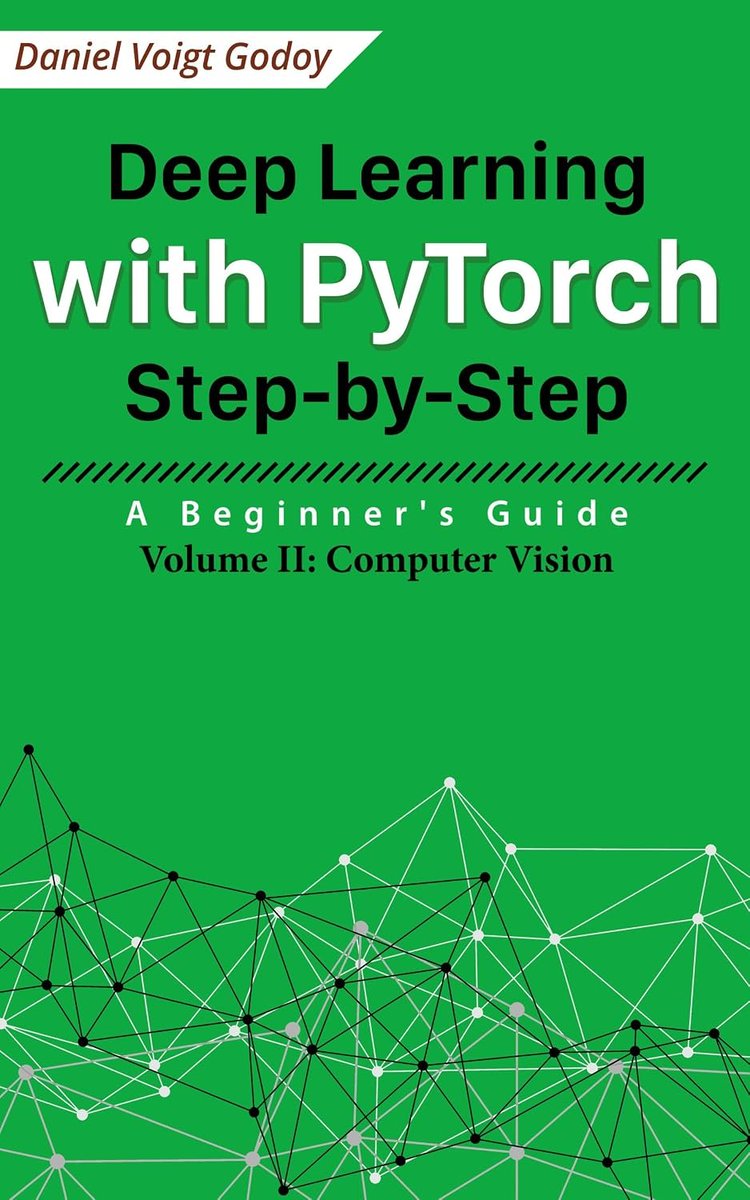
10 free textbooks from MIT, Stanford, and Berkeley that you can download legally right now.
→
Introduction to Linear Algebra — Gilbert Strang (MIT)
This is textbook for one of the most-watched math courses ever. The course has about 20 million views on MIT OpenCourseWare. A lot of machine learning engineers learned these ideas from one calm, clear professor.
https://t.co/21ZEyYt0Q8
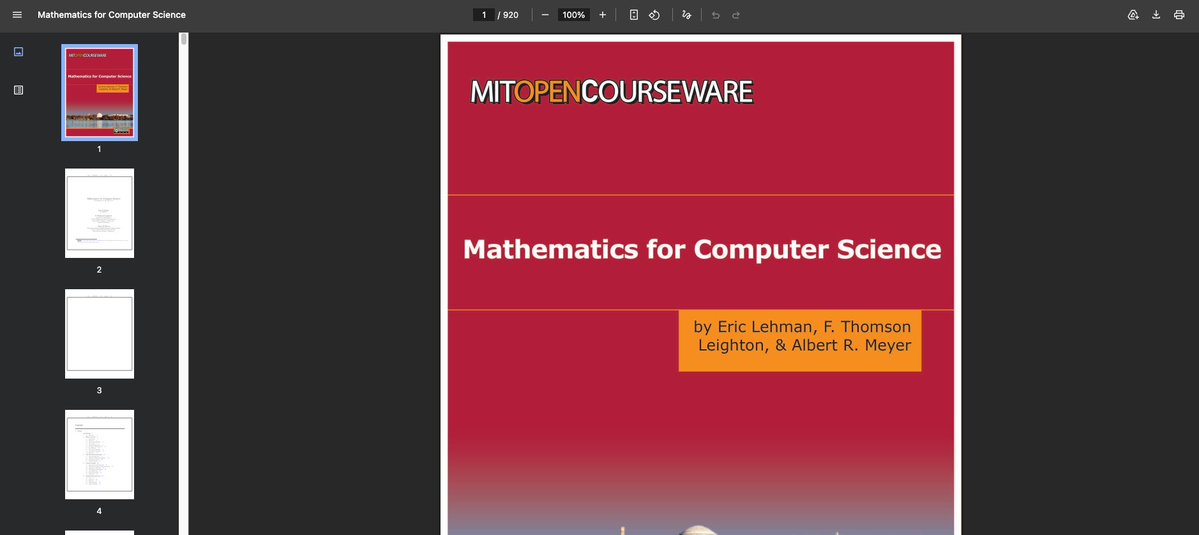
→ Mathematics for Computer Science (MIT 6.042)
This course covers proofs, discrete math, and probability. These topics are a big part of what computer science is built on, but a lot of undergrads don’t hear about them until later.
https://t.co/n6iYa2nTxZ
→ Convex Optimization - Stephen Boyd, Stanford
This is used in almost every serious machine learning and control systems class in the world. Cambridge University Press let Boyd keep it free on his own website.
web. stanford. edu/~boyd/cvxbook/bv_cvxbook.pdf
→ CS229 Machine Learning Notes - Andrew Ng, Stanford
Not the Coursera version. The actual Stanford graduate course notes. Dense, precise, and the closest thing to a grad school education you can download in one PDF.
https://t.co/lMbgoQpuzB
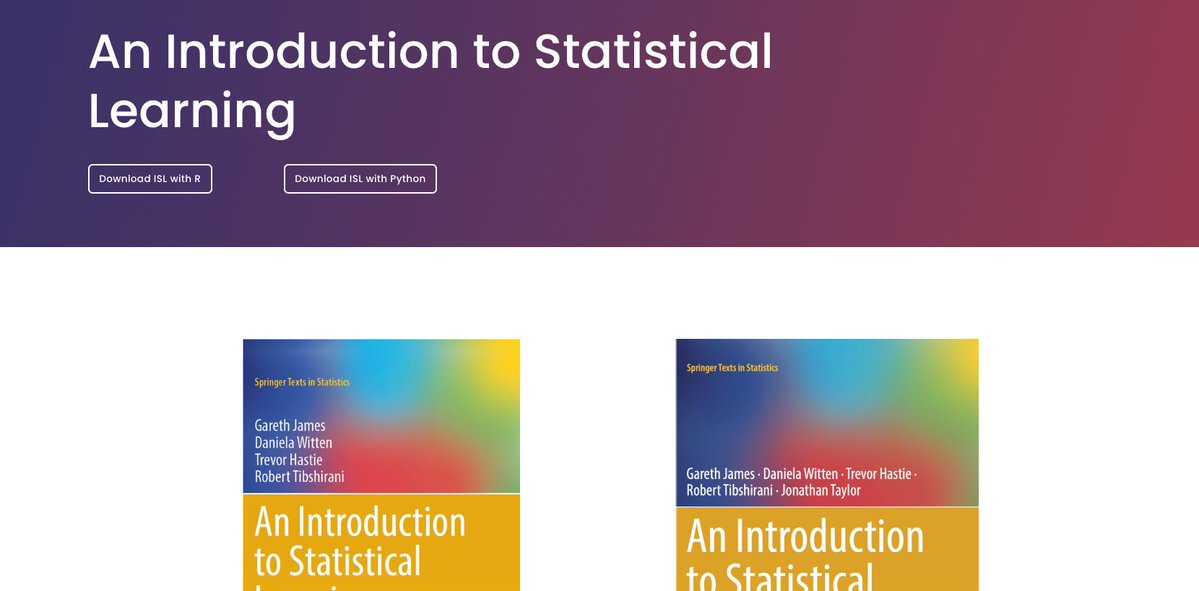
→ An Introduction to Statistical Learning - Stanford / USC
The book three statisticians from Stanford and USC made free because they wanted everyone to learn it. 290,000 people have taken the companion course on edX.
https://t.co/pzr1qxZwLR
→ Computational and Inferential Thinking - Berkeley Data 8
The textbook behind Berkeley's most popular course. Data science from scratch, built to be understood without a math degree first.
https://t.co/SJKJHKwOUj
→ Dive into Deep Learning - Berkeley / Amazon
Jensen Huang called it "excellent." 500 universities across 70 countries use it. Every concept runs as live code directly in the browser.
https://t.co/AxpcyRsVFw
→ Introduction to Probability - Blitzstein & Hwang, Harvard
The official textbook of Harvard's Stat 110, which has been called the best probability course ever put on YouTube. Free second edition online.
https://t.co/T8mDwKLPvp
→ The Elements of Statistical Learning - Hastie, Tibshirani, Friedman, Stanford
This is the grad-school version of ISLR. Springer offers it for free as a PDF. A lot of researchers download it and keep it saved on their computer.
https://t.co/8ApXy767id
→ MIT OCW Online Textbooks Index - 45+ books across every department
One page with every free MIT textbook, organized by subject. You can find books on algorithms, physics, economics, and engineering. All of them are open access.
https://t.co/qafq5b2tsa
Save this before someone makes them take it down.
(They won't. But save it anyway.)
Paradoxes in Physics and Mathematics ✍️
1. Zeno's Paradoxes:
A set of philosophical problems that challenge the concept of motion and continuity. For example, Achilles and the tortoise paradox argues that Achilles can never overtake a tortoise given a head start, as he must first reach the point where the tortoise began.
2. Russell's Paradox:
A contradiction found in naive set theory, where the set of all sets that do not contain themselves leads to a logical inconsistency. This paradox highlights problems in defining a universal set.
3. The Barber Paradox:
A self-referential paradox where a barber shaves all those who do not shave themselves. The question arises: does the barber shave himself? If he does, he shouldn't; if he doesn't, he should.
4. The Liar Paradox:
A statement that declares itself false, such as "This statement is false." If it's true, then it must be false, and vice versa, leading to a contradiction.
5. The Sorites Paradox:
This paradox arises from vague predicates, such as "heap." If removing a single grain of sand from a heap doesn’t stop it from being a heap, how many grains can be removed before it ceases to be a heap?
6. The Monty Hall Problem:
A probability puzzle based on a game show scenario. Given a choice among three doors (with a prize behind one), switching after one non-prize door is revealed increases your chances of winning from 1/3 to 2/3.
7. The Birthday Paradox:
Refers to the surprising probability that in a group of just 23 people, there's about a 50% chance that at least two individuals share the same birthday, challenging intuitive understanding of probability.
8. The Banach-Tarski Paradox:
A theorem in set-theoretic geometry that states a solid ball in 3-dimensional space can be split into a finite number of pieces that can be reassembled into two identical copies of the original ball. This paradox challenges our understanding of volume and measure.
9. The Twin Paradox:
A thought experiment in relativity where one twin travels at a significant fraction of the speed of light while the other remains on Earth. Upon reunion, the traveling twin is younger than the stationary twin, illustrating the effects of time dilation.
10. The Grandfather Paradox:
A time travel paradox where a person travels back in time and inadvertently prevents their grandfather from meeting their grandmother, thereby preventing their own existence. This raises questions about causality and the nature of time.
Mathematical Coalescence. Math machine.
A strange pattern emerges in these Archimedean Spirals with interconnecting tubes. "The pattern 東南西北 can be displaced, but remains conserved."
By Raven Kwok, @RavenKwok, Used with permission
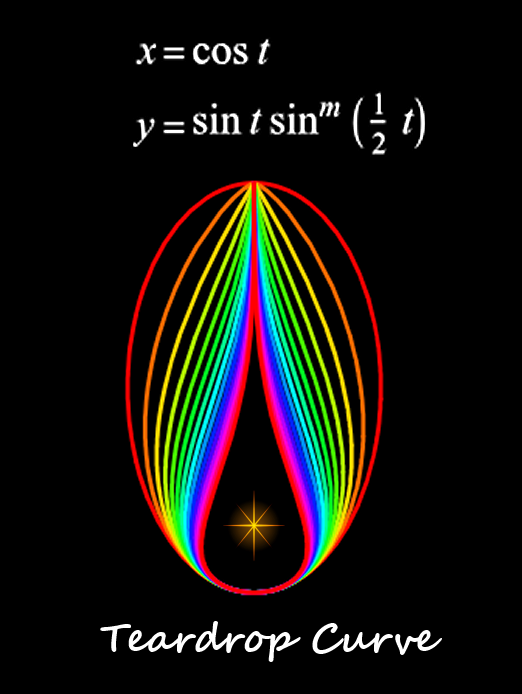
Mathematics. Teardrop Curve.
Try to make your own using the formula provided, for different values for m.
Adapted from Weisstein, Eric W., "Teardrop Curve." MathWorld -- A Wolfram Resource. https://t.co/9qzbo7zEqb