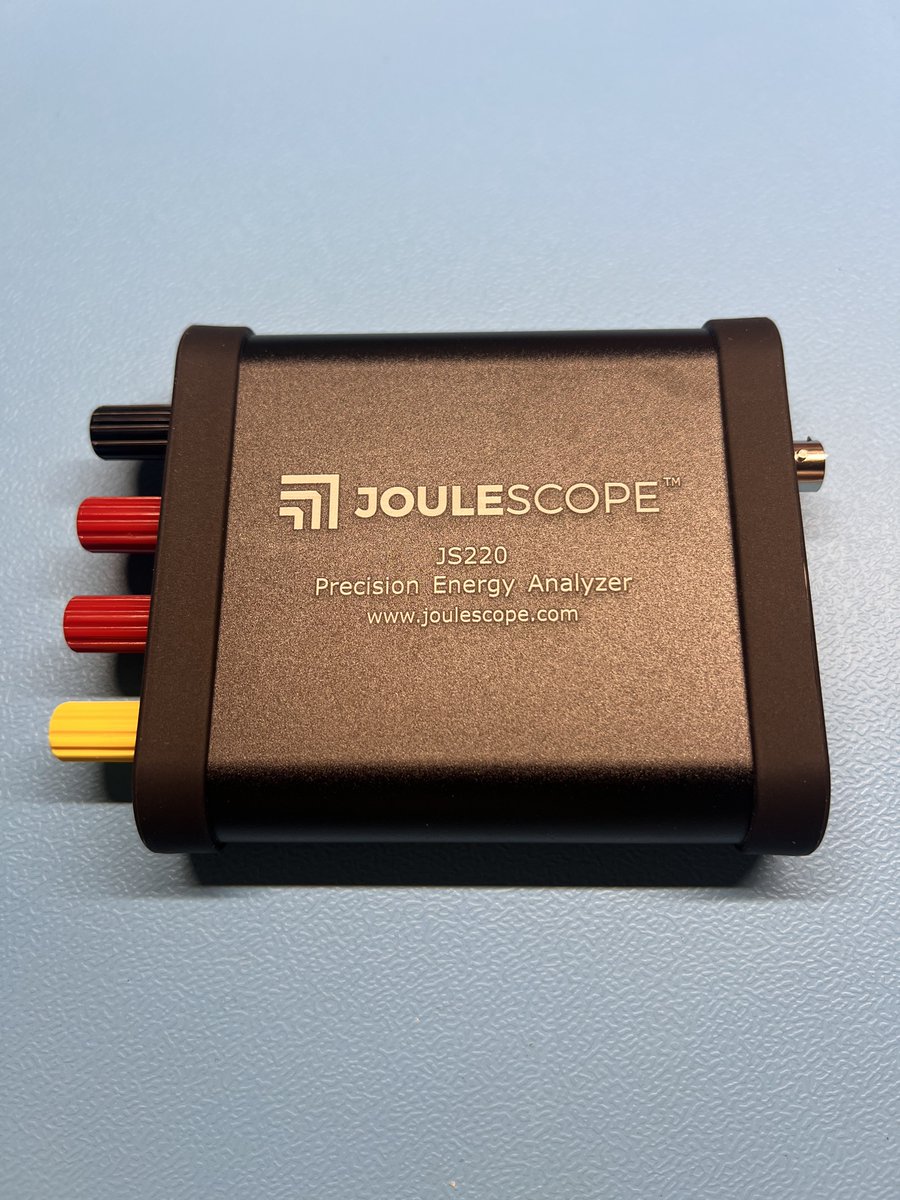
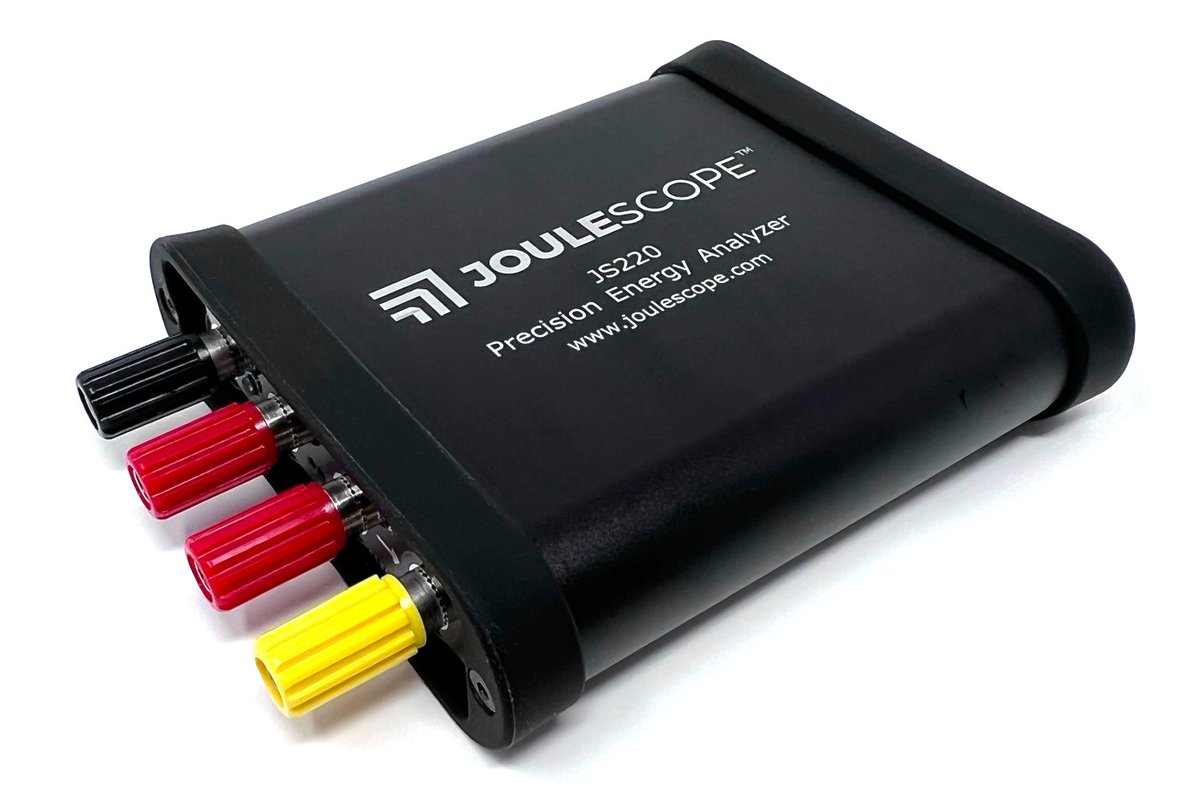
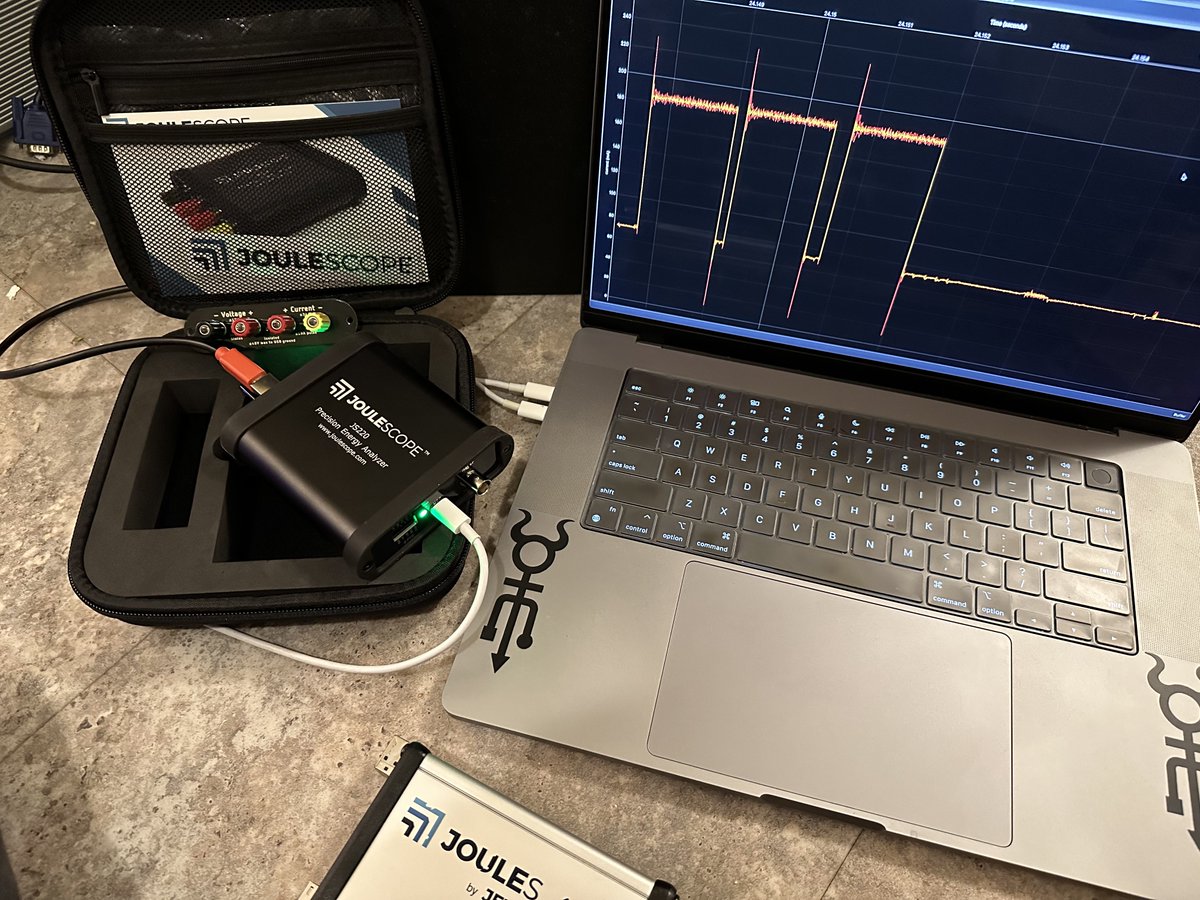
I've been busy developing the new @joulescope JS220. Now available for preorders!
Measure current from nanoamps to amps while simultaneously measuring voltage, power, energy, and charge. Like the JS110, but with better performance & more features.
https://t.co/dpxTJ1JwIK
Got Joulescope for the lab, as suggested by a few people (we only had Nordic PPK2)
I will write a detailed thread about the importance of power consumption analysis in hardware security tomorrow.
For now, let's look at Joulescope.
It's advertised as "DC Energy Analyzer"
Basically it measures power consumption of your device under test.
Why would you want to do that? It's important when you design/build a battery operated IoT device. You want to optimize the energy usage.
You could measure a device's consumption over time (power profiling), and basically find areas that could be optimized. It could also be useful for security as we'll see tomorrow.
It's better than Nordic PPK2 in almost every aspect: more current (3A), better resolution (0.5nA), high sampling rate (2Msps, 16 bit). But all that comes at a price (almost 10x)
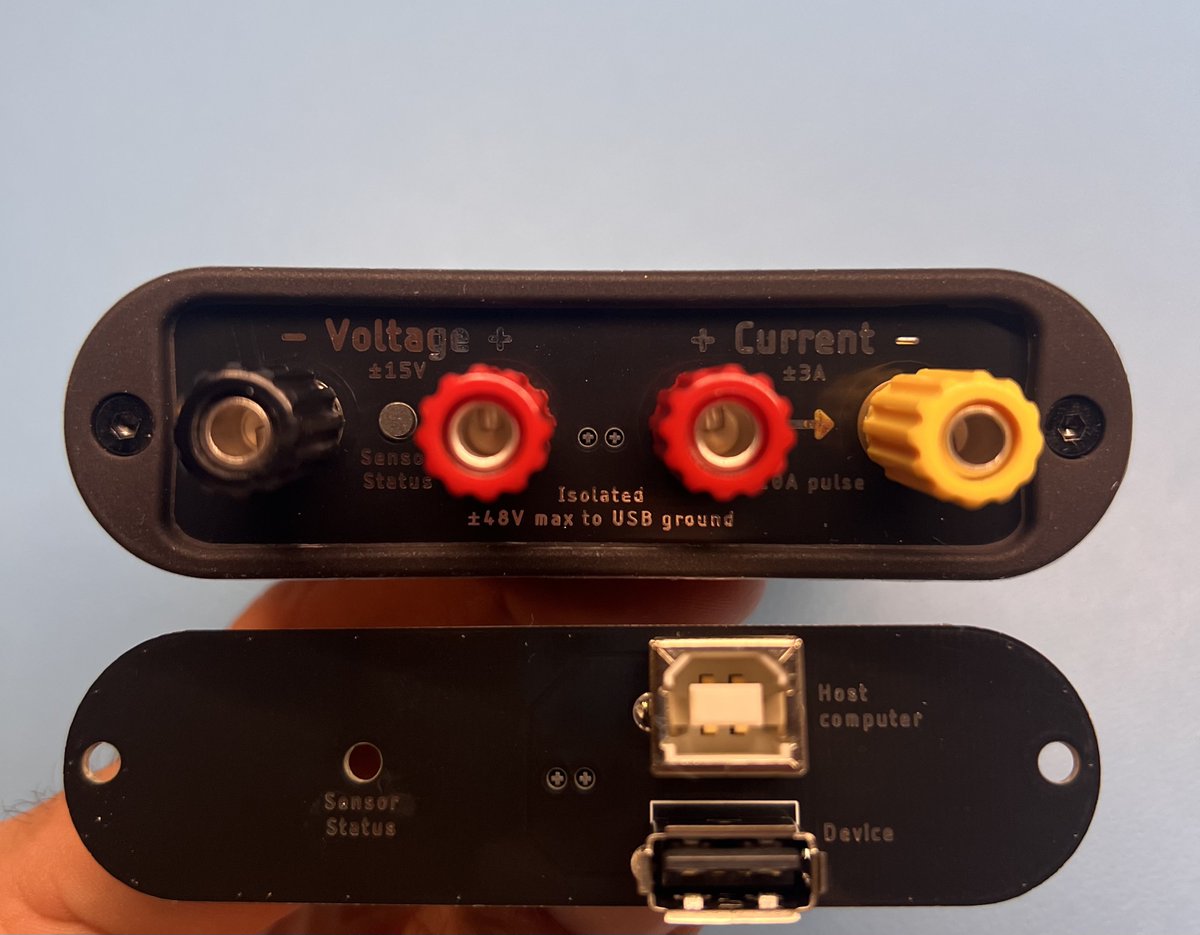
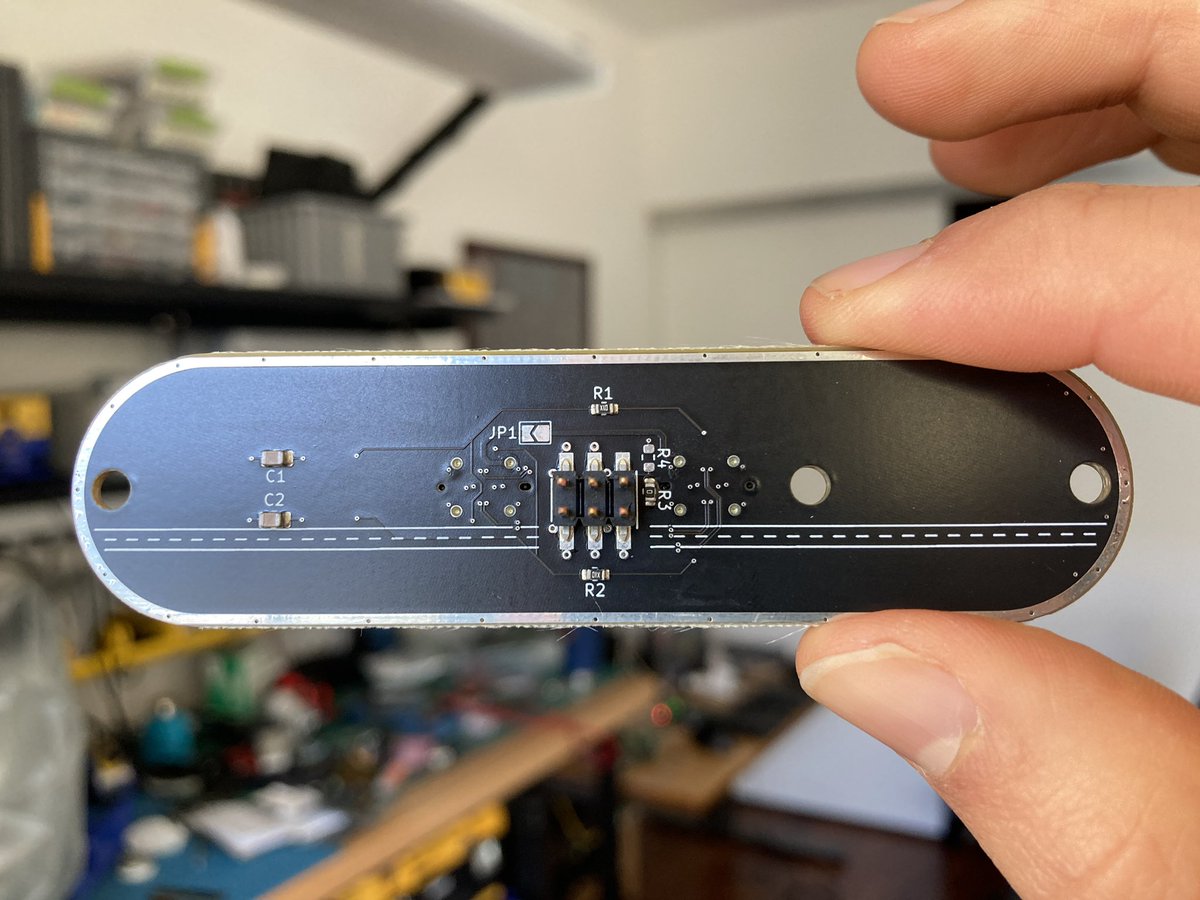
I also got a USB front panel that could replace the default panel, to make USB device power analysis easier.
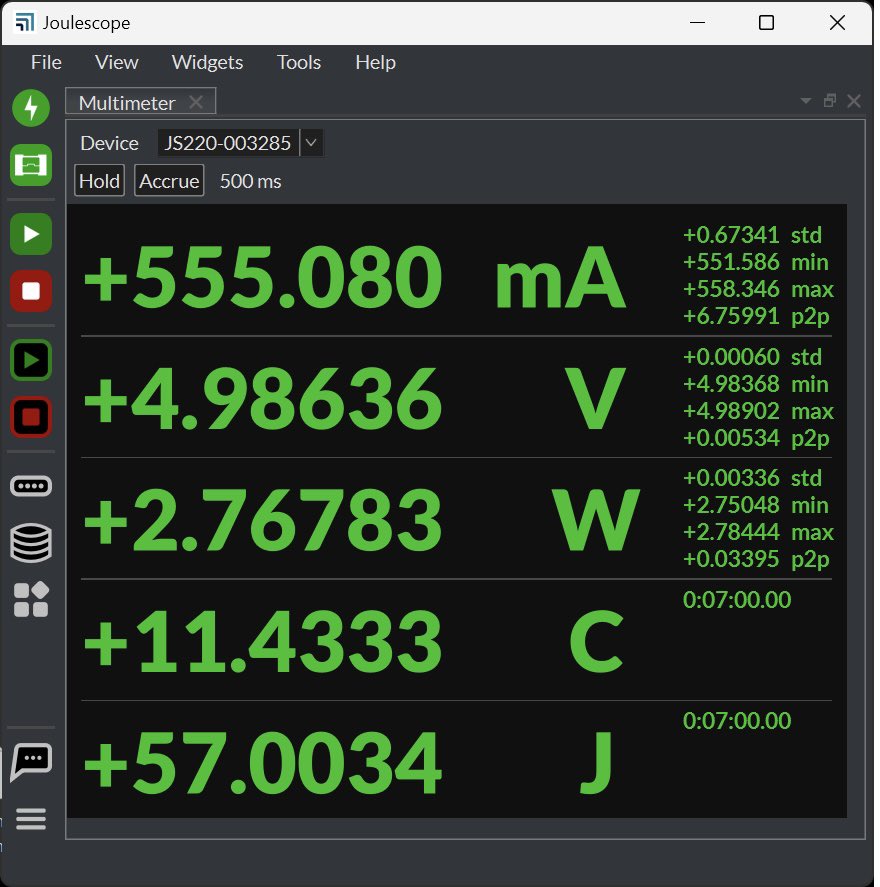
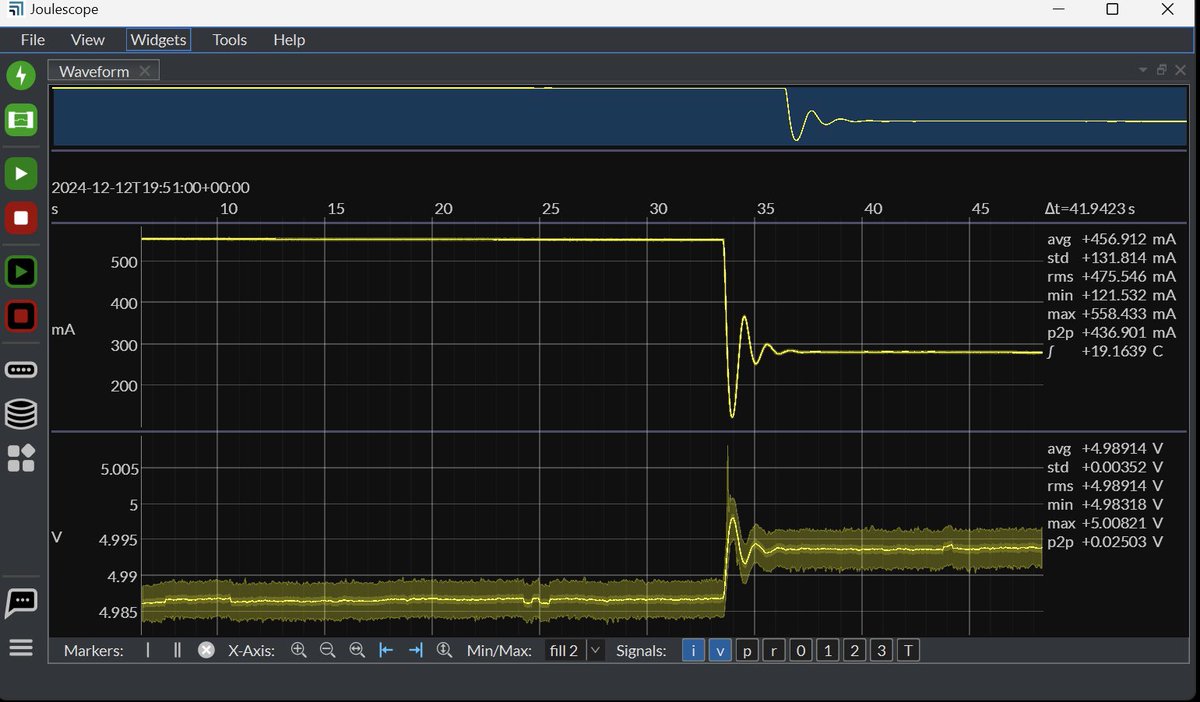
In the pictures I show a power profile of an OCXO. As you see, during the warm-up phase it draws about 556mA, and after the period, it goes down to about 280mA.
I'm still playing with the app, but it has 2 main views: voltmeter and oscilloscope.
Btw, the device is assembled in USA and feels high quality.
Your embedded software is a glutton for power on your IoT device and you don't know it.
It’s time you put it on a diet, but before you need to measure the damage.
@mliberty1 introduces the tool you will need for that: @joulescope
https://t.co/BxH6AY4hUw
#IoTShow#IoT #Embedded #EnergyConsumption
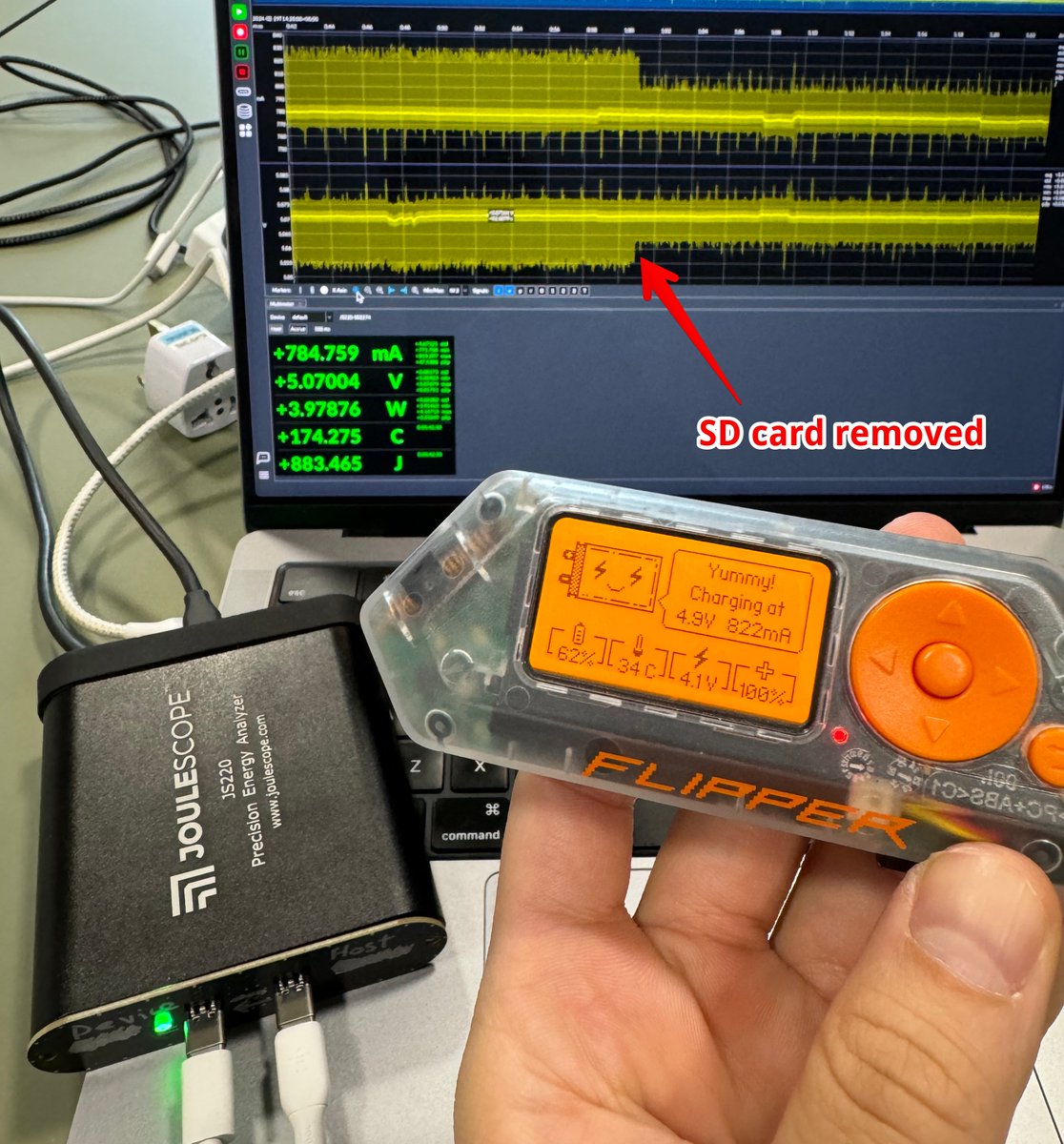
Thank you all for a wonderful tool! Joulescope works like a charm with @alvaroprieto's USB-C front panel — on a photo, we can see the power consumption drop when the SD card was removed.
It's much more convenient than using an oscilloscope for this task. We think your product is underrated and you need to invest more in marketing! We can repost your posts if you publish some story about measuring Flipper Zero's power.
Introducing:
✨ Scopin' Sans ✨
A open source typeface JUST for hardware nerds.
See your text as it was meant to be seen (as serial data on an oscilloscope)... 🧵
Check out the Oct 23 Joulescope newsletter!
* Visit us at the PCB Carolina Trade Show
* Circuit Cellar JS220 Review
* Sneak Peek: Software-controlled Fuse Feature
* US Patent Grant
https://t.co/cg77I5wsJD
Announcing the first stable release of the Joulescope UI 1.0! Tons of improvements that make all Joulescopes easier to use and more capable.
https://t.co/zc66gYEZQt
First version had the high speed pairs swapped 🤦♂️(because each cable swaps them internally!)
New version swaps them once more!
Also added switch to enable/disable USB-PD comms(put a big cap on the CC lines to filter it out)
USB-C super speed on @joulescope FTW!
@efox29 Yes, it’s on our future feature list, at least for the JS220. With our migration the JLS v2, we also have a file format to load/store large test annotations. Unfortunately, no roadmap date yet. Working to get UI 1.0 to stable: alpha now.
Just got the new @joulescope. The original has become a top tool for me, to the point I bought a backup! The change to USB-C is nice.
Super portable & the tool chain is ready in seconds. Low friction tooling that doesn’t require a bunch of setup or space is worth so much to me.
A new episode has been posted! "JouleScope JS220 Precision Energy Analyzer Scope Review, Teardown & Experiments" @joulescope
https://t.co/vJSrObsg68
@DanSGiesbrecht@WestonBraun@colinoflynn The original @joulescope JS110 used a @hammondmfg enclosure based on 1455J1201. Aluminum anodizing creates a high-impedance layer, but you cannot rely on it for safety applications. Does minimize shorting risk on bench. USB 2 tends to drop with ESD events.
Want a chance to win a brand new Joulescope JS220? Check out Jack Ganssle's JS220 review in The Embedded Muse newsletter. Subscribe to the newsletter and follow the links to enter the giveaway contest. You may be one of two lucky winners!
https://t.co/D0yysmhDVI
@ogimoore@pyqtgraph I totally appreciate what you are trying to do, which would be great. I am no help with the original CodeCL question. I run into PySide6/Qt6 object lifetime issues outside of pyqtgraph. From my perspective, it would be awesome if PySide6 had a more general solution.
@ogimoore@pyqtgraph Hmm. Challenging to not break existing code. A python instance could monitor event subscriptions and disconnect on __del__.
The existing linkage between python object scope and Qt C++ object lifetime causing segfault does not assist developers in tracking down the root cause.
I enjoyed returning to @TheAmpHour this week to talk with @Chris_Gammell about the upcoming @joulescope JS220. We talked about FPGAs, microcontrollers, and more including low-power design, micropython, and the component shortage. Check it out!