Application and Collaboration Driven Development of Interpretable and Statistically Sound Machine Learning Methods 🔬
Follow for updates about the group 🔥
Part of our group headed to Marburg for the 13th UCT Science Day!
A great kick-off for our early-stage PhD researchers to present their projects, exchange ideas, and connect with collaborators across the field.
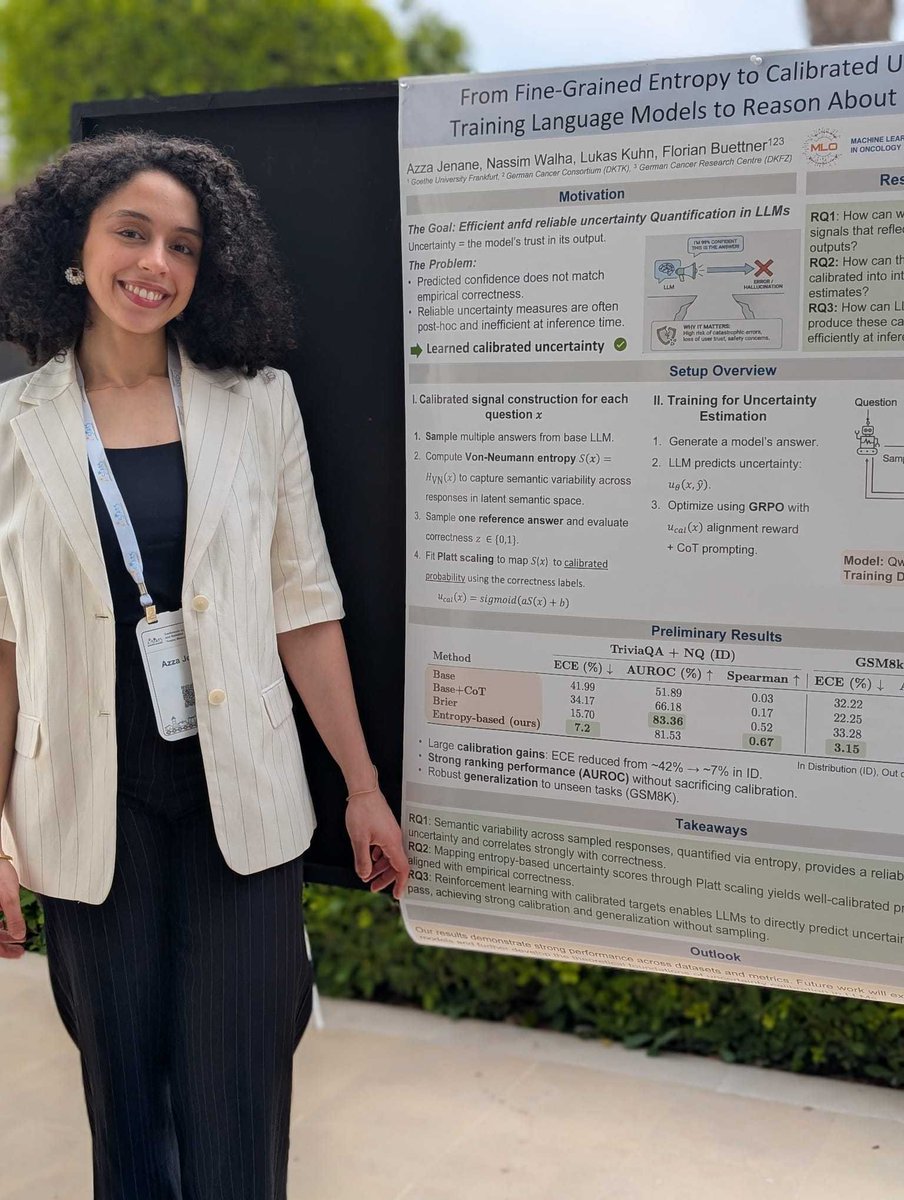
Azza presented “From Entropy to Calibrated Uncertainty: Training Language Models to Reason About Uncertainty” at the AISTATS Workshop on Calibration for Modern AI where she won the Best Student Paper Award!
Congratulations, Azza! 🎉
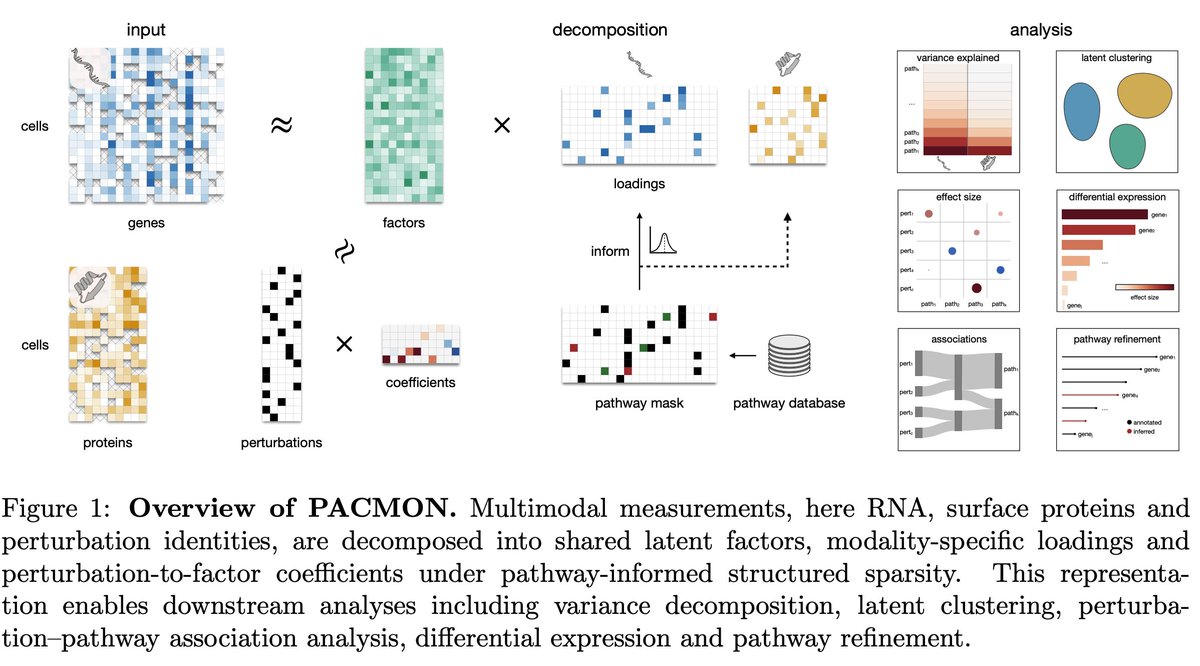
New preprint: PACMON
A framework for pathway-level interpretation of multimodal perturbation screens, integrating RNA + protein readouts and scaling to atlas-scale datasets.
https://t.co/fiyjjh9aFL
#bioRxiv#multiomics#computationalbiology
Can we trust LLM confidence? 🤖
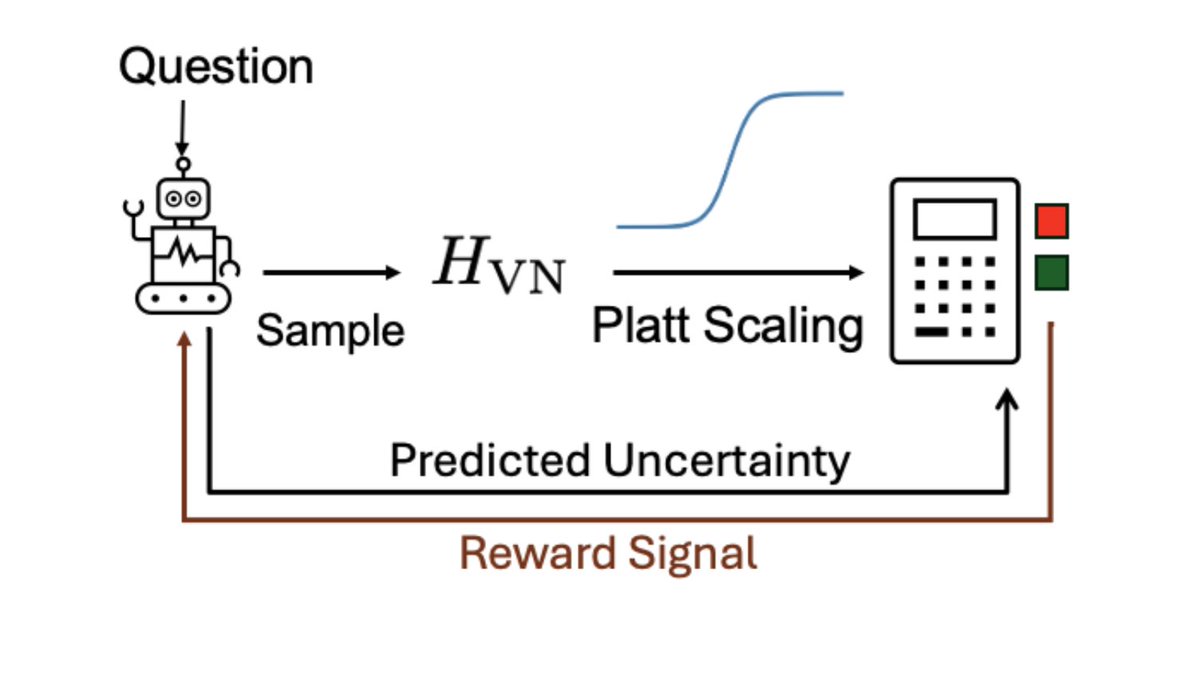
Excited to share that our paper “From Entropy to Calibrated Uncertainty” is accepted to the #AISTATS2026 Calibration for Modern AI workshop!
In this work, we introduce a Von Neumann entropy-based approach to align model’s confidence with actual accuracy.
📄 Read: https://t.co/sbkhAXUWS7
In collaboration with @walhanassim, @lukasgradient, @BuettnerFlo 🔥🙌🏻
Attending AISTATS? Come find our poster!
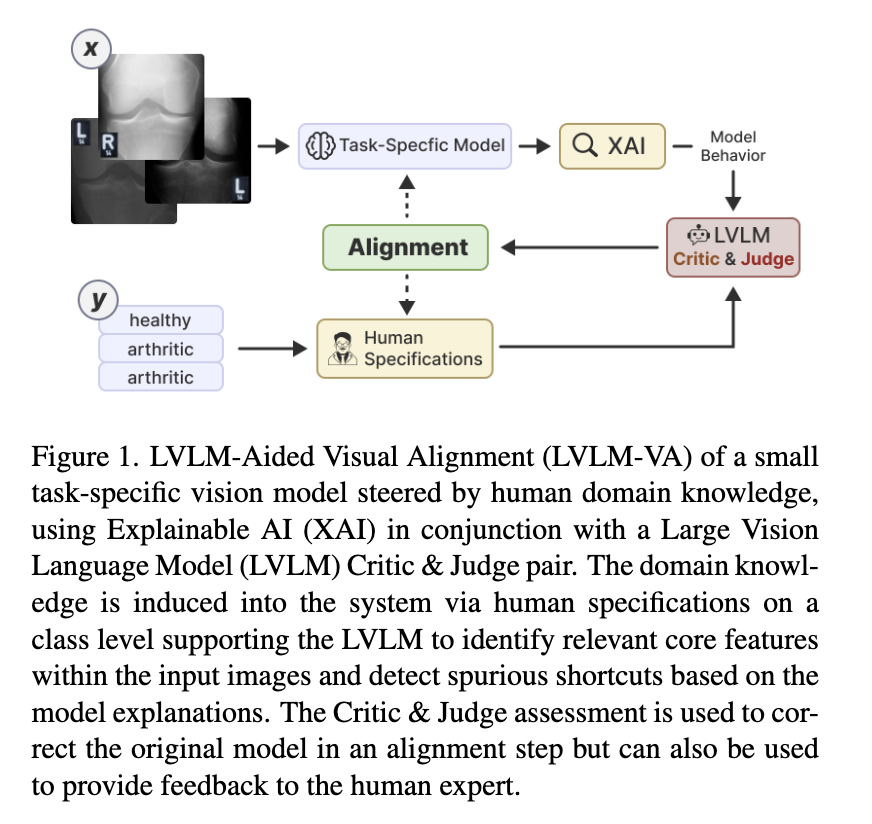
GenAI and classic discriminative ML don't have to be mutually exclusive! Our paper "LVLM-Aided Alignment of Task-Specific Vision Models" has been accepted at CVPR 2026. (@CVPR#CVPR2026)
We use LVLMs to fix what small vision models get wrong, no per-instance human feedback needed.
🧵
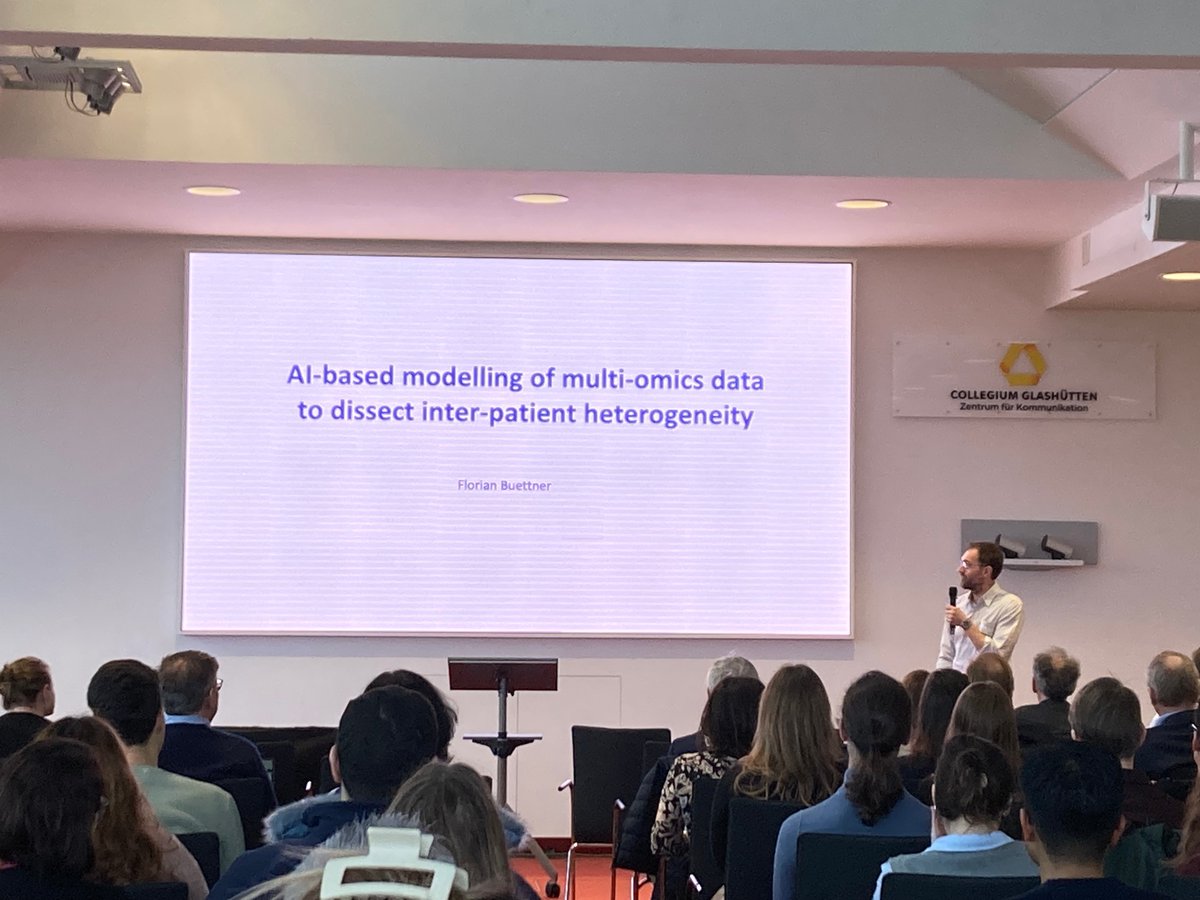
Today Florian presented "AI-based modelling of multi-omics data to dissect inter-patient heterogenity" at the 6th Rhein-Main Cancer Retreat!
His talk highlighted how machine learning approaches can transform complex molecular datasets into clinically actionable insights
Accepted at #CVPR2026! 🙌🏻🥳
We use LVLMs as a bidirectional interface between domain experts and small vision models to detect and correct spurious correlations. No fine-grained annotations needed!
Key Idea: Domain experts provide simple class-level descriptions, and an LVLM Critic & Judge pair automatically translates these into instance-wise correction signals using our novel PPEPS-WGM segmentation on model explanations.
Joint work with Alexander Koebler, Ingo Thon, and @BuettnerFlo! 🔥
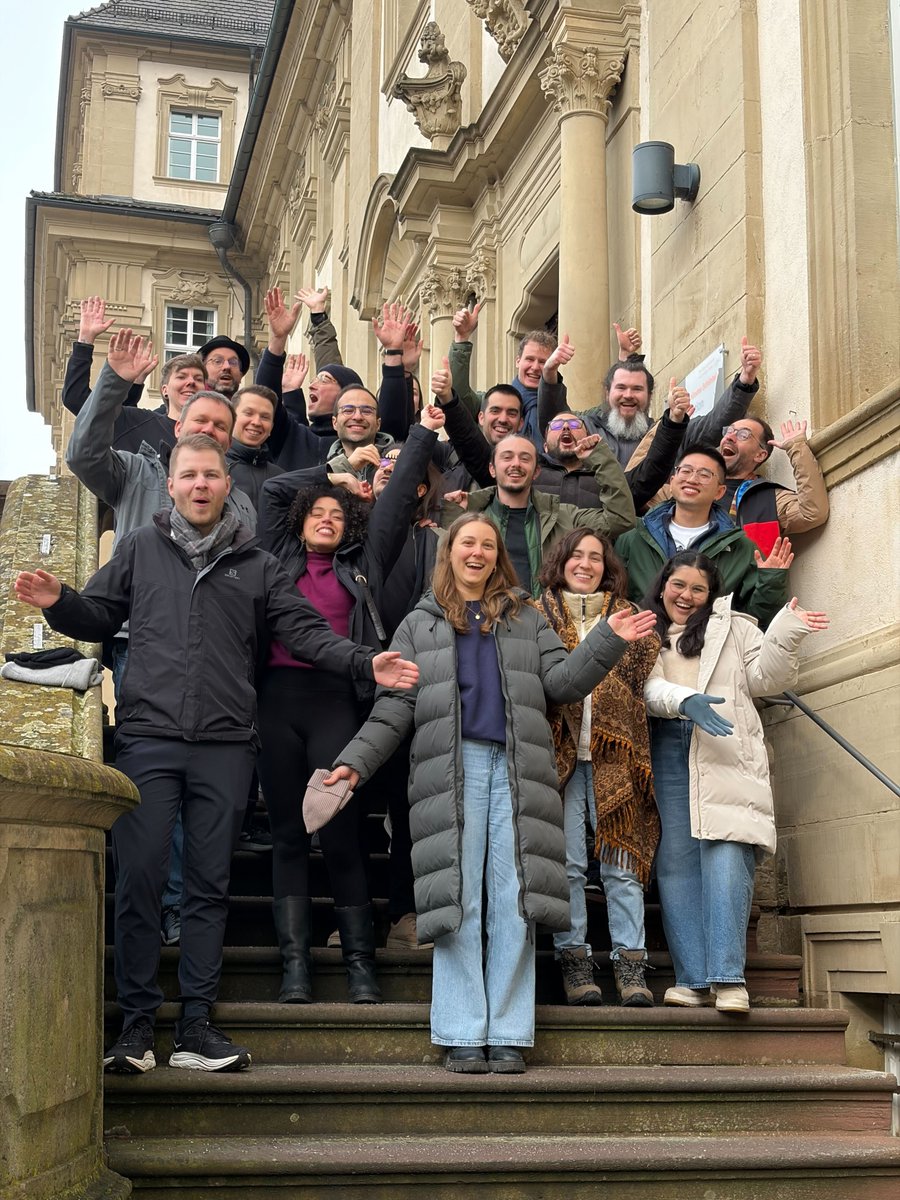
Beyond the sessions, the retreat was also about connection, with lively conversations and a round of table tennis in the evenings. Overall, it was a wonderful opportunity to come together as a team, strengthen collaboration, and return with renewed focus and a shared perspective.
For our 2026 group retreat, the entire team gathered at Bildungshaus Kloster Schöntal. Set in the beautiful monastery surroundings, the retreat gave us dedicated time to discuss orga, exchange ideas on science, and deepen our understanding of our wide range of research areas.
Introducing NOVA — Non-Contrastive Vision-Language Alignment!
We show you don't need negative sampling, momentum encoders, or stop-gradients to align vision and language.
Just predict text embeddings from image views + one simple regularizer (hint: it's by @ylecun & @randall_balestr).
🧵👇🏼 1/n
We got accepted at TMLR!
What characteristics of the samples consistently alleviate catastrophic forgetting in memory-based online continual learning?
@gserpep, Ben Werner, and @BuettnerFlo investigated this question under an uncertainty lens.
📜: https://t.co/c8O0HFSFgK
We got accepted at #ICLR2025!
@gserpep and @BuettnerFlo formalized a novel scenario for *online* federated continual learning and introduced an effective memory-based baseline that combines uncertainty-aware updates with random replay.
📄Read more: https://t.co/EM6gEEhYwI