This is so helpful.
I’ve worked with the likes of Kevin Durant and Victor Oladipo and watched superstars like Kobe Bryant and Steph Curry in their private practice routines—and two things stick out. One, they stick to the basics. They study and practice the basics to the point that they’re automatic, as if the actions are doing them. Two, they work harder than anyone else. They might lose, but they simply will not be outworked.
- Alan Stein Jr.
Know the fundamentals and work hard for what matters.
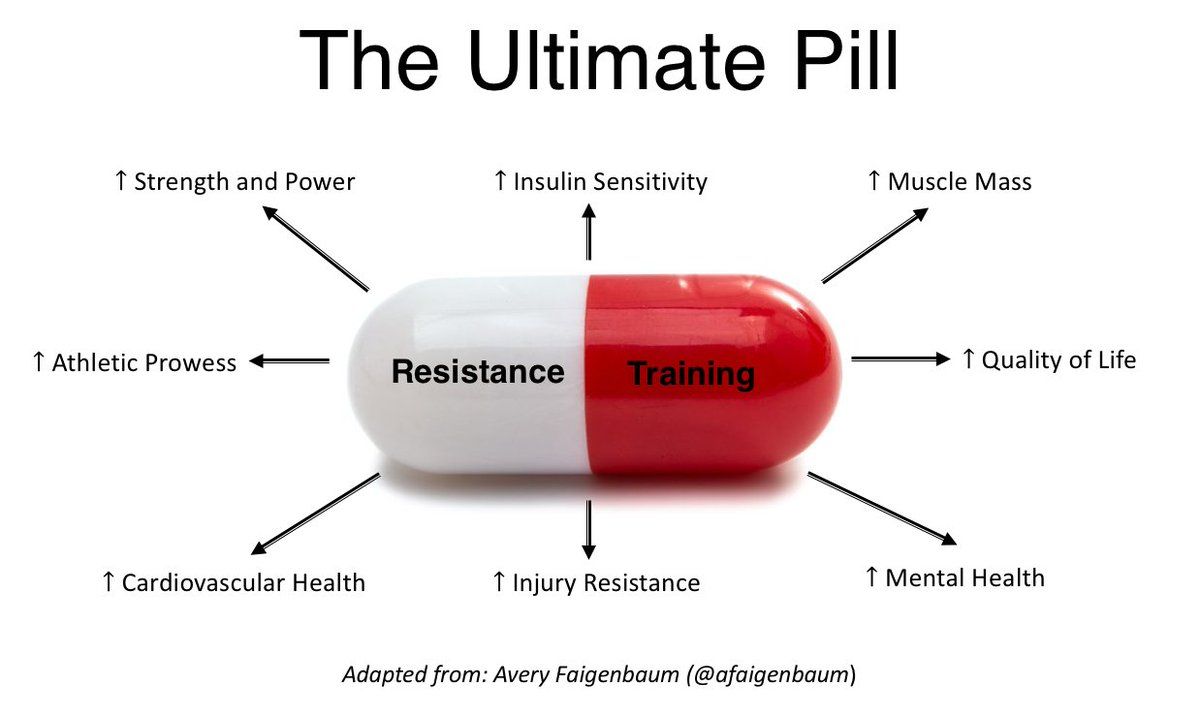
Few things you can do have as profound an impact on your health and well-being as resistance training. 💪
This image says it all.
Lift weights. Build muscle. Invest in your future self.
Shoutout to @AFaigenbaum for creating the original image that inspired this adaptation.
No disrespect to Linus Torvalds, but this guy is the greatest geek alive 🫡
Created UNIX in 1971 when he was 28 years old.
Created Go in 2009 when he was 66 years old😲
He also developed the B programming language (which led to C), created UTF-8 encoding (making international text possible online), and designed essential tools like grep that developers still rely on daily.
He also helped with the development of Multics (that led to UNIX), Plan 9 from Bell Labs and Inferno operating systems.
That's 4 operating systems in total... Most people don't even use these many OS.
Pretty impressive resume, right? 🔥
And it's a shame that many people, even the ones in the IT and tech industry, don't know him.
Ken Thompson.... Remember the name 🙏
The AI boom is not just probably bigger than the two previous ones I've seen (integrated circuits and the internet), but also seems to be spreading faster.
The leap I witnessed in AI this week has me shaken.
If you've followed me, you know I don't really make statements like this.
I've been hearing how AI will change everything for years, but there's been little beyond promises. Nothing that can be used now.
That just changed:
The classic software startup writes code to solve users' problems. If AI makes writing code more of a commodity, understanding users' problems will become the most important component of starting a startup. But it already is.
We are living in a timeline where a non-US company is keeping the original mission of OpenAI alive - truly open, frontier research that empowers all. It makes no sense. The most entertaining outcome is the most likely.
DeepSeek-R1 not only open-sources a barrage of models but also spills all the training secrets. They are perhaps the first OSS project that shows major, sustained growth of an RL flywheel.
Impact can be done by "ASI achieved internally" or mythical names like "Project Strawberry".
Impact can also be done by simply dumping the raw algorithms and matplotlib learning curves.
I'm reading the paper:
> Purely driven by RL, no SFT at all ("cold start"). Reminiscent of AlphaZero - master Go, Shogi, and Chess from scratch, without imitating human grandmaster moves first. This is the most significant takeaway from the paper.
> Use groundtruth rewards computed by hardcoded rules. Avoid any learned reward models that RL can easily hack against.
> Thinking time of the model steadily increases as training proceeds - this is not pre-programmed, but an emergent property!
> Emergence of self-reflection and exploration behaviors.
> GRPO instead of PPO: it removes the critic net from PPO and uses the average reward of multiple samples instead. Simple method to reduce memory use. Note that GRPO was also invented by DeepSeek in Feb 2024 ... what a cracked team.
Enough courage to get started + enough sense to focus on something you’re naturally suited for + enough persistence to stay in the game long enough to catch a few lucky breaks + a lot of hard work.
There’s your recipe.
A friend who's a former British military officer told me that when he was training soldiers in jungle warfare they were taught that if they got lost in the jungle, the first thing they should do was to brew a cup of tea and think about what to do next.
"No meetings before 11am. No meetings when emails or calls will do. Don’t schedule calls, text coordinate them on the fly when possible. Cram all meetings into two days a week. 1-on-1s are usually 30-minute walking meetings.(Meetings are the death of productivity)" - @naval
“When you’re on the fence about going for a long run or working on a big project, remind yourself: discipline now, freedom later. The labor will pass, and the rewards will last.” — @RyanHoliday
Some lessons I've learned from Buffett and Munger:
1. Wisdom is prevention
2. The fundamental algorithm of life: repeat what works
3. Become a learning machine: The wise of every generation discover the same truths
4. Avoid distractions
5. Spend time thinking
6. Position yourself for opportunity
7. Invert: Avoid what you don't want
8. Avoiding stupidity is easier than seeking brilliance
9. The weakest link causes the problem
I met many aspiring artists in my early 20s. Observing their trajectories since then, I've learned that long-shot careers in the arts (famous singer, actor, songwriter, filmmaker, etc.) are long shots not because success relies on wild luck or rare genius or insane connections. Success stories pretty reliably happen for people who combine three not-that-remarkable things: solid talent, savvy business sense, 15-20 years of persistent hard work. It's just that most people only pull off one or two of those things and not all three.