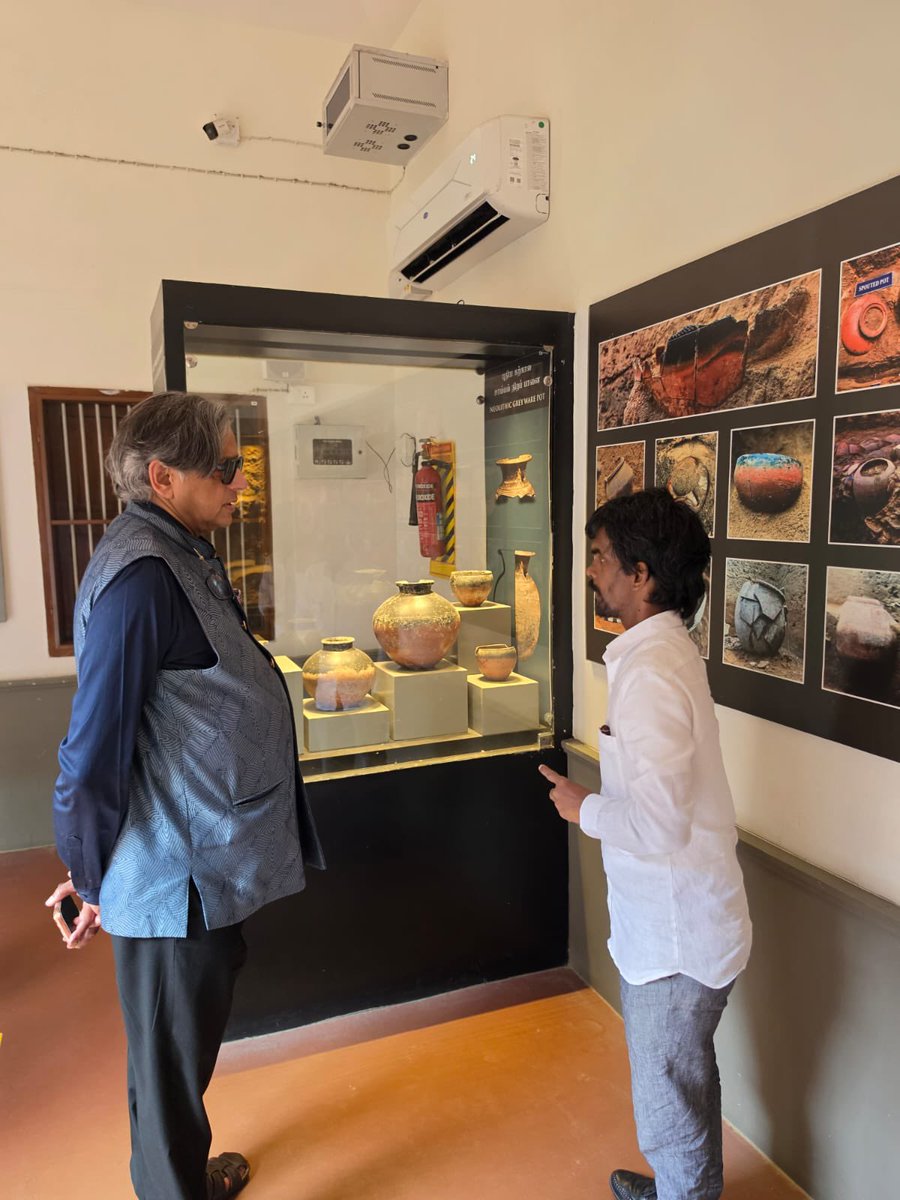
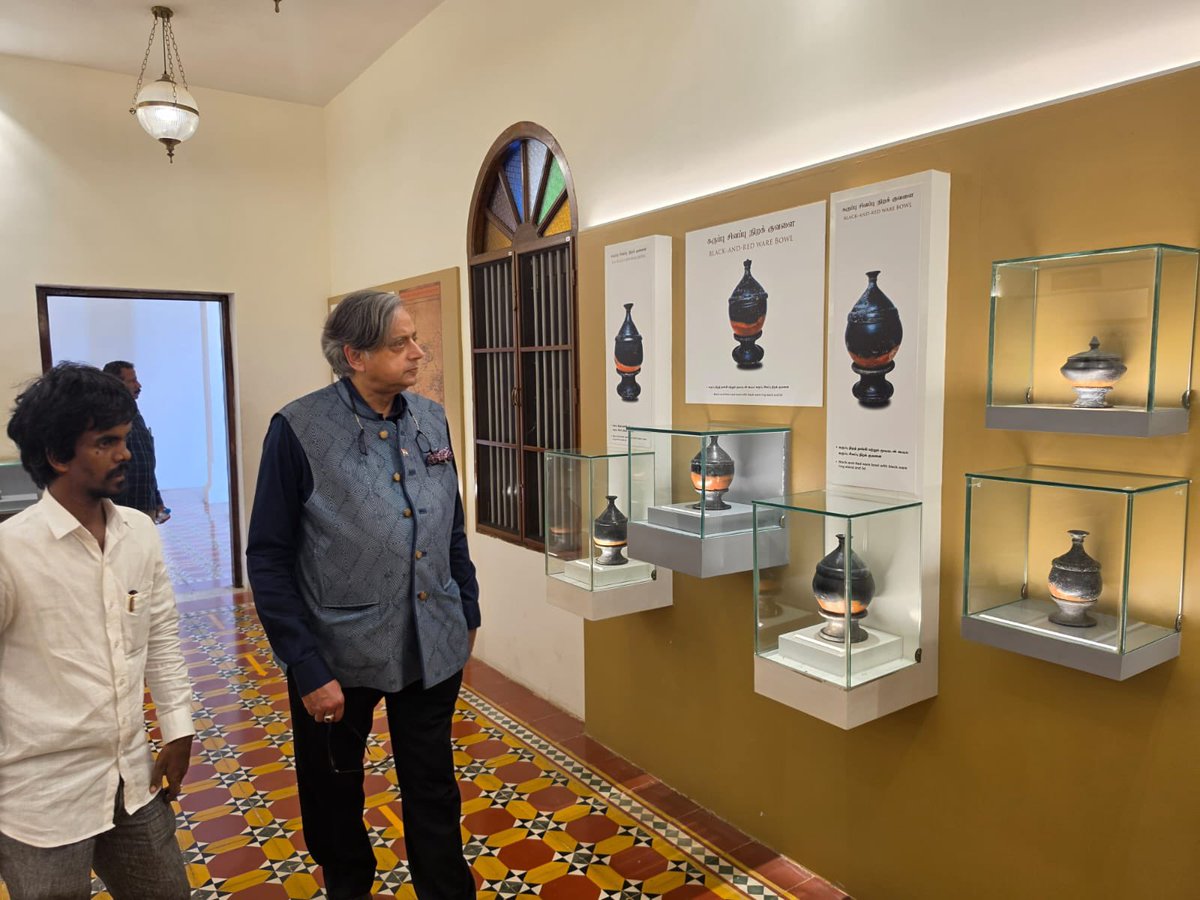
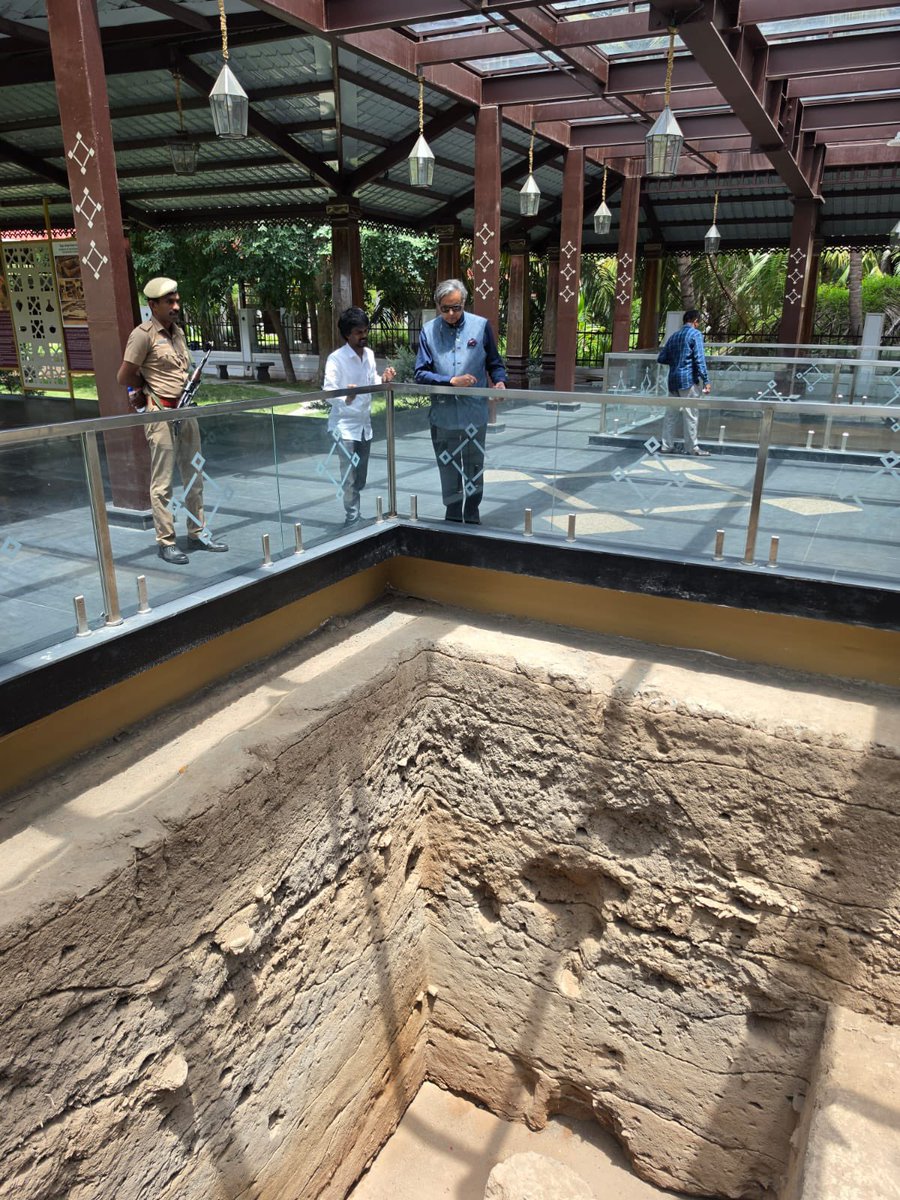
Had an extraordinary two and a half hour visit to the remarkable archaeological excavations at #Keeladi, where findings suggest that civilization flourished as early as 3450 BC. What’s remarkable is that this is an advanced Iron Age culture whereas Harappan civilisation was still in the Bronze Age at the same time. Ongoing excavations here and at Sivagalai, further south, could rewrite the history of the subcontinent’s antiquity!
@mybmc@mybmcwardKW Since past 2 weeks water is coming at a low pressure and for less duration than what is normal on Sangeetkar N Dutta Marg road in 4 Bungalows Andheri W. The water quality is also poor, tastes weird. We are forced to buy drinking water. Pl urgently look into it
Forget everything your textbook told you about Islam's "golden age of tolerance" in India. Forget the Sufi poetry, the spice-route romance, the multicultural Mughal miniature paintings hanging in museums funded to whitewash the brutal Islamic conquest.
None of that built the second-largest Muslim population on Earth out of a subcontinent that was overwhelmingly Hindu, Buddhist, and animist for thousands of years before a single Arab horse crossed the Indus.
The sword did, sieges did, mass executions did, burned and beheaded idols did, a poll tax engineered to starve the infidel into submission did.
In this article from our Infidel Awareness Month series, @nuriyahk traces how Islamic conquest transformed South Asia and how its non-Muslim populations were subjugated under Islamic rule.
https://t.co/lJkYtYCr9w
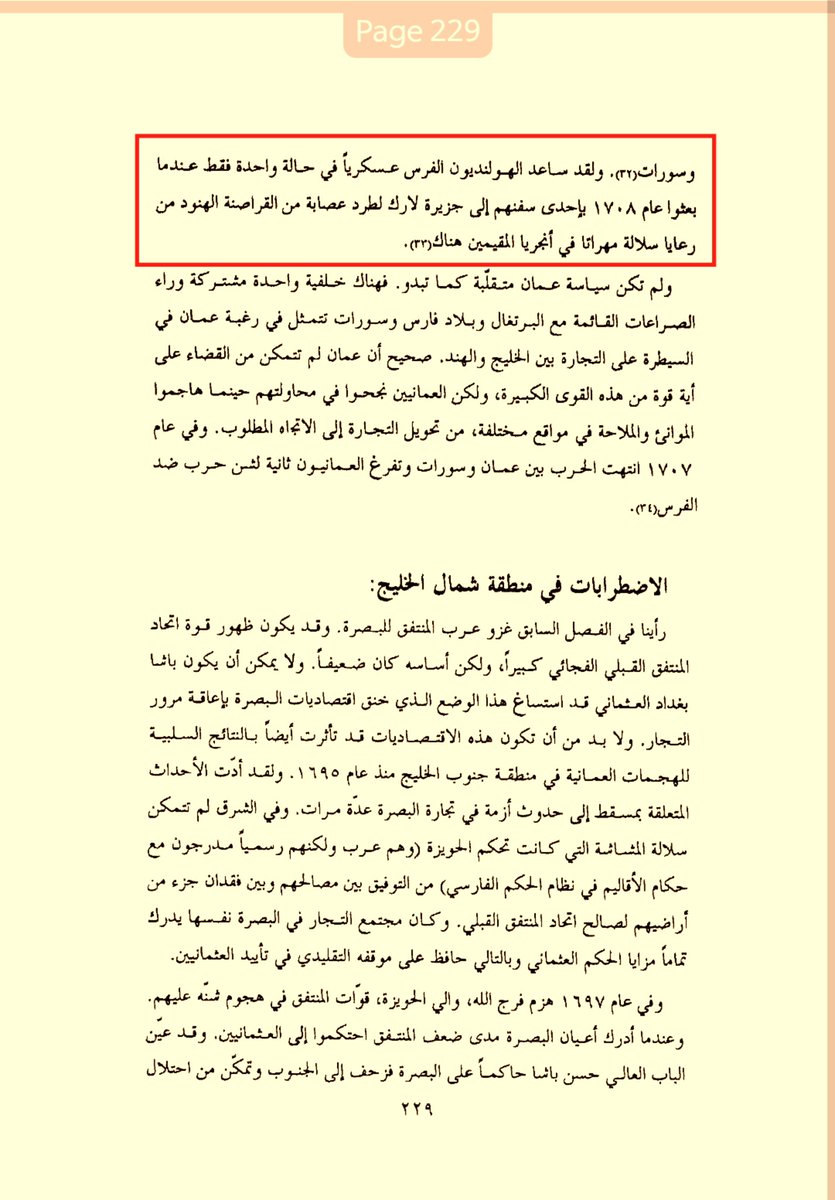
In 1708, Marathas successfully occupied the island of Larak near the Persian coast.
The Safavids had lost a strategic outpost near their coast & were now threatened with a blockade of #Strait of #Hormuz.
Unable to dislodge Angres, the Shah implored European assistance.
🧶 3/n
Digiyatra barcode scanning not working in Kolkata Airport Gate 1 and 2, only working in Gate 3 at entrance. Also why can't the entry gates be based on facial photographs like in Mumbai and Delhi airports?
@aaikolairport
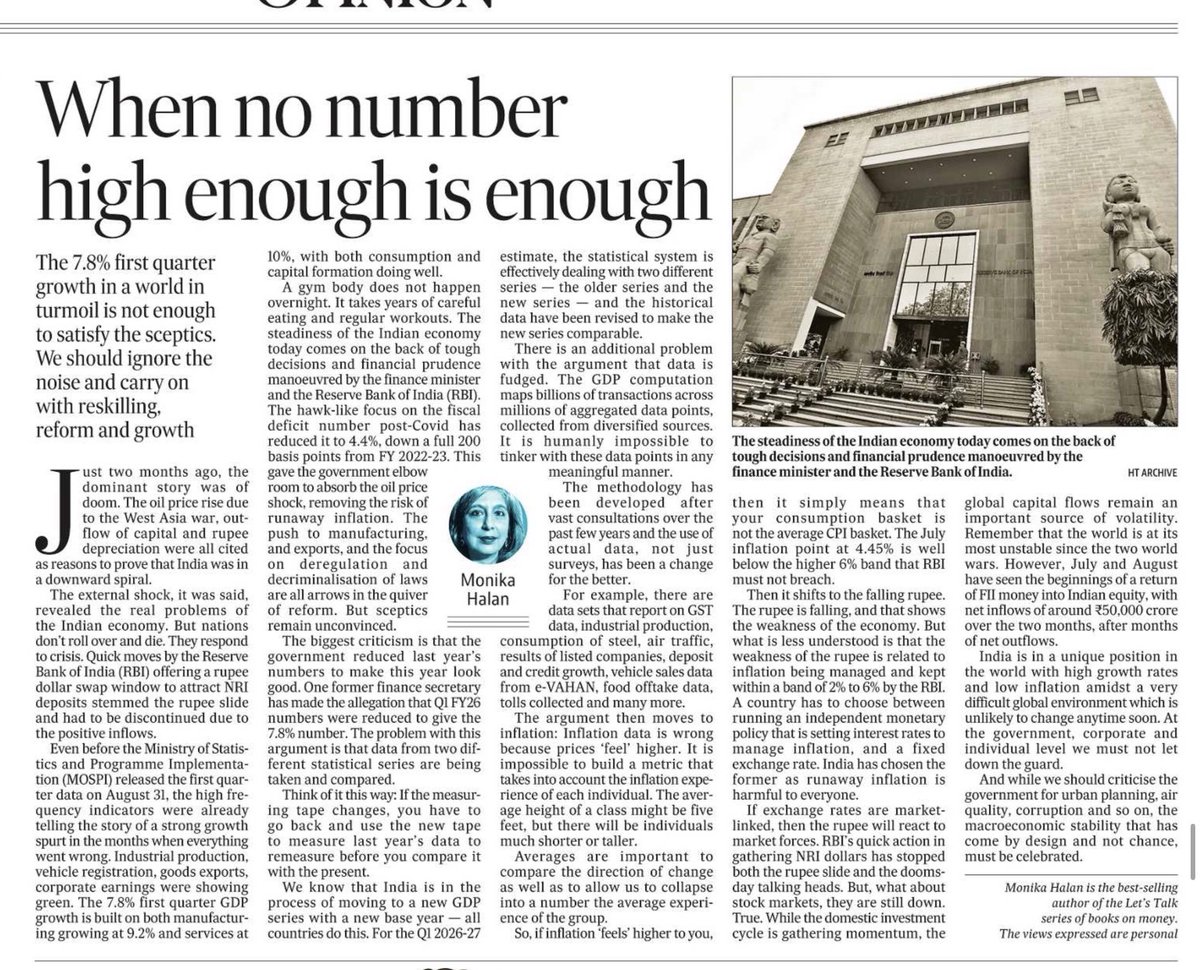
MOSPI @GoIStats put out detailed methodology documents for the base year revision in February 2026 (6 months back). For @arvindsubraman to claim that the methodology has not been made available - and worse, for @sardesairajdeep to accept this canard gleefully on prime time tv - is the essence of the unfortunate pantomime that this GDP debate is!
To use the result of an old measuring tape to compare with that of a new one is simply wrong.
The needless GDP number controversy, and the traction it had, hides a deeper faultline - a section of the population deeply wants to believe India is doing badly.
India's macro stability comes not as a chance but as policy decisions.
Certainly, a reason to celebrate that we remain the world's fastest growing economy despite a very unstable world.
My oped in @htTweets
https://t.co/D2dm0QaIuO
It is a sign of a healthy democracy that retired public officials can question government policy, data and motives without fear. Governments must be criticised when criticism is warranted. But serious criticism also requires serious use of evidence. Let us examine the substantive claim made in this video:
https://t.co/2D9ULVj58C
The argument is that nominal GDP grew by only 2.57% in Q1 FY2026–27:
📷
It is then alleged that the government manufactured the reported 10.3% growth rate by suddenly revising last year’s nominal GDP down to ₹80 lakh crore.
The problem is elementary. The ₹86.05 lakh crore figure was released on 29 August 2025 under the old 2011–12 base-year series. The ₹88.26 lakh crore estimate comes from the new 2022–23 base-year series. Comparing figures drawn from two different GDP series produces a meaningless growth rate.
https://t.co/zZUnmvs6Q6
When MoSPI introduced the new series on 27 February 2026, it had already re-estimated Q1 FY2025–26 nominal GDP at around ₹80 lakh crore. The large change from ₹86 lakh crore to ₹80 lakh crore therefore occurred transparently in February as part of the rebasing exercise. It was not introduced surreptitiously in August to inflate the latest growth rate.
https://t.co/YujZj60hkt
The estimate was subsequently revised to ₹80.44 lakh crore in the June provisional estimates and to ₹80.00 lakh crore on 31 August. This latest revision was only 0.55%. It was routine and had been explicitly anticipated because the revised Index of Industrial Production and producer-price data were still to be incorporated.
https://t.co/tQWQnSqndw
If the gentleman remains confident that 2.57% is the correct nominal growth rate, he should make the testable prediction that, unless the previous year’s base is revised down again, nominal GDP for FY2026–27 will be only about ₹354–355 lakh crore. That would require almost no nominal growth during the remaining three quarters.
This is theoretically possible, but the available evidence makes it highly implausible. Tax collections, electricity consumption, vehicle sales, exports and other high-frequency indicators all point to a substantial expansion in nominal economic activity. A claim of virtually zero nominal growth over the remaining three quarters would require these indicators to be profoundly misleading or to collapse abruptly.
We can legitimately debate whether real growth is 7.3% or 7.8%. Statistical estimates are never beyond scrutiny. But claiming growth of only 2.57% by combining figures from two different GDP series is not scrutiny. It is a basic comparability error.
We should question policies and criticise governments whenever the evidence demands it. But attacking the credibility of the country’s statistical institutions using plainly incomparable data can cause lasting damage. Institutional credibility is difficult to build and easy to destroy. Criticism must therefore be rigorous, not merely forceful.
@CEO_Maharashtra@ECISVEEP Very difficult to search as the revised part numbers are different from previous part numbers. Have to download too many pdf s. Pl make the search possible based on EPIC No @AmeetSatam@rohanrathodBJP
In 1968, Hamid Dalwai published a short book arguing that Hindu communalism was a reaction to Muslim communalism, and that it would not go away until Muslim communalism did.
Dalwai was a Muslim, a socialist, and a man who had spent his working life on reform inside his own community.
The book made him unwelcome across most of the Indian intelligentsia. It is still the sharpest criticism of Muslim society in India written by an Indian Muslim.
He knew the first objection would be that he was doing the Hindu right's work for it. So before making his case he put his record on the table. He had opposed the ban on cow slaughter, and not on Islamic grounds as Shah Waliullah had, but on economic ones.
Congress had always drawn a line between the communal Muslim and the nationalist Muslim. It condemned the first and honoured the second.
Dalwai said the line did not exist, and he argued it using what nationalist Muslims had said themselves.
Syed Mahmud, a former Congress leader routinely described as a nationalist Muslim, told him:
- that Hindus were incapable of ruling a country,
- that the nation was going down the drain because Muslims had no share in power, and
- that only Muslims could save it.
The difference Dalwai found was not in what such men wanted but in how they meant to get it. Jinnah had settled for an Islamic state in one part of the subcontinent. The nationalist Muslim, on Dalwai's reading, opposed partition because a smaller India was a smaller field to Islamise.
He did not put the blame on Muslim leadership alone.
He blamed the secular parties, which found the arrangement convenient, and Congress in particular for building up the ulema as leaders of the community instead of the small number of Muslims who wanted to reform it.
What he wanted in their place was a liberal Muslim class committed to modern values, and he was clear that Muslim society had not yet produced one.
However, Dalwai did get some of it wrong, and his reading of Savarkar is where it shows.
The liberal Muslim class he wanted has produced some voices since but almost all of their energy goes on Hindutva and almost none on the communalism inside their own community.
Read the full piece for the quotations Dalwai collected from the men everyone called nationalist, and for the one reform proposal of his that would trouble most of his admirers.
https://t.co/6J24oQSZkP
🚨 FACT CHECK: RAHUL GANDHI’S CLAIM IS FALSE ❌
At a rally in Pune on August 22, 2026, Rahul Gandhi claimed:
“Boys can take examinations multiple times after the age limit, but the marriage age is 23 for women”.
Reality: FALSE ❌
There is no legal marriage age of 23 for women in India.
Under the law in force before the Modi government, the minimum legal marriageable age was 18 for women and 21 for men. This distinction was retained under the Prohibition of Child Marriage Act, 2006, enacted during the UPA era.
So, the Congress-led UPA government’s legal framework itself maintained the 18-for-women vs 21-for-men distinction.
The Modi government later moved to remove this disparity.
The Prohibition of Child Marriage (Amendment) Bill, 2021 proposed increasing the minimum marriage age for women from 18 to 21, bringing it at par with men.
So Rahul Gandhi’s claim is misleading on two counts:
❌ 23 is NOT the legal marriage age for women.
❌ The UPA-era framework retained the 18 vs 21 gender distinction.
Meanwhile, the Modi government proposed making the minimum legal marriage age 21 for both men and women.
Facts matter. Jhooth Ki Goonj will fact-check them.
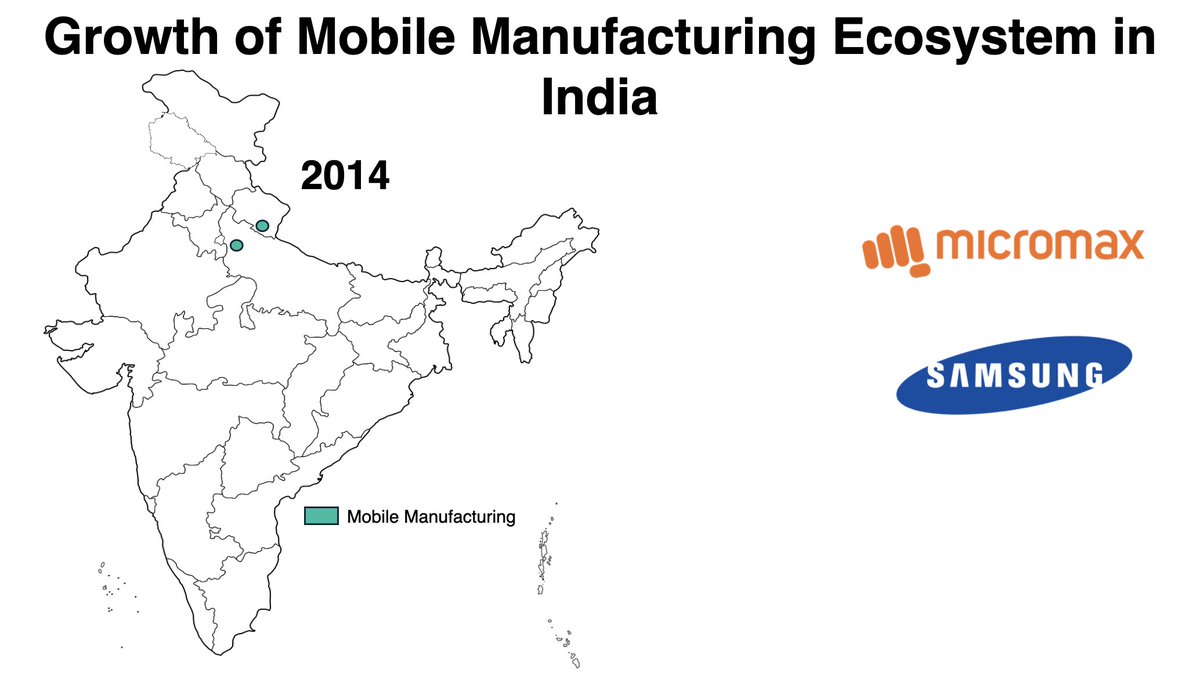
Look at 3 maps. Same country. 12 years apart....
2014: Two dots. That is it. 2 manufacturing locations on India's entire mobile map. 2 brands worth naming, Micromax and Samsung.
2020: The map fills in...mobile manufacturing, IT hardware, early semiconductor units, supply chain nodes spreading across states. New names appear: Apple, Dell, Foxconn (as Bharat FIH), Wistron, Xiaomi, Oppo, Vivo.
2026: The map is saturated. Dots cover practically every industrial state...mobile, semiconductors, IT hardware, supply chain, all 4 categories, dense enough to blur together. Apple, Micron, Tata Electronics, HP, Foxconn, Dixon, Flex, boAt, Noise, nearly 2 dozen global and Indian brands, anchored across the country.
The number sitting quietly on that 2026 map: 5,70,17,952.
That is not a typo. That is not a rank. That is a running count, 5.7 crore+ units printed right there on India's own manufacturing map.
Here is what that visual actually represents, in hard numbers:
- Mobile phone production grew 33x since 2014, at a CAGR of ~37%.
- Mobile phone exports grew 166x from a category that was not even in India's top 100 exported commodities in 2014-15, to India's #1 single exported commodity by 2025-26.
- India is now the world's 2nd largest mobile phone manufacturer by volume.
The policy engine behind those 3 maps, this is the part almost nobody sees:
- Under the PLI scheme, against a 5-year investment target of ₹7,000 crore, actual investment came in at ₹20,587 crore, 294% of target.
- Production came in at 142% of target. Exports at 132%.
- Component and EMS companies grew from just 10 to 40+.
- More than 135 Tier-2 and Tier-3 suppliers got integrated into global supply chains that did not exist here before.
3 single factories in Karnataka: Bengaluru, Kolar, Hosur... employ ~86,000 people between them. Across the whole ecosystem, mobile manufacturing now supports ~12 lakh jobs, and average wages in the sector climbed from ₹1.5 lakh to ₹2.4 lakh a year in just 5 years.
For, Kya hi badla hai desh mein Janta...this is what changed.
Bharat is rising. 🙏🙏
Department of Expenditure had issued a clear and unequivocal advisory on how consultancies are to be awarded government contracts. In particular, it states that qualification criteria for government contracts should be commensurate to the project. Till now it was common for eligibility to be restricted through unnecessarily high turnover and payroll requirements that could only be met by a tiny club. This levels the playing field for Indian consultancies and new entrants.
Inspirational PM @narendramodi at IIT Delhi:
"Your parents had their firsts. Your generation has a new list." IIT has a syllabus. Life doesn’t. First in my bloodline!
Build the rocket. Build the chip. Build the drone. Build the startup.
This is India’s century - and it’s being built by young Indians.
Create firsts that the next generation will be proud of. 🇮🇳
#IITDelhiConvocation2026
I wish I was making this up.
Months after Tarun Tejpal raped a junior colleague, Newslaundry published an open letter to the victim calling her a “bubblegum feminist” who was whining about a “small occurrence”.
And that was just the start.
August 5, 1669. A date written in the sacred blood of Assam's greatest heroes.
Ten thousand brave warriors of Assam charged into the fierce Mughal cavalry, knowing they were outnumbered.
In just one day, all ten thousand laid down their lives. They chose death over dishonour.
Alaboi Ron was not just a battle; it is the heartbeat of our freedom.
Salute to the immortal martyrs of Alaboi.
Huge protest by students in Jharkhand against paper leak..
Every passing day number of students on the streets are increasing....
Students in Jharkhand demand resignation of Education Minister!
There is Congress lead alliance govt in Jharkhand!
@Fintech03 Was Janaka the Title of the Kings of Mithila instead of name of one particular king? Because Ved Vyas and Shukdeva are from much later era than the famous Mithila King Janaka of Ramayana.