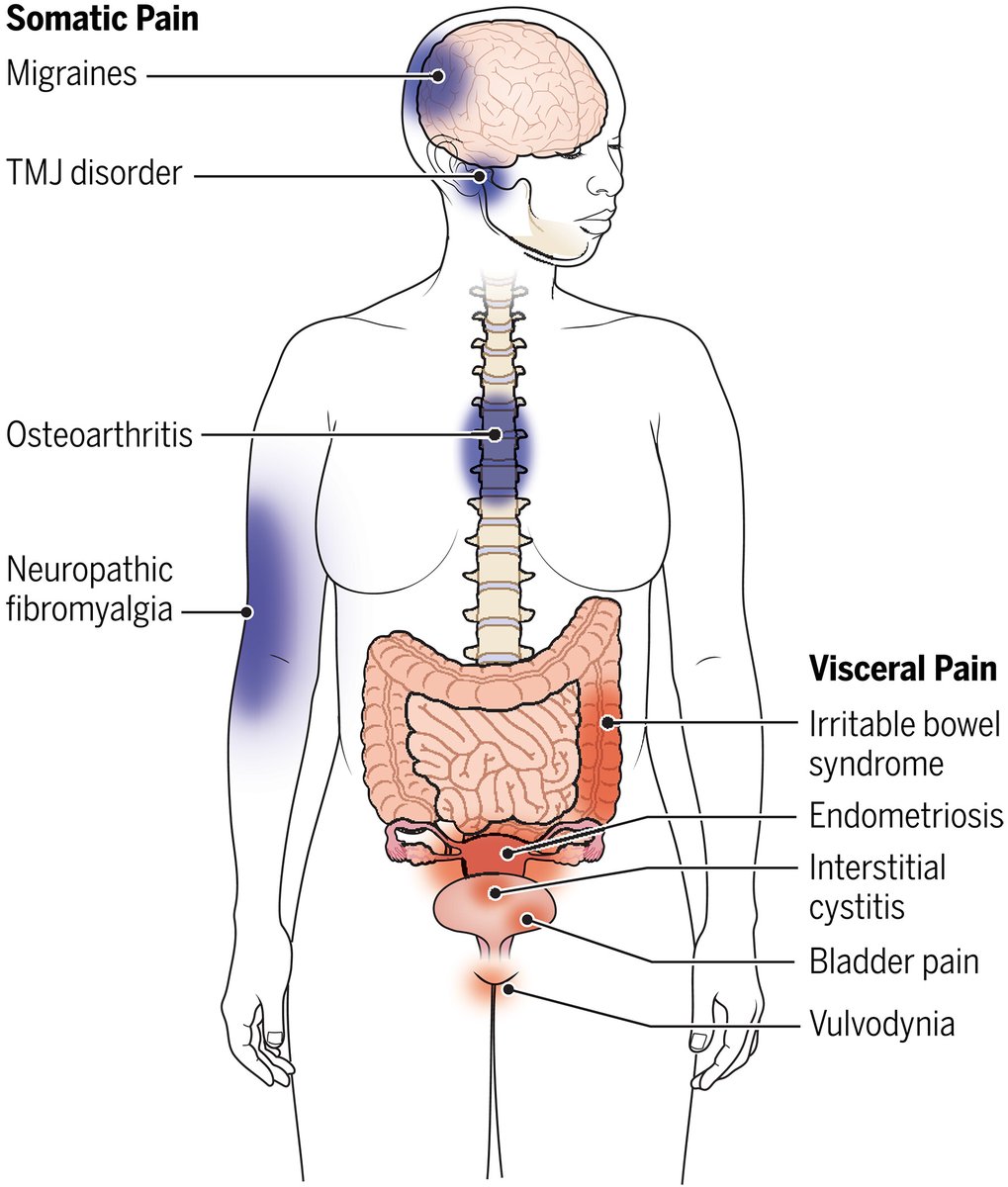
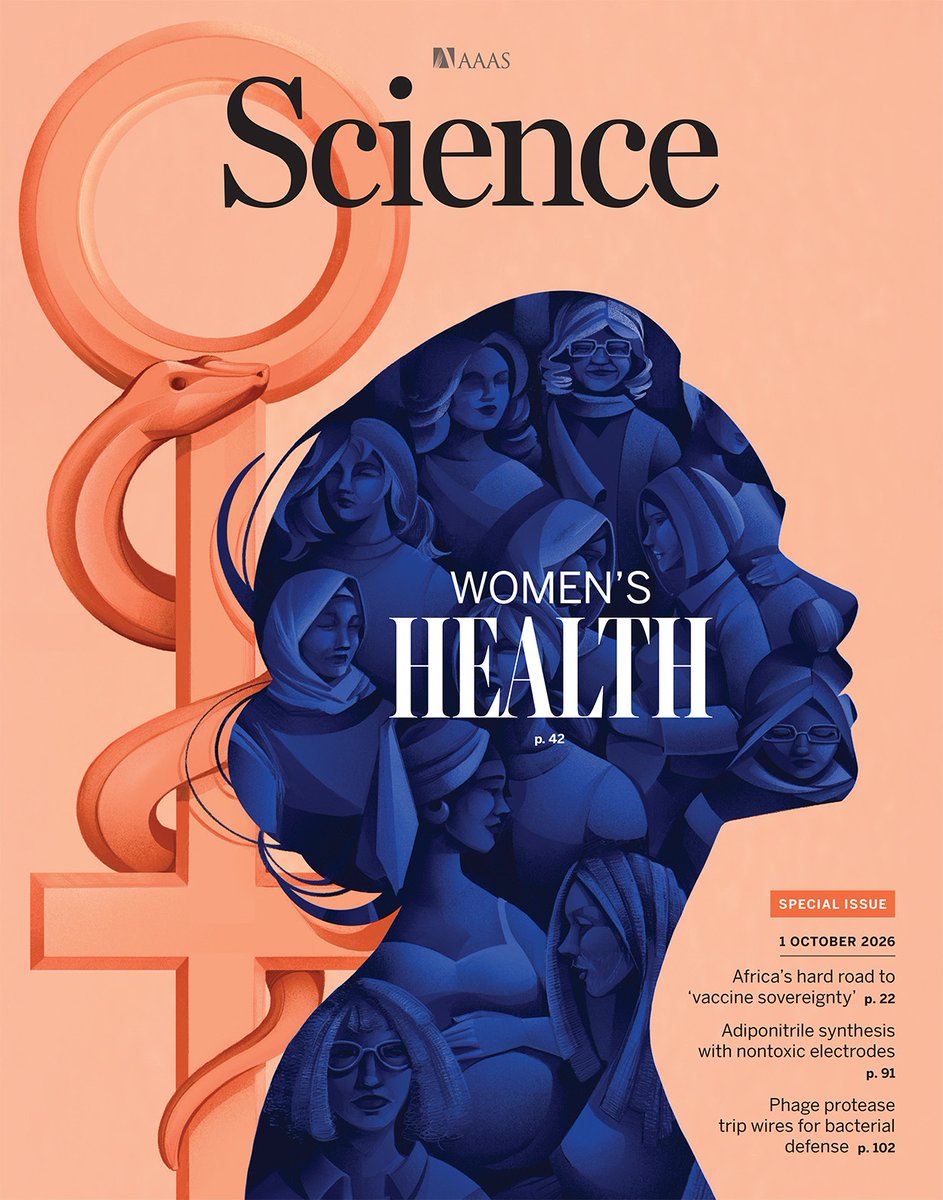
It has long been recognized that millions of women, especially younger women, are disproportionately affected by pain disorders.
In a new #ScienceReview, researchers synthesize recent advances in understanding these conditions. https://t.co/XKFCWzLxFo
Historically, medical research has relied heavily on male participants, with findings often generalized to women and children.
If women��s health is discussed at all, it’s largely framed around reproduction.
This special issue of Science highlights the research that is seeking to close the critical gaps in women’s health. Learn more: https://t.co/MQDsxJ4dUq
Our new review is out now on the ventral hippocampus, highlighting a large body of recent work, from the information it represents to how internal state shapes its activity to how its circuits influence behavior.
Out today in J Physiol: Piezo1 in intestinal smooth muscle doesn't only sense force at the cell surface. First paper built entirely at UC Davis across the causeway with trainees from several labs. This is the foundation my lab is building from!
https://t.co/uZ64FSenZm
Our new study: A Hormone-Sensitive Brain Node Prioritizes Movement over Excretion, led by Lucas Cabrera-Zapata, with help from @moolakaari and others.
https://t.co/qLNHwZVUIJ
Seats are running out fast. Be sure to register for our Integrative Brain-Body Neuroscience course on the beautiful island of San Servolo in Venice. Check it out here👇👇
Holly Ingraham at #ENDO2026: trying to understand hormonal differences driving increased disease burden in women. IBS is much more common in women – enteroendocrine cells secrete serotonin, mediate pain @TheEndoSociety#ENDO2026#WomensHealth#Endocrinology
Male octopuses use a specialized arm that acts as both a sensory and reproductive organ to navigate the female’s mantle, locate oviducts, and transfer sperm. These findings reveal how sensory systems shape reproductive behavior and drive speciation.
Learn more this week in Science: https://t.co/yoppnbkiUW
Mucormycosis, also called “black fungus,” is still shrouded in mystery. It’s unclear why the normally rare disease is most prevalent in India, and why it surged during the pandemic.
But a new paper suggests the fungal infection may strike when levels of albumin, the most common blood protein, are low. https://t.co/9SwJU4OtW6
Women are dramatically more likely than men to suffer from IBS, and when male mice get estrogen, their gut pain matches females. @UCSF scientists led by @hollyingrahamSF finally discovered why. https://t.co/N98DO8nR9I
Estrogen tunes a cross-talk between hormone-secreting cells in the mouse gut to regulate visceral pain
https://t.co/14MaakmoAW
https://t.co/Th1DtbDNYo
@ScienceMagazine@hollyingrahamSF@UCSF
preview by @FlyGutLab
Overall, this hormone-sensitive paracrine pathway highlights new opportunities for IBS treatment 💡 and underscores estrogen as a powerful driver of pain and female physiology.
Pretty stoked to share my postdoc work, now out in Science! 🎉
We show how estrogen ingeniously co-opts communication between gut epithelial cells to modulate pain.
https://t.co/xLTxGUfxTl
🧵⬇️ THREAD (1/11)
Our model brings together some key clinical observations:
• Women are 2–3x more likely to have IBS
• Symptoms fluctuate with the menstrual cycle
• Low FODMAP diets provide intermittent relief