El tamaño de tu abdomen y estatura
SI IMPORTAN
📢 El diagnóstico de #Obesidad se amplía, con base en el nuevo capítulo de Tamizaje y Diagnóstico de los Standards of Care de la American Diabetes Association (ADA)
⚖️ IMC > 30 = Obesidad (sin cambios)
📏 IMC > 25 + relación cintura/estatura > 0.5 = Obesidad
🌎 IMC > 27.5 en personas de origen asiático = Obesidad
🌎📏 IMC > 23 en personas de origen asiático + relación cintura/estatura > 0.5 = Obesidad
@StratCons@doctormacias@DrMauinforma@docramiro@Obesidades_mx@WorldObesity
https://t.co/KQE4k4MKNf
🟡 Plato saludable y actividad física en el contexto de GLP-1
🟣Recomendaciones de APOYO NUTRICIONAL y de ESTILO DE VIDA para el manejo de la obesidad con terapias basadas en GLP-1: Declaración de consenso de expertos mediante un enfoque Delphi modificado.
OBLIGADO
👇👇👇
Sievenpiper, J. L., Ard, J., Blüher, M., et al. (2025). Nutritional and lifestyle supportive care recommendations for management of obesity with GLP-1 - based therapies: An expert consensus statement using a modified Delphi approach. Obesity pillars, 17, 100228. https://t.co/FuKoRD2p5o
It was a Monday in early August 2023. The exhausted truck drivers of Taylor Swift's Eras Tour thought they were heading to a routine production meeting before the Los Angeles shows.
They had no idea what was coming.
Scott Swift walked in. Taylor's father didn't say much—he just began handing out envelopes. When the drivers finally peeked inside, some thought the check said $1,000. Others read $10,000. The third driver stared at his and said out loud: "This has to be a joke."
It wasn't.
$100,000.
Each driver. Nearly 50 of them. The industry standard bonus from the biggest stars? $5,000 to $10,000. Taylor had given them more than ten times that.
But here's what made it matter most: these drivers weren't wealthy. They lived in truck cabs. They hadn't seen their families in 24 weeks. They were people who would never own homes—until now. Until that envelope.
That moment of shock and tears? It was just the beginning.
Across the entire Eras Tour, Taylor quietly handed out $197 million in bonuses. The dancers. The band. The riggers. The lighting and sound technicians. The caterers. Every single person who built the show—they got bonuses, handwritten notes, and wax-sealed letters. When dancers opened theirs on camera in her docuseries, they broke down crying. Some couldn't believe she was real.
"If the tour grosses more, they get more," she explained simply. These people work hard. They deserve it.
But the crew bonuses weren't the only quiet revolution happening.
Starting in March 2023, in every city where the tour touched down, a call came to local food banks. Taylor wanted to donate. No press conference. No announcement. No photo op. One donation fed 75,000 meals. Another provided hundreds of thousands of pounds of fresh produce. Across the tour, the total reached millions of meals—possibly more—all delivered in silence.
She never posted about a single one.
And it wasn't new for her.
In March 2020, when the pandemic locked down the world, Taylor scrolled through social media posts from fans who were breaking. A photographer about to lose everything. A person staring down eviction. She sent direct messages with rent money—$3,000 here, $13,000 there. Some fans got enough for months of bills. She read the Washington Post. She noticed the names. She helped.
She never announced it.
Years later, in October 2025, a two-year-old named Lilah—fighting a cancer so rare that only 58 families in America had ever known it—was filmed by her mother dancing to a Taylor Swift song. Lilah called Taylor her friend. A few days later, the GoFundMe received a $100,000 donation.
The note said: "Sending the biggest hug to my friend, Lilah! Love, Taylor."
Mike Scherkenbach has worked with the wealthiest people in music. He's seen the bonuses. He's seen the behavior. He's watched billionaires guard their money jealously.
What he saw with Taylor was different.
The biggest tour in history grossed $2 billion. The artist behind it became a billionaire from her own songwriting. And then she signed her name onto hundreds of envelopes by hand and sent enough money back to the people who built her dream that they cried opening their letters.
That isn't strategy. That isn't a publicity stunt.
That's what happens when someone, somewhere along the way, remembered what matters.
🚨 El nuevo concepto de Síndrome Cardiovascular–Renal–Metabólico (CKM) redefine cómo entendemos el riesgo cardiovascular, renal y metabólico 🌎❤️🩺
📌 La American Heart Association (AHA) propuso en 2023 el término CKM syndrome, integrando obesidad, diabetes, enfermedad renal crónica y enfermedad cardiovascular como parte de una misma red de daño multisistémico.
⚠️ La mayoría de los adultos del mundo ya cumplen criterios para algún estadio de CKM, especialmente el estadio 2, donde aparecen HTA, diabetes, hipertrigliceridemia o daño renal.
📊 El síndrome CKM se divide en 5 etapas: 🟢 Estadio 0 → salud ideal
🟡 Estadio 1 → sobrepeso/obesidad o prediabetes
🟠 Estadio 2 → factores metabólicos o ERC
🔴 Estadio 3 → enfermedad cardiovascular subclínica
⚫ Estadio 4 → enfermedad cardiovascular clínica
📈 A medida que avanza el estadio: ⬆️ aumenta la mortalidad cardiovascular
⬆️ aumenta la mortalidad global
⬆️ aumenta la discapacidad y hospitalizaciones
🌍 Los grupos más afectados: 👨 hombres
👴 adultos mayores
🏘️ poblaciones rurales y de bajos recursos
⚠️ comunidades con menor acceso a salud y alimentación saludable
🍔 Factores clave que impulsan el CKM: • obesidad
• ultraprocesados
• sedentarismo
• tabaquismo 🚬
• contaminación ambiental 🌫️
• pobreza y desigualdad social
💊 Terapias con beneficio “multisistema”: ✅ agonistas GLP-1
✅ inhibidores SGLT2
✅ antagonistas mineralocorticoides no esteroideos
Estos medicamentos no solo mejoran glucosa, también reducen eventos cardiovasculares y progresión renal.
🏃♂️ Pero el mensaje más importante sigue siendo: 👉 prevención temprana
👉 control del peso
👉 ejercicio
👉 alimentación saludable
👉 detección precoz del riesgo cardiovascular y renal
🧠 El CKM cambia la visión clásica de “tratar órganos separados”.
Ahora entendemos que obesidad, riñón, metabolismo y corazón forman parte de una misma enfermedad sistémica que debe abordarse de forma integral.
📚Nature Reviews Nephrology. 2026. DOI: 10.1038/s41581-026-01078-w
🩺Consigue el artículo completo aquí: https://t.co/C7lrflFpJq
Dr Efraín Uvilla Zamora:
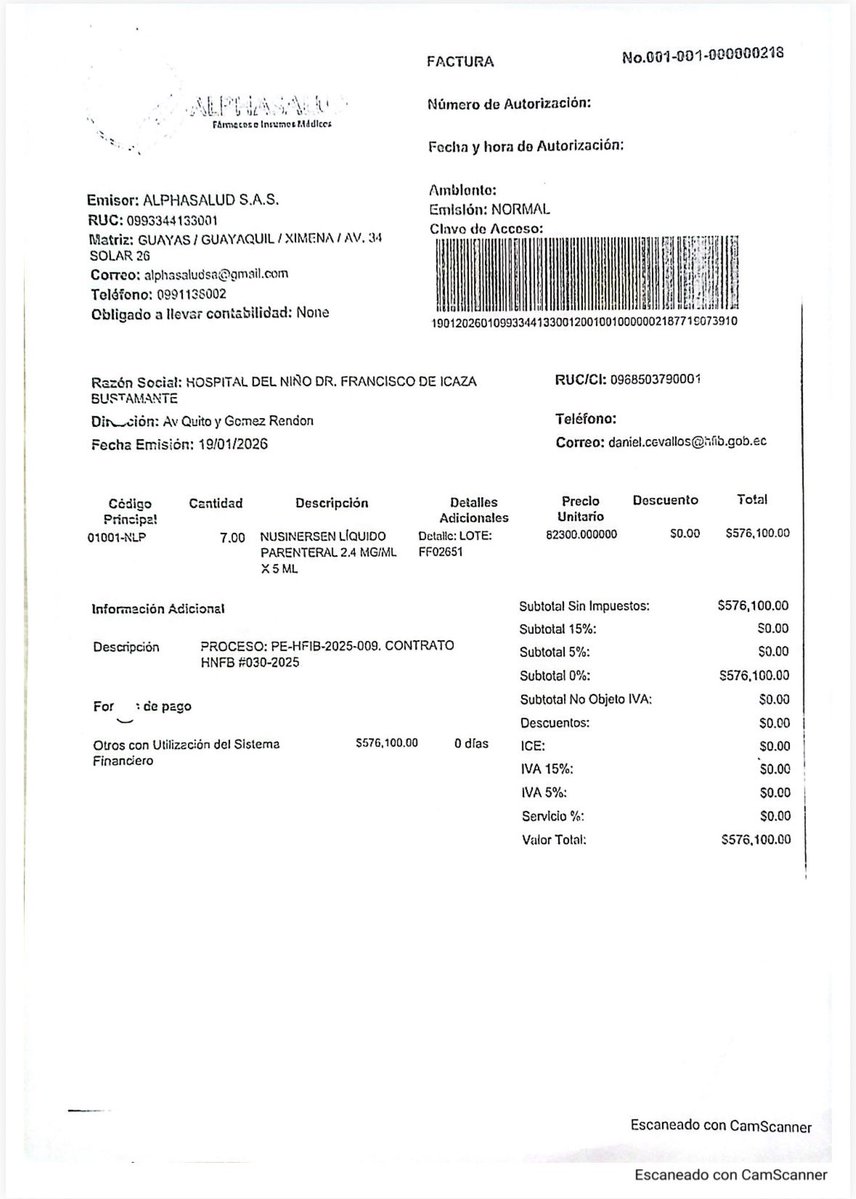
He conocido casos de presunta corrupción e indolencia y el que acaba de ocurrir en el hospital que usted gerencia, el Francisco Icaza Bustamante de Guayaquil.
5 niños, pacientes de Atrofia Muscular Espinal, le ganaron al hospital una demanda que le obligaba a Ud comprar NUSINERSEN marca SPINRAZA, fabricado por BIOVEN.
Cada dosis cuesta $85 mil dólares.
¿Y qué compró Ud?
7 dosis de NUSINERSEN de origen chino. Le costó $5500 dólares cada dosis, pero Ud le pagó al importador $84 mil dólares por cada dosis.
¿Por qué autorizó ese pago?
¿Qué pasó con ese dinero?
Por si no sabe, no se acuerda, o quiere seguir ocultando lo inocultable, le adjunto las facturas autorizadas y pagadas por usted.
Sigan este hilo 🧵 para que se enteren de lo que este señor quiere hacer con 5 niños enfermos.
@Salud_Ec@HospitalHFIB@mjpintoec
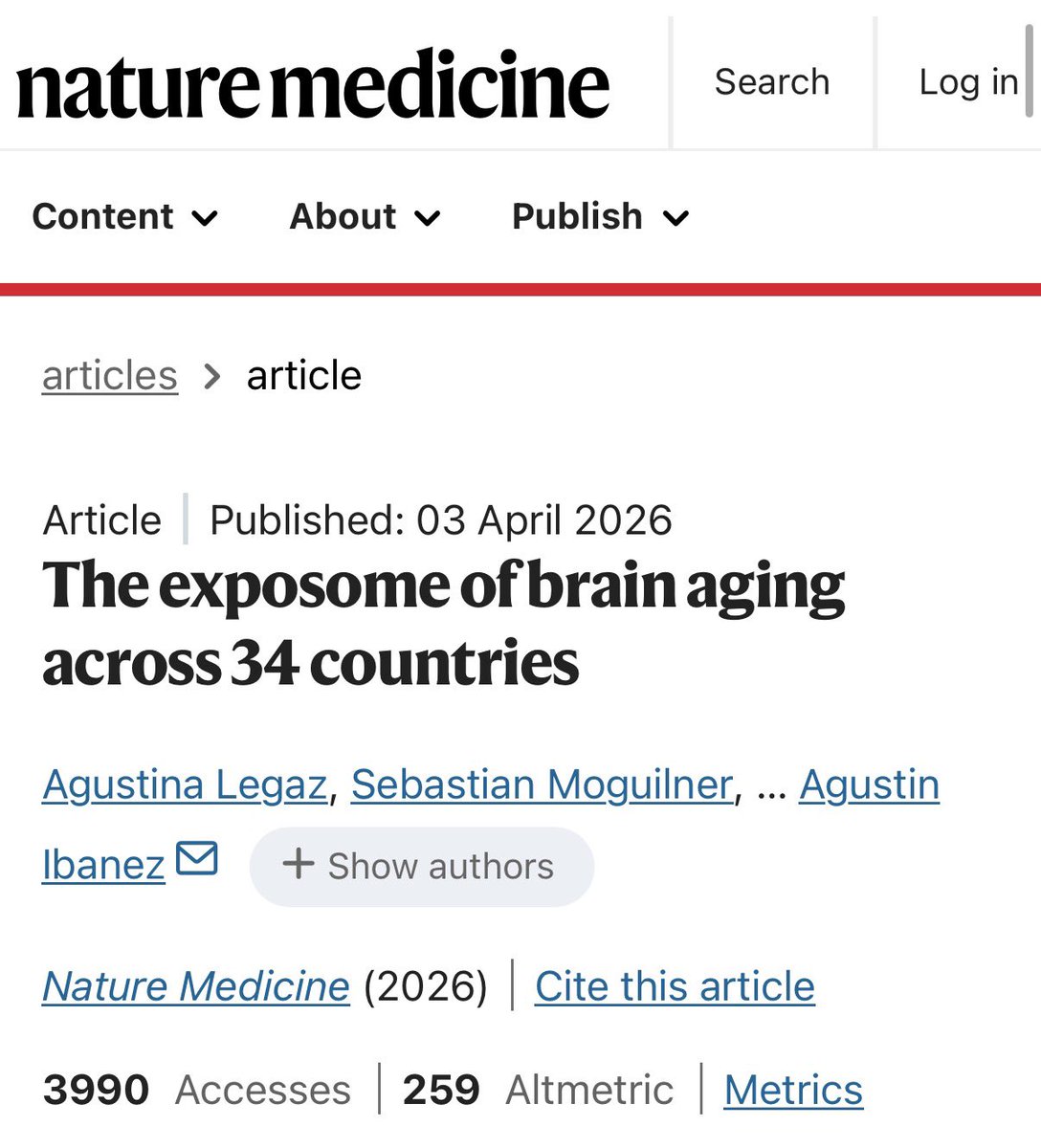
Hoy voy a contarles de las verdaderas razones del envejecimiento cerebral acelerado, es este paper que salió en abril de 2026 y que todo el mundo está citando pero casi nadie lo está explicando.
Every morning I take five things.
A statin. Ezetimibe. Psyllium. Creatine. A multivitamin.
Once a week, I add a sixth: tirzepatide.
No rapamycin. No NMN. No Bryan Johnson protocol.
Here's what the evidence actually says—and why I left everything else out. 🧵
5/ Creatine has a branding problem.
The evidence base doesn't.
Leong et al. (Lancet 2015; n=142,861): grip strength predicted CV mortality more strongly than systolic blood pressure.
Skeletal muscle is the largest insulin-responsive organ in the body.
Creatine makes resistance training more productive and lean mass more preservable.
That's a longevity argument.
🔥 El “truco aburrido” que más peso te hace perder (y casi nadie usa):
En solo 12 semanas:
📉 −10% de variedad en la dieta
→ +0.5% más pérdida de peso
📊 Repetir comidas frecuentes
→ hasta +1.6% más pérdida
⚖️ Variar calorías cada día (+100 kcal)
→ −0.6% resultados
Salt restriction lowers blood pressure by 2-5 mmHg on average.
Dietary carbohydrate reduction? Double digits in many patients.
We’ve been chasing the wrong villain for decades.
Hypertension isn’t a salt problem. It’s an excessive insulin problem.
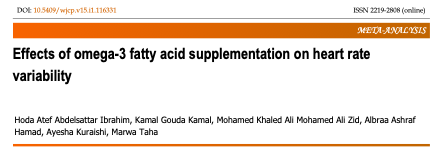
El omega-3🐟mejora la variabilidad de la frecuencia cardíaca (VFC)🫀en personas con sobrepeso u obesidad, reduciendo su riesgo cardiovascular
Sus mecanismos incluyen la modulación del equilibrio autonómico, la reducción de la inflamación y una mejor función endotelial🩸
Your doctor says your cholesterol is too high.
But did they check your inflammatory markers?
My guess is "no" they didn't.
But they really should if they want to address the true cause.
Simply put, high cholesterol isn't the problem—it's your body's adaptive response to chronic inflammation.
The cholesterol is there to help repair the damaged inner linings of you blood vessels.
Fix the inflammation first.
The cholesterol levels naturally normalize in 98%+ of cases.
If you want to learn more, I share more details in this article: https://t.co/M1zqUwsKZz
A new randomized, double-blind trial found that taking omega-3s daily for 3 months significantly improved stress, anxiety, depression, sleep quality, and everyday memory in adults with severe psychological distress.
A simple daily intervention (500mg EPA and 250mg DHA) improved nearly every psychological measure the researchers tested.
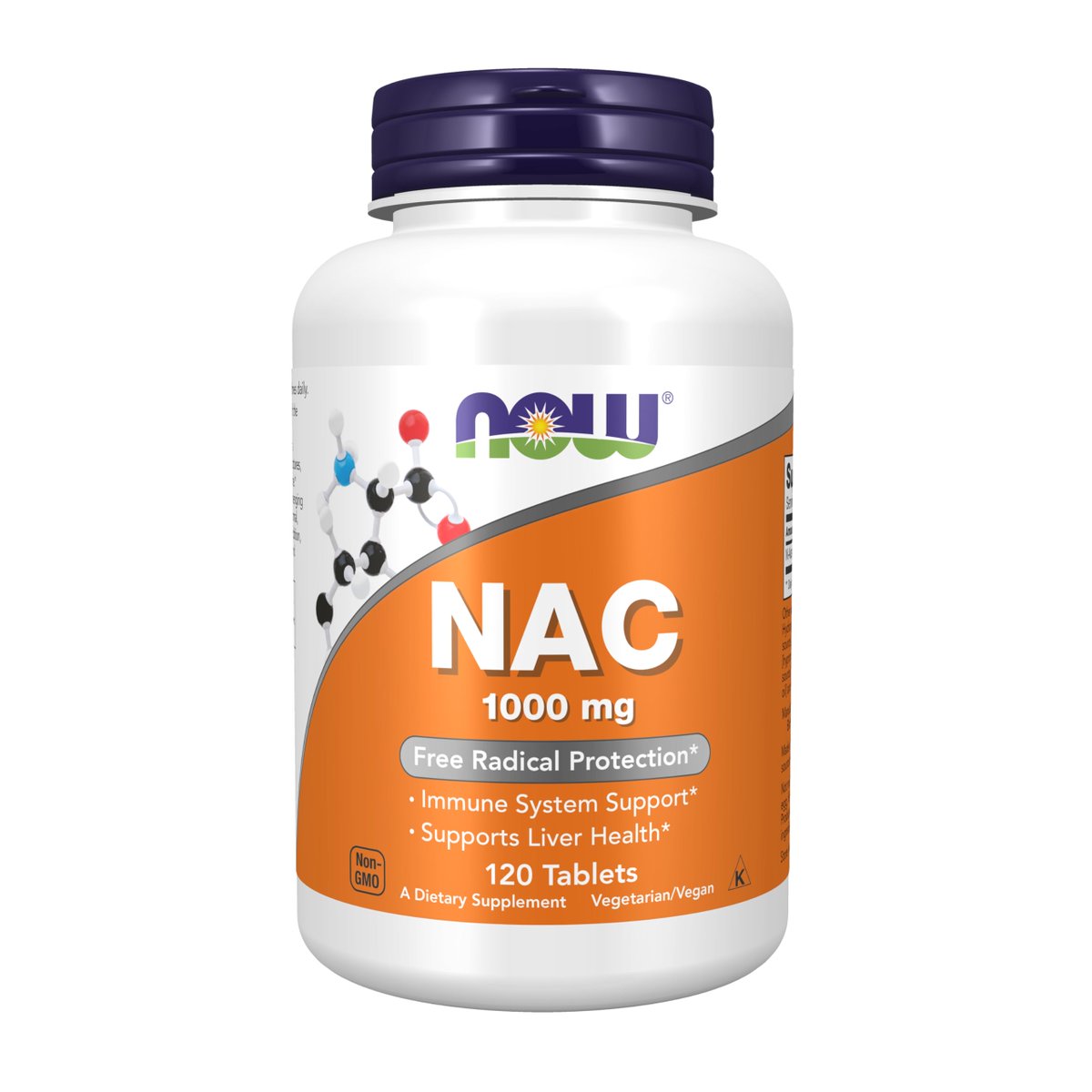
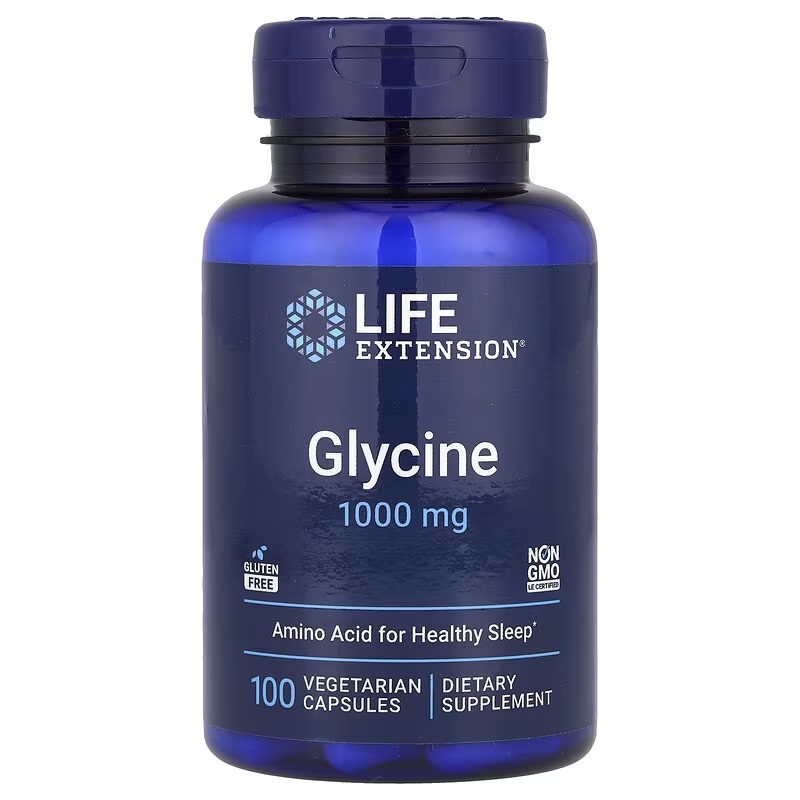
ANOTHER one of the most impressive studies in recent memory found that the combination of NAC + Glycine has remarkable anti-aging effects in nearly every metric.
(🧵1/8)
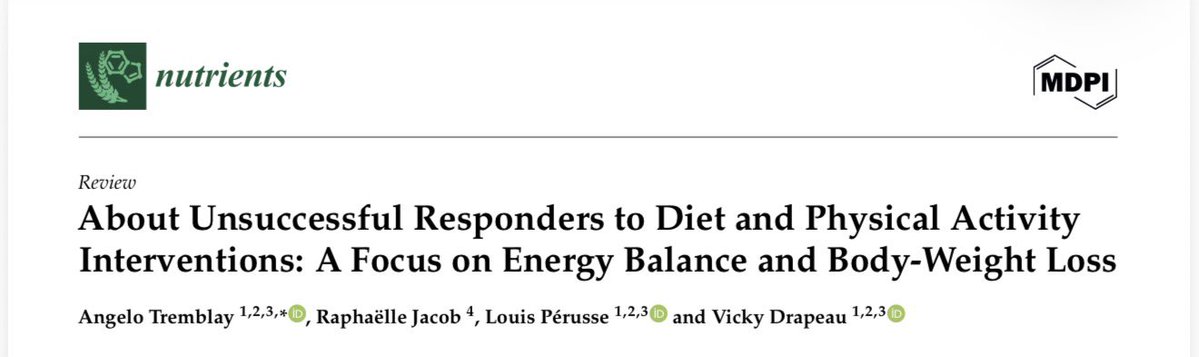
🚩🚩 ¿Es posible que alguien haga dieta + ejercicio correctamente… y NO pierda peso?
Sí.
Y no, no siempre es falta de disciplina.
Un nuevo paper en Nutrients (2026) desmonta el mito del “si no adelgaza es porque no cumple”.
Te explico 👇
Por qué no sirve la "MODERACIÓN" a la hora de tratar la dependencia a los ultra-procesados ?
Si en el momento en que el cerebro está tratando de “desengancharse” de los ultraprocesados se vuelven a comer, se activa otra vez el mismo circuito que estaba intentando apagar.
Es como si el cerebro estuviera bajando el volumen… y le vuelve a subir de golpe.
La adicción no funciona como un interruptor que se apaga para siempre. Es un proceso crónico y sensible a los estímulos.
Por eso, incluso un consumo “ocasional” puede volver a despertar el deseo intenso y facilitar una recaída completa.
Ref.
Hough, K., Friuli, M., Avena, N. M., & Romano, A. (2026). The addicted brain: How processed foods hijack reward pathways. Pharmacological Research, 224, 108097
Tarman, V. I. (2024). Hard stop: reestablishing the significance of abstinence in the treatment of late stage ultra-processed food addiction. Frontiers in Psychiatry, 15, 1488769