Use CASE, not "use cases".
- Bitcoin: A Peer-to-Peer Electronic Cash System -
https://t.co/0z8le3lUpW
Caveat emptor...
FICcoin Core
https://t.co/4AABFaMIKD
Core: “This is a valid transaction… paid-for use of block space.”
BIP-110: “Are they stuffing arbitrary data into a monetary network?”
Core: “I hope this can be a technical discussion…”
BIP-110: “When you use language to hide what the transaction is for, it isn’t a technical discussion. A transaction that jams images, inscriptions, and BRC-20 onto the chain is spam. It is not an ‘innovative use case,’ and it is not ‘content hosting that becomes legitimate because someone paid a fee.’”
Core: “We’re trying to keep the protocol neutral and uncensoring…”
BIP-110: “Neutral? Then let’s define money the same way. Call inscriptions ‘cultural assets in the witness field.’ Call oversized OP_RETURN ‘on-chain footnote art.’ The guy who writes a JPEG into the witness so every node on earth has to download it forever is just a ‘visitor with paperwork pending.’ How’s that?”
Core: “That’s a crude analogy.”
BIP-110: “What’s crude is pretending Bitcoin’s purpose isn’t money because Core’s copywriters invented a cuter euphemism. ‘Valid transaction’ sounds like someone left a receipt in the mempool. No. Someone used script and the witness discount to write non-monetary data permanently into a ledger every node must verify, then treated a question about what consensus is for as a matter of relay-policy writing style.”
Core: “But many inscriptions paid high fees and contributed miner revenue…”
BIP-110: “Ah, the classic line: if spam can afford the rate, it isn’t spam. By that standard, people using the whole chain as a free cloud drive also ‘contribute’—they create short-term miner income. Want us to call him an ‘informal data-warehouse entrepreneur’? Does Core agree?”
Core: “You’re creating division, and you want to censor transactions with consensus rules.”
BIP-110: “No. I’m refusing your marketing dictionary. You first blew datacarrier from 83 bytes to almost no limit, tore out the policy that used to nudge small data into prunable OP_RETURN, then accused people who still say ‘Bitcoin is money’ of being ‘non-neutral’ and ‘censors.’ Oldest trick in the book: soften the words, relabel spam as a use case, then declare a moral and technical victory. Node operators are tired of the act. Call things what they are. Block space is for settling value, not for forever-hosting arbitrary data. Or admit the goal was never clarity—it was narrative control, slowly turning a monetary network into the general-purpose database you keep describing.”
@Arthur_van_Pelt Purchasing a rental is long the market. Renting out your rig is short the market.
With that much of a rental premium, far more people are long the market than short.
@parman_the “I understand that some people just cannot accept what has happened to the existing chain”
It’s not about not being able to accept.
It’s about losing conviction based on the state of the project.
To the left, you can see the spam op_return tx in a typical Blake Bitcoin block. It's the tiny green square at the bottom left.
To the right, you can see a typical spam chain block. The green areas are actually all spam op_return
It should be noted that small op_return under 83 bytes are valid on both chains. But spam chain hash polls actually lowered their miner fees to below 1 sat/vbyte specifically for the purpose of cramming more spam in each block.
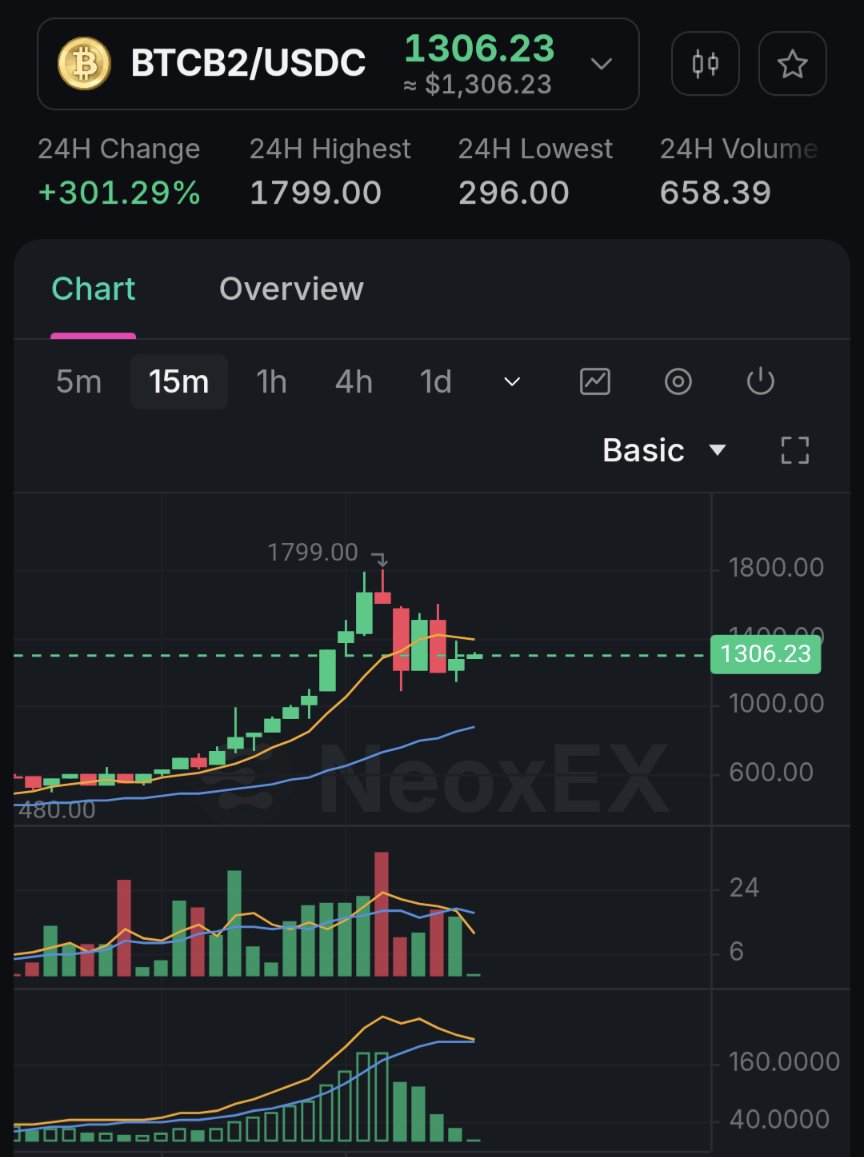
460 GH/s - USD 1629 (plus shipping)
"It's probably nothing..."
At least rental prices have started to correct. Sheesh.
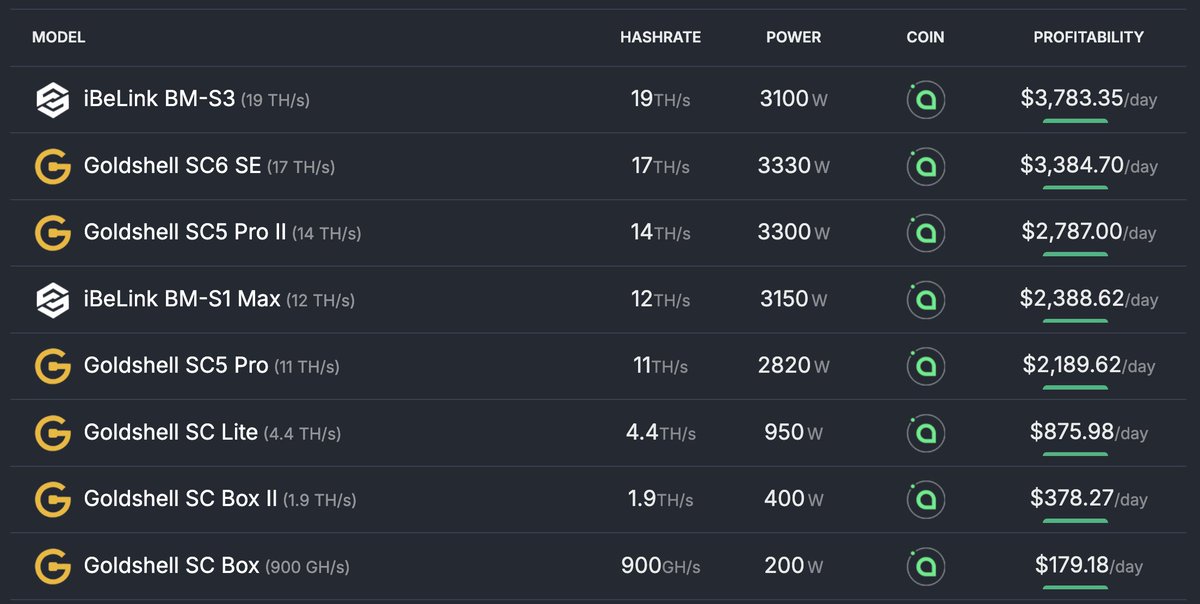
9/2: 0.00025000 per THash/Day - 4 available
@secsovereign This 👇🏼👇🏼
"Bitcoin has one implementation and no written specification. That means the codebase is the specification, and whoever controls the codebase controls what Bitcoin is. That's not a conspiracy theory. It's an architectural fact with documented consequences."
I formally specified Bitcoin's consensus rules from scratch. I built an independent Rust implementation and verified it against 900,000+ blocks. I put together a sixteen-year quantitative dataset on Bitcoin Core governance, tracking contribution concentration, merge authority, and funding sources across the entire history of the project. I designed a horizontal commons governance model as an alternative to the current structure. I've written seventeen articles on Bitcoin protocol and governance. All published and freely available, and the code is under open source licenses.
I'm also consistently critical of Bitcoin Core's governance structure. Bitcoin has one implementation and no written specification. That means the codebase is the specification, and whoever controls the codebase controls what Bitcoin is. That's not a conspiracy theory. It's an architectural fact with documented consequences.
People sometimes tell me I do this to sound smart or to work out some personal issue. On the personal issue, they're actually right, just not in the way they mean. I've been the single point of failure. I've also depended on one. Both positions are worse than they look from outside, and the person in the middle usually knows it before anyone else does.
The maintainers should understand this better than anyone. They didn't design this structure. They inherited a codebase that became the de facto specification for a network securing over a trillion dollars, with no formal governance and no way to distribute the responsibility. That's not power. That's exposure. The critique isn't aimed at them as people. It's aimed at a structure that's bad for everyone, including them.
What I keep running into instead of counterargument is access control. The mailing list is moderated. The IRC is moderated. The subreddits are moderated. Core contributors have blocked me here rather than answer the argument. And it's not just the online channels. I'm feeling the same friction locally, trying to participate in community events. The funding concentration is in the dataset. Go look at who employs the people running those channels and then look at who funds those employers. They are not going to engage the substance because engaging it is not in their interest. That's not a moral failing. It's an incentive structure. I'm not going to change it by softening the critique.
I'm fully allocated. I don't hold anything else. I'm not here to undermine Bitcoin. I'm here because Bitcoin is worth getting right.
Honestly, I welcome the pushback. The minute people stop arguing with me is when I'll actually start to worry.
If the analysis is wrong, show me where. I'll update publicly.
@Puncher522 Grok, give me the tldr.
"Bottom line: Private credit is the match; the life-insurance reinsurance machine is the bomb. The author argues the “backing” is largely accounting fiction, and the system is set up so the public pays when it fails."
https://t.co/ojnO7h4oXN
@SteveSimple "like" isn't correct framing; just observing and commenting on what appears to be happening in the space right now.
https://t.co/SH2wHi7mXZ