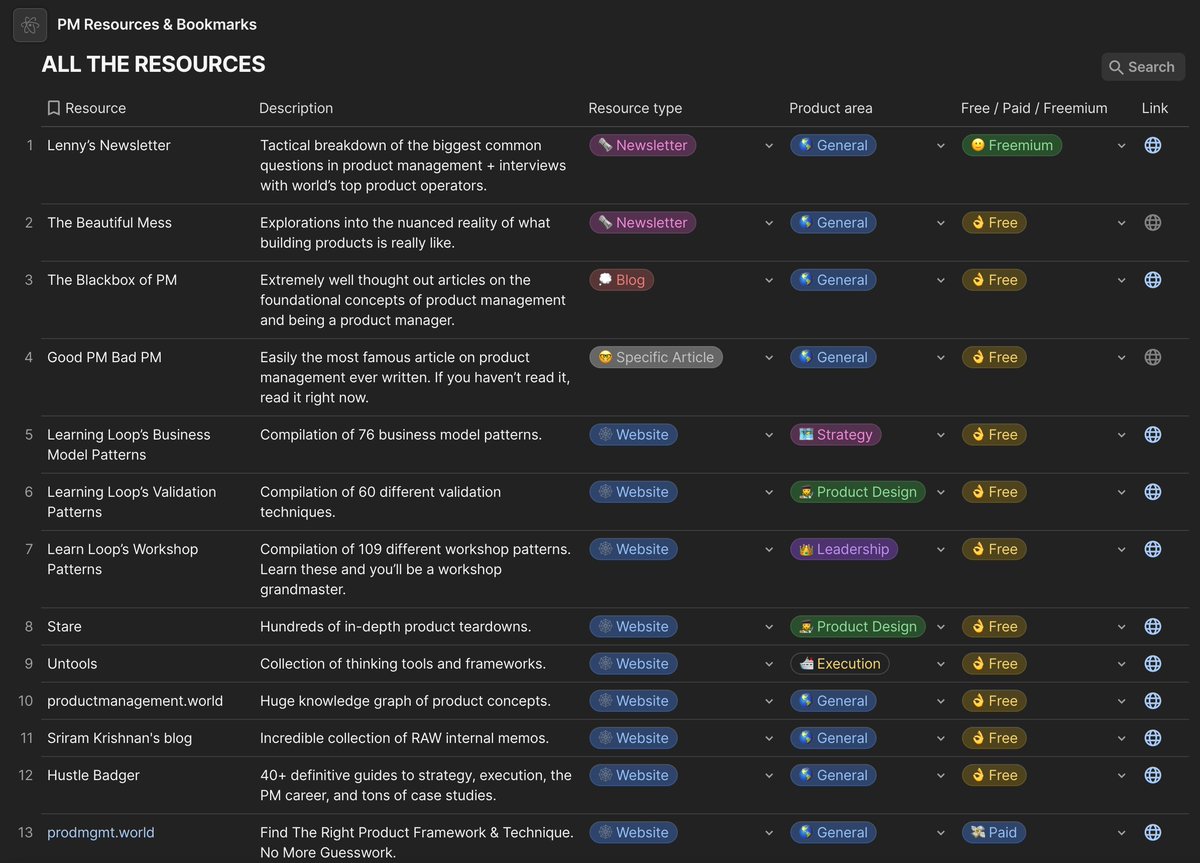
I've spent 100s hours of finding good PM content.
Here's my HUGE curated db of 144:
🔸 tools
🔸 books
🔸 videos
🔸 courses
🔸 websites
🔸 podcasts
🔸 templates
🔸 newsletters
I'm going to sell it for $59.
For the next 24h only: FREE!
Follow + RT + comment "🚀" and I'll DM.
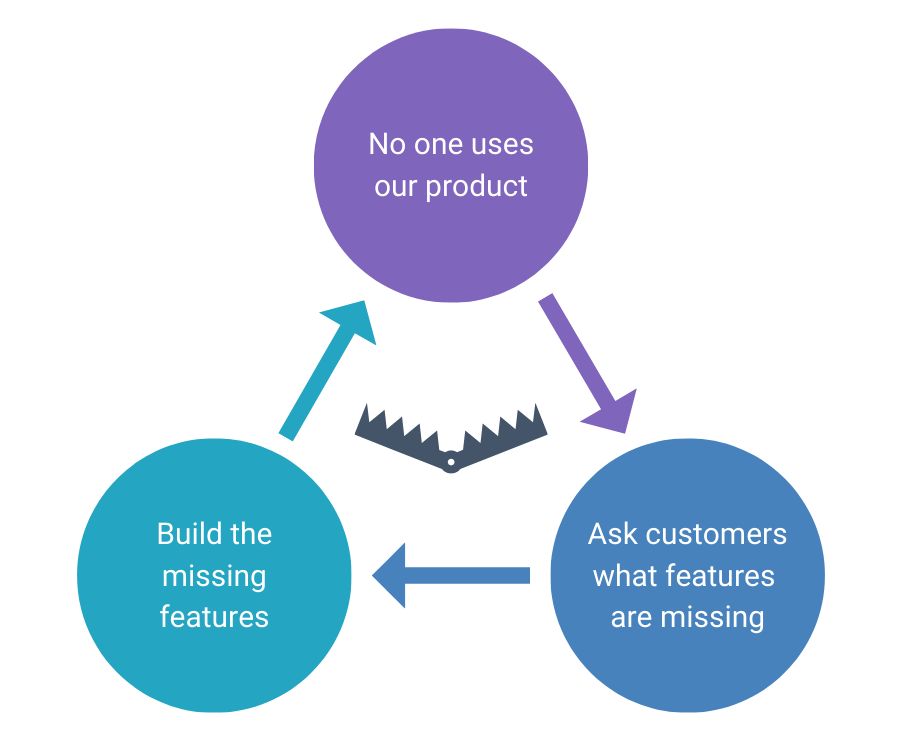
The product death cycle is a terrible trap.
Many PMs forget about the "Why" and become waiters.
To please everyone, a typical waiter collects and waterfalls all "feature requirements" to the team. 🧵
Want to know the secret to nailing product development?
It's all about finding the right amount of process.
Too little and you'll have chaos on your hands, but too much and progress comes to a screeching halt.
Every PM knows the classic documents: 1-pagers, PRDs, user story maps.
But there are a ton of other kinds that can help radically clarify ideas.
Here are 6 of my favorites + when and how to do them.
Try them out to make better product decisions (and impress your boss).
Every PM needs to give an exec presentation sometimes.
But many suck at it, wasting the chance to be noticed.
3 secrets to turn your presentation into a clear, compelling story: 🧵
1. Use the SCQA Framework
2. Use the Pyramid Principle
3. End with a brief summary
Now in detail:
1. Use the SCQA Framework
The SCQA Framework is used by the biggest consulting companies like McKinsey & Company or PwC.
The acronym stands for:
- Situation: Describe the current situation and set the context for your presentation, e.g., "Meta has 51.19% of the social commerce market share."
- Complication: Clearly state the problems and challenges in that situation, e.g., "The new generation prefers TikTok, and the company's growth slows down." Explain why the presentation is needed.
- Question: Explain what problem you are trying to solve, e.g., "How we can get back on the path of rapid growth."
- Answer: Provide the answer, which will be the main part of your presentation, e.g., "We should invest in the metaverse" (I don't believe that, it's just an example).
Before providing an answer, tell your audience why they should care. Set the context for what you are going to say. It's essential.
Now you have their attention, and they can understand your message easily.
-
2. Use the Pyramid Principle to structure the Answer
Start by providing the answer \ main idea. Support it with additional details and information.
For example, each line below can be a separate slide:
Slide: We should invest in the metaverse
Slide: -- We should invest in VR devices
Slide: ---- VR devices details 1
Slide: ---- VR devices details 2
Slide: -- We should invest in VR apps
Slide: ---- VR apps details 1
Slide: ---- VR apps details 2
This will make your answer crystal clear.
-
3. End with a brief summary
- Shortly restate: Situation, Complication, Question
- Shortly summarize the Answer
- Tell them what the next steps are (call to action)
- Plan time for questions and answers
-
If you liked this post, pay attention to its structure:
- Situation: PM needs to give an exec presentation (...)
- Complication: But many suck at it (...)
- Question: How to easily turn a presentation (....)
- Answer: SCQA Framework and the Pyramid Principle
This will make your presentation clear and compelling.
Try it at the first opportunity so that you don't forget it.
Hope that helps.
What are your thoughts?
-
If you liked this tweet:
1. Follow me @PawelHuryn for more
2. RT this tweet to share it with others
You might also join 9K+ subscribers and get 1 actionable tip for PMs every week: https://t.co/SEqxN1QljG
here is GPT-4, our most capable and aligned model yet. it is available today in our API (with a waitlist) and in ChatGPT+.
https://t.co/2ZFC36xqAJ
it is still flawed, still limited, and it still seems more impressive on first use than it does after you spend more time with it.
@JustAnotherPM I think it should be proportionate to the overall downsizing. Otherwise, you're either removing Product as a function, or there isn't the bandwidth to ship
@carlvellotti I like this graph! You could argue that the decision is actually an outcome, not necessarily the PM's output, however the graph is still valid. Thanks for sharing
"Don’t waste time wishing the power dynamics of organizational hierarchies were different. Accept it as reality and work within those constraints."
https://t.co/qrhDGn4dMy
#prodmgmt#ux#engineering