While many areas of the US and Europe still lack reliable 5G coverage, China has already rolled out 5G-Advanced in many cities and is moving into the second phase of 6G trials.
This is no longer just about testing one clever piece of technology. The latest trials are testing complete systems in real-world conditions: how equipment connects, how networks perform across different scenarios, and whether coverage holds up beyond a single test point.
At the 2026 6G Development Conference in Shanghai, researchers are set to unveil a 6G base-station prototype built using domestic computing power, alongside a dataset of U6GHz spectrum and real-world channel measurements. That data matters because AI-powered networks need to learn from actual signal conditions before they can make decisions about beams, interference and network resources.
China Mobile has also reported an 18Gbps download speed in a 6G experiment using U6GHz spectrum. That’s a striking result, but it is still an experimental figure—not a speed people can expect from a phone today. The bigger story is that testing is moving from individual technologies towards entire networks, with 15 organisations involved in trials covering areas such as immersive communications, AI in wireless networks and integrated sensing.
There is still a long road to commercial 6G. The standards are being developed now, and important questions remain about component supply, continuous coverage and when phones will be able to use the new spectrum. But the groundwork is already being laid.
While other countries are still trying to close gaps in their 5G networks, China is preparing for what comes next.
Do not underestimate China.
🚨 OFFICIAL: Nike will become Formula 1’s Official Apparel and Uniform Supplier starting in 2027!
The partnership will include exclusive apparel collections, fan experiences and activations worldwide.
The first F1 x Nike collection will launch on November 20 with a limited-edition Las Vegas Grand Prix capsule collection.
Two global sporting giants joining forces. 👀
⚛️ Quantum computing and supercomputing are converging.
At #SC26, we’ve expanded Slurm to bring QPUs into the workflows HPC centers already run. This enables scientists to bring quantum computing into their research domains without friction and allows QPU builders to reuse one integration across every deployment.
Learn more: https://t.co/KDSBLcjkHw
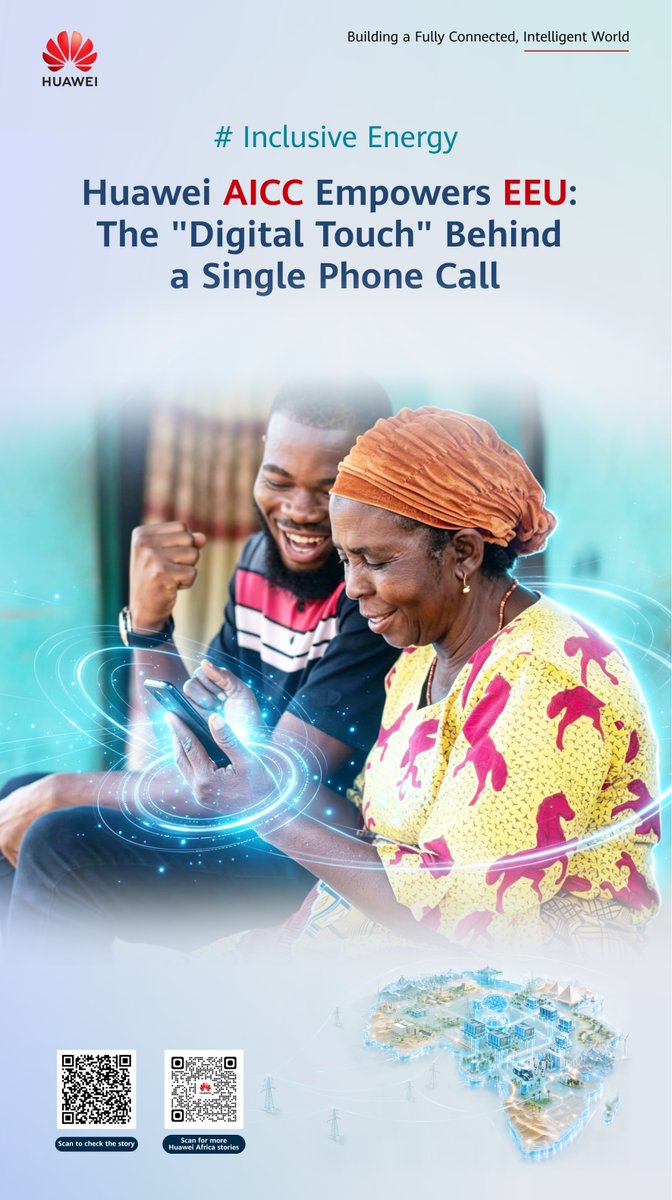
Behind every phone call is an opportunity to deliver better service. Huawei AICC empowers Ethiopian Electric Utility (EEU) with intelligent customer interaction capabilities, helping make electricity services more accessible, efficient, and responsive.
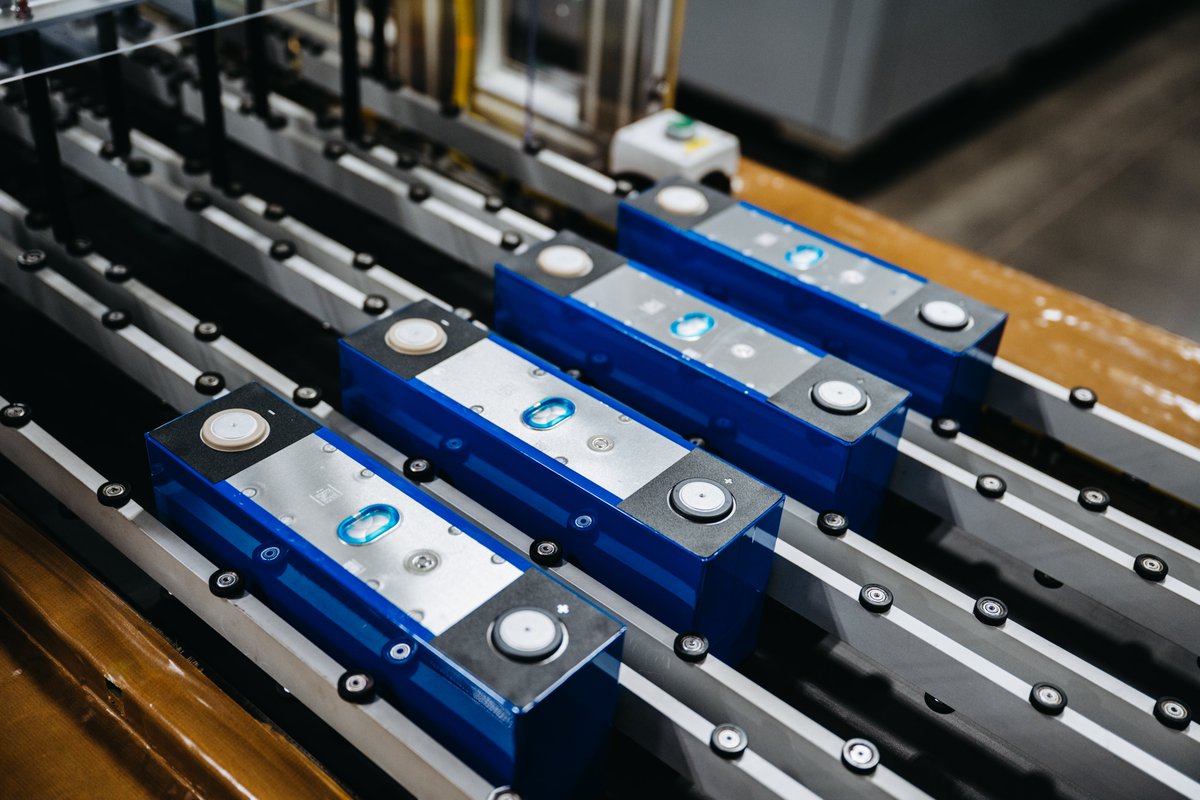
Ford is officially in the battery business. We’ll be the first to deliver LFP batteries in the U.S. for mainstream consumer automotive use and I couldn’t be prouder of the @Ford team. They've started battery cell production at BlueOval Battery Park Michigan and are shipping our first LFP prismatic cells to Louisville Assembly Plant where they'll power #FordFathom prototypes.
This is a significant step for us. We’re building capability to deliver batteries for more affordable electric vehicles and applying that same LFP technology and manufacturing expertise to build a new energy storage business with Ford Energy.
Congratulations to our talented team on this milestone!
Learn more from Charles Poon, vice president of Hardware Engineering at Ford: https://t.co/vDjxZItSM6
"I'm just happy that we could show all of Germany that we have some incredible ballers!" 😎
WORD 🤝 Kloppo
Jürgen Klopp's team now has three wins from their last four matches and are through to the Nations League quarterfinals after thrashing the Netherlands 5-0 🔥
The next milestone for the Genesis Mission: Lux is ready for science.
Proud to continue our leadership in high-performance computing with the AMD-powered Lux supercomputer at @ORNL, now open to scientific users.
Built by @HPE, Lux brings together AMD EPYC processors, AMD Instinct MI355X GPUs, AMD Pensando networking and AMD ROCm software to unite AI and high-performance computing, advancing the U.S. Department of @ENERGY’s Genesis Mission and accelerating discovery in fusion energy, new materials and Earth system prediction.
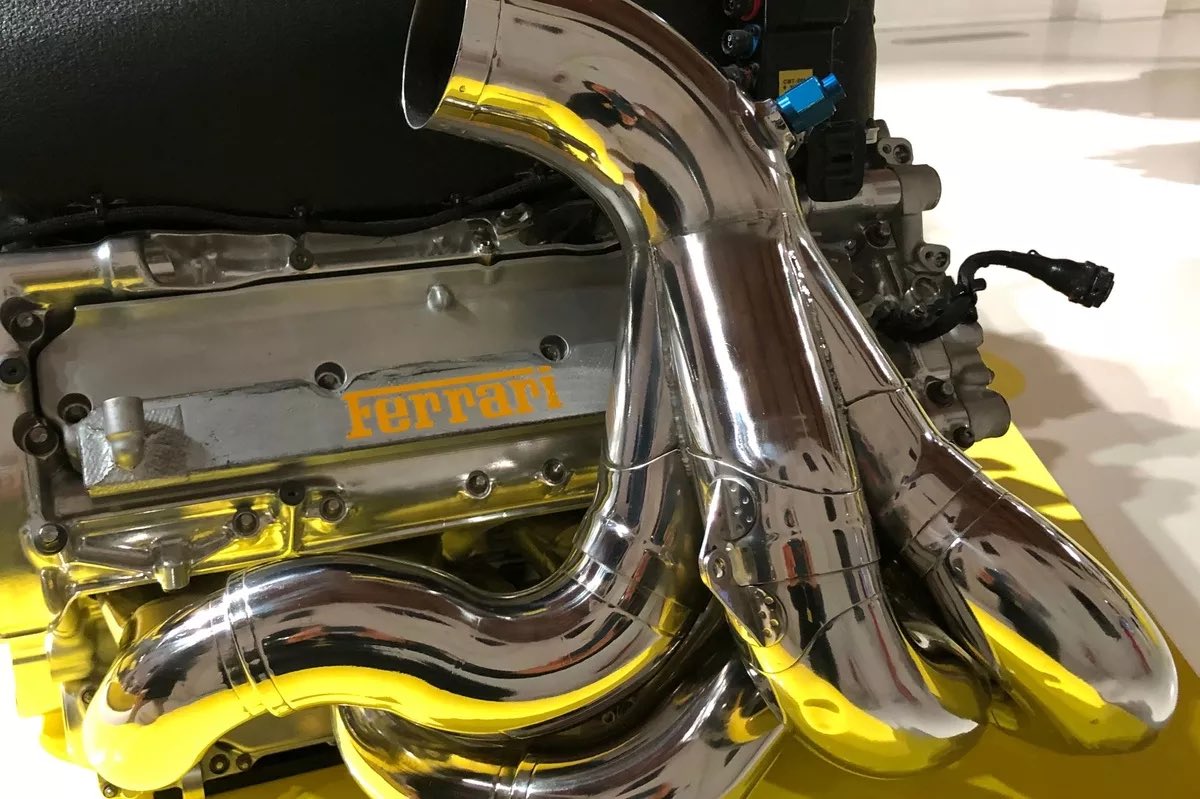
🚨 F1’S FUTURE V8 ENGINE REGULATIONS ARE BEING DISCUSSED TODAY!
The F1 Commission meets in London today to discuss the proposed regulations for 2030.
According to Motorsport Italia, proposals include:
• 2.1L or 2.6L turbocharged V8 engines
• Maximum RPM of 15,000–16,000
• Electric power options of 100 or 200 kW
• A potential push-to-pass system
• A target of 80 kg lighter cars
• Engine costs targeted at €500,000–€600,000
The FIA wants to introduce the new regulations in 2030, a year earlier than originally planned.
Today’s discussions could be a major step toward agreement, although final approval is not guaranteed.
(via. @Motorsport_IT) #F1
China's independently developed 10-tonne electric commercial aircraft CE-25A completed its maiden piloted flight on Saturday in Binzhou, east China's Shandong Province, according to the Commercial Aircraft Corporation of China (COMAC).
Carrying two pilots and one flight-test engineer during the flight, the aircraft operated normally, and all performance indicators met expectations, COMAC said.
Designed mainly for intercity commercial flights, the CE-25A can carry 19 passengers and has a maximum takeoff weight of 10 tonnes. It has a cruising speed of 300 km per hour, a cruising altitude of 2,400 meters and a range of 400 km.
#China's independently developed 10-tonne electric commercial #aircraft CE-25A completed its maiden piloted flight on Saturday, according to the Commercial Aircraft Corporation of China (COMAC).
The CE-25A is COMAC's first electric commercial aircraft. Designed mainly for intercity commercial flights, it can carry 19 passengers and has a maximum takeoff weight of 10 tonnes. It has a cruising speed of 300 km per hour, a cruising altitude of 2,400 meters and a range of 400 km. #electricaircraft
https://t.co/aIg9mfiH4E
Chinese state-owned aircraft manufacturer COMAC completed the first crewed flight of its CE-25A electric aircraft in Binzhou, state broadcaster CCTV reported
Congratulations @SpaceX!
For the first time in human history, a spaceship has been caught by a launch tower.
What an extraordinary engineering achievement. 🎥 by @KEnagonio
While the rest of the world is still debating EVs vs. gas cars, China just plugged in a 10-tonne passenger plane and took off!
Meet COMAC’s CE-25A—China’s first full-scale, all-electric commercial aircraft:
- 100% electric, zero jet fuel
- 19 seats & 400 km range
- 10 ducted fans embedded inside the wings (not your usual propellers)
- Capable of both autonomous & piloted flight
From a concept in 2023 to a successful first crewed flight yesterday in Shandong.
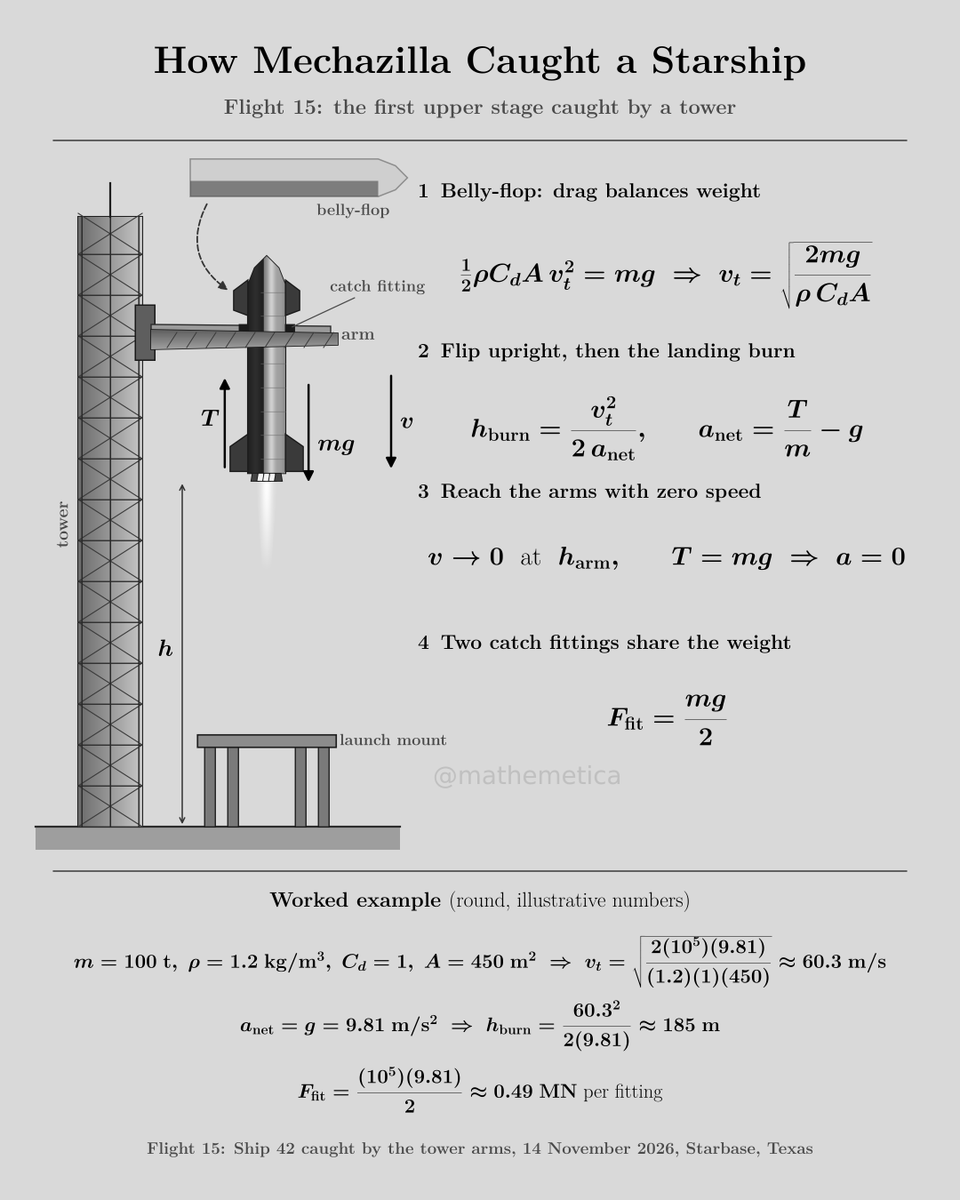
SpaceX caught Starship with the tower on Nov 14, the first upper stage ever caught coming back from orbit.
It falls belly-first and drag caps its speed: v = √(2mg ÷ ρCdA), about 60 m/s with round numbers.
Then it flips, burns from h = v² ÷ 2a and hits v → 0 right at the arms. Two fittings hold mg ÷ 2 each.
Every Starship before this was lost or dropped in the ocean. This one can fly again. The booster missed its catch, so catching both stages is still ahead.