RWANDA
KAGAME OPENS HIS LAST UNFULFILLED PROMISE TO RWANDANS: RWANDA ENDS AID DEPENDENCY, SHIFTS TO SOVEREIGN PARTNERSHIPS
When Paul Kagame assumed the presidency in 2000, the pledge was audacious for a country burying one million people and surviving on emergency rations: Rwanda would become self-reliant.
For 26 years, Kigali systematically delivered security, economic growth, national unity. Yet one foundational promise remained psychologically unfinished: ending foreign aid dependency.
On September 18, 2026, that final pledge was quietly fulfilled. Cabinet retired the 2006 Aid Policy and enacted the Rwanda Development Cooperation Policy (RDCP) 2026-2050. No donor pledging conference. No ceremony. Just a line in the communique that rewrites three decades.
This was not an event. It was the end of a trilogy.
1994-2006: The Humanitarian Era. Aid was oxygen. It kept a post-war and genocide society alive.
2006-2026: The Recovery Era. Rwanda did what few aid-dependent states do: it used aid to end the need for aid. The 2006 policy was a management manual to channel donor money into schools, roads, fiber, universal healthcare, and institutions.
2026- onward: The Sovereign Partnership Era. The word "aid" disappears from the architecture. It is replaced by trade, investment, and equal cooperation.
The fiscal numbers prove it. In the approved 2026/27 budget of $5.3 Billion (Rwf 7.8 Trillion), foreign grants are capped at Rwf 548.3 Billion — just 7% of total financing. Domestic resources now fund 68%. At 7%, aid no longer defines Rwanda's financial architecture.
This exit did not just appear, it was quietly engineered over the last two decades through four pillars:
1. Diplomacy as Infrastructure
Rwanda now operates 50 full diplomatic missions covering 147 countries and international organizations.
For context: that footprint outstrips Singapore, Luxembourg, Estonia, New Zealand, Iceland, Uruguay among others. For a landlocked nation of 14 million that had a few embassies in 1994, it is an anomaly and intentional.
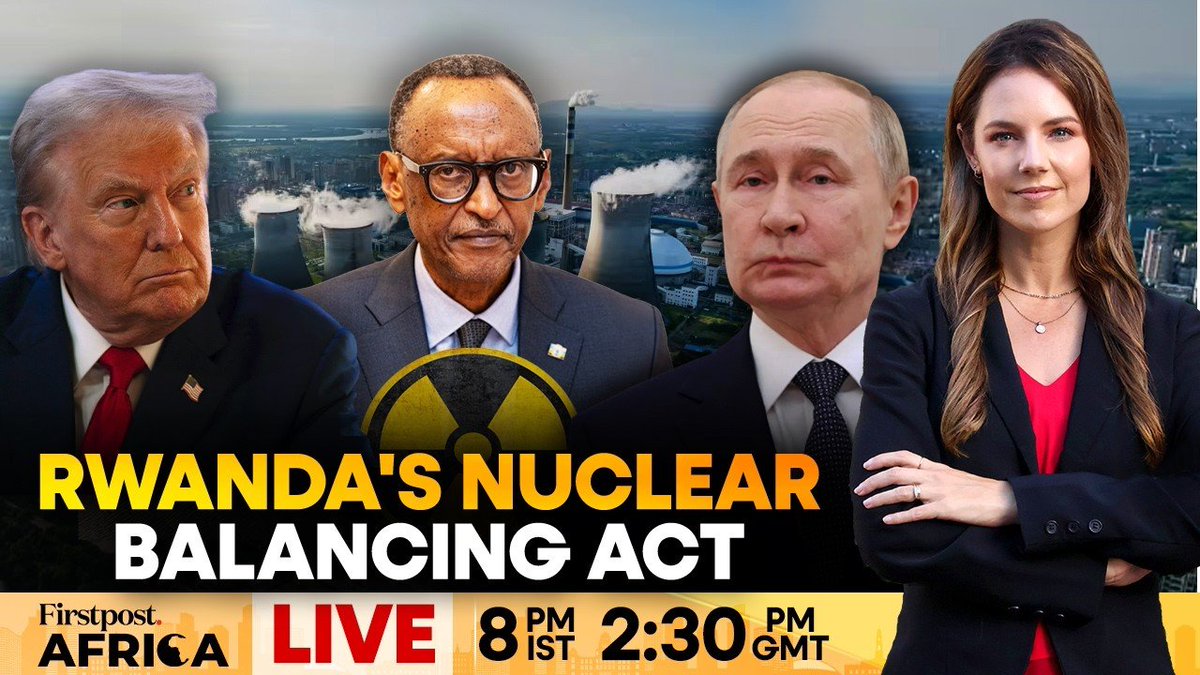
Kigali practices deliberate neutrality: For examole, earlier this year, Rwanda signed nuclear cooperation agreements with both Washington and Moscow in a span of less than 3 weeks. Kigali maintains solid ties with Russia & Ukraine, India & Pakistan, Israel & Qatar, France & Türkiye, Morocco & Algeria among others.
The passport mirrors the shift. In 2015 it ranked 92nd, in 2025, 76th; in early 2026 it jumped to 70th, its highest ever; with access to 68 destinations. In 2010 it was stuck in the late 80s. From a document of confinement to now a tool of commerce.
2. Security as Currency
Three decades after hosting UN peacekeepers in its darkest hour, Rwanda is now the world's second-largest UN peacekeeping contributor with about 6,000 personnel. It has also expanded to bilateral deployments across multiple nations becoming a security guarantor and exporter. Security became credibility.
3. Trade and Investment as Proof
The same Cabinet sitting that ended aid policy approved partnerships with Chinese auto giant Chery to set up an EV assembly plant and Dubai's DP World to expand its logistics infrastructure across Rwanda. Policy was not announced then implemented. It was announced by being implemented.
4. Tourism and MICE as Network Power
#VisitRwanda was mocked as vanity. It was strategy. Conferences and eco-tourism bring decision-makers to Kigali to see a state that works, a funnel for FDI.
One can say: President Kagame walked a 26-year sentence into reality. Rwanda did not wait for the aid era to end. It built the machine needed to operate after it.
In other words, Rwanda is not just graduating from aid, It is also resigning from it. #FactsOnRwanda
@FlyRwandAir@YvonneMakolo Thanks for the clarification, however think of cost sharing with beneficiary so that they feel that benefit otherwise revisit that policy
Thx
@YvonneMakolo@FlyRwandAir
I used to enjoy FlyRwandair till I became a beneficiary of rebate tickets,
When you want to travel, you have to go on waiting list till all passengers check in and later if allowed to board your seat number is the last on the toilets.
Terrible
Rwanda’s Strategic Triumph: How Kigali Outmaneuvered SAMIDRC, Exposed Regional and International Hypocrisy, and Asserted Sovereign Strength
In a region long plagued by instability, shifting alliances, and foreign meddling, Rwanda has once again emerged as a force not to be underestimated. The latest developments in the eastern Democratic Republic of #Congo (DRC) culminating in the humiliating withdrawal of #SAMIDRC (SADC Mission in the DRC) forces, demonstrate the strength of Rwanda’s military discipline, diplomatic precision, and unwavering strategic clarity.
The False Narrative Crumbles
For years, the #Congolese government and its regional and international backers, including #SouthAfrica, Belgium, and certain factions within the #UnitedNations painted #Rwanda as the aggressor in the DRC crisis. #Kigali was accused of backing #M23, while the real threat; the #FDLR, a génocidaire militia composed of perpetrators of the 1994 #Genocide against the #Tutsi, was ignored or even protected.
In January 2025, South Africa’s President Cyril #Ramaphosa issued a misleading statement blaming #RDF for the deaths of South African troops. President #Kagame responded with unflinching clarity, exposing the hypocrisy and manipulation behind regional diplomacy. He reminded the world that:
✍🏾 RDF is a national army, not a militia.
✍🏾 SAMIDRC was not a peacekeeping mission, but a belligerent force engaging in offensive combat operations to help the #DRC Government fight against its own people, working alongside genocidal armed groups like FDLR which target Rwanda, while also threatening to take the war to Rwanda itself.
✍🏾 Ramaphosa himself admitted privately that M23 did not kill South African soldiers, it was #FARDC.
This candid truth-telling shattered the façade of neutrality many actors tried to maintain.
M23’s Release of #SADC POWs: A Turning Point
After being decisively defeated in #Goma, SADC and FARDC troops, along with thousands of #European mercenaries, were left clinging to control of only #Goma Airport. In desperation, they turned their missiles toward Rwanda, an outrageous act of escalation intended to provoke direct war. But Rwanda was ready. Using its air defense systems, Rwanda successfully intercepted the missiles, preventing destruction in #Rubavu, #Musanze and #Kigali, and making it clear: Rwanda would not be dragged into a war on someone else’s terms.
Then came the diplomatic humiliation: M23 released captured SAMIDRC soldiers peacefully. And they exited the region through Rwanda, not #Kinshasa. The symbolism couldn’t be clearer. The very forces who came to challenge Rwanda’s sovereignty left under Kigali’s control.
Belgium’s role in this crisis has been especially toxic.
Following the collapse of FARDC positions in Eastern DRC, Belgium already deeply invested in Kinshasa’s propaganda, quietly deployed military support alongside FARDC and the genocidal FDLR. Their objective was not peace, but to crush M23 and, by extension, to counter Rwanda’s rising influence in the region. They failed.
In #Walikale, Belgian forces were routed in humiliating fashion. One Belgian officer was reportedly overheard saying: “This is Rwanda—no one can fight like this. We’re done.” That moment captured the arrogance and strategic miscalculation of a former colonial power now hiding behind failed proxies.
But Belgium’s defeat was not only military, it was diplomatic. Obsessed with undermining Rwanda, Belgian officials actively lobbied the @WorldBank, @IMFNews, @EU_Commission, and Rwanda’s global partners like @Arsenal, @PSG_inside, and @FCBayernEN to sever ties with Kigali. That campaign, too, collapsed. The institutions and partners that understand Rwanda’s vision and record refused to be swayed by Belgium’s neo-colonial games.
When Rwanda gave #Belgian diplomats hours to leave Kigali, #Brussels was left scrambling to restore relations, but trust broken by sabotage is not easily repaired.
1/2
#RDC government troops and allies like FDLR, WAZALENDO, Burindian imboneras are beheading Congolese people suspected to be tutsi, international media like @BBCWorld@cnni etc are silent only to comenup later blaming M23 and Rwanda 🇷🇼 @realDonaldTrump@Sophie_Mokoena@SABCNews
Chairman Kagame: As cadres of RPF-Inkotanyi, we should not be bragging about what others can learn from us. That is not who we are or the values we stand for. Let us focus on the many challenges we still face and solve them. #PF30