AI is becoming a core portfolio allocation. But for most investors it’s limited to a few, big players
Bittensor $TAO offers access to a decentralized network of AI projects
@YumaGroup opens the door for investors to Bittensor and decentralized AI
Fortitude’s business model allows us to move quickly when we see promising opportunities. We own and operate a diversified power portfolio with competitive long-term contracts, control our infrastructure buildout, and deploy capital selectively.
As a public company, we anticipate having the flexibility and access to capital to accelerate our core venture mining platform and continue pursuing high-return opportunities in the Proof-of-Work ecosystem, including our long-standing position in $ZEC.
I would like to thank the entire HeartSciences team for their continued collaboration as we work towards our combined future.
Join us as we share the Fortitude story on our upcoming investor call.
Read the announcement, which contains important additional information: https://t.co/FWwYz5Rple.
Fortitude and HeartSciences (Nasdaq: $HSCS) Announce Business Combination, Aiming to Bring a Leading Vertically-Integrated Zcash Mining Platform to the Public Markets.
-Combined company expected to operate under the Fortitude brand and to trade on Nasdaq; transaction expected to close in H2 2026.
-Fortitude expected to become the first publicly traded venture mining platform with a proven track record of identifying high-conviction, early-stage Proof-of-Work opportunities.
Read the full press release, which contains important additional information:
https://t.co/m58FhZ848I.
This is so underrated.
For the first time in human history, individuals can hold and transfer value using open, decentralized infrastructure while preserving financial privacy by default when they choose to use it.
That is extraordinary. It is not just a technical achievement. It is a human-rights, civil-liberties, and public-policy breakthrough.
Financial privacy is not a niche concern. It is part of personal security. It is part of economic freedom. It is part of political freedom. It protects people from surveillance, exploitation, discrimination, coercion, and abuse.
And yet, in policy debates, privacy is too often treated as suspicious by default.
That is one of the reasons we launched the PGPZ Community (https://t.co/dsPWjk3l56): to help policymakers, regulators, builders, advocates, and the broader Zcash community better understand what Zcash actually is, why financial privacy is critically important, and how privacy-preserving digital cash can coexist with responsible compliance.
The core point is simple: Legitimate privacy is not illicit opacity.
Zcash gives us a capability humanity has never had before: a decentralized, censorship-resistant, privacy-preserving way to hold and move value in a digital world.
That should inspire awe. It should also inspire serious policy work. I’m more motivated than ever!
Join the PGPZ Community:
https://t.co/dsPWjk3l56
#Zcash #ZEC #FinancialPrivacy #CryptoPolicy #PGPZ
Thanks, Anthropic, for helping protect Zcash users. At Shielded Labs’s request, they ran a security audit of Zcash with Mythos. It did not find any more serious bugs in the Zcash protocol. Shielded Labs and others are continuing security hardening work. Stay tuned for updates.
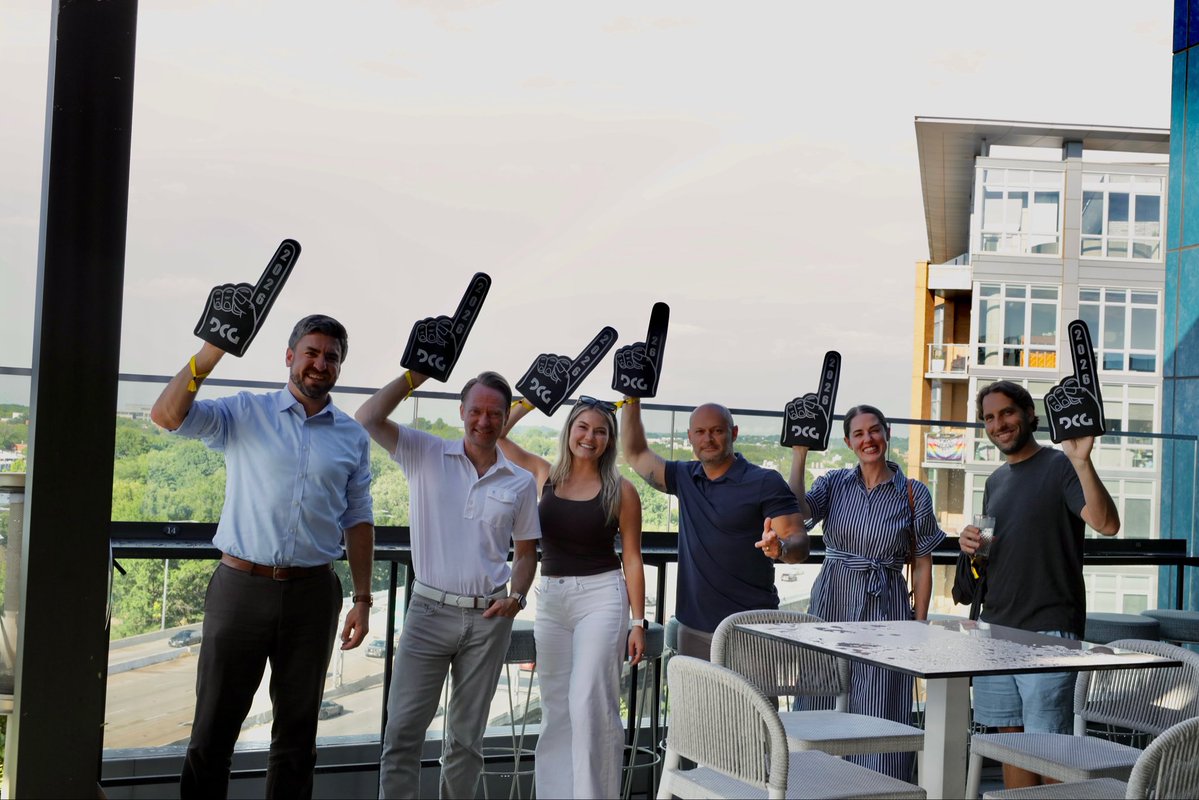
Closing out an exceptional week in DC for the 2026 DCG Fly-in. We brought together DCG executives and 20+ blockchain founders from across our portfolio for policy discussions spanning data privacy and digital asset regulation. Big thank you to those who joined us!
New @DCGco data on US voter privacy sentiment: 84% say individuals should own their personal data and control how it’s used, not companies.
Voters expect privacy as a right – not a policy preference.
NEW POLL: Voters that see crypto as a major election issue has doubled in the last two years from 20% in 2024 to 40% in 2026
With @HarrisPoll, we polled registered voters and found that Americans have embraced digital assets & want financial privacy
https://t.co/Jaz0EuZYG5
I’m excited to announce that PGP* (Pretty Good Policy) for Crypto is pivoting into PGP* (Pretty Good Policy) for Zcash, or PGPZ.
PGPZ is a Washington, D.C. policy initiative focused on privacy-preserving digital cash, practical compliance, and the public-interest role of Zcash.
The goal is simple: make sure Zcash has serious, organized, and credible policy engagement in Washington.
Policymakers are making decisions that will affect whether privacy-preserving digital cash can exist, be used lawfully, and serve the public interest. PGPZ is about ensuring Zcash is understood, represented, and defended in those conversations.
PGPZ will focus on three exciting pillars:
1. Focused Convenings
We will continue the PGP* policy convening series in a more Zcash-focused format, bringing policymakers together with experts on privacy-preserving digital cash, practical compliance, civil liberties, and public-interest technology.
The Cypherpunk Policy Dinner on October 21 will be a key example of this pillar in action.
2. Community and Member Resources
We are creating a broader home for Zcash policy updates, resources, programming, and community-led coordination so that people interested in Zcash policy work can stay informed and get involved.
3. The PGPZ Coalition
We are organizing a smaller, action-oriented working group of policy professionals and active advocates focused on policymaker education, advocacy strategy, and practical engagement around Zcash.
Privacy-preserving digital cash needs credible advocates. Financial privacy is not a partisan issue; it is a civil liberties and human rights issue. PGPZ is one way we are helping ensure that message is heard clearly by policymakers.
More details, programming, and participation information are coming soon.
https://t.co/l3uPqekIdz
👉For 4 years, 1 day, and 10 hours, anyone who understood the Orchard circuit could have minted ZEC out of thin air, silently, with no on-chain signature. The bug was disclosed this week. It was found by an AI-driven audit running Opus 4.8, not by an attacker.
1. Call the bug what it is
Two lines in halo2's variable-base scalar multiplication gadget used assign_advice() where copy_advice() was required. As a result, the diversified-address integrity check pk_d = [ivk]·g_d could be satisfied for arbitrary inputs. A malicious prover could spend the same note multiple times with different nullifiers, i.e. counterfeit ZEC inside the Orchard pool, undetectable on-chain because the privacy of the ZK proof hides exactly the inputs that would reveal the attack.
We do not know whether it was exploited. We will probably never know.
2. Four years. Multiple audits. Top-tier reviewers.
Orchard was reviewed by some of the strongest cryptographers in the field before activation. They missed it. Earlier automated audits with Opus 4.7 missed it. Opus 4.8 catches it in roughly 1 in 4 runs when prompted generically. The bug is hard.
And ZK inflation bugs are not new. Zcash itself shipped a counterfeiting vulnerability in Sprout (BCTV14) that survived years before being silently neutralized during Sapling. Similar soundness issues have appeared in circom, halo2, and rollup verifiers since. The pattern is consistent: when the protocol is private, exploitation is undetectable. You patch the bug and hope.
3. What Zcash did right
This was a textbook decentralized incident response:
▶️Audit: a full AI-assisted soundness audit of halo2 + Orchard, scoped end-to-end.
▶️Discover: the agent flagged the missing constraint and worked out the algebra to turn it into an exploit. A working RPC-level PoC in ~6 hours, mostly waiting on tokens.
▶️Coordinate: a soft fork disabling Orchard, prepared and distributed without leaking the bug, activated 2 days and 15 hours after acknowledgement. Coordinating a soft fork across miners, exchanges, and nodes without disclosing why is genuinely hard. They did it.
▶️Disclose: timeline, code lines, math, open questions. No spin.
Worth naming explicitly: Zcash's turnstile invariant caps the value that can ever leave a shielded pool by the value that entered it. Privacy and verifiability inside the same protocol. That is not an accident. That is good engineering, and it is what kept the worst case bounded.
4. The economics of security just changed
AI does not change whether bugs like this exist. It changes the cost of finding them. I wrote about this https://t.co/AeurraJXhB: a missing constraint in a 4-year-old production ZK circuit used to require a top-tier cryptographer with months of context. It now requires a few tokens, an API key, and a well-framed prompt.
The defender benefits. The attacker benefits more, they only need to find it once, and they never disclose.
Orchard is the optimistic version of this story: defense got there first. The pessimistic version is the one we cannot rule out, because the chain is private by design.
5. The only real exit
You do not patch your way out of this asymmetry. You raise the floor.
Formal verification of consensus-critical circuits, every assign_advice audited by SAT solvers and AI for under-constraint, as the reporter himself recommends. Proof-grade engineering that used to be too expensive is now cheap enough to be mandatory.
Hardware roots of trust, secure enclaves, certified secure elements, WYSIWYS. Cryptographic guarantees the user can actually verify, not promises a host can lie about.
Continuous AI-assisted audit of every consensus-critical commit, re-run immediately on the release of any new frontier model.
Zcash didn't just patch a bug. They demonstrated the new defensive playbook: AI-driven audits, decentralized coordination, radical transparency, verifiable invariants. That is the direction the rest of the industry needs to follow.
And those who don't raise the bar for security will be rekt in this new world.
Stay safe. Stay honest about your trust assumptions.
From a non technical perspective, to believe this vulnerability was actually exploited before being patched, you’d have to believe someone (1) was looking at the Zcash codebase more thoroughly than any of the ECC, ZODL, Shielded Labs, Zcash Foundation and other core Zcash dev and security contributors combined AND (2) resisted the urged to completely run out the Orchard pool turnstile to sell all its counterfeit ZEC during a historical 20x+ bull run. Seems unlikely to me.
IMO the real takeaway here is the Zcash dev and security community is absolutely best in class and ahead of every other protocol in terms of AI risk that will be endemic to all given what the models can do now.
And certainly if there is a Network Upgrade to allow anyone to verify the integrity of the Zcash supply and to prove the non-existence of counterfeit Zcash in the Orchard pool.
"Decentralized digital money that is private by design is good for the world" @BarrySilbert
Tune in to hear the thesis behind our long-term conviction in Zcash zcash:native and why we are doubling down on financial privacy in the latest ep from @NetworkMedici
https://t.co/JcDxZstjMv
At DCG, we have built a culture where people feel supported, connected, and proud of the work they do every day.
Honored to share that DCG has been named on @Inc 2026 Best Workplaces list! 🏆
Shoutout to our incredible team. #IncBestWorkplaces
https://t.co/Z836A5vflF
Around $3 Trillion dollars were laundered through banks in 2025 and they want you to believe that a bill in Congress that clearly applies AML/BSA obligations to crypto exchanges is somehow the problem. Literally nonsense.






![P3b7_'s tweet photo. 👉For 4 years, 1 day, and 10 hours, anyone who understood the Orchard circuit could have minted ZEC out of thin air, silently, with no on-chain signature. The bug was disclosed this week. It was found by an AI-driven audit running Opus 4.8, not by an attacker.
1. Call the bug what it is
Two lines in halo2's variable-base scalar multiplication gadget used assign_advice() where copy_advice() was required. As a result, the diversified-address integrity check pk_d = [ivk]·g_d could be satisfied for arbitrary inputs. A malicious prover could spend the same note multiple times with different nullifiers, i.e. counterfeit ZEC inside the Orchard pool, undetectable on-chain because the privacy of the ZK proof hides exactly the inputs that would reveal the attack.
We do not know whether it was exploited. We will probably never know.
2. Four years. Multiple audits. Top-tier reviewers.
Orchard was reviewed by some of the strongest cryptographers in the field before activation. They missed it. Earlier automated audits with Opus 4.7 missed it. Opus 4.8 catches it in roughly 1 in 4 runs when prompted generically. The bug is hard.
And ZK inflation bugs are not new. Zcash itself shipped a counterfeiting vulnerability in Sprout (BCTV14) that survived years before being silently neutralized during Sapling. Similar soundness issues have appeared in circom, halo2, and rollup verifiers since. The pattern is consistent: when the protocol is private, exploitation is undetectable. You patch the bug and hope.
3. What Zcash did right
This was a textbook decentralized incident response:
▶️Audit: a full AI-assisted soundness audit of halo2 + Orchard, scoped end-to-end.
▶️Discover: the agent flagged the missing constraint and worked out the algebra to turn it into an exploit. A working RPC-level PoC in ~6 hours, mostly waiting on tokens.
▶️Coordinate: a soft fork disabling Orchard, prepared and distributed without leaking the bug, activated 2 days and 15 hours after acknowledgement. Coordinating a soft fork across miners, exchanges, and nodes without disclosing why is genuinely hard. They did it.
▶️Disclose: timeline, code lines, math, open questions. No spin.
Worth naming explicitly: Zcash's turnstile invariant caps the value that can ever leave a shielded pool by the value that entered it. Privacy and verifiability inside the same protocol. That is not an accident. That is good engineering, and it is what kept the worst case bounded.
4. The economics of security just changed
AI does not change whether bugs like this exist. It changes the cost of finding them. I wrote about this https://t.co/AeurraJXhB: a missing constraint in a 4-year-old production ZK circuit used to require a top-tier cryptographer with months of context. It now requires a few tokens, an API key, and a well-framed prompt.
The defender benefits. The attacker benefits more, they only need to find it once, and they never disclose.
Orchard is the optimistic version of this story: defense got there first. The pessimistic version is the one we cannot rule out, because the chain is private by design.
5. The only real exit
You do not patch your way out of this asymmetry. You raise the floor.
Formal verification of consensus-critical circuits, every assign_advice audited by SAT solvers and AI for under-constraint, as the reporter himself recommends. Proof-grade engineering that used to be too expensive is now cheap enough to be mandatory.
Hardware roots of trust, secure enclaves, certified secure elements, WYSIWYS. Cryptographic guarantees the user can actually verify, not promises a host can lie about.
Continuous AI-assisted audit of every consensus-critical commit, re-run immediately on the release of any new frontier model.
Zcash didn't just patch a bug. They demonstrated the new defensive playbook: AI-driven audits, decentralized coordination, radical transparency, verifiable invariants. That is the direction the rest of the industry needs to follow.
And those who don't raise the bar for security will be rekt in this new world.
Stay safe. Stay honest about your trust assumptions.](https://pbs.twimg.com/media/HKCPArbWMAAT2O-.png)





