Spiders and scorpions belong to a group called chelicerates, which are arthropods with pincers at the front of their head. Fossil evidence reveals how this group evolved
https://t.co/BEvSoViNcw
One of the most-viewed PNAS articles in the last week is “Nudibranch color diversity shares a common physical basis in guanine photonic structure ‘pixels’.” Explore the article here: https://t.co/bwaI0Gmrng
For more trending articles, visit https://t.co/GHT9bEnnoQ.
🚨 It's finally out! 🚨
A new bizarre harvestman from Eocene Baltic amber, named Balticolasma wunderlichi!
This wonderful little guy was quite the challenge to work on as I don't do inverts that often...
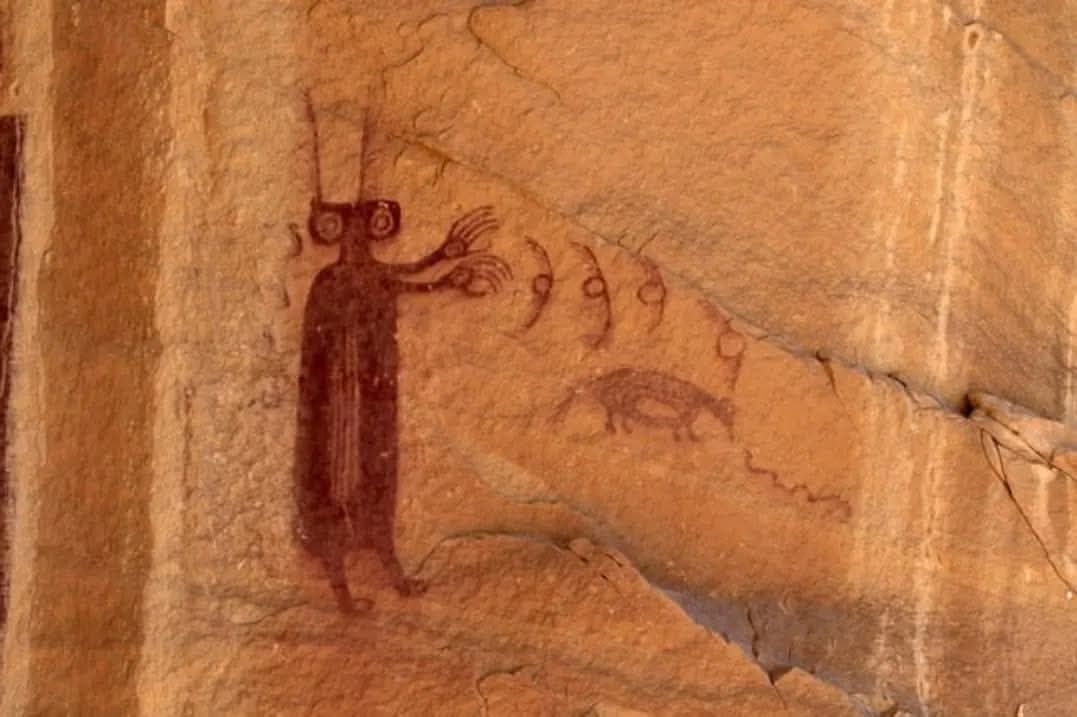
A pictograph at Barrier Canyon in the central Utah desert, depicting an anthropomorph with bug eyes and antennae. 2000 BCE-500 CE, United States of America.
Serra Silva & Telford (2026-01 preprint, bioRxiv)(オープンアクセス open access)
「螺旋動物の門間の関係は解決可能か?」
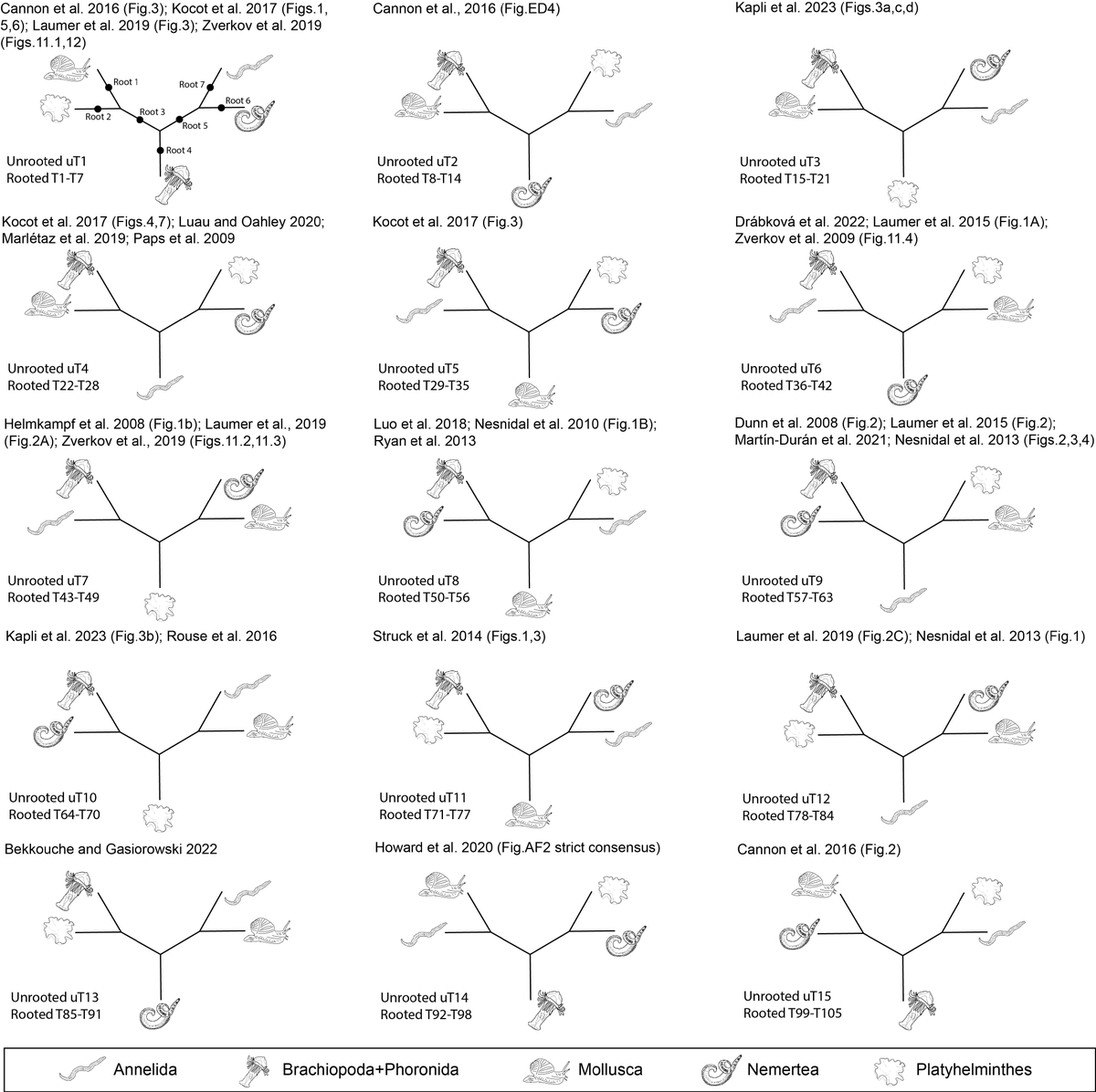
Are interphylum spiralian relationships resolvable?
螺旋動物Spiraliaの新たなゲノム系統学的研究!
A new phylogenomic study of Spiralia!
More than 400 million years ago, during the Silurian Period, an evolutionary event led to the later emergence of spiders’ spinnerets—the abdominal organs that make silk—according to new @ScienceAdvances research. https://t.co/lv3fCFRc0A
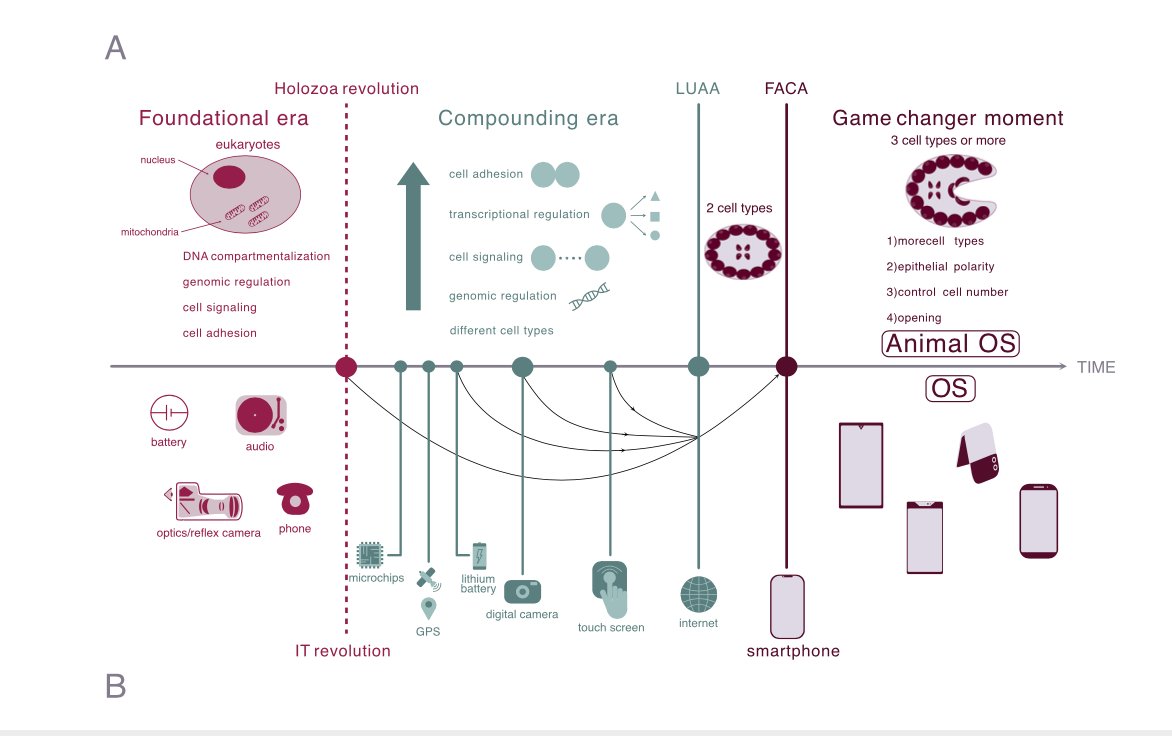
📱Is the origin of animals comparable to the origin of the smartphones? Yes! See our new review in @embojournal where we show how important it was the new "Operating System" (animalOS)for animals to evolve! with @ricard_sole Nick and Elena @the_prbb@CSIC@CSICdivulga
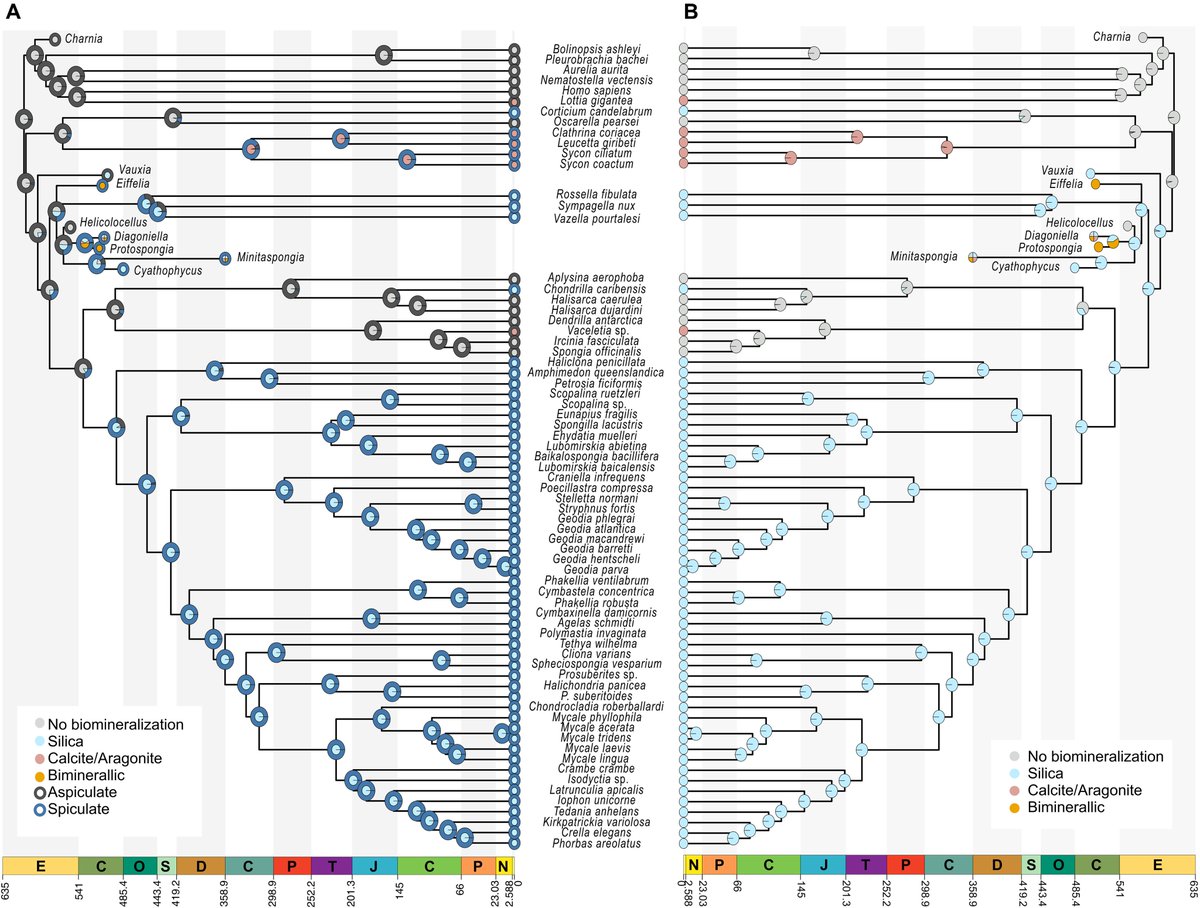
Rossi et al. (2026, 1月 Jan., Science Advances) (open access)
「骨片の独立起源により、海綿動物の進化史の古生物学的および分子的証拠が調和される」
Independent origins of spicules reconcile paleontological and molecular evidence of sponge evolutionary history
出版!
Now published!
The Fokker–Planck equation is a partial differential equation that describes how the probability distribution of a random system evolves over time under both deterministic forces and random noise. It is the population-level counterpart of stochastic differential equations such as Langevin dynamics, translating individual random paths into smooth probability flows. In probability theory, it is used to study diffusion processes, stationary distributions, and long-term behavior of stochastic systems. In machine learning, the Fokker–Planck equation underlies diffusion models, stochastic gradient methods, and sampling algorithms, helping explain how noisy updates explore complex loss landscapes and generate data. In real life, it models phenomena such as heat flow, stock price fluctuations, chemical reactions, and biological movement, providing a powerful framework for predicting how uncertainty spreads and settles over time.
The math:
If Xₜ follows
dXₜ = b(Xₜ)dt + σ dWₜ
then its density ρₜ satisfies
∂ₜρ = −∇·(bρ) + (σ²/2)Δρ.
New paper out! https://t.co/bx1SbwuJa4
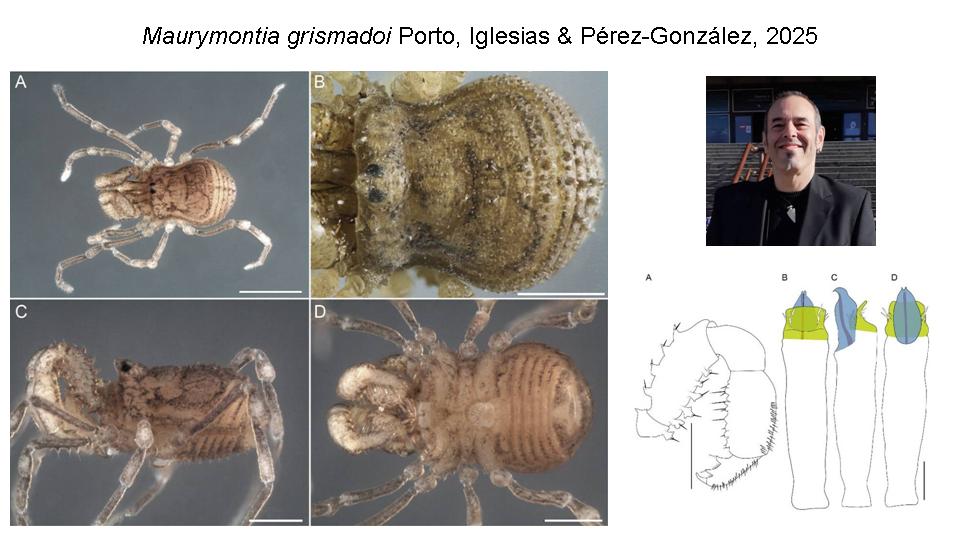
We revise South American triaenonychids formerly placed in Ceratomontia and propose the new genus Maurymontia, honoring Emilio Maury.
Three new species described, incl. M. grismadoi.
Happy New Year! 🎉
Pleased to share our latest paper in @CurrentBiology! We present the first chromosome-level genome of a phoronid and show that shared chromosomal fusions place phoronids and bryozoans as sister groups, resolving a century-old debate on lophophorates.
https://t.co/oswu6xuvgf




![squamiferum's tweet photo. [新作] 黒スケ・白スケだけじゃない! 8地点のスケーリーフットを用いた集団ゲノム解析でインド洋深海熱水域をつなぐ「海流」と隔てる「断層」を解明した論文が @CurrentBiology 誌に掲載! スケーリーは20~40万年をかけて、南から北へ分散したと推定。
タダで読めるリンク: https://t.co/tK0L70gX0R https://t.co/5jOLSuRnVE](https://pbs.twimg.com/media/HA6jjzla4AA8PR_.jpg)