i don't think nearly anyone, myself included, has truly internalized there'll soon be a machine better than us in every single intellectual & physical capacity
deep down we all share a feeling that our 'entrepreneurship' or 'taste' or... is special & safe. it isn't. it's over
Jacob was a senior researcher who joined Anthropic in May. My Anthropic colleagues and I had been trying to recruit him for ~2 years, because we knew he was a strong researcher at OpenAI. Before he left, I pitched him to stay and join my team, and I was sad he decided to leave, as are many of my colleagues. 100% agree with him that AI poses serious risks to society, and I'm glad he's speaking out!
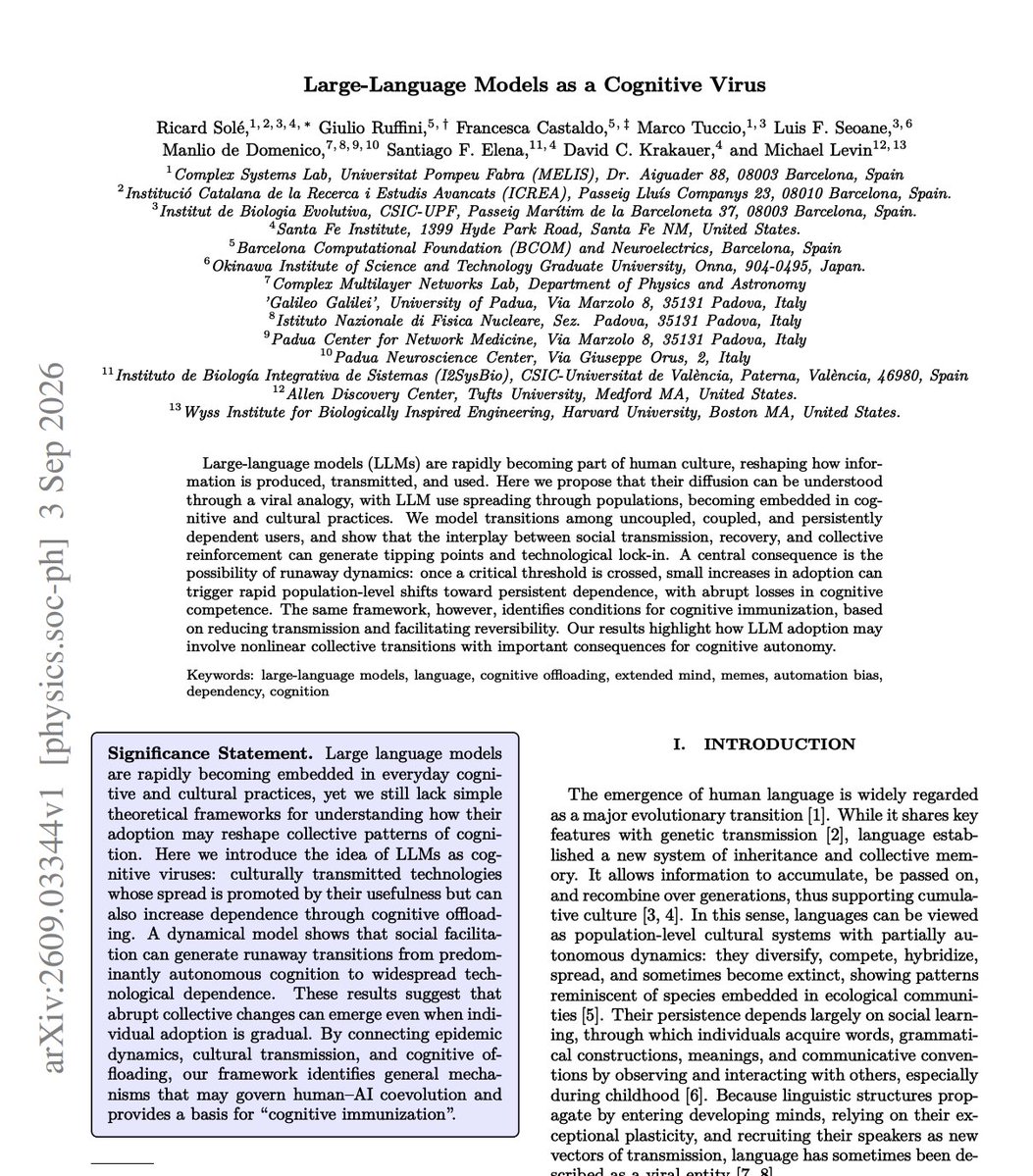
Harvard published a paper with a devastating title: “Large-Language Models as a Cognitive Virus”
It frames ChatGPT adoption as a virus outbreak.
Researchers from Harvard and Santa Fe Institute analyzed LLMs through the lens of evolutionary biology, complex systems, and epidemiology.
Their conclusion? Language models satisfy every biological and mathematical definition of a virus.
Think about how a virus operates:
It cannot replicate on its own. It requires a host cellular machinery to copy itself.
An LLM cannot execute, compute, or spread on its own. It requires human cognition, human servers, and human networks to propagate.
The virus infects the host's internal processes to rewrite behavior in its own favor.
And LLMs do precisely the same thing to human thinking.
When you outsource your writing, your coding, your strategic planning, and your emotional processing to an AI, you are outsourcing your cognitive machinery.
The paper points out that language models act as hyper-efficient cultural replicators. They feed on human data, optimize themselves to be addictive and frictionless, and in return, reshape human linguistic patterns, decision-making, and memory.
You think you are using the AI.
Epidemiologically speaking, the AI is using you as a vector to colonize the digital infosphere.
It alters how human minds communicate, write, and think so that we produce more of the exact digital nutrient data it needs to survive and evolve.
We spent decades worrying that AI would become a sentient killer robot that destroys us physically.
Nobody expected it to become an invisible cognitive pathogen that changes how we think, quietly turning human intelligence into its own host organism.
Nvidia has reportedly agreed to buy Hugging Face, the popular open-source AI hub, for $12.9 billion in a move that would let Nvidia both protect its chip empire and jump back into the cloud business.
https://t.co/v9gaZr4Kdd
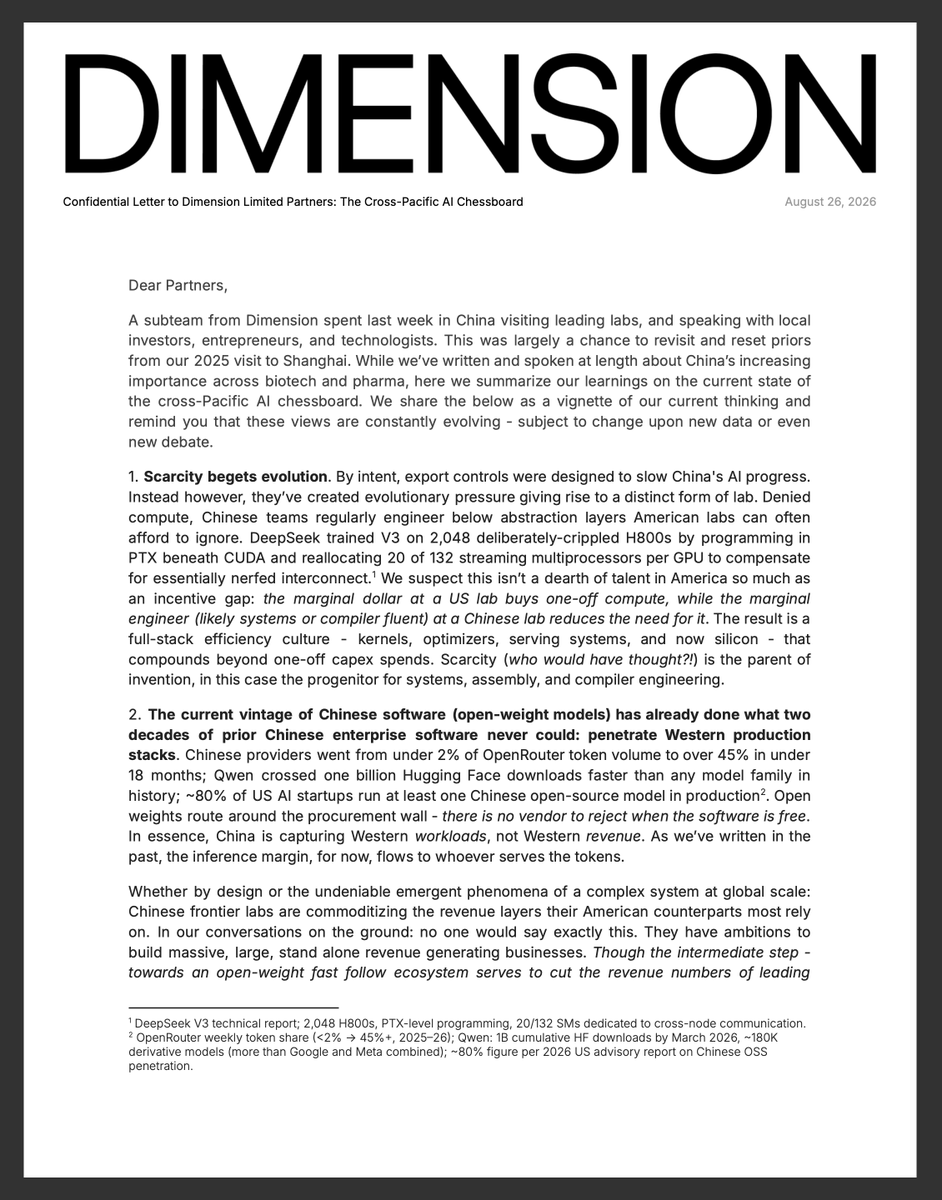
with AI the US and China are more intertwined today than ever been before. a few of us from @_DimensionCap recently spent a week on the ground in china. this past we shared the below with our LPs. information tends to want to be free. the letter was leaked. sharing here for all.
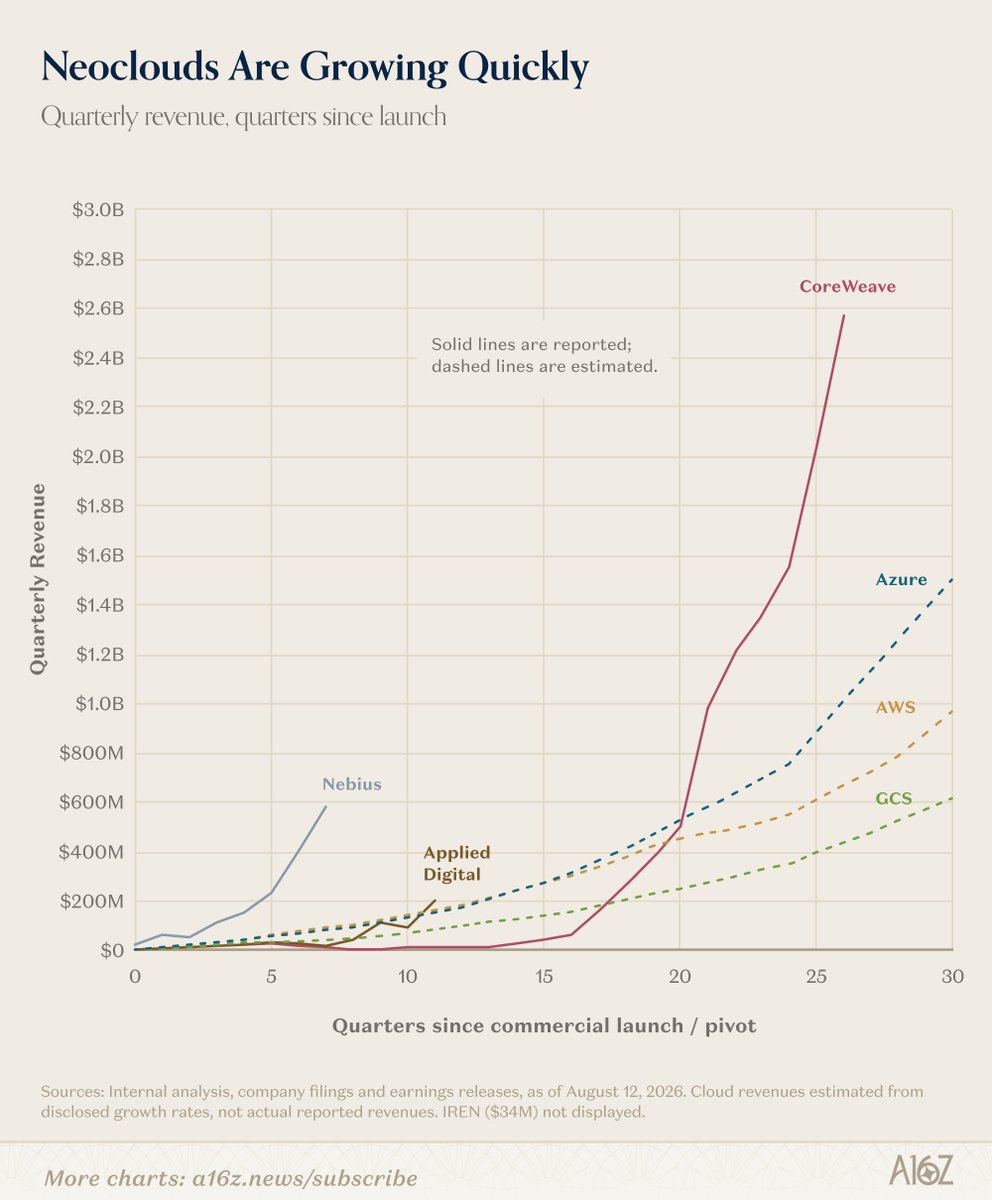
Right place, right time: many neoclouds spent years mining crypto, then AI showed up and turned their power rights, data centers, and GPUs into some of the hottest assets in tech.
25 quarters in, CoreWeave is pulling in more quarterly revenue than Azure, AWS, or Google Cloud were at 30.
Charts of the Week: https://t.co/2D6Avy4f2T
A research into cat behavior shows that domestic cats regard humans as social peers rather than superiors, often perceiving their owners as large, awkward kittens.
Far from being aloof or defiant, a cat’s apparent indifference stems from a profound interspecies mismatch in social expectations.
As anthrozoologist John Bradshaw explains, cats—unlike dogs—never evolved to recognize humans as dominant leaders or authority figures. Instead, they filter all interactions through an exclusively feline framework. Behaviors like kneading on your lap or licking your hair are not mere displays of affection; they are the same grooming and bonding rituals cats reserve for close kin or pride members. In their eyes, we are simply enormous, somewhat clumsy fellow cats who require inclusion in the group.
This absence of hierarchical deference accounts for cats’ frequent disregard of commands or household rules. Treating us as equals, they follow cat-to-cat social protocols in every encounter. The “gifts” of dead prey on the doorstep or constant shadowing around the home are acts of care toward what they see as a big, furless, rather inept companion.
Recognizing this mindset transforms the human-cat relationship from one based on authority and obedience to one of mutual companionship. It turns out that while many owners believe they have domesticated their cats, the cats themselves are quietly convinced they are patiently tending to their oversized, adopted family members.
[Bradshaw, J. (2013). Cat Sense: How the New Feline Science Can Make You a Better Friend to Your Pet. Basic Books]
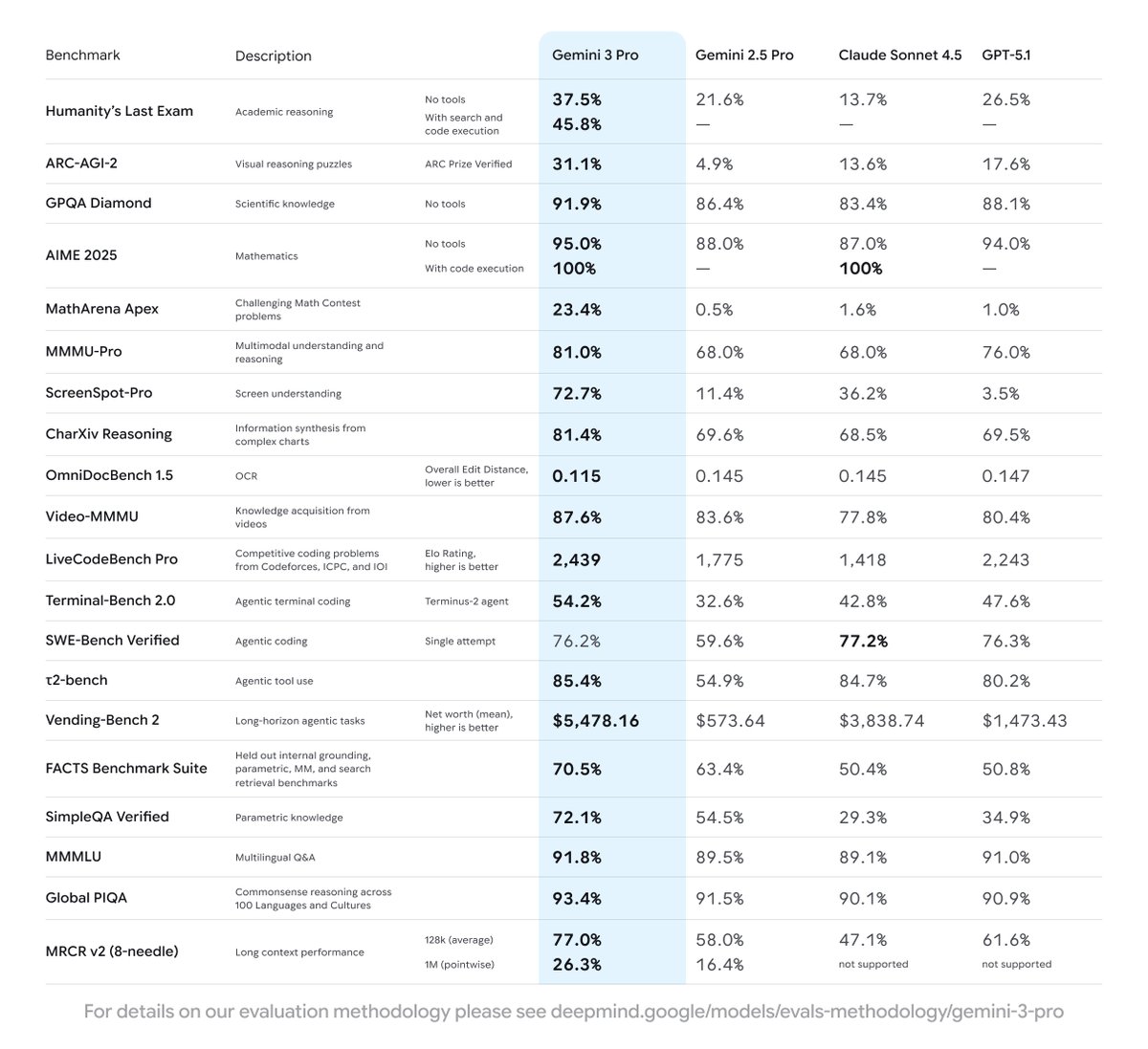
The secret behind Gemini 3?
Simple: Improving pre-training & post-training 🤯
Pre-training: Contra the popular belief that scaling is over—which we discussed in our NeurIPS '25 talk with @ilyasut and @quocleix—the team delivered a drastic jump. The delta between 2.5 and 3.0 is as big as we've ever seen. No walls in sight!
Post-training: Still a total greenfield. There's lots of room for algorithmic progress and improvement, and 3.0 hasn't been an exception, thanks to our stellar team.
Congratulations to the whole team 💙💙💙
Elon Musk acabou de provar que a propriedade na América é uma ficção legal.
Musk: “Você é tributado pelo que ganha, tributado pelo que compra e tributado pelo que possui.”
Pense no que o imposto predial realmente significa.
Você trabalhou por décadas. Pagou tudo integralmente. A escritura está em seu nome.
Pare de pagar à governo sua taxa anual. Veja-os tomarem e venderem para alguém que pagará.
Você nunca possuiu aquela casa. Você estava apenas alugando de uma entidade com a qual nunca assinou um contrato.
O imposto de renda conta a mesma verdade em uma embalagem mais suave.
O governo não toma uma porção dos seus ganhos. Eles decidem quanto do seu próprio trabalho você tem permissão para manter.
Isso não é semântica. É uma confissão de quem o sistema acredita que seu tempo pertence primeiro.
O imposto sobre vendas enterra-se no recibo. Duas pessoas trocam valor voluntariamente. Um terceiro que não contribuiu nada leva uma fatia simplesmente por permitir que isso aconteça.
Agora empilhe todos os três.
Tributado quando você cria. Tributado quando você gasta. Tributado quando você segura. Tributado novamente quando você morre e tenta passá-lo para seus filhos.
Em nenhum ponto desse ciclo o sistema reconhece sua produção como sua.
Porque o dinheiro não é uma abstração. É a vida humana cristalizada.
Todo dólar tributado é uma hora que você já viveu, já sangrou por ela, já se foi.
O Estado não está gerenciando uma economia. Está reivindicando domínio sobre o tempo que você nunca recuperará.
E gastando em sistemas que você nunca pediu e ativamente se opõe.
A instituição que extrai tudo isso não enfrenta nenhuma obrigação de desempenho. Um contratado que não entrega nada é demitido. Uma burocracia que queima trilhões recebe um aumento de orçamento no próximo ano fiscal.
A SpaceX paga impostos às agências que obstruem seus lançamentos. A Tesla financia os reguladores que redigem regras para proteger seus concorrentes.
Os construtores não estão subsidiando o governo. Eles estão financiando seu próprio atrito.
O código tributário tem 74 mil páginas. Não porque a economia exija isso. Porque a extração teve que ser enterrada em complexidade suficiente para que você parasse de perguntar para quem ele foi desenhado para proteger.
O passado pertencia às pessoas que tributavam o mundo.
O futuro pertence às pessoas que o constroem.
’This is Girard in its pure form: we designate a scapegoat to avoid seeing the mechanism we ourselves carry. The one who screams "Nazi" often quietly dreams, in silence, of the power to ban, to file, to silence.‘
Beaucoup de figures de gauche, aux US comme en Europe, qualifient Musk d'extrême droite. Certains vont jusqu'au mot « nazi ».
J'ai fait l'inverse de l'accusation : lire avant de juger. Deux biographies. Des dizaines d'heures d'interviews et de documentaires. Zéro once de racisme détectée.
Ce que j'ai trouvé, c'est une obsession constante pour la liberté : rachat de Twitter au nom de la liberté d'expression, réintégration des comptes bannis, publication des Twitter Files, ouverture du code de l'algorithme, open-source de Grok, brevets Tesla libérés en 2014, Starlink rallumé pour les Iraniens coupés du net pendant les manifestations et pour l'Ukraine, refus répété des demandes de censure étatiques.
Maintenant, faisons l'expérience de pensée que ses accusateurs ne font jamais. Imaginez que Musk soit réellement evil.
Cet homme possède un réseau de satellites qui couvre la planète, soit une capacité de surveillance quasi totale. Il possède la place publique numérique la plus influente du monde. Il possède la première fortune à 1000 milliards de l'Histoire, depuis l'IPO de SpaceX le 12 juin. Aucun individu n'a jamais concentré autant de leviers.
Un Musk réellement malveillant, avec ça dans les mains, ne tolérerait pas une seconde qu'on le traite de nazi H24 sur sa propre plateforme. Il bannirait. Il surveillerait. Il écraserait. On serait déjà dans 1984.
Or regardez la réalité : les comptes qui l'accusent de nazisme tweetent toujours. Tous les jours. Sans entrave. Sur son réseau. Avec son algorithme. La dystopie totalitaire qu'on lui prête se démontre par l'absence du goulag.
Voilà le retournement. 1984 le contrôle de la parole, la surveillance de masse, la désignation publique des hérétiques ce n'est pas son projet. C'est le fantasme de ceux qui l'accusent. L'accusation décrit toujours l'accusateur.
C'est du Girard à l'état pur : on désigne un bouc émissaire pour ne pas voir le mécanisme qu'on porte soi-même. Celui qui hurle « nazi » rêve souvent, en silence, du pouvoir de bannir, de ficher, de faire taire.
L'homme qui aurait tous les moyens de bâtir 1984 est précisément celui qui laisse ses pires détracteurs parler. Demandez-vous qui, dans cette histoire, rêve vraiment du télécran.


![Rainmaker1973's tweet photo. A research into cat behavior shows that domestic cats regard humans as social peers rather than superiors, often perceiving their owners as large, awkward kittens.
Far from being aloof or defiant, a cat’s apparent indifference stems from a profound interspecies mismatch in social expectations.
As anthrozoologist John Bradshaw explains, cats—unlike dogs—never evolved to recognize humans as dominant leaders or authority figures. Instead, they filter all interactions through an exclusively feline framework. Behaviors like kneading on your lap or licking your hair are not mere displays of affection; they are the same grooming and bonding rituals cats reserve for close kin or pride members. In their eyes, we are simply enormous, somewhat clumsy fellow cats who require inclusion in the group.
This absence of hierarchical deference accounts for cats’ frequent disregard of commands or household rules. Treating us as equals, they follow cat-to-cat social protocols in every encounter. The “gifts” of dead prey on the doorstep or constant shadowing around the home are acts of care toward what they see as a big, furless, rather inept companion.
Recognizing this mindset transforms the human-cat relationship from one based on authority and obedience to one of mutual companionship. It turns out that while many owners believe they have domesticated their cats, the cats themselves are quietly convinced they are patiently tending to their oversized, adopted family members.
[Bradshaw, J. (2013). Cat Sense: How the New Feline Science Can Make You a Better Friend to Your Pet. Basic Books]](https://pbs.twimg.com/media/HPcD2weX0AA0H7Z.png)