He raised $300k, grew startup to $10k MRR, went indie, roasted dozens of landing pages... and he's just a great guy!
Meet @eliasstravik 🔥
Watch Do It In Public with Elias now:
#buildinpublic
Cold outreach – Part 2/5: Openings 📧
Crystal clear subject, personal introduction, social proof and a CTA with true value.
That's what I'm striving towards.
Last year, I launched an app in 48 hours and sold it on @acquiredotcom for $65,000 just 3 months later 💸
Today, I'm sharing the full story on YouTube, from the moment I got the idea to the sale 😄
Link in the first comment 👇
It took me 2 weeks working 14-15h/day to learn editing, record and put everything together.
I hesitated a lot, thinking it maybe was "too much" or too cringe, but ended up publishing it anyway 😬
Hope you will like it!
Would love to hear feedback about what you liked/disliked.
I spent 37 hours on 𝕏 and got 4M views. Here are 19 lessons I learned about posting on Twitter:
1) It took me ~4.42min to get 1 click. I could get more clicks if I just sent cold DMs.
2) Content creation is a big business. I spend 1-2 hours per day on tweets.
3) The accumulative effect is significant. My post went from avg 1k views to 5k views in a month.
4) Price: my dopamine system is destroyed. I check 𝕏 every 15-30 min. Still figuring this out (any help @johnrushx?)
5) Repurpose! Tweet > LinkedIn > post post > video.
6) Good Tweets can be generated by AI. But it is a very creative and challenging task. A rare founder can do it.
7) Your tweet must give 1+ of these: smile, knowledge, ego boost, motivation. Otherwise, you should not tweet at all.
8) Views worth nothing. Followers worth nothing. I'm looking for true fans here. Memes create no fans (@dagorenouf thoughts?). Farming posts create no fans. Stories do.
9) Tagging other persons and companies works great. It is the easiest way for a novice to grow fast.
10) Good image = x2 views. Good image with your face and dog = x3 views.
11) People see your replies in their feeds. Make each golden.
12) Followers count does not matter. You can get mils of views with 1k followers.
13) Followers count matters. People assume you are important only if you have 10k-100k followers.
14) Consistency does not matter (for example @davidjpark96 takes 1-2 weeks breaks and still has good views on posts).
15) Quality, not form.
16) Quality, not quantity.
17) The algo changes fast, you can't adapt. You do not need to. Just keep creating quality content.
18) It is OK to post bad/boring tweets. If they are bad they are just not shown to people.
19) Controversion, drama, opinionation, story.
How to go from 0 to $5M ARR profitably (step by step)
Here is every growth hack we used for each of our distribution channels:
- Organic Short-form content
- Influencer Marketing
- SEO
- Paid Ads
Organic Short-form content
The most important thing to remember in this new age of social media is that follower counts don’t matter at all
I would unironically sponsor a fresh account made this week vs a YouTuber with a million subs if they had similar views and I don’t even think it’s a controversial opinion
(especially when you consider that the famous YouTuber will charge you potentially 30x more for less results, but I would maybe even choose the new account if they were the same price)
The reason being that new accounts are highly volatile and if you put out a great engaging piece of content then it could easily go viral regardless of how many followers you have
But rather than finding and sponsoring these new accounts in your niche, you can just create these accounts yourself
You just need to follow this basic format:
1. Find a face for your account
2. Craft a viral video 'series'
3. Multiply your accounts
What would happen if BTS made a new TikTok account and started posting?
All videos on the new account would immediately go viral because the algo would push the videos back to their fans
Despite having zero followers, this new TikTok account will ‘behave’ as though it has hundreds of millions of followers
One great hack is to find someone who already has an audience of people that you know will convert, then ask them to create a completely new account to posts videos about your product
This is an amazing hack because creators are usually very open to this idea because it doesn’t dilute their main page, it’ll be way cheaper to pay for 20 videos on a new account every month vs 20 sponsored posts on their main account, and it’ll get way better results
For example we found a creator named Mengmengduck whose entire account at the time was teaching students how to write to employers and we paid him $4000 for 20 videos/mo
In our first month we got 7 million+ impressions, just as expected the videos on the brand new account were being pushed to the followers on his main account
When you get a new creator just follow this basic guideline:
- Repost vids on all platforms (Reels, TikTok, YT Shorts)
- Post 1+ videos per day
- Initially, post vids similar to what the influencer posts on their main account, then start experimenting with videos that feature your product
- We paid $4000/mo for MMD who had 500k followers, but you can get someone cheaper for similar results!
The entire goal when working with your creator is to find a viral “series” because a video that goes viral once will go viral again
You want a video that you can basically tweak slightly and repost multiple times a week that is still fun for the audience
Once you find a viral series, you can start creating new accounts but this time you don’t need to work with big creators, you can just find charismatic UGC creators because you’ve found content that is engaging and poised to go viral
Currently, we have about 5 different Jenni AI accounts all posting similar content
Many of our accounts have tens or sometimes just hundreds of followers and they just repost stuff from our main account
In some cases, the account with 48 followers gets MORE views than our main account with 55k followers...even when posting identical videos
Examples of viral series:
1. A guy tries to see how many sticks of spaghetti it takes to hold his weight. Then he tries to see how many coat hangers. Then he tries to use sheets of paper. Etc etc. All the same video, minimal effort but will go viral every time.
2. A guy drinks a cup of milk for every 1000 followers he has. Everyday it’s the same video where he drinks milk but people continually tune in because they want to see him suffer and drink hundreds of cups of milk. Will go viral every time.
3. For us we had “POV you have an essay due” and it was just a ridiculous plot of someone realising they have an essay due while they are taking a shit or right before they sleep or w/e and it always ended with them using Jenni AI to help them write their essay faster. Same video, slightly different 10 second intro each time.
Thinking of new viral video ideas are so hard, so just try to think of tweaking your few winning videos into “series” and just think about prolonging the lifespan of your content
The order of virality:
1. Have one account on each platform (TikTok, Instagram, YT shorts) and experiment with a ton of hooks and video ideas
2. Eventually you’ll get a video that goes viral after enough experimentation
3. Experiment and somehow turn that video into a “series”
4. Start tweaking and posting this “series” on multiple accounts
5. Translate and create the same video with creators that speak Chinese, Spanish, etc
6. Take the really mega-viral videos and sponsor other pages to repost them
7. Use the mega-viral content for paid ads
8. Eventually enough copycats will copy your video series and it’ll get played out and you restart at step 1
Our video series "POV: You have an essay due" has probably generated 300 million+ views overall
It was essentially the same video over and over, multiple times a week, yet they consistently went viral
That one video series made us over half a million dollars, and it was one of several video series’ that we were able to cook up
Influencer Marketing
Find influencers
- Go to your users' Instagram and see which influencers they are following. This should be easy if you’ve done user interviews correctly, if you have no social media handles of your users you should actually befriend your users and get to know them on a deeper level or you’re not going to make it
- Do this for several users and eventually you will find some influencers that are ‘popular’ among your target user demographic. Find these influencers and follow them all, it’s okay you only need 1-3
- Go to these influencer's profile and click "suggested similar accounts" and you'll get an easy list of hot leads that you can sponsor (you can continue to do this recursively for each new influencer that you find)
- Also, be sure to see what hashtags these influencers are using when they post and then follow those hashtags as well
- Once you have a list of influencers, create a new Instagram/TikTok account and manually follow & watch their videos all the way through and the algorithm will start automatically showing relevant influencers to you that you can then reach out to (this is a great way to lower the risk of getting scammed because the videos that show up organically on your FYP are less likely to be accounts that have bought followers/views)
- On your new account, you want to be on the hunt for smaller influencers, if a new-ish account has multiple videos with 100k+ views, it's absolute GOLD
- Once you have a list of influencers who you are ready to partner up with, you can begin reaching out to them
Reach out to influencers
- DMs > emails = higher response rate (at least for us)
- All messages need to be as detailed and tailored as possible, but most importantly as CONCISE as possible. This balance is hard but you’ll get a better feel for this as you notice what gets ignored and what doesn't
- Demonstrate that you’re genuinely a fan of their content and that you’re excited to partner up. This is such a low bar but few founders actually put in the effort.
- Why should they partner with you? Why will their audience love your product? Don’t talk about dumb shit like how many employees your company has or what round of fundraising you’re at (I suggest not talking about those vanity metrics in any situation, but I digress)
- Make sure to indicate somewhere in the message that this is obviously a PAID promotion, influencers are constantly inundated by people who are begging them for free shoutouts or weird affiliate partnerships
- Expect more than 50% of influencers to not respond, but this % is very volatile depending on what industry you’re in, and how cool/well-known your product is
- The good news is, as more influencers talk about your product it gets easier and easier to convince them to promote your product because they have heard of it before (unknown products could be risky or straight-up scams)
Negotiate
- The highest priority is to align the incentives between you and the influencer. You should both want a banger video that converts
- Never pay upfront for videos (pay half upfront at most). Most influencers are fantastic people but some influencers will just try and drop a half-ass video once they get their check
- Try to split the payment so that some % comes from the number of conversions that they bring (you can track this via coupon code or UTM link). If they don’t want to do that, try to at least have some affiliate bonus
- Ask for their viewer demographics see which countries are viewing their content and compare that with the conversion rates of those countries for your product
- See previous sponsored content that they’ve posted and see how those videos performed vs their usual content
- Negotiate the deal so that either they only receive some/all of the payment if it reaches a certain # of views (or a certain # of coupon code redemptions)
- Don’t listen to these absolute garbage articles that tell you to pay based on the number of subscribers/followers that they have. The sole question you should be asking is, will they convert or will they not (at least in the early stage of your startup).
Post content
- You can’t use a general content strategy for all of your influencer partnerships because each influencer has a certain type of content that their audience likes. Your content can’t deviate too far from it or else it will have terrible watch times and you’re basically paying for a dud
- If you don’t have experience with social media or making engaging content, just let the influencer make the video and then you approve it (after aligning your incentives, as we discussed in the last step)
- One important note is that views are irrelevant, we’ve had videos that got 30 MILLION views and gave us barely any conversions, whereas a video with 50k views converted like hotcakes. The video should make the viewers excited about what you’ve built not just have them hear what you made and then forget about it the second they scroll to the next video on their For You Page
-When in doubt, don’t be afraid of your video looking like a straight-up ad, even if it gets less views it will convert better than an influencer casually talking about your product for 15 seconds in a random “Day in the life” vlog
Final tips
- The biggest risk with influencer marketing is sponsoring a dead video or a video that gets a few hundred views or a few thousand views in low-converting countries. For that reason, make a portfolio of bets instead of hunting for the perfect deal. Do not allocate all of your marketing budget to a few large influencers
- If the account has high conversion potential, but the first video flops, don't be afraid to run it back again (often times you can get a better rate on the second video if the first video does poorly)
- You should be casting a large net and then doubling down on the winners and gathering data to get better at predicting which influencer would be great to sponsor
- One good influencer partnership can make up for several influencer partnerships with negative ROI
- The ultimate goal is to build out your influencer marketing arm and then bring on somebody to help run it so you can focus on other aspects of growth.
- You need to have all of your insights and data figured out so that when you bring somebody on, they can take your insights and devote all of their time to become even better than you are at influencer marketing.
SEO
SEO is a tricky one because it can take so long to see results
That’s why I would never start with SEO because in the early-stages you want fast feedback cycles and SEO is the furthest from it
But the flip side is, when you really need SEO, you probably should’ve started on it 6 months prior to that point
For that reason my ideal order of what growth channels I would focus on is: Organic Short-form -> Influencer Marketing -> Paid Ads
And at any point when I felt like I had a deep understanding of who my powers users were I would start work on SEO and do it concurrently with whatever growth channel I was working on at that point in time
Here are some growth hacks for when you do start SEO work:
1. Taking featured snippets
Sometimes you'll be ranking low on the first page, not getting much traffic. Pushing yourself to the top of the page can take a lot of effort and investment, but there's a way to get there almost immediately.
If the search term you're looking to rank for has a featured snippet, you can often easily take over the first spot by just tweaking your content to answer the query more precisely.
The chances are your content already answers the question well enough, but it's just not written in a way that Google realizes it. Use definitive phrases like "The answer is Yes, you can do X". Use bulleted or ordered lists to make the answer concise and clear.
To find these opportunities, you can plug your domain into a tool like Ahrefs, Semrush or Search Atlas and filter the keywords you are ranking for by the SERP containing a featured snippet.
To keep it simple:
* Plug your domain into SEO tool (ahrefs, semrush, searchatlas)
* Look at keywords you're ranking for already
* Filter results by the criteria of containing a featured snippet in the results
* Tweak your content to answer the query in the best way possible
* Jump from position 3-10 to 1
2. Increasing brand name searches
Brand searches helps legitimize your startup in Google’s eyes and will help your content be seen as “trustworthy”.
With this in mind, for your SEO you should be engaging in other marketing activities that necessitate brand searches.
To keep it simple:
* When doing organic social media marketing, encourage users to search out for your brand name instead of directly typing in the URL
* When doing paid social marketing, utilizing view-through or engaged-view conversions to still track conversions made via Google searches so you can still optimize the social campaigns while reaping the SEO benefit.
3. Make it easy for search engines to understand your website
Search engines have gotten a lot better at understanding messy websites, but that doesn't mean you shouldn't make it as easy as possible for them.
Adding schema to your pages and giving clear cut definitions to your content can make it incredibly clear to any bots crawling your site what your site is about and what it is doing.
The more the better, we've had a lot of limitations with this as we're using Framer and we've found some types of schema quite hard to implement. However, we've done what we can and any type of schema is better than nothing (as long as it's accurate)
To keep it simple:
* Add relevant schema to any page that is suitable
* Mark up your landing pages with FAQ data, mark up your blog posts with article data.
4. Accurately estimate your ROI from search engines
It's been a long time since Google allowed us to see which keywords led to conversions in Google Analytics, however it's super important to get as accurate of a picture as possible.
Many people will simply look at reports and anything under the "organic" or "search engines" column, they'll count as an SEO conversion. But that's simply not true, and it severely misinforms you.
By the nature of the tracking, it's impossible to differentiate between branded conversions and non branded conversions with SEO.
The closest we've been able to get to do this is with a custom tool, but you can replicate it manually as well
* Log into search console
* Select your time period
* Export your clicks for each query
* Remove all branded queries
* Go to your paid ads (preferably Google ads) platform and note down your conversion data.
* Slightly lower the conversion percentage (because paid typically converts better than organic, as you're bidding based on a lot of other targeting metrics too)
* Tally up all the clicks from search console
* Use the conversion percentage from paid ads (slightly lowered)
* Calculate the amount of conversions you have received from SEO (excluding brand)
* Times this by the average LTV of your customer
This is a much closer metric to reality than anything reported by any reporting software, especially if you have a lot of branded searches like us
Paid Ads
Founders will tell me their marketing strategy and marketing spend and sometimes I’ll be shocked
Many are going to end up spend a sizable portion of their entire investment on google/meta ads, and the worst part is they aren’t even acquiring users at a profit, which genuinely makes me nauseous
Especially in the early-stages, I honestly wouldn’t be burn ANY money on paid ads and only spend after some social media marketing first
This is because data is key when it comes to paid ads and you want as much accurate data as possible to feed into the ad platforms
The algorithms work very well, but they need data to make the right decisions, and you can get this data from other growth channels before starting paid ads
Why paid ads after influencer marketing and organic content:
1. From influencer partnerships and organic short-form you will have a bunch of creatives that you can work/experiment/rework for paid ads
2. You get valuable customer feedback in the comments of your posts (how do target users describe your product, what they compare it to, what they like/don’t like about your product) which can be leveraged for ad copy and positioning
3. You can use the data from your social media partnerships to have better targeting for your ads on day 1 (what countries convert better, what’s the LTV of each country, what types of users are ideal to market to, etc)
4. In early-stages your budget won’t be big enough and you won't be able to spend enough on Meta to get enough data for targeting based on purchase conversions
We only scaled paid ads after:
* PMF (Product Market Fit)
* 3x LTV to CAC (we pay less than $1 for every $3 you make from ads)
* Short payback period (we make back our money in less than 3 months)
Lastly, take special considerations of both the entire user journey and the landing page before you crank up adspend
If your landing page isn’t persuasive + effective it’ll not only get less conversions you will also pay more for each click. In Google it improves the relevancy score and in Meta it improves the quality ranking. An easy win is also just to speed up the loading time of your page, this can directly effect the quality score of your ads and will also lower spend per click
Again, do not do paid ads until later in your startup’s lifecycle
It requires a larger budget, more data, and typically has higher cost per acquisition than other channels that you can start with
I personally also think it’s just the most boring growth channel so don't deprive yourself of the joy of figuring out the other fun ones first haha
Conclusion + Final Tip:
For every level there is a new devil
As you scale up your paid ads, your cost per acquisition will continue to creep upwards
As you scale your influencer marketing you may actually run out of influencers to sponsor for your target user demographic
There’s always some content strategy that stops working on your social media accounts, or a random Google update that threatens to fuck your rankings
At each stage of scaling you’ll come across a myriad of issues that can only be solved by specialized knowledge and intense focus
Scaling to $5M ARR is too difficult for one man to do (unless you’re the Lisan Al Gaib of startups)
Now that you’ve read this entire guide you can just choose which growth channel to start with and throw your whole weight into it until you solve it and you can move to the next one
Once you start acquiring users profitably with that first growth channel, find someone who either has the skillset to take over or someone who you can train to take over
This is a critical step
To get to $5M ARR you need to know how to find, hire, and retain amazing talent
This could be an entire post on it’s own because hiring is so tricky, but I will say that I highly highly bias towards resiliency + speed over experience
Why do I care if a candidate has 15 years of digital marketing experience?
Half of our marketing work has to do with short-form content and you could’ve only become an expert in short-form (TikTok, Reels, YT Shorts) in the last 3 years anyways
A young marketer with TikTok brain rot who has a great work ethic will often times outperform the “established” digital marketing agency with a ton of fake google reviews
Today, our entire marketing team is just 3 people (me included), and I couldn’t have gotten anywhere close to $5M ARR without them
Thanks to my growth team composed of Justin and Luke who are rockstars at what they do and helped flesh out a lot of the strategies on this post
Since you’ve made it all the way to the bottom I’ll tell you one final secret
Look at the bottom right of this tweet and count the bookmarks
How many of those people will actually read this whole thing? 10%?
How many of them will then actually try to implement some of the strategies I wrote about here? 10% of the 10%?
How many of them will continue to try 1 year from now when these marketing tactics help them uncover deep flaws in their product? 1% of that?
This post will be read by hundreds of thousands of people but ultimately it will only be properly utilized by literally one or two of you
I hope you are that one person that I wrote this for and I hope you can go on a similar fantastical journey that I got to experience
Good luck!
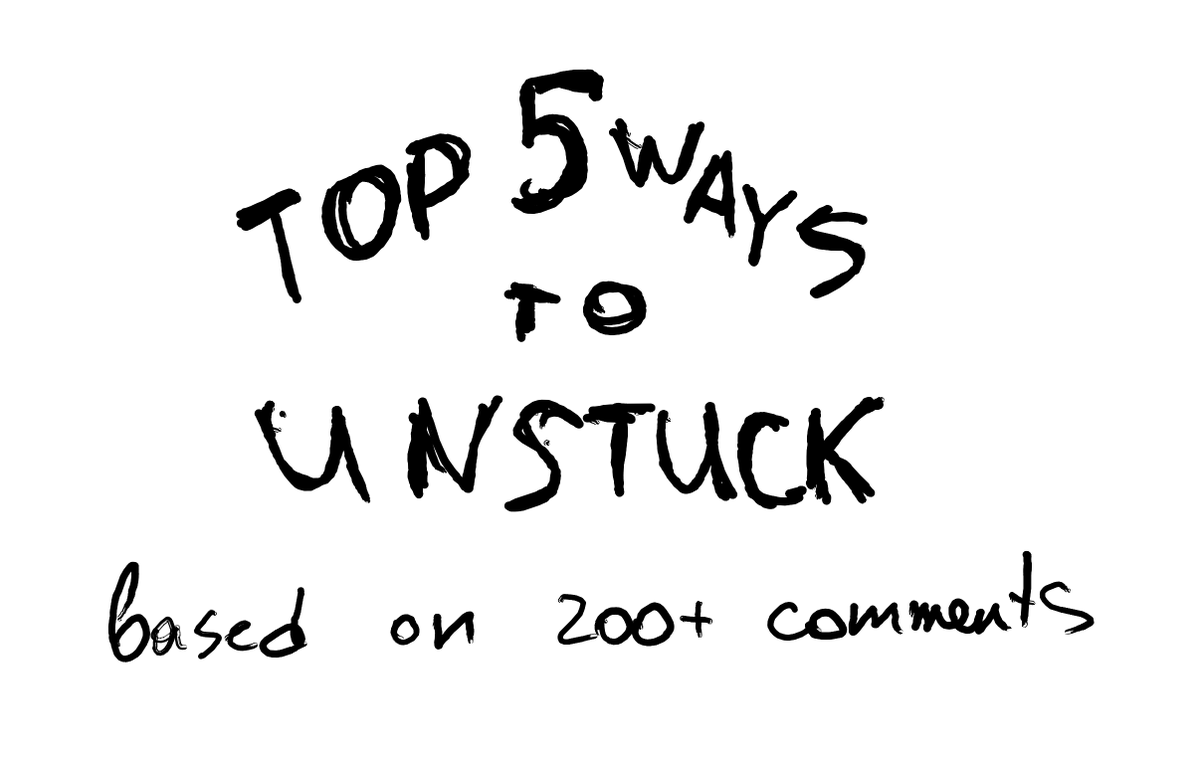
Yesterday I've asked you what you do when you stuck
Here are the top 5 things that 200 people recommended to restore the creativity:
1. Take a break. Chill, have some rest, get close to nature. Stay alone with your thoughts, disconnect your devices. Do things you enjoy.
2. Go for walk. Long walk, short walk, whatever works best. Walk under the Sun. Listen to some music. Or stay alone with your thoughts.
3. Consume content to get some inspiration. Read books, listen to music, watch videos, play video games. Do copywork.
4. Try new things, take action. Do something completely new. Challenge yourself, set the goals. Go outside your comfort zone. Get into unknown.
5. Hit the gym. Take a run. Exercise. Take cold shower. Ride a bike.
Other than that: meditate, sleep, talk to people, revisit old ideas. Take substances if you prefer. Brainstorm with AI or other human. Or just keep going.
Do whatever works for you
#buildinpublic
Friday is here! And a few interesting things have happened in the world of SEO this week. Here are some interesting bits of news that startup founders should keep on top of:
1/ Google says no need to disavow link spam
If you’ve ever had your website bombarded with 404 link spam your first question might be “What the f— is going on?” your second question is probably, “How will this impact my SEO?”
According to Google’s John Mueller, Google ignores these types of links. No need to disavow all of them manually.
If you’ve ever been hit by a negative SEO campaign, you might find Mueller’s response risible. There is often a critical mass of spammy backlinks that can render a website
In ultra-competitive niches, companies sending spammy backlinks to their search engine rivals can be a way to gain an edge.
It looks like Google has no official advice to combat this, so you better hire a good SEO expert if you ever have to fight your way out of it.
Hi! My name is Paul. Nice to meet you.
It's been a few month since I posted my last story. Work have been keeping me busy, but I'm taking a much needed breather to jump back into side projects and storytelling.
It's going to be another long one, so buckle in.
---
I skipped the last semester of high school to backpack across China alone.
The year was 2007 and I was 18 then, full of ambition and big ideas, dreaming about independence. While most of my friends were agonizing over how to ask girls to prom, I amassed enough credits to graduate early and quietly planned a solo trip that'd take me across 10 cities in China.
The risks, as my parents worried, were many. What if I got lost? What if I got hurt? What if I ran out of money? How would a teenager barely able to take care of himself at home figure out all the necessary steps to make a month long trip a success?
I wish I had a flawless plan that I could show my worried friends and family, with details highlighted and costs calculated to the cent - but like most eager adventurers, I packed a bag, counted my stars and jumped on the trip without a second thought.
Lesson 1: The Universe always finds a way to work itself out.
On the plane, I made friends with a group of exchange students from Argentina, they shared my plan of backpacking across China for the next few months - and invited me to join them. I said yes, and promised to reach out to them in a few weeks after visiting family first.
Not many people spoke fluent English in China back in 2007, but all were eager to practice. Along with my heavily accented Mandarin, navigation was not an issue at all.
On the first days of travel, I received a hot tip from a fellow traveller to sew a Canada flag on my backpack - To use it as a conversation starter and help Canadians identify each other. Everywhere I went friendly strangers would stop and ask me about my origin and offer me much needed tips of every city I visited.
From this I learned a valuable lesson on the willingness of strangers to offer help. It would take me years to put it into practice, but looking back, this is a trait that's embedded in the goodness of people.
Our overnight train from Beijing to Xi'an partially derailed and broke down half way.
We were stranded in the dark, middle of no where, without much food or water. While we knew it was something outside of our control, it was easy to get into panic mode. Thankfully, it wasn't a major issue and the engineers had us back on track 12 hours later.
I learned that it's important to stay calm and tackle uncertainties head on. Communicate with understanding goes a long way, especially when language barrier was an issue. Much of our trip was rushing from one place to another, but I made sure to stay calm every step of the way.
When visiting tourist spots, I quickly noticed peddlers in China were often aggressive and intimidating, grabbing you and blocking the way to the exit.
I learned that a firm no with a stern look of disapproval would often do the trick. For the times I did want to buy something, the insight was that the price fluctuated between sellers and often decreases dramatically the closer you get to the exit. With a bit of haggling you can get 80% off from the seller with the worst spots - good negotiation is often appreciated.
In the end, the joke was that my parents barely noticed I had left, one month passes rather quickly at home. But on the trip, I gained independence for the first time as a teenager, proved to the world that I can survive on my own.
I still carry these lessons with me today, and have used them as anecdotes in my book. I look back on these memories fondly.
Thanks for reading!
The reality is all of us have secret battles few know about.
To keep things real here, I'll share mine too:
This is what someone (me) struggling looks like:
- Joined the Carrd team
- Completed 100 days of code commits
- Launched 5 products in 2024 so far
- Got to 10k followers on X recently
- Volunteer my time to build social good products
Wait those are all wins, what am I talking about?
That's the thing. Truth is I am struggling. Barely keeping my head above water. But on the outside, things look great. I appear to be winning.
But behind the scenes:
- Kid had to go to hospital for the first time last week.
- Having to wake up at 4am before my consulting to work on my products but struggling.
- So exhausted from consulting every week I can barely stay awake pushing my daily code.
- Yeah 100 days of commits but the past 2 months had been bare minimum code, like adding 1 new item to a directory each day. Almost feels like cheating.
- 90% of the code isn't generating revenue which is what truly matters.
- My financials are still rekt. Still worried about providing for my family.
- Trying to find a fulltime job but market is so bad it's tragi-comic.
- Having a 10k following is distracting.
- I build products to help others for social good but can't help myself.
Not trying to indulge in self pity and score pity points here. Not my intention. I don't want sympathy.
Just wanted to share that this is what social media looks like. Everyone's winning. Everyone's beautiful, tanned, tall, enjoying life, earning big bucks. But people might be fighting battles they are losing, yet no one knows. Sometimes not even their family.
It made me wonder about how I see the same in others who are winning on X.
Made me wonder if they too, might be struggling with things no one knows about.
Made me wonder who these people are, if there are the signs, and how we can tell...
This about sums it all up:
"Be kind, for everyone you meet is fighting a battle you know nothing about."
Wanna make 10x better hooks in 10 seconds?
Pay attention...
Every hook has 2 parts:
1) Verbal
2) Visual
The verbal is easy – just think of the clickbait title for your video and say that
The visual is where most fail
But don't overcomplicate it. Just focus on 1 object on screen...not 2 or 3 or 4 objects
1 OBJECT!
To give the object the most "viral potential" – it should be recognizable or relatable
E.g. Michael Jordan, Tesla, blister
Bonus points if you can edit this object beautifully – HD image, subtle motion, sound design, etc.
Wanna see it in action?
Watch me make a 10x better hook with 1 tweak👇
(P.S. If you need beautiful editor, DM me for the hookup at https://t.co/WIlS3CfTlJ)
How do you add your startup in social media
So Google indexes it?
And understands it as a brand?
I spent a week of research on this one
Link to detailed instructions below 👇
SEO News Roundup
Here is the latest SEO news startups should take note of to maintain and grow their rankings.
1/ Google says links aren’t that important
At a recent conference, Google’s Gary Illyes reiterated that Google requires very few links to rank pages.
As a result, some are saying that the tides are turning and that links are becoming less important than ever before.
Now, I’ve always advocated for producing top-quality content and it seems like Google agrees.
That said, we should be cautious about the advice Google gives.
In my experience, I’ve seen the best results by leveraging quality content in tandem with a strong backlink profile. Both elements are non-negotiable in SEO.
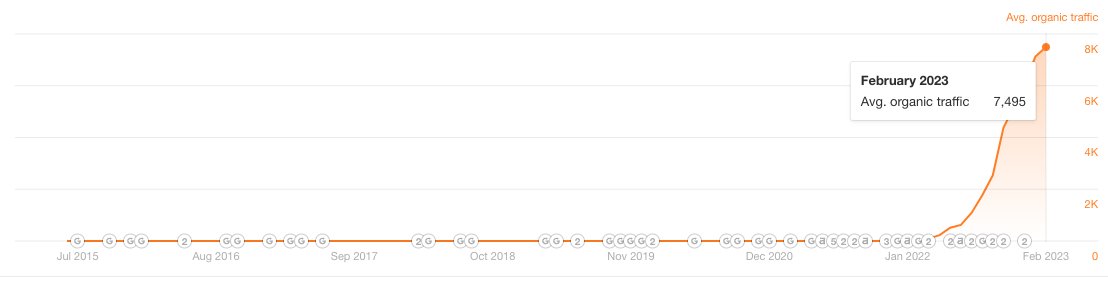
For example, we took a client that was getting only 27 visits per month all the way to 7,000 just by strengthening their backlink profile.
So, while Google says you need few links to succeed, keep in mind that they’re still admitting you need quality backlinks.
I wanted to finally go viral on LinkedIn so I've met with @shnai0
Iuliia shown me her secret method in detail: she coded a micro-tool for LinkedIn in just 45 minutes 😱
Watch now to learn coding fast and go viral:
https://t.co/z0A95ERyzw
This is my first livestream 🎥
Today I will be live-streaming the integration of @tinacms on my website to manage the podcasts and blog.
#buildinpublic https://t.co/9tDnCFUc0g
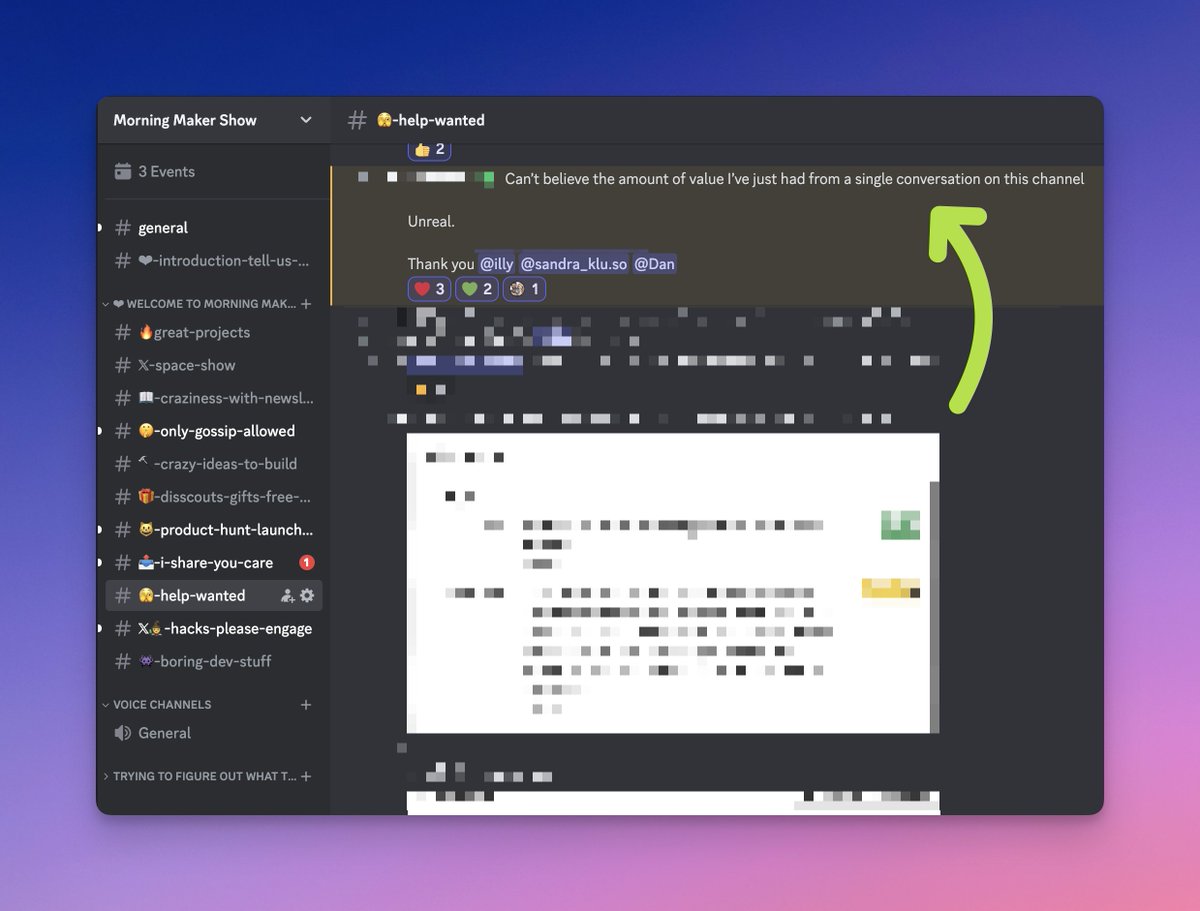
over 40 Morning Maker Show members! 🎉
together, we’re building a place for the indie maker community to thrive & it’s so motivating!
Ironically, being part of a group 📈 chances of making it solo 😂
defo one of the hardest thing to build tho.
there's no boilerplate!
An unusually simple spin-off story.
It was 2014, and we decided to spin one of our products off into its own company. The product was Know Your Company and knew the perfect person to run it. Her name was @clairejlew.
There are a million ways to spin-off a company. And most of them are fucking complicated. Complicated stuff is anathema to us at 37signals, so anything messy, extensively lawyer-y, protracted, knotty, or otherwise elaborate was off the table. So what was the simple way to do this?
How we structured the deal.
At the moment of the spin-off, Basecamp owned 100% of Know Your Company. The product was a year old and had generated a few hundred thousand dollars of revenue at that point, so it was a nice growing business, but it was still young and mostly unformed. Its best days were ahead of it.
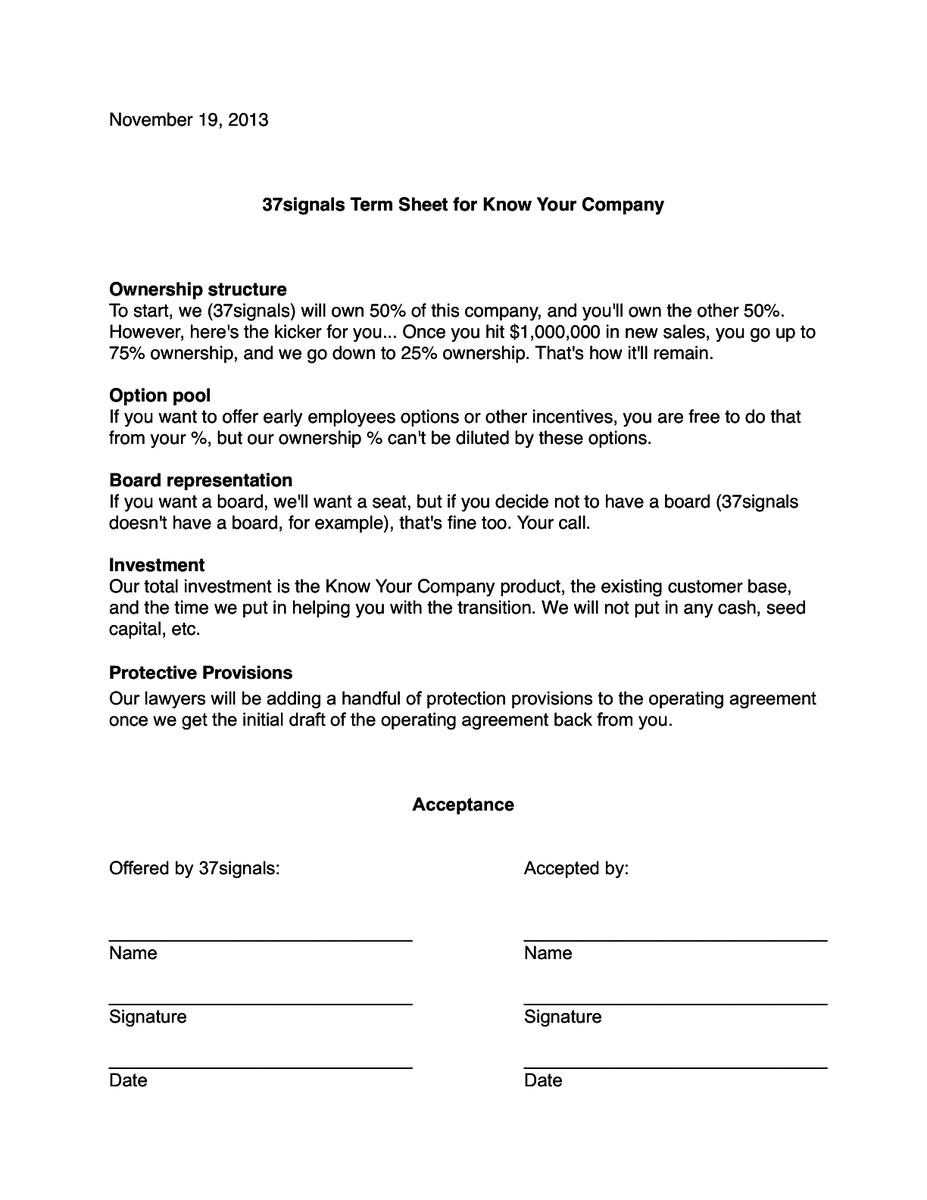
So we decided to give Claire half of it. We’d own 50%, she’d own 50%. Her 50% wouldn’t cost her anything.
We wanted her, she was up for the challenge, and the money that she would have to normally come up with to buy-in wasn’t an amount that mattered enough to us to put any hurdles in the way of making it happen. Plus, we didn’t have to mess around with silly valuations either. Why complicate things?
We’d maintain that 50/50 partnership until she generated $1,000,000 in new sales. It could take 3 weeks, it could take 3 months, it could take 3 years. The $1,000,000 was cumulative — she’d hit it whenever she hit it. And when she did, we’d flip the partnership in her favor. She’d now own 75%, and we’d own 25%. And that’s how it would run in perpetuity.
It was that simple.
I’ve attached the actual term sheet to prove it.
It was signed one day later on November 20th, 2013. She hit the $1,000,000 in revenue mark long ago, so today she’s got 75% and we retain 25%.
Things can be simple.
Talk to enough people about spinning things off, putting deals together, writing up agreements, coming to terms with people, etc. and you’ll inevitably hear how complicated it is.
But it’s not inherently complicated. It often becomes complicated. Just about everything can be made complicated.
Spend enough time doing business and you’ll notice that making things harder than they need to be comes naturally to most people.
I believe simple is actually the natural state of things. It’s simple until you make it complicated. This goes for just about anything in life and work.
I hope the way we structured this deal — simple terms, a single one-page plain language agreement, a handshake, and a ‘we’re here to help any time’ will serve as an example of how simple a deal can be.