Correction: June *11* 8pm, I will give the PSW public science lecture at the Cosmos Club in DC
And you (yes, you) can watch online:
https://t.co/qN88LIODeE
Thought Emerges from Neural Dynamics
How Science is Unraveling the Nature of Cognition and Consciousness.
#neuroscience
And Nature Communications (2026) — computational mechanisms of visual object coding DOI: https://t.co/Oo7Hdka98d
Deeply grateful to my collaborators, mentors, and especially the patients who made this work possible.
Thrilled to share that our recent Nature Human Behaviour paper on feature-based encoding of face identity by single neurons in the human amygdala and hippocampus has been selected as a finalist for the 2026 SANS Innovation Award.
This work is part of a broader set of recent studies: • Current Biology (2025) — neural computational framework for face processing DOI: https://t.co/9iM9sm85Pm
• Nature Communications (2025) — object representation and memory coding DOI: https://t.co/Zm5HxyZOLO
I am recruiting PhD students for 2026! ⏰✨📝
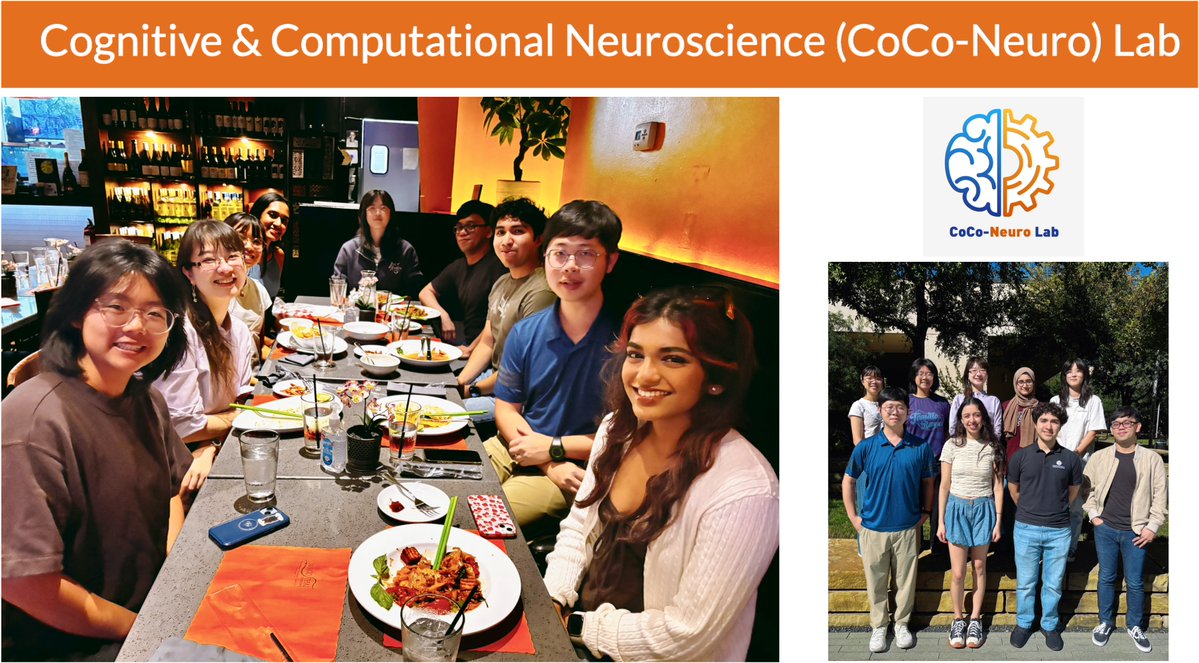
My lab @BBSutdallas@UT_Dallas studies human cognitive neuroscience 🧠🧠🧠 in high-level perception and cognition using neuroimaging, naturalistic stimuli, computational methods, and AI models 🤖🤖🤖 in both typical and neuropsychological populations 💻💻💻!
If you'd like to meet me in person, please come and talk to me at SfN in San Diego this year!
🏷️Lab: https://t.co/pDxNRtQIxr
📔PhD (DDL Nov 15 & Dec 1): https://t.co/Jy6nAzzap2
✅Application details: https://t.co/JkWAvjhVKo
Recent discussions (e.g. @RichardSSutton on @dwarkesh_sp’s podcast) have highlighted why animals are a better target for intelligence — and why scaling alone isn’t enough.
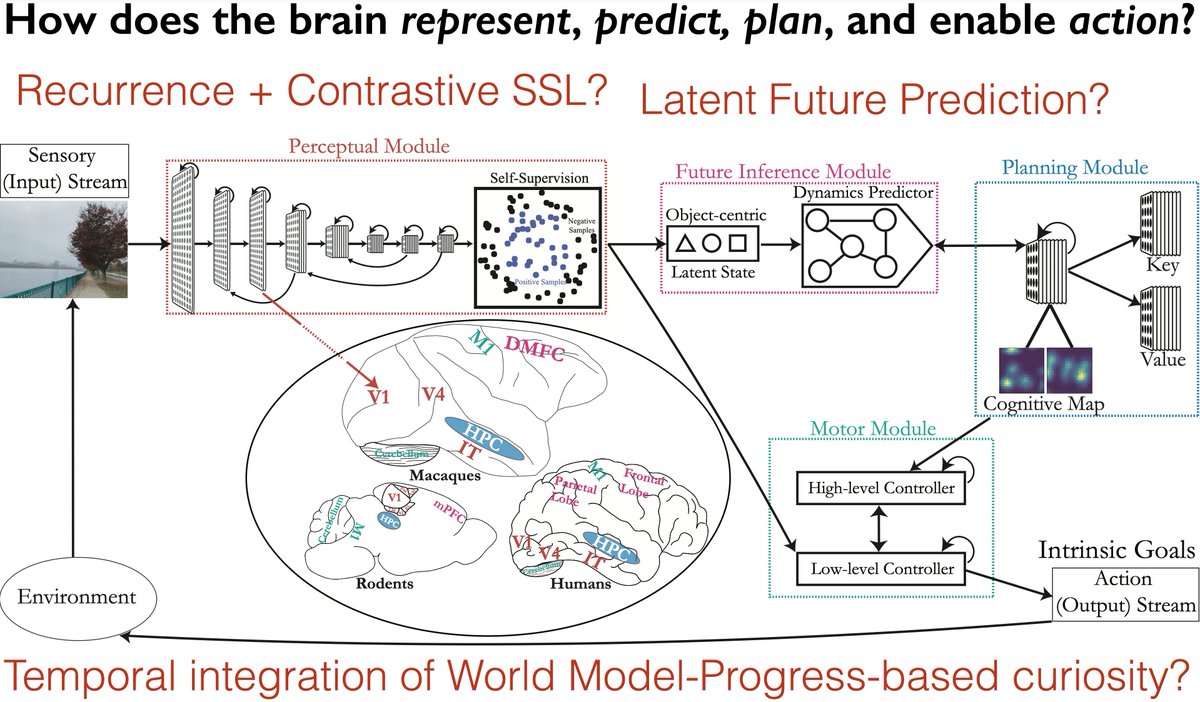
In my recent @CMU_Robotics seminar talk, “Using Embodied Agents to Reverse-Engineer Natural Intelligence”, I present a cohesive framework that develops these notions further, grounded in both machine learning and experimental neuroscience.
In it, I outline our efforts over the past four years (and our lab’s work over this past starting year) to set the capabilities of humans and animals as concrete engineering targets for AI. By grounding agents in perception, prediction, planning, memory, and intrinsic motivation — and validating them against large-scale neural data from rodents, primates, and zebrafish — we show how neuroscience and machine learning can form a unified *science of intelligence*.
This journey culminates in our first task-optimized “NeuroAgent”, integrating advances in visual and tactile perception (including our NeurIPS ’25 oral), mental simulation, memory, and intrinsic curiosity. I also touch on the Contravariance Principle/Platonic Representation Hypothesis, our proposed NeuroAI Turing Test, and why embodied agents are essential for building not just more capable, but also more reliable, autonomous systems.
I close with reflections on AI safety and alignment, and the Q&A explores open questions: from building physically accurate (not just photorealistic) world models to the role of autoregression and scale.
Our brain-to-voice synthesis brain-computer interface paper was published in @Nature today! This neuroprosthesis synthesized the voice of a man with ALS instantaneously, enabling him to ‘speak’ flexibly and modulate the prosody of his BCI-voice. 1/7
Paper: https://t.co/STKtfgypAW
🚨3rd preprint from my lab out! with my awesome grad @LuJunsong19474🌟
How do people mentally represent numerous inferences about others?🤯
Prior work proposed low-dimensional rep with latent dimensions
We show high-dimensional network brings new insights🧵👇
https://t.co/0zNoxltLIp
My lab (CoCo-Neuro) at UTD is recruiting a lab manager/tech to start in the summer of 2024 (2 years preferred). If you have a strong computational background and are interested in cog neuroscience, this position is for you! Apply through the official post:
https://t.co/pNYnRhLWui
🚨 New paper 🚨
In this new theoretical paper @NYASciences with @LinChujun, Sai Sun, @nanrun2, @KohitijKar, and Shuo Wang, we reviewed recent work on the neural computational mechanisms of social trait and emotion perception from faces. https://t.co/g8HQs68WxJ 🧵
🌟Are you interested in how people think about each other?🌟
🚨Join my lab to advance this knowledge using naturalistic designs, computational methods, & any other new, exciting approaches that you can think of!🤯
PhD application deadline: Dec 6th. See https://t.co/99D7N11d6b
Thanks to Runnan Cao (@nanrun2), Lukas Kunz (@lks_kunz), Shuo Wang, & Joshua Jacobs (@neurojosh) for working on this piece with us!
Let me know of any access issues - I can send a copy and/or preprint version here: https://t.co/EGLGN93mn8
Questions, comments, etc, welcome!