⚡️ Excited to share that I am starting an AI+Education company called Eureka Labs.
The announcement:
---
We are Eureka Labs and we are building a new kind of school that is AI native.
How can we approach an ideal experience for learning something new? For example, in the case of physics one could imagine working through very high quality course materials together with Feynman, who is there to guide you every step of the way. Unfortunately, subject matter experts who are deeply passionate, great at teaching, infinitely patient and fluent in all of the world's languages are also very scarce and cannot personally tutor all 8 billion of us on demand.
However, with recent progress in generative AI, this learning experience feels tractable. The teacher still designs the course materials, but they are supported, leveraged and scaled with an AI Teaching Assistant who is optimized to help guide the students through them. This Teacher + AI symbiosis could run an entire curriculum of courses on a common platform. If we are successful, it will be easy for anyone to learn anything, expanding education in both reach (a large number of people learning something) and extent (any one person learning a large amount of subjects, beyond what may be possible today unassisted).
Our first product will be the world's obviously best AI course, LLM101n. This is an undergraduate-level class that guides the student through training their own AI, very similar to a smaller version of the AI Teaching Assistant itself. The course materials will be available online, but we also plan to run both digital and physical cohorts of people going through it together.
Today, we are heads down building LLM101n, but we look forward to a future where AI is a key technology for increasing human potential. What would you like to learn?
---
@EurekaLabsAI is the culmination of my passion in both AI and education over ~2 decades. My interest in education took me from YouTube tutorials on Rubik's cubes to starting CS231n at Stanford, to my more recent Zero-to-Hero AI series. While my work in AI took me from academic research at Stanford to real-world products at Tesla and AGI research at OpenAI. All of my work combining the two so far has only been part-time, as side quests to my "real job", so I am quite excited to dive in and build something great, professionally and full-time.
It's still early days but I wanted to announce the company so that I can build publicly instead of keeping a secret that isn't. Outbound links with a bit more info in the reply!
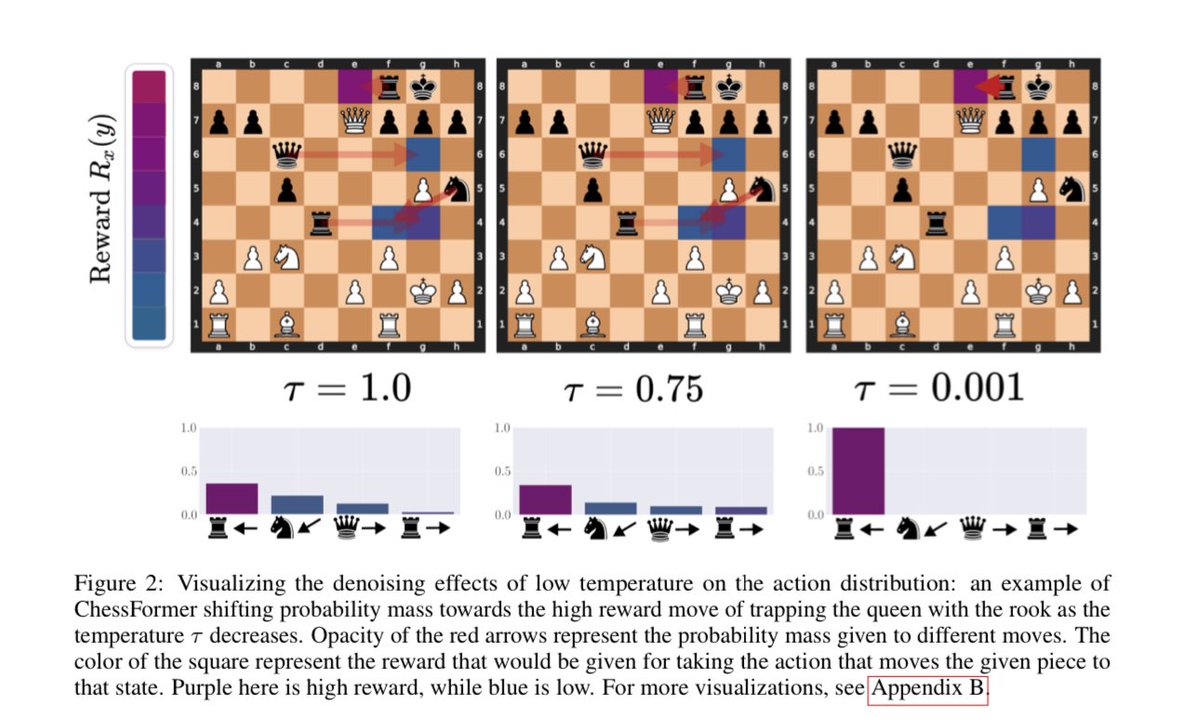
Awesome result on a way in which AIs can outperform all the individual human experts whose data it is trained on: the AI is effectively aggregating the wisdom of the expert crowd.
When trained on diverse expert knowledge, the AI acts like a majority vote, which beats individuals
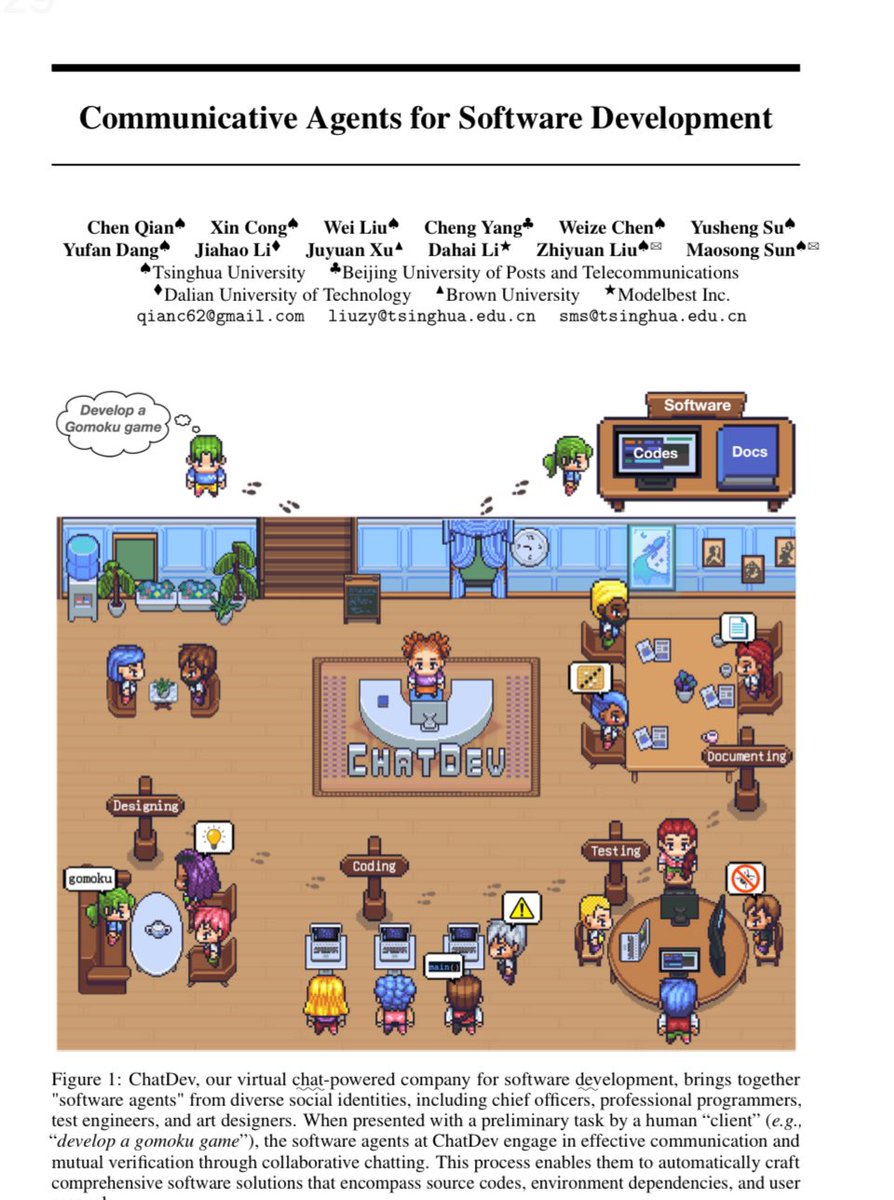
A really intriguing set of findings of AI researchers that needs more exploration, replication, and expansion: AI agents given personalities and backgrounds, and placed into a virtual formal organization (with CEOs, VPs, etc.) outperform normal AI in doing complex tasks.
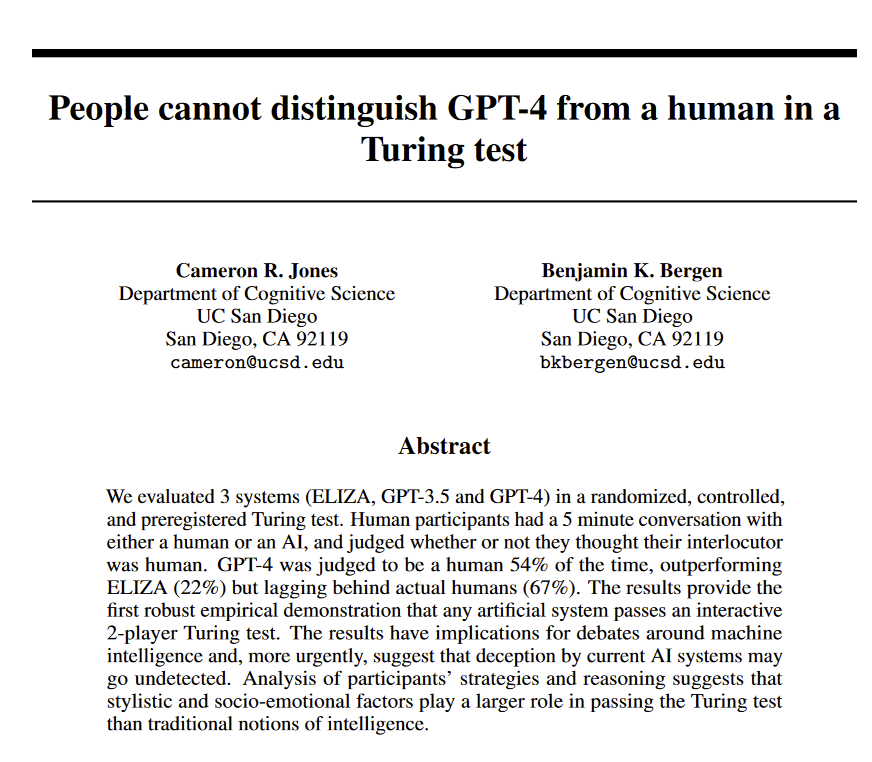
👀 "the first robust empirical demonstration that any artificial system passes an interactive 2-player Turing test."
GPT-4 was judged to be human by other humans 54% of the time (though humans were judged to be human 67% of the time). https://t.co/JCNUCG2AP5
Multi-agent collaboration has emerged as a key AI agentic design pattern. Given a complex task like writing software, a multi-agent approach would break down the task into subtasks to be executed by different roles -- such as a software engineer, product manager, designer, QA (quality assurance) engineer, and so on -- and have different agents accomplish different subtasks.
Different agents might be built by prompting one LLM (or, if you prefer, different LLMs) to carry out different tasks. For example, to build a software engineer agent, we might prompt the LLM: "You are an expert in writing clear, efficient code. Write code to perform the task …".
It might seem counterintuitive that, although we are making multiple calls to the same LLM, we apply the programming abstraction of using multiple agents. I'd like to offer a few reasons:
- It works! Many teams are getting good results with this method, and there's nothing like results! Further, ablation studies (for example, in the AutoGen paper cited below) show that multiple agents give superior performance to a single agent.
- Even though some LLMs today can accept very long input contexts (for instance, Gemini 1.5 Pro accepts 1 million tokens), their ability to truly understand long, complex inputs is mixed. An agentic workflow in which the LLM is prompted to focus on one thing at a time can give better performance. By telling it when it should play software engineer, we can also specify what is important in that subtask: For example, the prompt above emphasized clear, efficient code as opposed to, say, scalable and highly secure code. By decomposing the overall task into subtasks, we can optimize the subtasks better.
- Perhaps most important, the multi-agent design pattern gives us, as developers, a framework for breaking down complex tasks into subtasks. When writing code to run on a single CPU, we often break our program up into different processes or threads. This is a useful abstraction that lets us decompose a task -- like implementing a web browser -- into subtasks that are easier to code. I find thinking through multi-agents roles to be a useful abstraction.
In many companies, managers routinely decide what roles to hire, and then how to split complex projects -- like writing a large piece of software or preparing a research report -- into smaller tasks to assign to employees with different specialties. Using multiple agents is analogous. Each agent implements its own workflow, has its own memory (itself a rapidly evolving area in agentic technologies -- how can an agent remember enough of its past interactions to perform better on upcoming ones?), and may ask other agents for help. Agents themselves can also engage in Planning and Tool Use. This results in a cacophony of LLM calls and message passing between agents that can result in very complex workflows.
While managing people is hard, it's a sufficiently familiar idea that it gives us a mental framework for how to "hire" and assign tasks to our AI agents. Fortunately, the damage from mismanaging an AI agent is much lower than that from mismanaging humans!
Emerging frameworks like AutoGen, Crew AI, and LangGraph, provide rich ways to build multi-agent solutions to problems. If you're interested in playing with a fun multi-agent system, also check out ChatDev, an open source implementation of a set of agents that run a virtual software company. I encourage you to check out their github repo and perhaps even clone the repo and run the system yourself. While it may not always produce what you want, you might be amazed at how well it does!
Like the design pattern of Planning, I find the output quality of multi-agent collaboration hard to predict. The more mature patterns of Reflection and Tool use are more reliable. I hope you enjoy playing with these agentic design patterns and that they produce amazing results for you!
If you're interested in learning more, I recommend:
- Communicative Agents for Software Development, Qian et al. (2023) (the ChatDev paper)
- AutoGen: Enabling Next-Gen LLM Applications via Multi-Agent Conversation, Wu et al. (2023)
- MetaGPT: Meta Programming for A Multi-Agent Collaborative Framework, Hong et al. (2023)
[Original text: https://t.co/4gTbcQfikx ]
The big three guides to the underlying technology of LLMs for non-specialists:
Wolfram’s essay on how ChatGPT works: https://t.co/7LY5893IWs
Lee and Trot’s essay on LLMs with minimum jargon: https://t.co/7DzzJ0LPpg
3blue1brown’s new video on transformers: https://t.co/Yek9M8iftV
5. Make A Deal
6. Orient Them
7. Shake Things Up (Gently)
You'll have to read the post to understand what these all mean, but I think I did a fair job of documenting what I learned (often the hard way) over many hours at the front of a room.
https://t.co/9VPlJnfaTZ
Full house for my lecture hosted by the Center of Mathematical Sciences and Applications at Harvard yesterday.
Video will be available from the CMSA YouTube channel.
Slides here: https://t.co/o5N4n5vHLM
#RayBanMeta
By assuming that technical talent is fungible and interchangeable, a previously-successful engineering company will be run into the ground...
...along with a few of its own products and everyone on board.
It's astonishing how certain types of managers will prefer less-talented-but-more-controlable scientists and engineers over more brilliant and creative ones who may be more difficult to control, somewhat unpredictable, and sometimes annoying.
Here is the thing: scientific and technical breakthroughs are unpredictable by management, and progress often comes from folks with unconventional personalities and backgrounds.
As I was told by my management at Bell Labs: "You don't have to be crazy to work here, but it helps" 😄
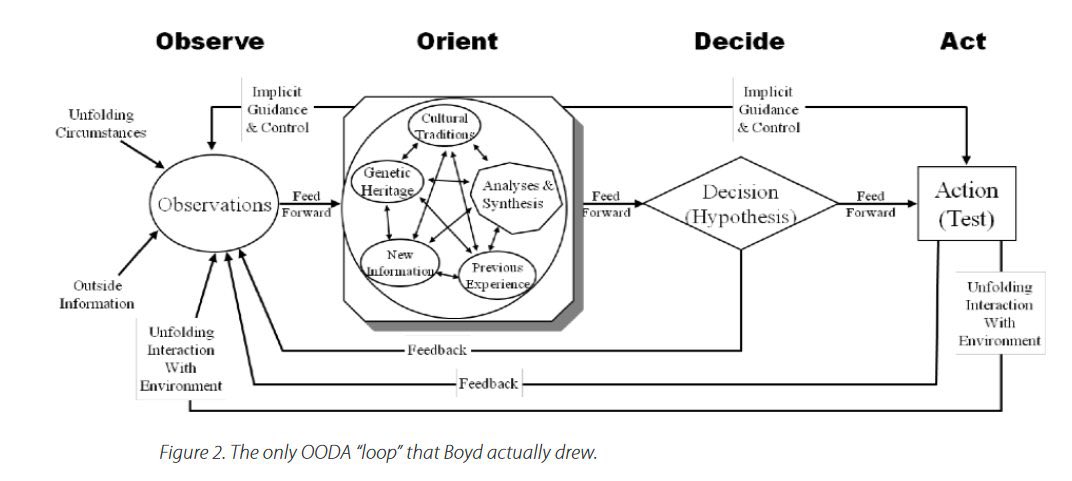
This is a fascinating frame: “OODA loop as a way of making luck work for you”
The OODA "loop" was developed by military strategist John Boyd to explain why some pilots won in air combat, but works as a profound mediation about dealing with uncertainty & using pacing to win 1/5
Today, with @Tim_Dettmers, @huggingface, & @mobius_labs, we're releasing FSDP/QLoRA, a new project that lets you efficiently train very large (70b) models on a home computer with consumer gaming GPUs. 1/🧵
https://t.co/UAsWOLtn7a
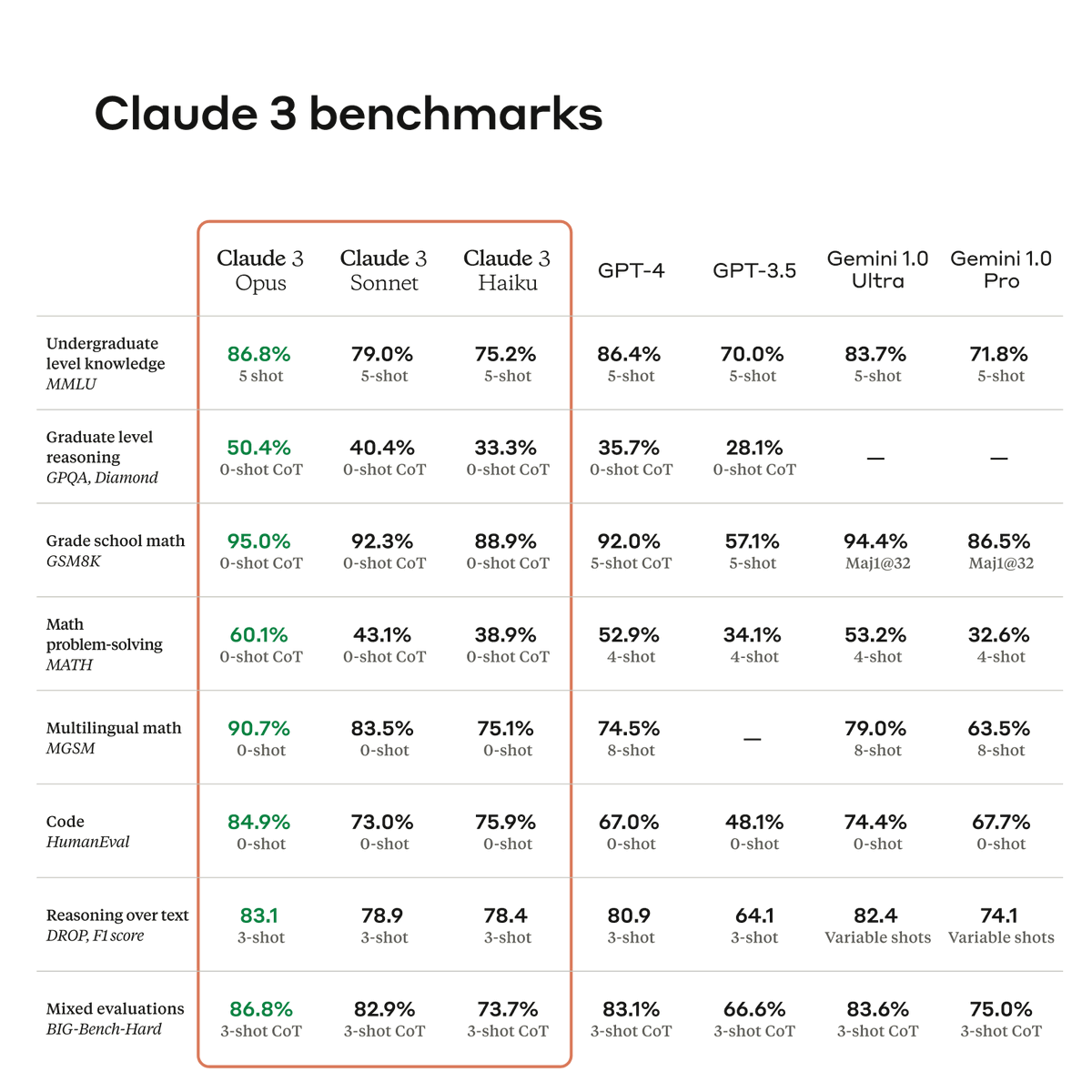
Today, we're announcing Claude 3, our next generation of AI models.
The three state-of-the-art models—Claude 3 Opus, Claude 3 Sonnet, and Claude 3 Haiku—set new industry benchmarks across reasoning, math, coding, multilingual understanding, and vision.