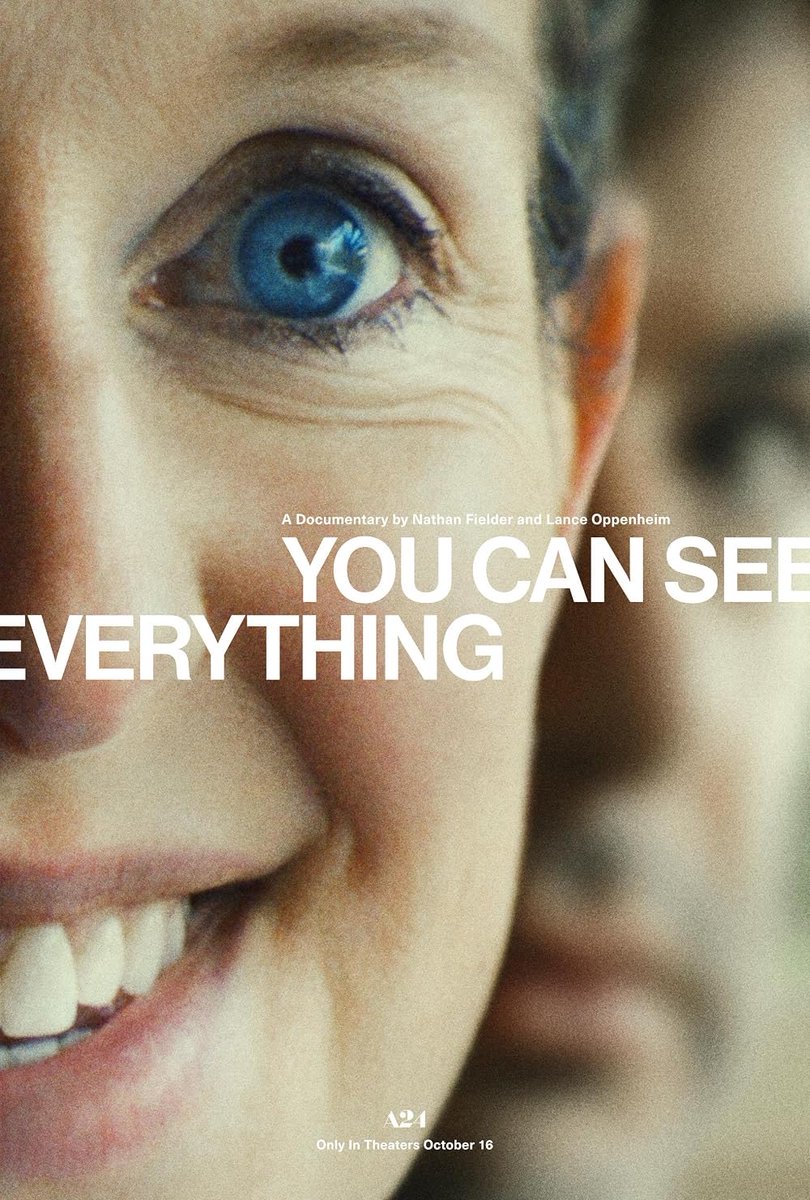
If you have You Can See Everything on the brain, I strongly recommend watching Close-Up and F for Fake if you haven’t seen them. Both came to mind while thinking about YCSE, which is EXTREMELY high praise.
Every recent Nathan Fielder project expertly touches the deep existential horror of not being able to ever fully know or understand another human being or their actions.
YOU CAN SEE EVERYTHING checks all the boxes:
✅ Devilish & voyeuristic director deliberately creates chaos during an already tumultuous time in a couple’s life
✅ Couple desires fame more than family or each other, but it’s not clear who has the power or who is a victim
✅ Explores the dynamic between two men enamored by one insane woman
✅ Exploiters are exploited
✅ Full-frontal shot of a uniquely ugly penis
Welcome back THE CURSE!
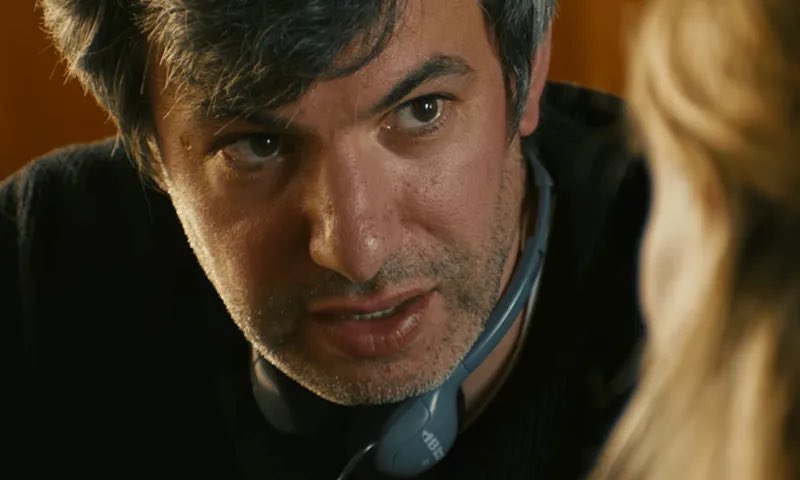
Nathan Fielder is a genius. There’s no other way to put it. In what I believe to be the apex of Fielder’s career, You Can See Everything (🌟🌟🌟🌟🌟) is a masterpiece. Unquestionably deserving of The Five Star Treatment. But perhaps the single biggest compliment I can pay Fielder & this movie is that Fielder’s work goes beyond genre-defining: it’s genre-expanding. In other words, Fielder just changed my expectations of what it means to make a documentary. I don’t believe we’ve ever gotten a documentary like this before. As I sit here and write this review in disbelief, I question if we ever will again. The way co-directors Fielder and Lance Oppenheim create a journey that shoves you in the faces of two stone-cold sociopaths is a magic trick. This is a film that’s 3 hours long but somehow too short. I could’ve watched another 3 hours if you let me. Whatever Fielder is serving, I’m ordering.
The crux of the story here is straightforward yet mind-boggling; in 2023, before she was set to begin an 11 year long prison sentence, notorious Theranos founder and fraudster Elizabeth Holmes and her partner Billy Evans have invited Nathan Fielder to live with them and document her final days of freedom, encroaching on a family’s final moments together. What follows is a documentary that blurs the line between truth and fiction with such force that it disappears all together. Every genuine moment might be a performance. Every conversation may have an ulterior motive. Every awkward silence could be strategic. And when the subject of Fielder’s documentary is no longer accessible to him, he continues his exploration and hunt for truth in the unique way that only Fielder knows how.
There is simply so much to unpack with this movie, because the conceit driving it all is an inherent oxymoron. How do you create a documentary, a piece of film designed to be transparent and truth-bearing, about people who are famous for being frauds? Who successfully lied and conned people who sit at the highest levels of government and industry? Can one document deception without participation? A documentary is inherently performative; everyone involved has a motive. That is dialed up to an 11 here, as Holmes and Evans are the quintessential final bosses of deceit and discomfort. You never know where you stand with either one. They are a two person cult. The second you start feeling bad for one, you wonder if you’re falling into their trap. No moral evaluation can be relied upon, because the audience’s perspective shifts constantly throughout the entire film.
Nathan Fielder was built in a lab for this movement. He is the perfect person for the job. He built a decades-long career in sitting back, allowing people to stew in their discomfort, and seeing what comes next. And to be totally honest, I think Holmes underestimated his intelligence. When a conversation reaches an awkward pause where a normal person would step in to fill the silence, Fielder lets it lie to see who chooses to fill it and with what. But here he may have met his match, in a couple that relies on prolonged eye contact, the guise of full access, and weaponized helplessness. One of the documentary’s great feats (of which there are many) is making us wonder if Fielder has gotten pulled too deep into their orbit. Fielder’s own biases may make him susceptible to the very manipulation he’s trying to expose. A great final moment between Fielder and his rehearsal scene partner brilliantly mimics and reverses the roles of his final conversation with Holmes before jail. Has the deceived become the deceiver….
delete tiktok. watch old movies. embrace boredom. quit doomscrolling. eat without stimulation. hang out in book shops. slow your mornings down. walk without headphones. start believing in yourself. create phone boundaries. stare out the window. visualize your future. learn new skills. seek discomfort. experience life.
People will love The Residents, Captain Beefheart, Mr. Bungle, Velvet Underground, and Frank Zappa (me included these are mainly my favorite bands) but decide to collectively draw the line at fucking Yoko Ono
Nakayama perdió contra Nenecho. Después abandonó el PLRA para fundar su partido, no juntó las firmas y volvió. Su campaña: libertarismo mal copiado de Milei, cero propuestas y cortar sandías. ¿Y ahora pretende que todos salgamos a votarlo? ¿En serio? ¡Jajajaja!
"The movie really is about how much Kubrick hated King" is my hot take about The Shining
He saw Jack as King's self insert:
An alcoholic boomer who blames the USA (The Hotel) for all of his problems
Not knowing that he IS the Hotel
Kubrick had King pegged from the start.
-Que nos pueden decir de Palestina?
+Que sos un pelotudo
-Me refiero al genocidio
+Y eso, que hay un genocidio, lo acabas de decir vos TARADO
-Hace falta insultarme?
+Si
JAJJAJAJAAJA Y ESTE GENIO?