Timothy Arcuri at UBS: We’re seeing a clear shift! Agentic AI is bringing CPUs back to the center of the story.
From UBS´ expert calls, Arcuri believes server CPU TAM can grow about 5x to roughly $ 170B by 2030, driven by higher CPU usage in AI workloads and new demand from standalone CPU racks.
From a competitive standpoint, he sees all architectures benefiting, but not equally. In his view, ARM is best positioned given its efficiency and ability to scale, with potential to reach around 40 to 45 percent unit share by 2030.
He is raising his price target on $ARM to $245 from $175, reflecting stronger earnings growth and a more compelling long term outlook.
He also expects $AMD and $INTC to see meaningful upside from this trend, supported by both server demand and an AI driven PC refresh cycle.
Bottom line: AI compute is expanding, and CPUs are becoming a much bigger part of the story than many expected.
The entire bubble in photonics is due to a bunch of stock promoters being followed by guys with a bit of cash who don't know much about stocks. There are companies building semi components making zero money that GPT thinks are "bottlenecks" which have repriced 100x in a year
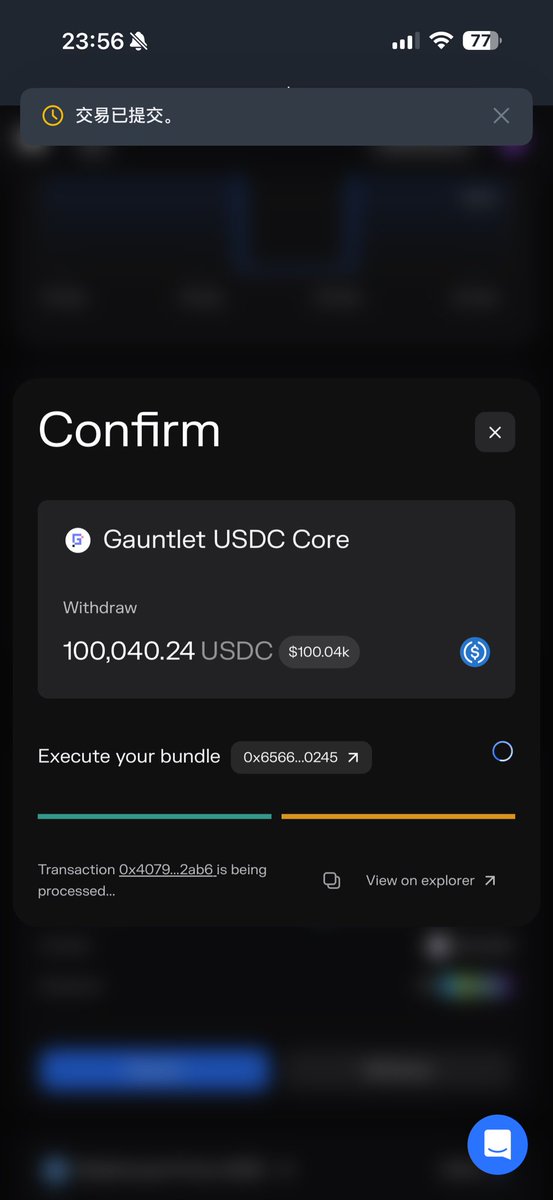
Currently, available liquidity in the Gauntlet USDC Core vault is <0.01 USDC, and I am unable to withdraw. Following the Resolv exploit, the wstUSR/USDC market is stuck. I understand you are monitoring the liquidity, but I kindly hope you can provide a rebalance timeline and recovery plan as soon as possible. Please prioritize this, thank you! @gauntlet_xyz@mattdobel@ChiangRei@RiskRinger@CarsonMBrown@DemoSkalkotos@tarunchitra
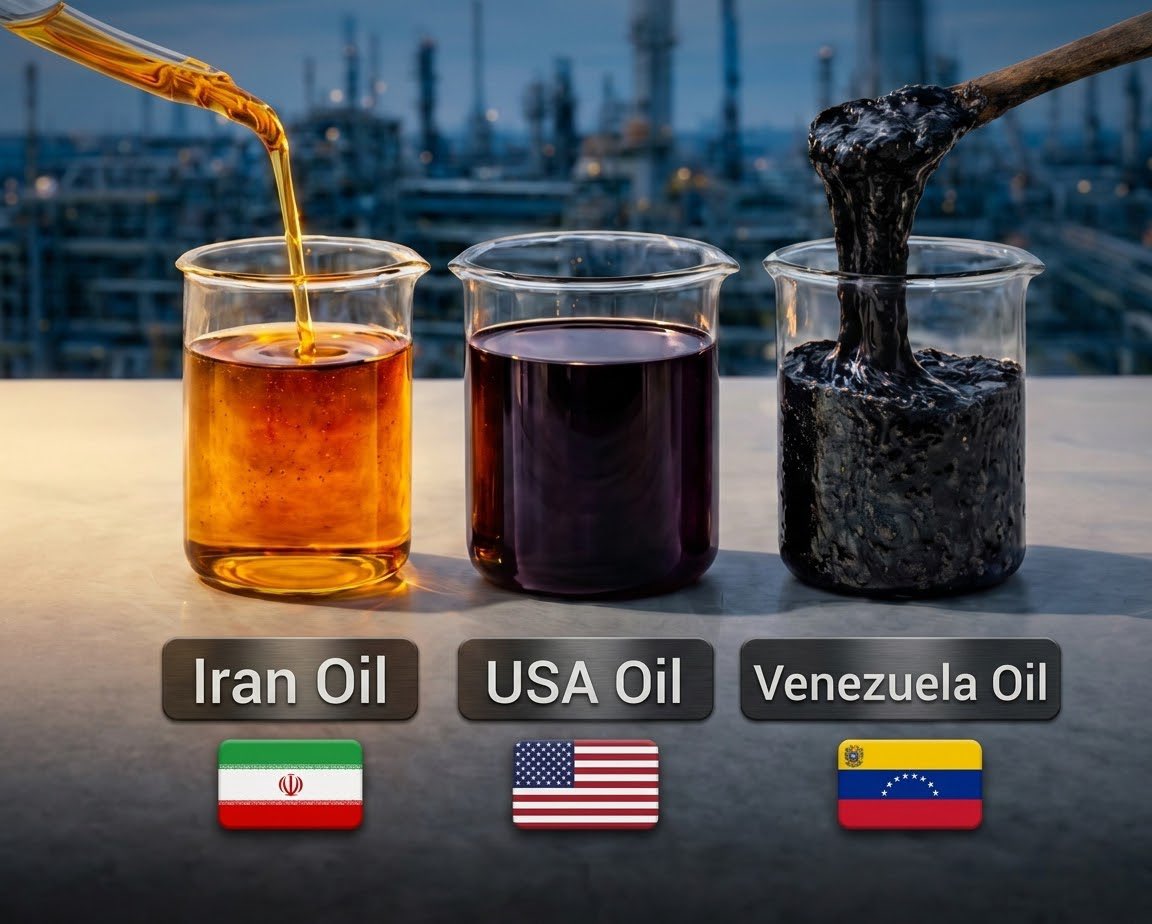
Everyone talks about Iranian oil in barrels. Nobody talks about what is inside them. That difference is why Western refineries have been running shadow networks through Dubai for twenty years to get it despite the sanctions.
Crude oil is not a uniform commodity. It is a spectrum of hydrocarbons with different molecular weights, and the composition of a given crude determines how easily it converts into the products refineries actually want to sell: gasoline, diesel, jet fuel, heating oil. The measurement that captures this is API gravity. Higher API gravity means lighter crude with shorter carbon chains, which means lower energy cost to crack, lower processing cost to refine, and higher yield of the light distillates that carry premium pricing. Lower API gravity means heavier crude requiring more energy, more processing steps, more capital equipment, and producing a higher share of lower-value residuals.
Iranian Light crude runs at 33 to 36 degrees API gravity with sulfur content between 1.36 and 1.5 percent. That is the refinery sweet spot. It is light enough to yield high fractions of gasoline and middle distillates without excessive processing costs, but heavy enough to produce the full range of products that complex refineries are designed to process. It is what petroleum engineers call an optimal blend crude.
Now compare the alternatives.
Venezuelan Merey heavy crude runs at approximately 16 degrees API gravity with sulfur between 3 and 5 percent. Refining it profitably requires a coking unit, a hydrocracker, and an extensive desulfurization train. The equipment exists. The economics work for refineries purpose-built around Venezuelan feedstock. It is not a substitute for Iranian crude. It is a different product requiring different industrial infrastructure.
US West Texas Intermediate runs at 39 to 40 degrees API with sulfur below 0.25 percent. In theory, the cleanest and easiest crude to process. In practice, it is so light that it does not yield the heavier middle distillates a complex refinery needs to run at full capacity. European and Asian refineries built around medium crudes cannot switch to WTI without blending it with heavier crudes to achieve the molecular weight distribution their process units require. WTI is not a drop-in replacement for Iranian medium.
Iranian oil fits where both US shale and Venezuelan heavy do not. It is the liquid that flows through the middle of the global refining system without requiring either the coking infrastructure for heavy crudes or the blending operations for ultra-light shale. That molecular fit is why it commands a persistent premium above comparable grades. It is why Indian refineries maintained Iranian crude purchases through every round of sanctions and negotiated the logistics to keep that flow moving. It is why the Dubai shadow banking and trading network that the UAE is now considering dismantling existed in the first place.
The Strait of Hormuz does not just carry oil. It carries the specific category of oil that the global refining system was built to process most efficiently. Closing it does not just reduce supply. It removes the grade of crude that the system runs best on and forces every refinery in the world to run less efficiently on whatever it can find as a substitute.
That is the premium embedded in the $82 oil price. Not just volume. Molecular weight.
https://t.co/ULBgEzZ3A8
NEW: We are short Ether $ETH, and ETH-linked securities, incl. $BMNR.
We think ETH tokenomics are impaired following the December 2025 Fusaka upgrade. Vitalik knows it and is selling, while $ETH's most ardent bull, Tom Lee, is throwing good money after bad.
$ETH is going lower.