Looking forward to speaking on 'Ideal Analgesic Technique' at the Obesity Anesthesia Course
@ESPCOP preCongress @euroanaesthesia#ESAIC2026#Rotterdam
And also debating 'Day Case Sleeve Gastrectomy' with Prof Jan Mulier at the Obesity Anesthesia Research Forum! #Controversial
Come to Amsterdam in december
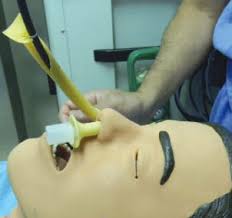
Awake flexible intubation course. A core skill for anesthesiologists and critical care specialists
Info and registration https://t.co/Wmt8Aqi6mA
#airway#flexibleintubation
Charles Dickens fought his depression by walking through London at night. One October he set out at 2 in the morning and walked 30 miles, all the way to his country home in Kent. In 1860 he wrote about why it worked. It took psychology another 150 years to catch up.
Dickens called his bad spells "spectres." They came back every time he started a new novel and sometimes hung on for months. His mood would fall apart, his sleep would collapse, and the only thing that pulled him out was walking.
He explained his method in an essay called "Night Walks," published on July 21, 1860 in his weekly magazine All the Year Round. He had tried fighting his insomnia from bed and lost. So he changed the plan. The fix, he wrote, was "getting up directly after lying down, and going out, and coming home tired at sunrise." A worried mind cannot fix itself by worrying more in bed. You have to get up and move.
Most nights he walked 12 to 20 miles. A friend called it "violent walking." Dickens wrote that on these walks his wandering self had "many miles upon miles of streets in which it could, and did, have its own solitary way."
Today, walking is one of the most powerful tools doctors have against depression. In 2012 a team of researchers pulled together eight high-quality studies of walking as a depression treatment. The effect was as strong as the antidepressants doctors actually prescribe.
The biggest test came from Duke University. The SMILE study took 202 adults with serious depression and split them into four groups: supervised exercise, home exercise, the drug Zoloft, or a placebo pill. After 16 weeks, the people who exercised did just as well as the people on Zoloft. A 2024 review of 75 studies covering 8,636 patients confirmed it. Walking should be one of the first things doctors try.
The reason is the thing Dickens stumbled onto in the dark. Depression runs on rumination, the looping bad thoughts that grind people down during the worst stretches. In 2015 Stanford researchers scanned people's brains before and after a 90-minute walk in a quiet park. The walkers had less activity in a part of the brain called the subgenual prefrontal cortex. That spot, deep behind your forehead, is the brain's worry loop. After the walk, the worry loop got quieter. The walkers said they felt less stuck inside their own heads. The brain scans agreed.
A walking body shuts up a noisy mind. The street takes attention, the walking rhythm fills the head, and the dark spells lose their grip. Dickens called the streets his cure because they gave his brain somewhere else to be. The science 150 years later says he had it right. Depression hates a brain that is moving.
What an incredible day to open the @CdnTulipfest Festival. Thousands of people out to celebrate.
It was a true honour to welcome Princess Margriet of the Netherlands and Professor van Vollenhoven to the festival, alongside veterans, dignitaries, community leaders, and an enthusiastic crowd that brought so much energy to today’s event.
Bill Black, a 100-year-old veteran, addressed the crowd. It was a moving moment that reminds us all of the debt of gratitude we owe our veterans.
Quelle journée incroyable pour l'ouverture du festival @CdnTulipfest ! Des milliers de personnes se sont rassemblées pour faire la fête.
Ce fut un véritable honneur d'accueillir la princesse Margriet des Pays-Bas et le professeur Pieter van Vollenhoven au festival, aux côtés d'anciens combattants, de dignitaires, de responsables locaux et d'une foule enthousiaste qui a insufflé tant d'énergie à l'événement d'aujourd'hui.
Un moment émouvant a été consacré à rendre hommage à Bill Black, un ancien combattant âgé de 100 ans dont le service nous rappelle pourquoi ce festival revêt une telle importance.
زميلي
لو قلنا انك مناوب
تم استدعاؤك بشكل عاجل إلى قسم الطوارئ
طفل 4 سنوات، وصل للطوارئ بـ Stridor حاد وهبوط أكسجين مفاجئ. عند محاولة تأمين مجرى الهواء، ظهر لك هذا المنظر :
كطبيب تخدير؛
وش أول أداة بتمد يدك عليها؟
وش الإجراء اللي "ممنوع" تسويه هنا عشان ما تسوء الحالة؟
“Read books. Travel when you can. Learn how to cook one meal exceptionally well. Sit in old bars and talk to strangers. Wear your best jacket to dinner. Appreciate good wine, good music, and good conversation. Do the right thing, even when no one is watching. Set the example for younger men who are watching you. Call your parents. Take long walks. Leave your phone behind sometimes. Become the kind of man people feel better after being around. Life is short, so live it well.”
-J.B. Lloyd
Dear David Attenborough,
Congratulations on reaching your 100th lap around the sun, young man!
Thank you for sharing the wonders of our world with such care and curiosity.
Here’s to many more years, slow and steady wins the race!
With admiration,
Jonathan the Tortoise
Winston Churchill fought his depression with bricks. He'd lay them for hours at his country home in Kent. He joined the bricklayers' union. And in 1921 he wrote about why it worked. It took psychology another 75 years to catch up.
He called his depression the "Black Dog." It followed him for decades. His method for fighting it back was as basic as it sounds: laying brick after brick, hour after hour.
Churchill spelled out his theory in a long essay for The Strand Magazine. People who think for a living, he wrote, can't fix a tired brain just by resting it. They have to use a different part of themselves. The part that moves the eyes and the hands. Woodworking, chemistry, bookbinding, bricklaying, painting. Anything that drags the body into a problem the mind can't solve by itself.
Modern psychology now calls this behavioral activation. It's one of the most-studied depression treatments out there. Depression sets a behavior trap. You feel bad, so you stop doing things, and doing less means less to feel good about. Feeling worse makes you do even less. The loop tightens until you can't breathe inside it.
Behavioral activation breaks the loop from the action side. You schedule the activity first, even when every part of you doesn't want to. Doing it produces small rewards: a wall gets straighter, a painting fills in, a messy room gets clean. Those small rewards slowly rewire the brain. Action comes first, and the feeling follows.
Researchers at the University of Washington put this to the test in 2006. They studied 241 adults with major depression and compared three treatments: behavioral activation, regular talk therapy, and antidepressants. For the people who were most severely depressed, behavioral activation matched the drugs. It beat the talk therapy. A 2014 review of more than 1,500 patients across 26 trials backed up the result.
Physical work like bricklaying does something extra on top of this. It crowds out rumination, the looping bad thoughts that grind people down during the worst stretches of depression. Bricklaying needs both hands and gives feedback brick by brick: each one is straight or crooked. After an hour you can see exactly how much wall you built. No room left for the mental chewing.
The line George Mack used in his post, "depression hates a moving target," is good poetry. The science behind it is sharper. Depression hates a brain that has somewhere else to be.
@UnitedChargers Hello Grizzl-e!
I already have the #classic Grizzl-e Duo installed and am charging two vehicles.
Can I get an upgrade to the Duo Connect and join the club?
Thanks!