Browser use w/ @LangChain + @typesafeai's Jev! Really fun to build.
... I found it's excellent at playing the Wikipedia Game. (But, it's also great at "folding laundry" type tasks, like finding cheap flights.)
LangChain developers can now easily build agents that can pay for things with @link (which works across any checkout online or programmatic payments over @mpp).
See their in-depth guide and demo! =>
we built Restock, an agent to automate ordering office supplies using @link by @stripe - pens, groceries, and more. it's open source, so you can fork it, modify it, and deploy it yourself with `mda deploy`
payments are handled via @mpp. Restock is a great example of a complex use case which handles user authentication, secure secrets storage, and human-in-the-loop payments approval.
source code 👇
You can now build an agent that:
🔎 Finds real products
🛒 Prepares purchases
💳 Pays
…with a person approving every order 👨💻
Ask in @slackhq, review the order, approve in @Stripe's Link agent wallet.
Built on MPP + Managed Deep Agents.
https://t.co/UY3PTfdWsX
Really sad to hear that Margaret Hamilton has passed away. Led an incredible life and was an inspiration to so, so, so many. From MIT: https://t.co/ndlwsqc5hp
We just shipped 🦾 MDA v0.9 - it adds dynamic agent definitions 🧱, Slack reactions 👀, and...
It's now possible to build agents which can dynamically set schedules.
Build tools for your agents around the new schedules SDK to let anyone using their agent schedule updates, deep research tasks, and more.
Happy building 🏗️
Really excited to try building against this protocol - there are a lot of interesting explorations in this space like web MCP and MPP.
but there's a lot of innovation that can happen in this space and PAP feels like a step in the right direction
Today we’re announcing Personal Agent Protocol — an open standard @Meta and @SierraPlatform are developing along with industry partners at @Genesys, @instinct, @RocketOTD, @Shopify, @stripe, and @Walmart. It will help define how personal agents interact with businesses and is open for anyone to implement.
Read more: https://t.co/9cWCVlCv8H
let me introduce you to the langchain stack
1. langgraph gives you this level of control
2. traces give you the complete run lineage
3. version your skills and instructions in context hub
4 & 5. deepagents has durable execution built in and manages the context window for you
Add web search to your Managed Deep Agents for free.
🌐 Powered by @p0
💻 No separate vendor accounts, managing extra PI keys, or wiring search tools necessary
A quick demo from @ndrezn
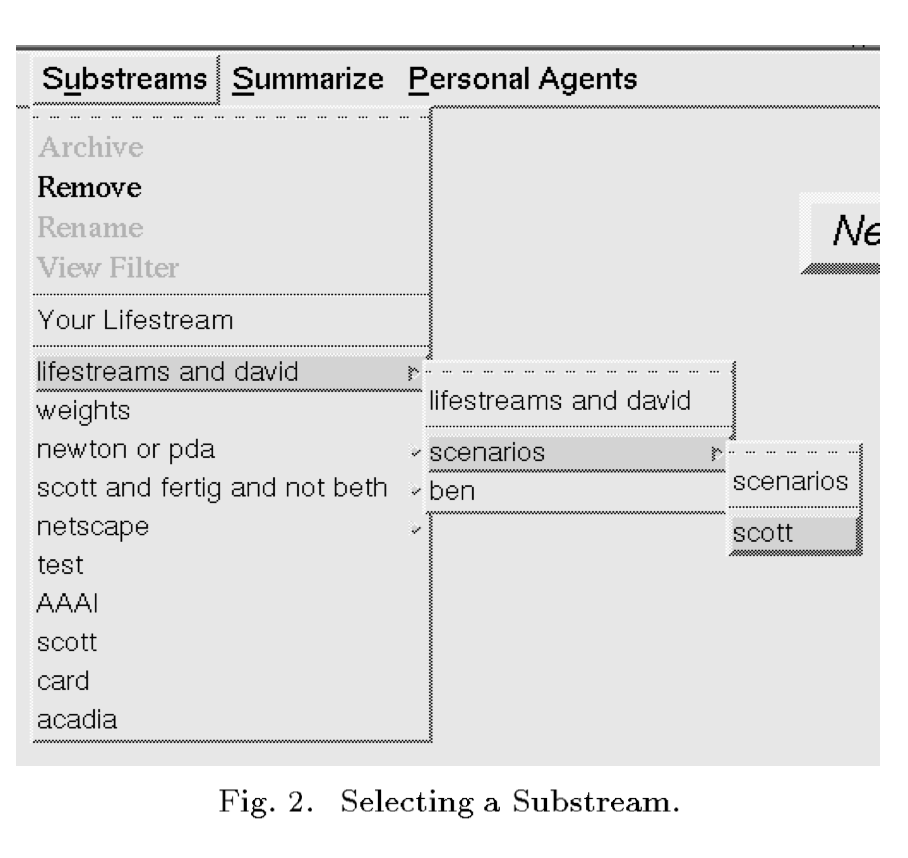
morning reading today is Lifestreams (1996) which Scott Jenson referenced in his excellent talk on innovating the desktop OS -
lots of interesting ideas in this paper.
- implicit organization: our interactions with the computer say more about intention than we might realize in terms of how information should be organized
- filesystem management as a first stem is a poor abstraction: we never write the name of the project on a piece of paper nor are we required to stuff it in a folder in real life, so why do we require this in our digital lives?
- document-first & compression-first design: our interactions with computers consist of the production of documents. let's optimize the computer to sort and find information out of this mind map
I think Obsidian might be the closest modern human-first implementation of a system like this but there are a ton of ideas in here I think are fascinating when thinking specifically about agentic memory and retrieval systems that are possible today with llms
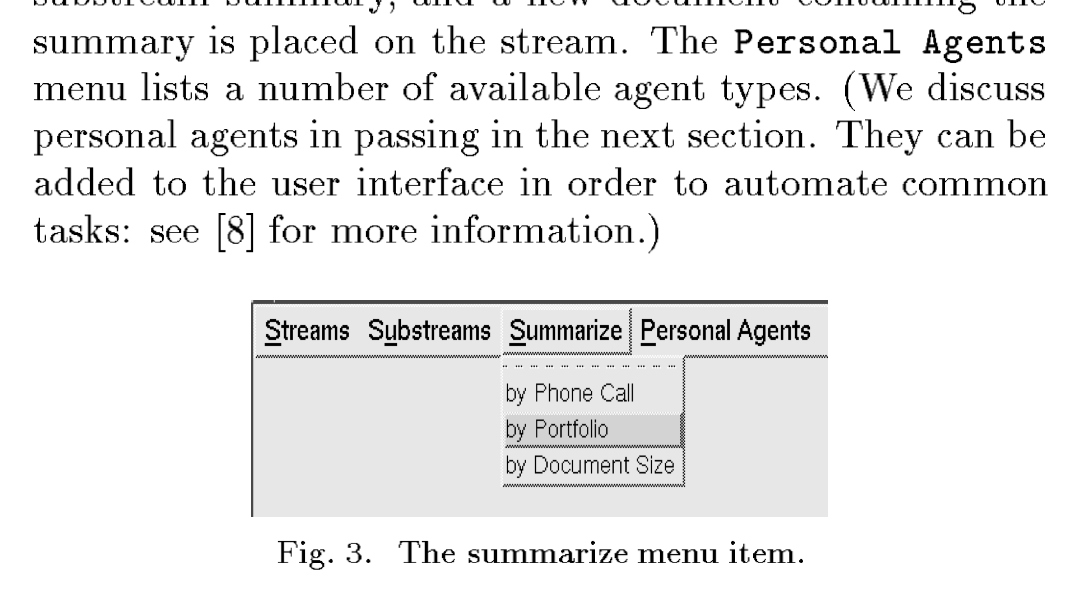
the proposal of "personal agents" as first-class citizen is likewise prescient - different agents designed for different functions.
in this paradigm a personal agent is defined as a specific function to avoid having to delegate common workflows to dedicated applications. similar perhaps to "skills" tools for llms today, or perhaps a complex agent in this paradigm might be akin to today's purpose-built agents (like what folks can build with deepagents)
We just released Polars 2.0.
It removed many of our legacy decisions makes the streaming engine our default and promotes SQL to a first class citizen within Polars.
It comes with initial out-of-core (spill to disk) support, a new Map data type and a lot of performance improvements. In fact, we think Polars is now one of the fastest analytical SQL engines on a single node. See benchmarks in the post: https://t.co/ATc6UzJqby
great piece from @sydneyrunkle on moving model routing upstream into the harness -
great way to think about managing routing more efficiently and building your harness to avoid context bloat.