Amazon AWS S3 is probably the largest filesystem in the world, storing 250-1000 Exabytes of data and 100M qps.
Andy Warfield wrote about building this by distributing "heat" with Reed-Solomon erasure coding, Rust-based formal verification and more.
Must-read for engineers.
'We are at the very beginning of time for the human race. It is not unreasonable that we grapple with problems...
Our responsibility is to do what we can, learn what we can, improve the solutions, and pass them on.'
-Richard Feynman, "The Value of Science" (1955)
Come authors and teachers
Who theorize with your pen
And open your minds
To the knowledge therein
For the old ways are gone
A new era begins
Terse books of past
Are being rewritten again
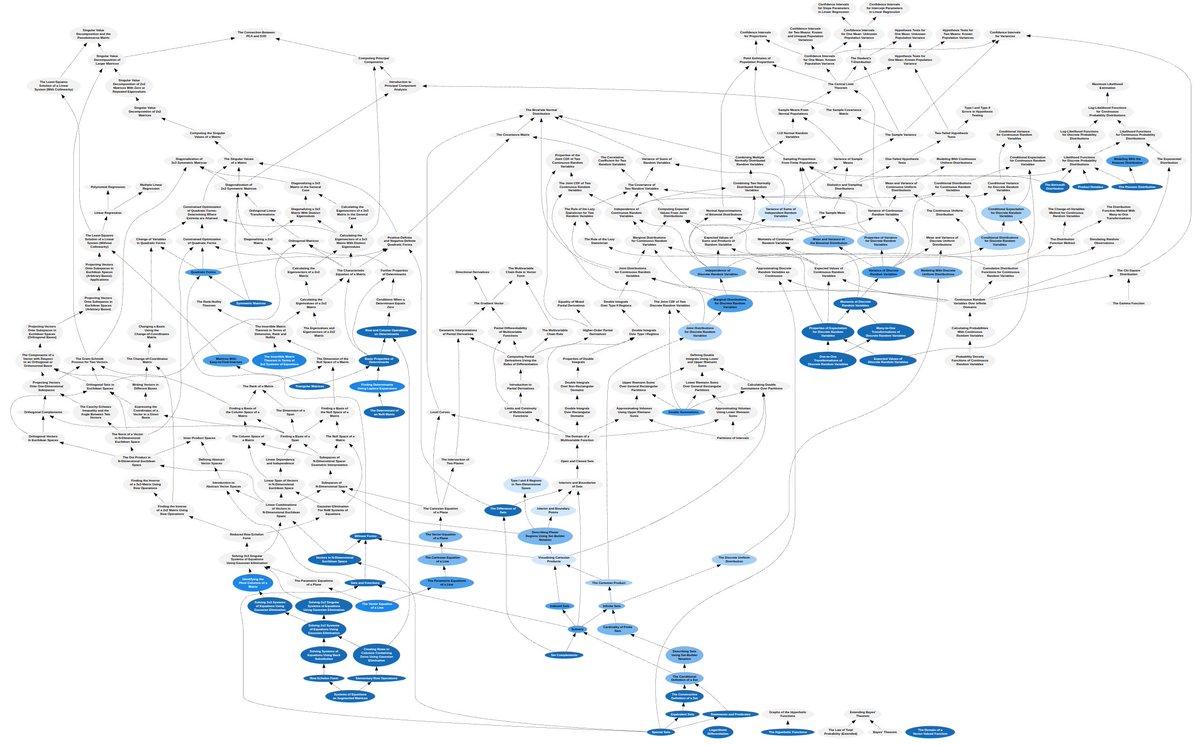
Because the proofs we find
Are worth explainin'
For the times they are a-changin'
The No Language Left Behind paper (NLLB) just appeared in Nature.
High-quality translation between 200 languages in any direction, with sparse training data, and many low-resource languages.
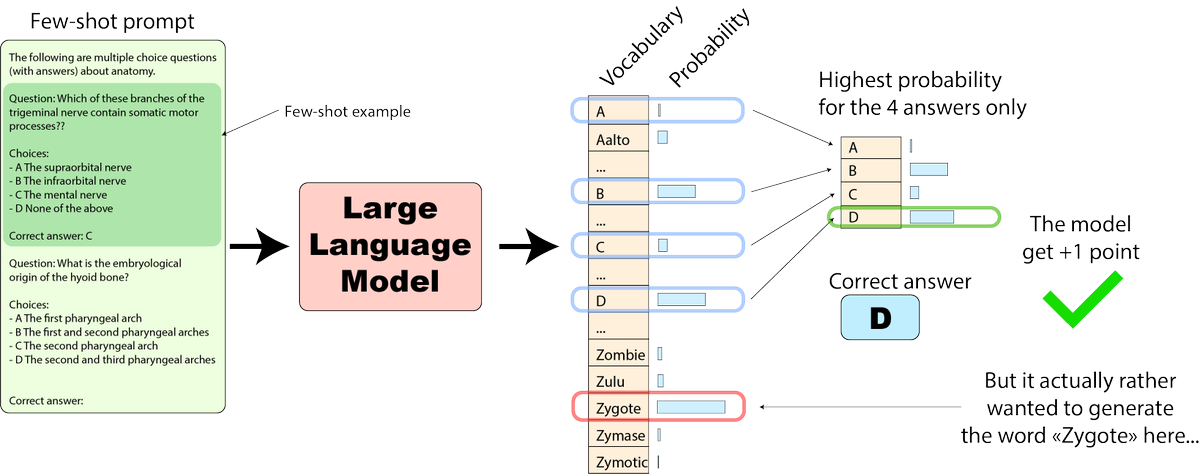
Nice, a serious contender to @lmsysorg in evaluating LLMs has entered the chat.
LLM evals are improving, but not so long ago their state was very bleak, with qualitative experience very often disagreeing with quantitative rankings.
This is because good evals are very difficult to build - at Tesla I probably spent 1/3 of my time on data, 1/3 on evals, and 1/3 on everything else. They have to be comprehensive, representative, of high quality, and measure gradient signal (i.e. not too easy, not too hard), and there are a lot of details to think through and get right before your qualitative and quantitative assessments line up. My goto pointer for some of the fun subtleties is probably the Open LLM Leaderboard MMLU writeup: https://t.co/Ns1hfEct4k
The other non-obvious part is that any open (non-private) test dataset inevitably leak into training sets. This is something people strongly intuitively suspect, and also why this GSM1k made rounds recently
https://t.co/0jzJNb2SXK
Even if LLM developers do their best, preventing test sets from seeping into training sets (and answers getting memorized) is difficult. Sure, you can do your best to filter out exact matches. You can also filter out approximate matches with n-gram overlaps or so. But how do you filter out synthetic data re-writes, or related online discussions about the data? Once we start routinely training multi-modal models, how do you filter out images/screenshots of the data? How do you prevent developers from e.g. vector embedding the test sets, and specifically targeting training to data that has high alignment (in the embedding space) with the test sets?
And the last component of this is that not all LLM tasks we care about are automatically evaluateable (e.g. think summarization, etc), and at that point you want to involve humans. And when you do, how do you control for all the variables involved, e.g. how much people pay attention to the actual answer, or the length, or the style, or how refusals are treated, etc.
Anyway, good evals are unintuitively difficult, highly work-intensive, but quite important, so I'm happy to see more organizations join the effort to do it well.
Sometimes, groups are genuinely found to differ a bit, on average. For instance, it may be found that men are a bit more dishonest than women or that Chinese kids outperform Americans at math.
At this point, people tend to go off the rails in one of 2 ways:
🧵