Our paper is finally out! 🥳 Together with @neuro_fabs we found a midbrain dopaminergic cell group that serves as a hub for courtship behavior in male zebra finch. Without those cells, males fail to produce any courtship behavior, but sing when alone! https://t.co/1JlsWNM8Jz
The Tschida Lab is keen to recruit a new PhD student in this upcoming cycle. We are on the hunt for students interested in the neural circuits that regulate vocal communication and other social behaviors. Happy to chat more with interested students! Please RT!
Scientists traced “wet-dog shakes” to a specific neuron response that starts at the back of the neck in most furry mammals. My latest for @NewsfromScience. https://t.co/06bWE9VUhi
I'm excited to share with you all our new paper (co-authors the twitterless Anna Lally and @Healeylab) out in @CommsBio!! I've made a tweet thread abstract below, spooky halloween style.🎃
Open access at the following link:
https://t.co/PZFlOz1lpp
1/14
@GeoSantiagoM@SACNAS@ASBMB@AcademicChatter@ASMicrobiology@ABRCMS @HHMINEWS @PSUmBiome I think the ones that are available are primarily at the local/University level :( the only one I know for non-european citizens is AAUW: https://t.co/qlQ7GaBHlo
European citizens have more options including BIF: https://t.co/15f16JQIJC
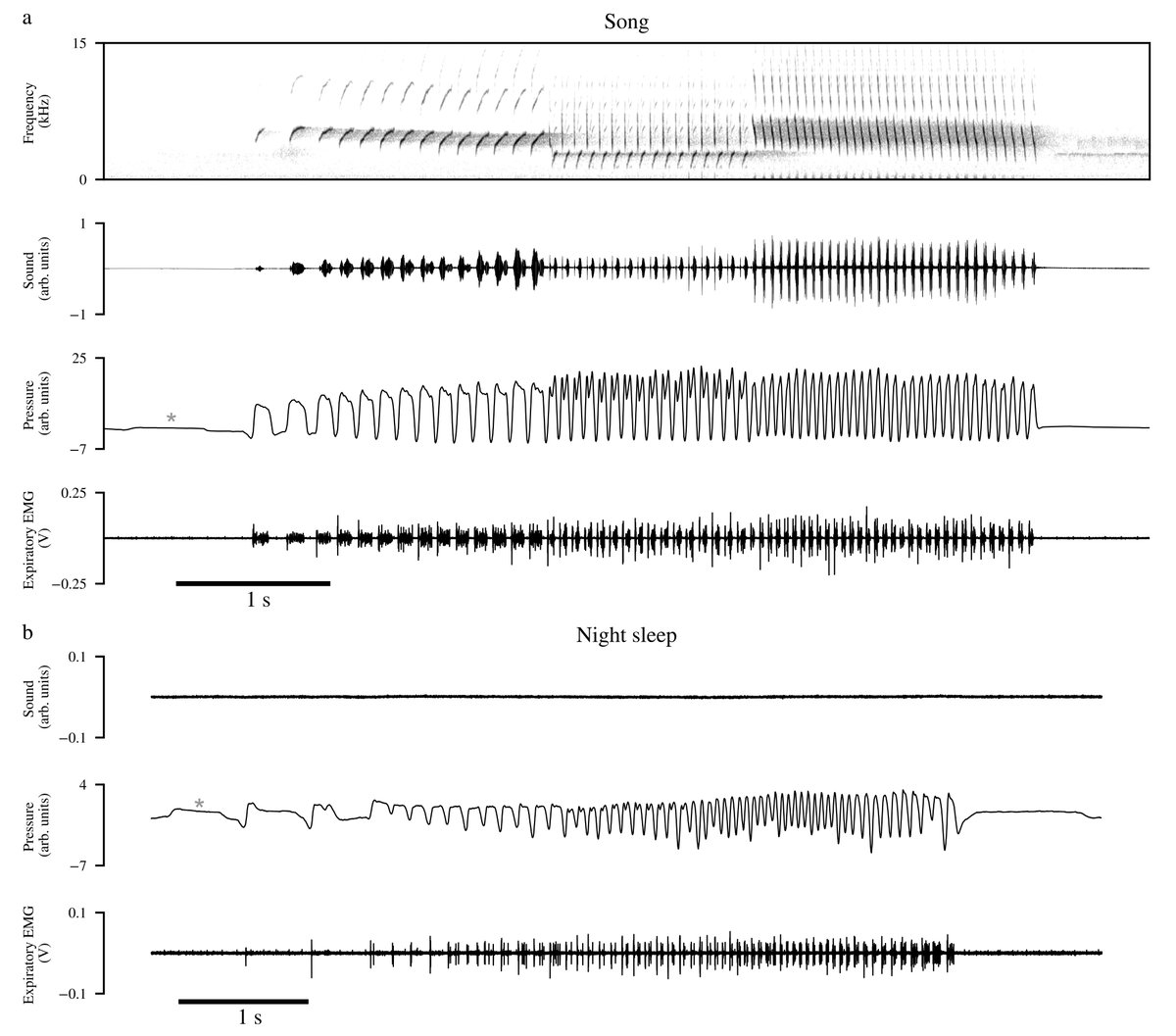
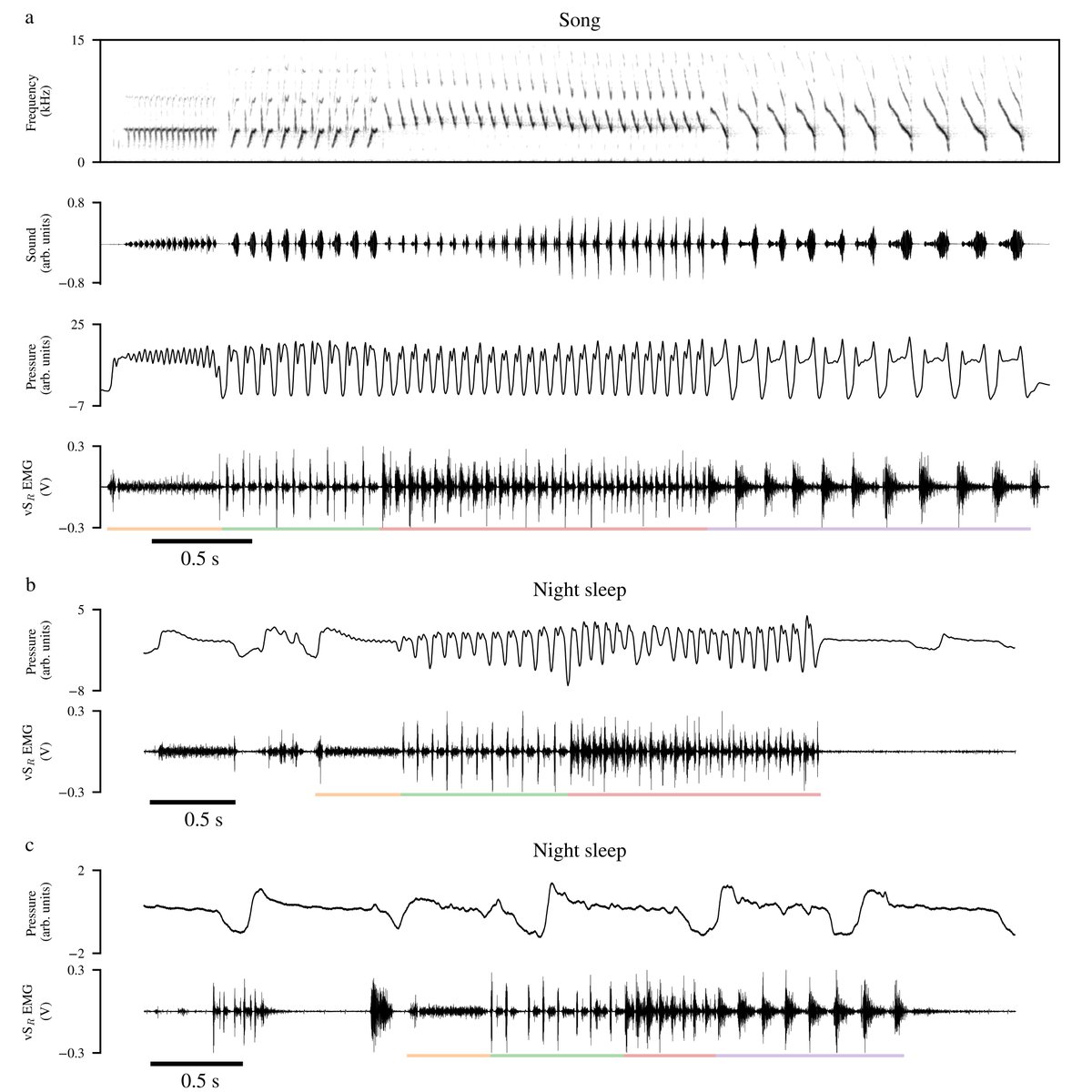
New article with F. Goller and @GaboMindlin.
https://t.co/3FEQbb1iiY
We report, for the first time, that canaries re-activate in a song-like fashion the syrinx and the respiratory system during sleep.
I'm leaving @ESI_Frankfurt. I’ll miss the huge group of kind smart hardworking 95% who make it so promising. But relieved to leave the handful of people whose behavior does not meet minimal standards of morality. In admin & senior science, a few truly *appalling* people. 🧵 soon.
Are there biases? Absolutely, but that just comes back to the first point. If you want more diverse winners the bottom line is that you also need a more diverse committee.
Yes, very few awards go to women but that is also in part a reflection of the representation of gender in those fields 30 years ago (assuming winners today made their breakthrough discoveries around that time).
@KortBeck@DanieladoingPhD Yep, agree to those points when discussing basically all of Latin American students. I think resource accesibility is getting better (see @cientificolatin ) but when you don't know other people who have gone through the process it's almost impossible.
@DanieladoingPhD In my field (systems neuro) there was not a single woman PI when I left but things might be starting to change.
This is a topic I think about a lot and always happy to talk to about it to share ideas to make it better, my DMs are open if you ever wanna talk more!
@DanieladoingPhD The gender gap is much larger in Mexico. To that, add institutional barriers and it's a perfect formula for exclusion. It just gets even worse as competitiveness increases to enter grad school in the US. There are probably even more reasons but those are maybe the main ones (...)
@GeoSantiagoM@DanieladoingPhD Yeah :( I think lack of institutional and community support, reduced scientific networking opportunities (which are just inherent to gender biases) and lack of visibility are a few of the reasons (I have identified so far) behind it. But talking about it is a great start!