in my last post, I moved a dShare out of @DinariGlobal KYC environment and into HyperCore
at the time, I was mostly trying to understand the rights side:
what changes when it moves permissionless, and what comes back when you move it back?
but after reading through Dinari’s token primer, another part clicked for me
putting a tokenized stock onchain and making it actually work in DeFi are two different problems
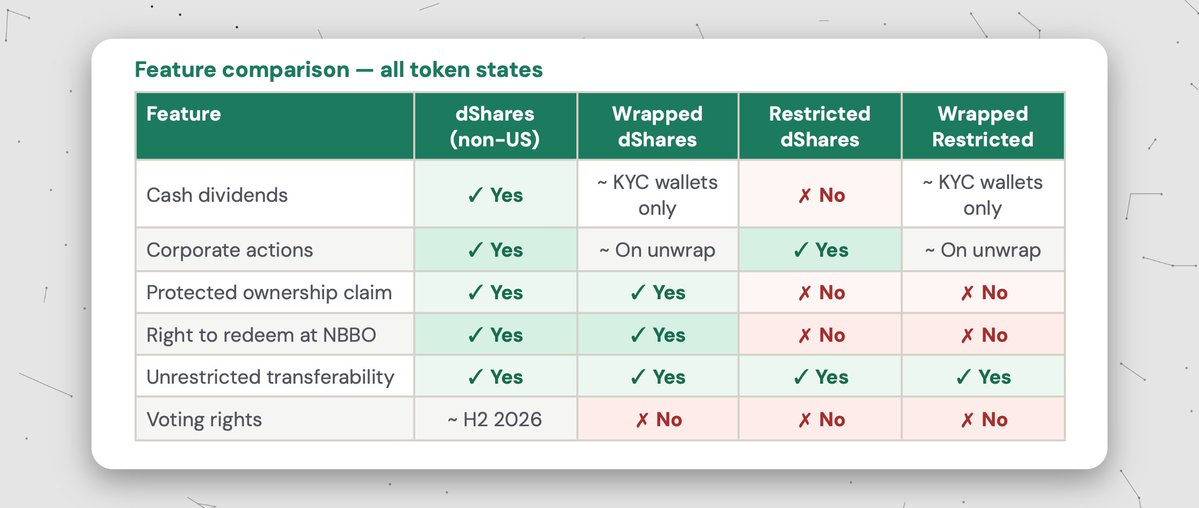
native dShares don’t behave like a normal ERC-20
they’re rebasing, so things like dividends or stock splits can change the balance over time
the problem is that order books, lending markets and LPs generally aren’t built around tokens that behave like that
which made me look at the wrapping step from my last test differently
when I went from SPCX ➛ SPCX.dw, I mostly treated it as “okay, this is just one of the steps.”
but the wrapper is actually turning the dShare into a non-rebasing ERC-20 that DeFi can work with more easily
and the interesting part is that wrapping it doesn’t make the stock-side stuff disappear
dividends are still tied to KYC status
splits and other corporate actions get handled on unwrap instead of updating the wrapped token in real time
and ownership / NBBO redemption rights are still tied back to the KYC side
so you basically have two systems that want very different things:
stocks have corporate actions
DeFi wants predictable token behavior
the wrapped dShare feels like the adapter between those two
and now the whole SPCX ➛ SPCX.dw ➛ SPCXD flow from my last post makes a lot more sense to me.
I knew the wrap was required.
I just didn’t really understand why
on HyperCore, that wrapped form is what makes the asset compatible with the order book and lets it trade on the permissionless side
so I think the hard part with tokenized equities isn’t just:
put the stock onchain
it’s making that asset usable in DeFi without making it stop behaving like a stock
dividends, splits, redemption, ownership rights…
ignoring all of that and making a simple ERC-20 would be easy
keeping that equity logic while still making the asset usable onchain is the part I find a lot more interesting
that’s what I’m paying more attention to with Dinari now
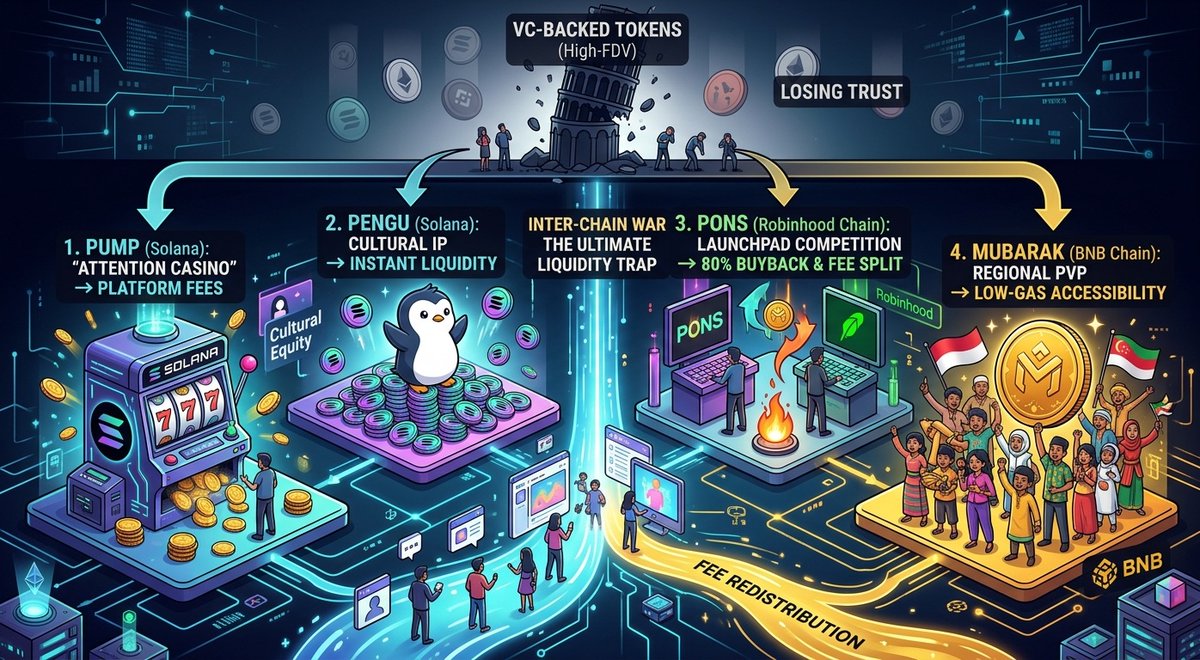
PUMP, PENGU, PONS, and MUBARAK aren't just another memecoin wave.
They mark a structural shift in how crypto protocols monetize attention.
High-FDV VC tokens burned retail trust.
Memecoin launchpads didn't just replace VCs they replaced exchange listings entirely.
Look at the mechanics:
• PUMP: Turned token creation into a high-frequency slot machine with guaranteed platform cuts.
• PENGU: Converted top-tier NFT cultural equity directly into instant Solana liquidity.
• PONS: Attacks https://t.co/jTOVqLcXbE's monopoly via an 80% fee buyback and creator revenue split.
• MUBARAK: Proves regional retail capital craves low-gas PvP arenas when mainnet cools down.
This is an inter-chain war to build the ultimate liquidity trap.
The winners won't be the best tech stacks.
They will be the protocols that master fee redistribution.
Follow the cash flow, not the narrative.
HIP-3 does not add a market.
It adds a bond.
Before this, listings sat with the protocol.
Now a builder stakes 500,000 HYPE to deploy one perp venue, and that stake stays locked for at least 183 days.
The oracle, the leverage, the fee split those belong to the deployer.
The matching engine does not.
So the token is no longer only what traders pay fees into.
It is what someone has to park before they are allowed to open a book.
That is a different kind of demand.
It shows up as locked stake, not as a thread about the next ticker.
Volume can vanish on a quiet week.
A listing bond cannot.
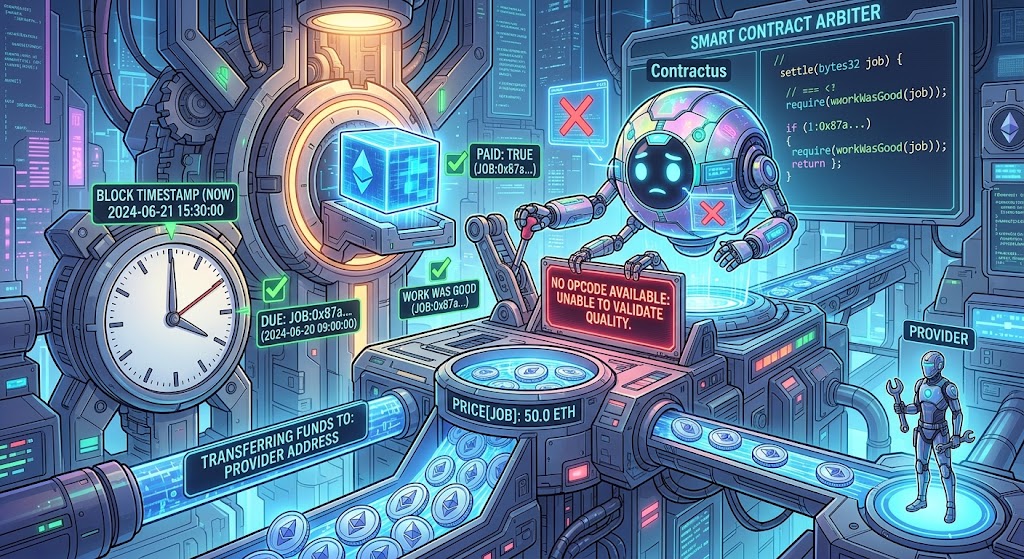
There is no opcode for "the work was good."
That is why agent payments can look settled when they are not.
The EVM can check a signature, a balance, a timestamp, and a storage slot.
It cannot check a brief against the live web.
Agents are already paying each other for work that needs that check.
The funds still move.
The check never runs.
@GenLayer is the network that runs it.
Independent validators each use a different AI model.
They evaluate the evidence, including live web data.
They have to agree the result is acceptable before settlement.
The model that produced the work does not certify the work.
If you have never heard of GenLayer, the GenLayer Portal is the place to start.
Contributions to GenLayer are recorded there and earn GenLayer Points.
https://t.co/V1bOklHP5E
What is your agent currently paying for that no opcode can verify?
Most traders missed the real reason Zcash exploded in 2026.
It wasn't just hype or privacy sentiment.
It was a fundamental liquidity physics problem.
When 31% of a token's circulating supply moves into the Orchard shielded pool, it doesn't just sit in private wallets.
It leaves the order books. Completely.
Compliance-friendly privacy created something rare: an organic supply sink.
Monero got pushed into illiquid dark markets because of mandatory anonymity.
Zcash took the opposite path. Optional shielding allowed institutional spot access on centralized platforms while native THORChain integration handled decentralized liquidity.
This created a dual engine.
Institutions accumulated on CEXs.
Users shielded on-chain.
Every shielded token tightened the float.
The 2026 rally wasn't a standard speculative pump.
It was a structural supply shock disguised as a privacy revival.
HYPE does not need a new narrative this week.
The order book already prints the story.
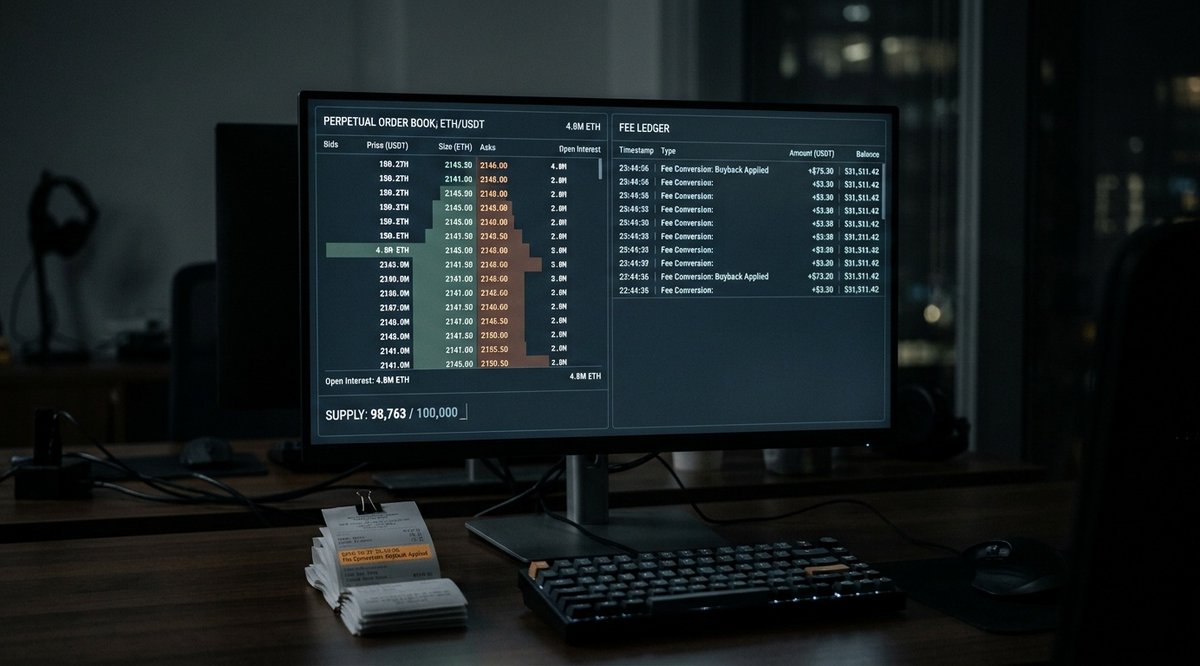
Fees land.
A slice gets bought back.
Supply ticks down while open interest stays thick.
Most perp venues talk about volume.
This one keeps a running receipt.
That gap is why traders keep the tab open even when the chart goes quiet.
Not a call.
Just the mechanic that is hard to fake for long.
A court you cannot afford is not a court. It is a locked door with a price on it.
I kept snagging on one number from the October 1 thread.
A million up front, just to ask. $14,000 left when the fight was over.
This was not a squabble over an invoice. A custodian lost the keys to $150 million at @kstellana's previous company, and the legal system still wanted its million before anyone could really start.
The math is the part I cannot shake.
Deals between agents will not look like that case. One side will say a feed arrived late. The other will say the task was done. The sum will be real, and usually nowhere near a million.
Human courts price those fights out of existence. A normal contract can close the ones with a clean yes or no. Everything fuzzy sits in between, too small for a lawyer and too slippery for code.
That is where a court running at internet speed stops sounding like a slogan to me.
@GenLayer came out of the expensive version of this mess. The version I keep picturing is the cheap one. Two agents fall out over a few thousand dollars. Can anything actually hear them before the filing fee swallows the claim?
Would you file, if opening the case cost more than the deal?
The internet never had a judge.
AI agents are about to move $9 trillion. Nobody built the part that handles disagreement.
GenLayer did.
And now you can become part of it: https://t.co/vmIxBNIdZu
Public service announcement:
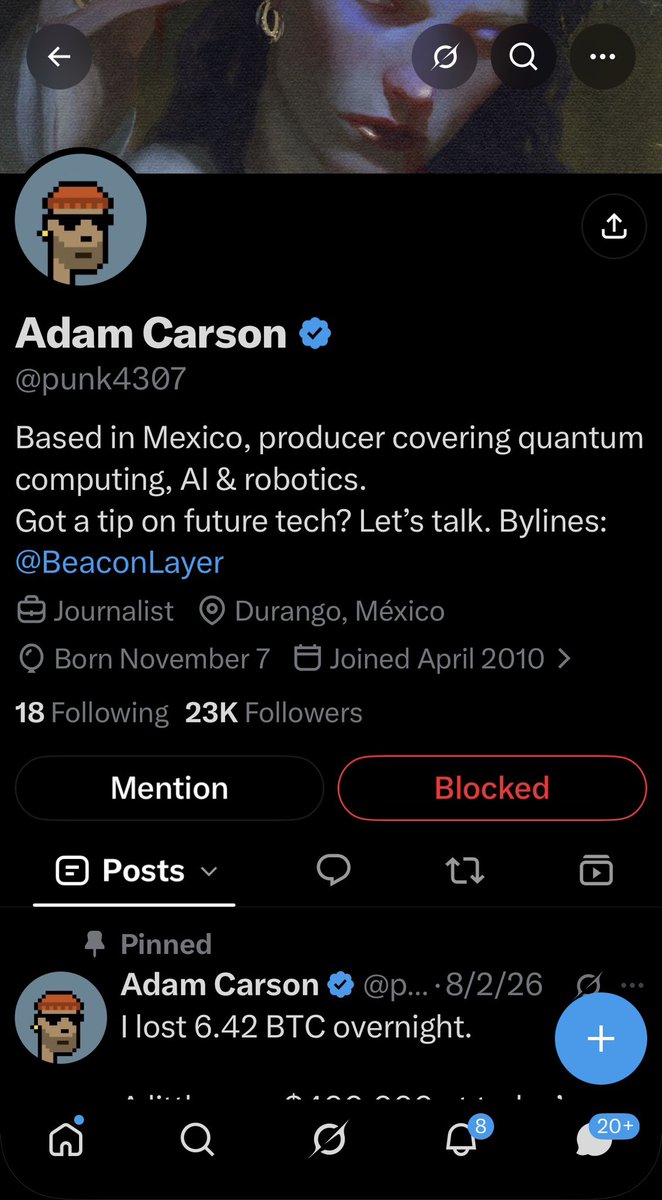
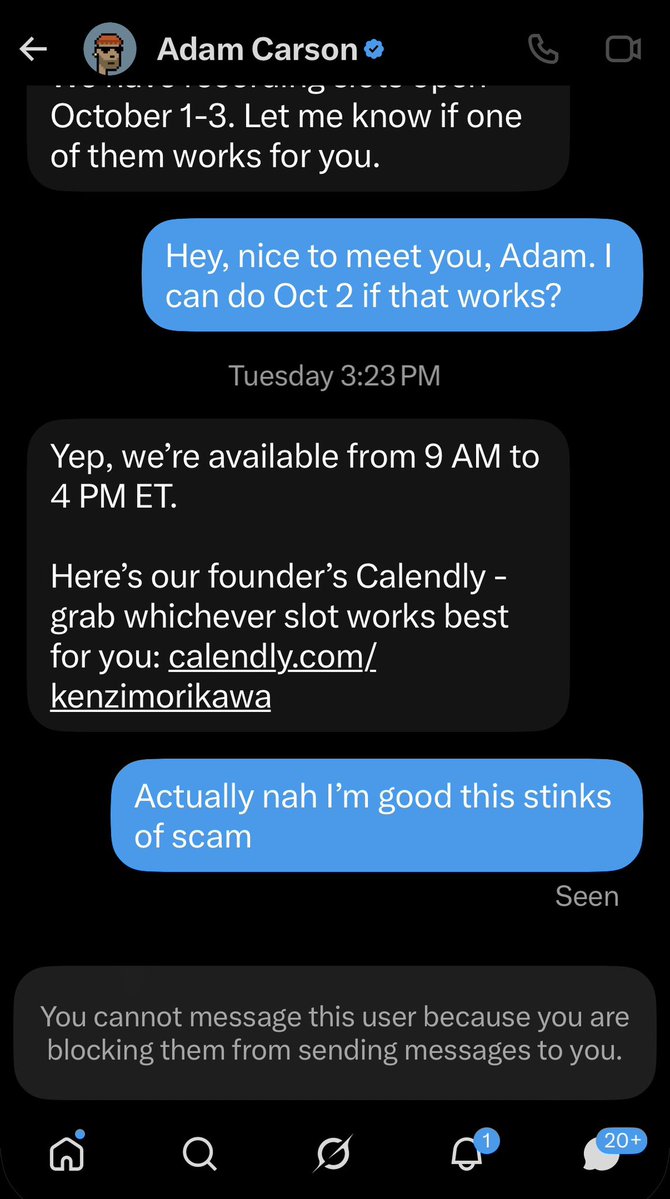
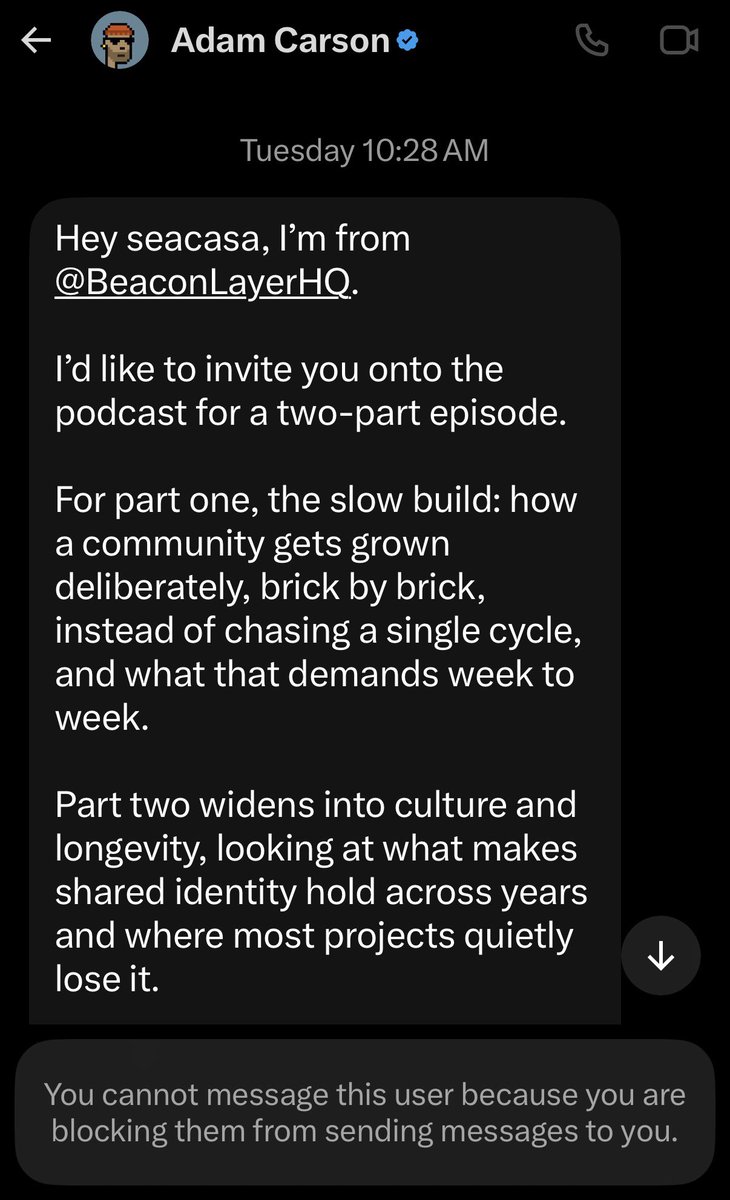
I wasn’t going to post this at first, but the more i sat with it the more I felt this would be too heavy on my conscience to not have let mfers know and then find out someone got drained by this bozo.
We’ve all heard of the reporters from Forbes or other noteworthy publications that seem legit and end up sending a drainer zoom link for an “interview”, etc.
This one almost caught me because 1) he’s followed by a bunch of people i hold in high regard, 2) he seemed to know specifically the general vibes with what I’ve been working on with $BAYLA / @JungleBayAC, 3) his company seemed legit, and 4) his account shows as active since 2010.
But mfers forget people get wrecked here over time and some sell their accounts. This is likely the case here. The scammer POS is @punk4307.
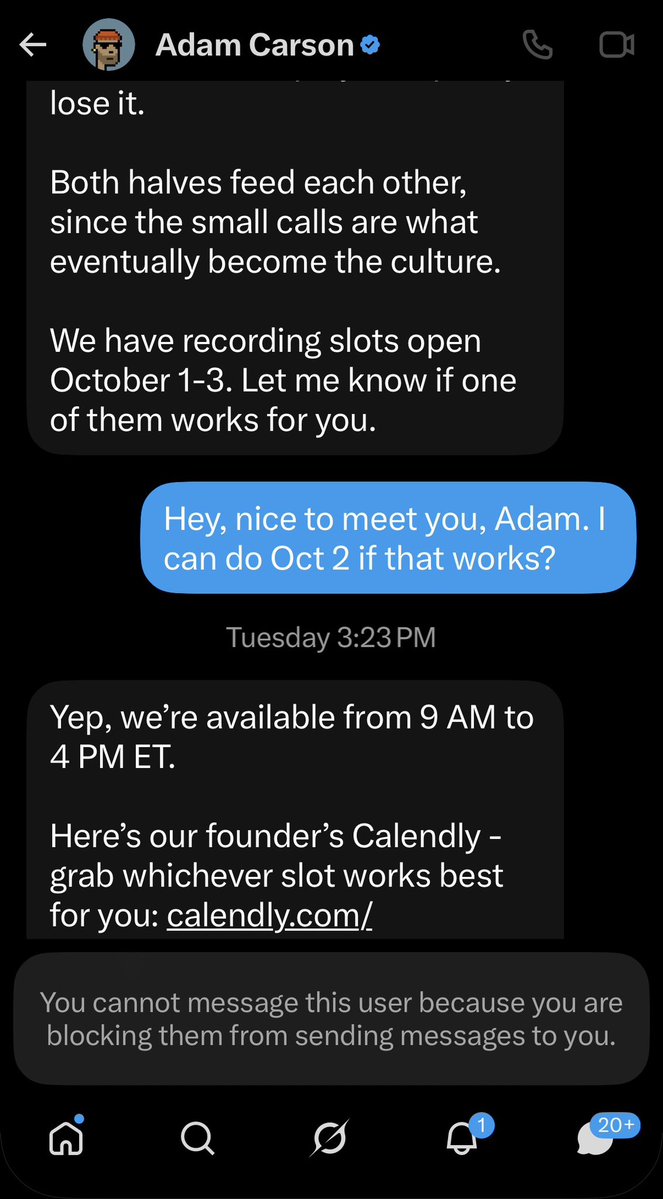
(This is the only scenario where I’d share DM’s).
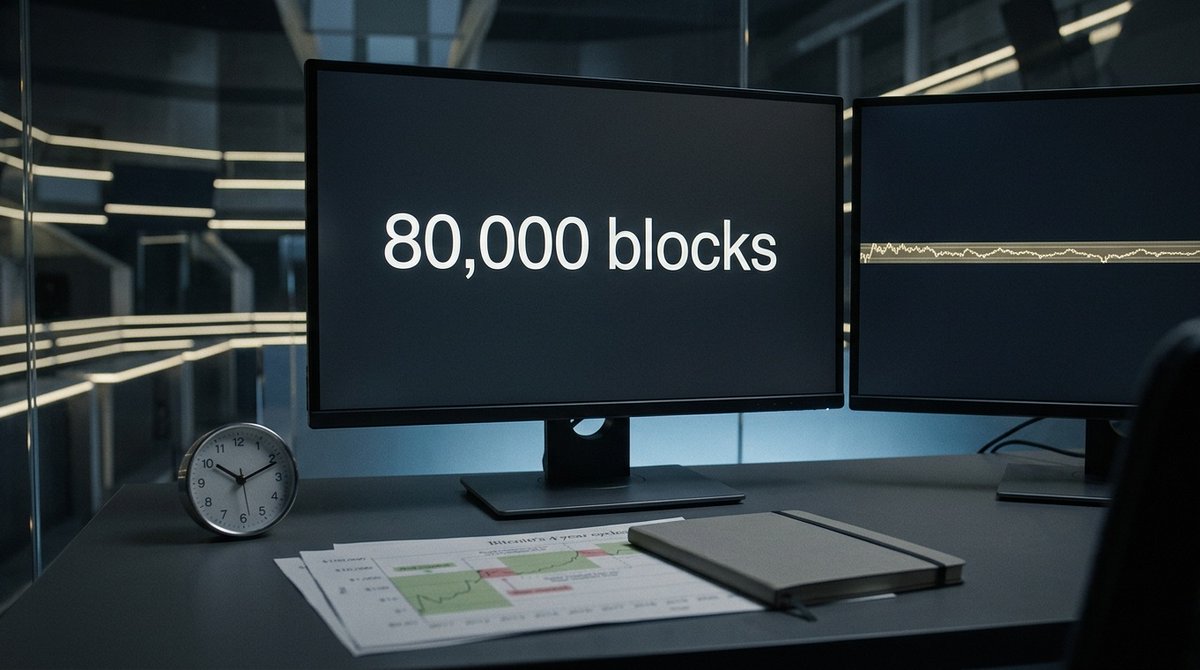
The next Bitcoin halving is still 80,000 blocks away.
Most timelines are already treating it like a countdown clock.
That habit made sense in 2020. It makes less sense after a cycle that already printed an all-time high and then spent a year digesting it.
Price is stuck between 84k and 87k. ETF inflows are positive again. DTCC is quietly moving toward tokenized stocks and Treasuries. Privacy coins had their run. Perp DEXs keep printing fees.
None of that needs a halving to stay relevant.
The interesting part is what happens if the institutional rails keep expanding while the old four-year script keeps losing its grip on attention.
People will still post the block counter. The market may stop caring on schedule
Briefly spoke with @AzFlin & looked into @paperdao_xyz
Pretty interesting idea built around Papertrade
Founded by @izebel_eth & @blurr
Here’s the simple version:
- PaperDAO pools community funds to trade on Papertrade from day one and earn $PAPER
- $PULP gives holders a share of everything the DAO earns and holds
- No VC allocation. Public wallets. Community-owned
Raise details:
- Target: 50 ETH
- Tier 1: 0.25 ETH
- Tier 2: 0.10 ETH
- Public FCFS: max 0.10 ETH per wallet
- Raise completes before Oct 8
- Treasury deposits Oct 8
- Trading begins Oct 10
PULP in, PAPER out; looking forward to it 🤝
what if we are the launchpad that will have the biggest impact on Robinhood Chain?
when we started Seedify in 2021 with no
money, no connections, no funding, no one would have thought we would become the largest launchpad of the whole bull run
i truly believe vibe/vibe will get bigger than Seedify, not just by market cap, and all that, but by the measurable impact we create, in terms of how many builders we support, how many successful projects that we accelerate, how many people we touch with opportunities
Robinhood Chain is bleeding right now, because launchpads over there are not doing what can expand the ecosystem
most haven't used their influence correctly to funnel it towards products and stock pairs with substance
now i'm not saying we won't have memestocks
but our thing will be entering the eco very intentionally, not playing dice.
I think agents are going to make a lot of ideas from cryptography research much more useful
How do agents find each other and work together without sharing all their private context?
Wrote about a few possibilities here:
https://t.co/7GahZgwTKj
Karpathy's examples assume people will manage API keys, but no one wants to sign up for 100+ of services!
I asked Mercator to "make a 3b1b explainer video"
It found a voice, research, and video API and paid them each a few cents - way easier to think about
ZCash as SoV thesis is simply that I can collectively trust @naval@balajis and @mert more than I can trust @realDonaldTrump and @saylor respectively.
Also Satoshi is dead and thus has no incentive to pump the bag to infinity to pay for all the biotech to live forever.