The sun is fascinating to watch. This timelapse was recorded using a modified telescope designed to safely observe the solar chromosphere, captured over a period of several hours from my backyard in Arizona.
The entire Earth would be a small dot at this distance of ~93M miles.
“It’s never perfect, and sometimes it gets things wrong and it’s exasperating. But when you’re able to harness that horse, you see the world from a whole new perspective. You can go 20 times faster.”
https://t.co/VY3HwiQuz5
DREADDs in humans--update:
3 clinical trials using hM4Di in humans registered in China. 2 for epilepsy and 1 for Parkinson's Disease.
In our original paper we stated:
"...We suggest that at least one of these designer receptors, hM4D, will prove useful for neuronal silencing in vitro and in vivo.."
It seems we were correct.
Experienced researchers are less likely to produce ‘disruptive’ science than are those just starting their careers, finds an analysis of scientific papers published by 12.5 million researchers over 60 years
https://t.co/azibpaEgnN
It’s estimated that the Protein Data Bank (PDB) cost around $13B to create. Alphafold was only possible because of it. If we want ML to solve biology, we should be funding the creation of databases and the development of new assay technologies. ML is nothing without data.
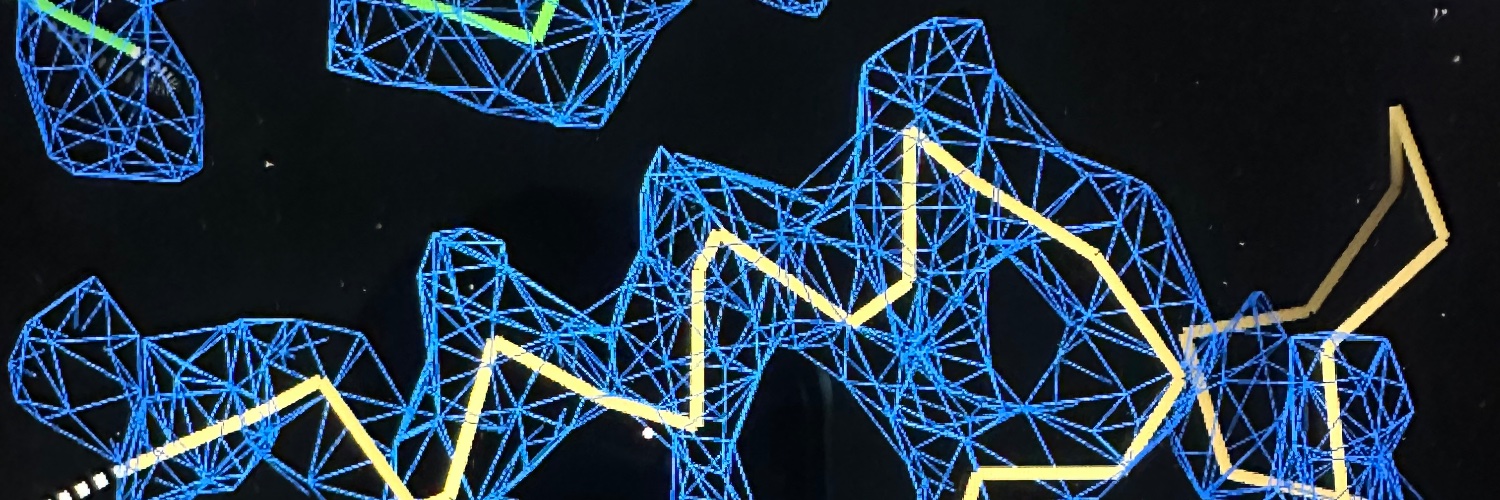
1.55 Apoferritin map.
Claude & Codex still fail at key steps, so manual intervention is a must for now. Seeing how MCP is making complex tools more accessible, I’m optimistic.
With so many devs pushing forward. I’m sure better days are coming soon.
The polypharmacological profiles of xanomeline and N‐desmethylxanomeline - Sakamoto - British Journal of Pharmacology - Wiley Online Library https://t.co/g1d769rxY0
The polypharmacological profiles of xanomeline and N‐desmethylxanomeline - Sakamoto - British Journal of Pharmacology - Wiley Online Library https://t.co/g1d769rxY0
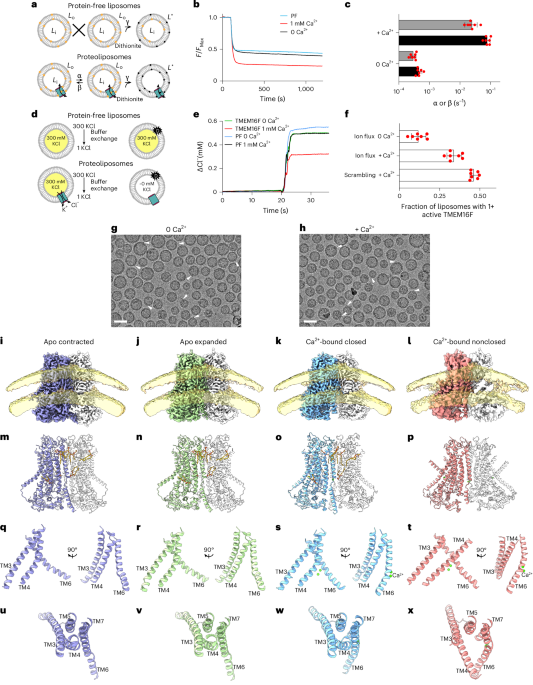
We just preprinted one of my favorite studies @FlatironInst. I was lucky to be part of an amazing team studying the effects of rapid cooling to preserve samples in cryoEM. Read on to learn about the limits of cryoEM for biophysics and how to overcome them https://t.co/nYXsIs88Hf
For decades, biology textbooks have enshrined a simple rule: DNA is made by copying a template. After one enzyme unzips a DNA double helix into separate strands, another called a polymerase builds a complementary sequence, base by base, for each strand. Presto: two copies of the original DNA.
But new research into how bacteria defend themselves from viruses now shows this synthesis rule isn’t absolute.
Now, a team describes a bacterial enzyme that synthesizes DNA without a nucleic acid template, using its own structure as a guide.
Learn more: https://t.co/TeUWvyO0OD @NewsfromScience
Wow!!
Molecular dissection of protein complexes isolated from sections of human brain https://t.co/3leV573yv8
Also complimentary:
https://t.co/Bzqb6tPlwJ
From the abstract:
"Here, we show that cryo-EM data can be organized into a probabilistic conformational landscape in which latent density reflects the distribution of molecular states.
We demonstrate that this landscape is both physically grounded and experimentally actionable."
From the abstract:
"Here, we show that cryo-EM data can be organized into a probabilistic conformational landscape in which latent density reflects the distribution of molecular states.
We demonstrate that this landscape is both physically grounded and experimentally actionable."