📢✨Excited to share our latest #AvianResearch paper! Over 33 years, Thrush Nightingales in Finland showed a complete turnover of song types, yet over 40% of their syllable elements persisted—revealing a fascinating facet of cultural evolution in birdsong 🔄🕰️
Next Monday (Sept 2) at 4 pm @MasYoungblood will give what is sure to be a very interesting seminar on complexity in bird song | in person @OxfordBiology, Board Room at BRAB
@nicholdav@TessaRhinehart I wish I could have attended a course like this a few years ago! Very nice to see these data being useful. And yes, within-individual variation is small enough to tell hundreds of birds apart by their songs alone. Given current methods this should be the null assumption, I think!
If you attended the GRS bioacoustics bootcamp (ACABB), here is a link to the GitHub repository with all the notebooks, slides, and resources with links. Thanks @TessaRhinehart@nicholdav for a sensational job!
https://t.co/KK8pH8U11f
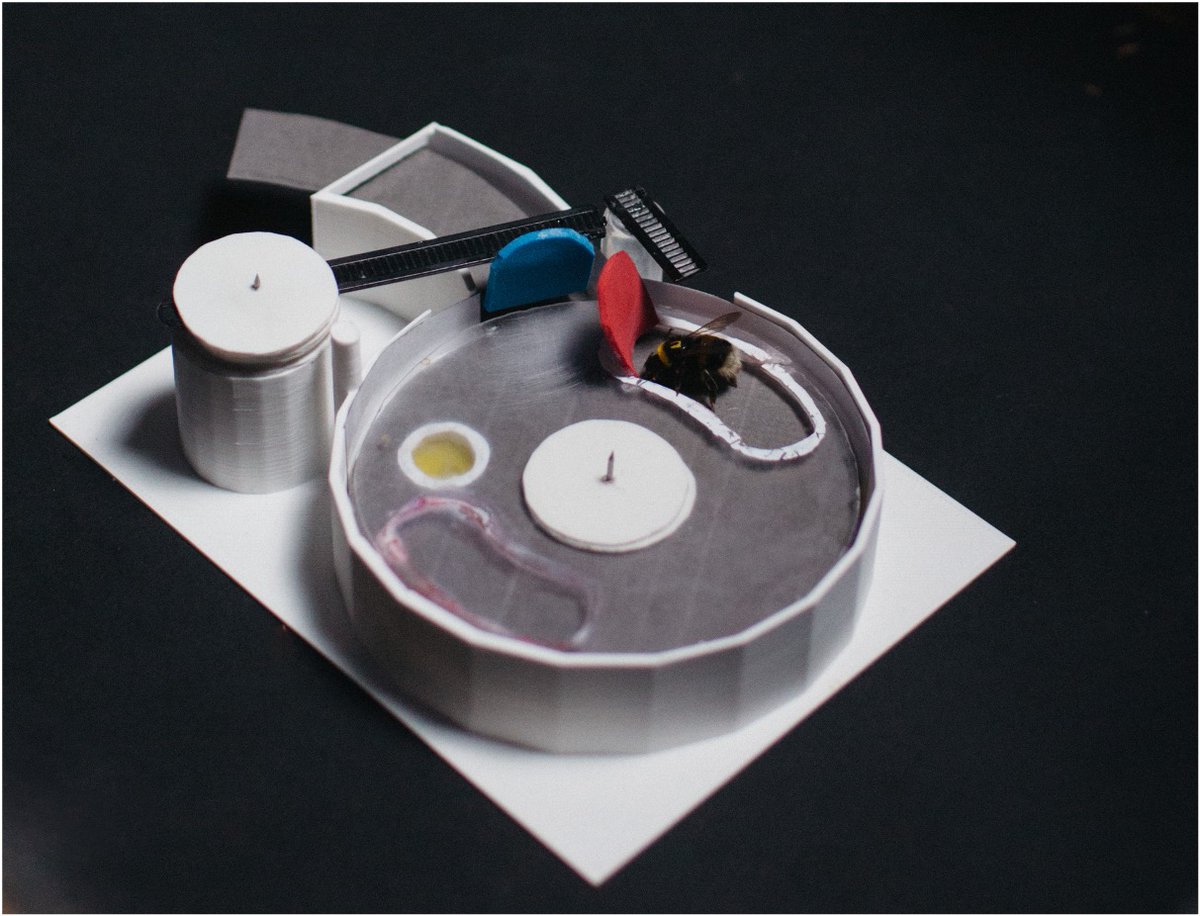
Join us on Monday, June 3rd at 5 PM CET for our next ESLR/@CulturalEvolSoc seminar with @alicedbridges She will present her work on puzzle-solving bumblebees 🐝that show a capacity for complex learning and culture. Check our website for the Zoom link https://t.co/JBq5B05Jni
So @ConversationUK asked if I had any thoughts about talking to whales. Turns out I do... Thoughts invited, please share @_SMRU_@philipwhale@9brandon https://t.co/TChVZNfllD
House finch song displays structural features that are typically found in human language! This suggests that it has evolved to minimize learning and production costs while maximizing communicative function. Out today in Proceedings B (@royalsociety) 🐦🧵 https://t.co/GOt67PLlXe
🔥 We've just dropped a fresh update for scikit-maad at https://t.co/Jpu6HYPbVW!
🚀 Version 1.4.1 is here with new features, bug fixes, and improved documentation! 📦 Check out what's new and upgrade now!
https://t.co/doIFnnenxv
@Ben_Sheldon_EGI @AndreaEstandia @EllaFCole@antoine_vansse@LoannePichot I'm very fortunate to have had you as a mentor and collaborator throughout this learning process, and to have had the support of the entire group! 😊
I'm really looking forward to leading this workshop with @TessaRhinehart at the @GRC_NMAC_2024
It will be great to help grad students + post-docs better analyze their acoustic communication data and learn the basics of bioacoustics
(RTs appreciated)
Preprint out! https://t.co/LLRS1ixUb7 We show age-specificity in territory attributes but weak overall age structure in space, likely due to high mortality and territory turnover. We suggest structure in habitat features contribute more to spatially-variable demography than age🌳
📌 New #Preprint Alert
"The acoustic adaptation hypothesis across terrestrial vertebrates: a meta-analysis"
If you're interested in how animal acoustic communication is shaped by the vegetation structure of the habitat, check it out 👇
1/3
New preprint! We review how social behaviour changes with age, and what this might mean for overall social structure and functioning in wild populations with different age structures @samingokcekus@KristinaBeck_@JoshAFirth https://t.co/cN3iKkhnl6
@AavikaD@WildCRU_Ox@sciencedirect Went out of their way to say that as well, as Palestine is the common geographical and historical term for the region. No mention or acknowledgement that part of the research was done in the occupied territories, where Israeli settlements breach international law, either.