We’re thrilled to see our advanced ML models and EMG hardware — that transform neural signals controlling muscles at the wrist into commands that seamlessly drive computer interactions — appearing in the latest edition of @Nature.
Read the story: https://t.co/75UEPCjoi9
Find more details on this work and the models on @github: https://t.co/D6upYyjy0Z
here is sora, our video generation model:
https://t.co/CDr4DdCrh1
today we are starting red-teaming and offering access to a limited number of creators.
@_tim_brooks@billpeeb@model_mechanic are really incredible; amazing work by them and the team.
remarkable moment.
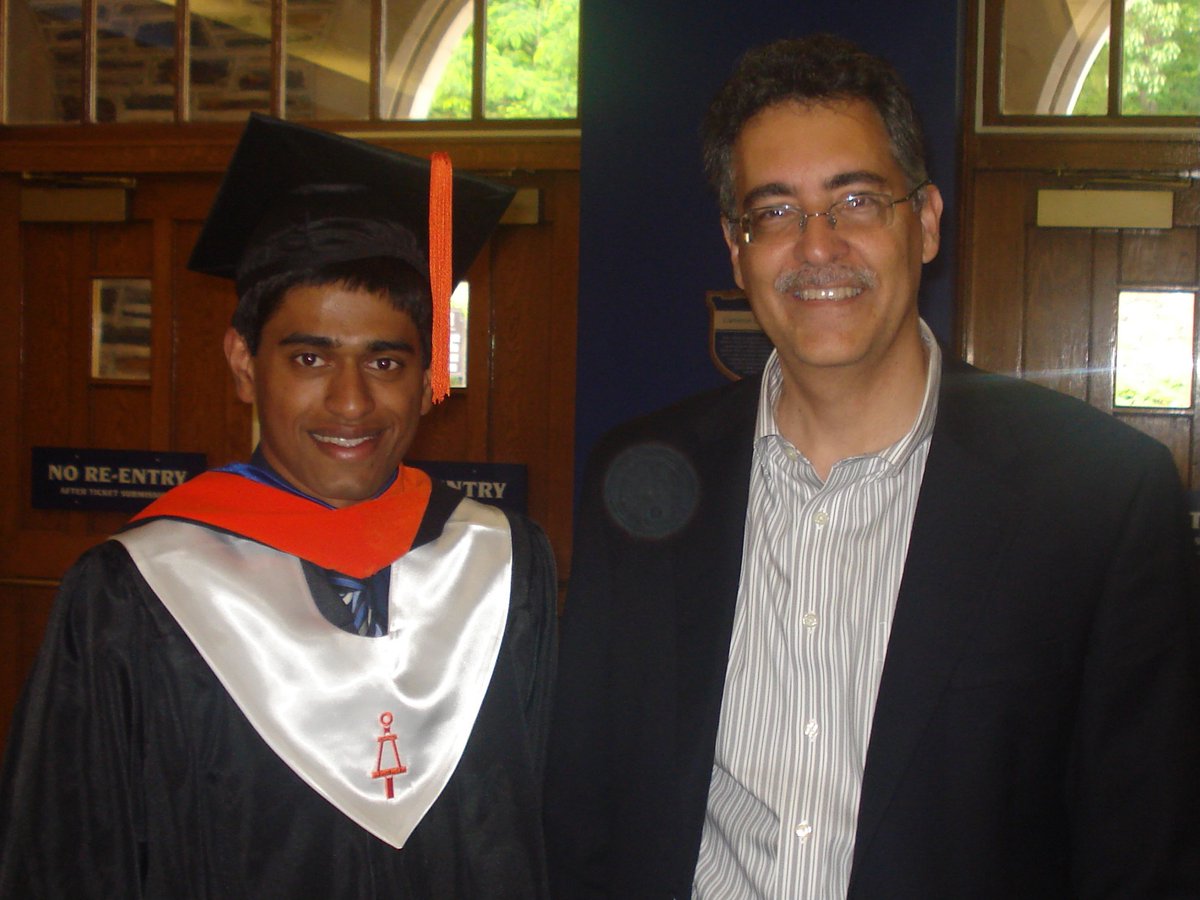
I'm incredibly saddened today to hear about the passing of Prof. Craig Henriquez, one of my first research advisors when I was an undergrad. Craig was an incredible mentor, scientist, and compassionate human being; he will be deeply missed. https://t.co/0cAeUAGkzV
1/Our paper @NeuroCellPress "Interpreting the retinal code for natural scenes" develops explainable AI (#XAI) to derive a SOTA deep network model of the retina and *understand* how this net captures natural scenes plus 8 seminal experiments over >2 decades https://t.co/6rFK5D3Po8
Sometimes I want to be a computational neuroscientist just so that I can make minimalist talks with only keynote drawings and whatever that cool sans serif font is
@octonion We found that RNNs were capable of discovering some commonly used optimization techniques, but it took some digging to understand how: https://t.co/rc8ciJj3SE
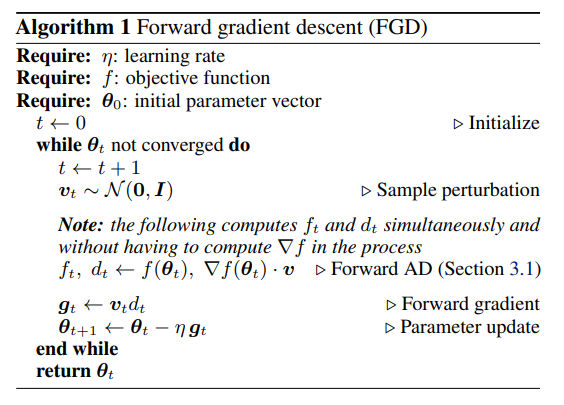
Gradients without Backpropagation
Presents a method to compute gradients based solely on the directional derivative that one can compute exactly and efficiently via the forward mode, entirely eliminating the need for backpropagation in gradient descent.
https://t.co/2eNaSlGgAi
New work out on bioRxiv (https://t.co/h97lUGnkO7) on the geometry of representational drift in natural and artificial neural networks. Work done with Marina Garrett (@matchings), Shawn Olsen, and Stefan Mihalas (@Stefan_Mihalas) at the @AllenInstitute. 🧵