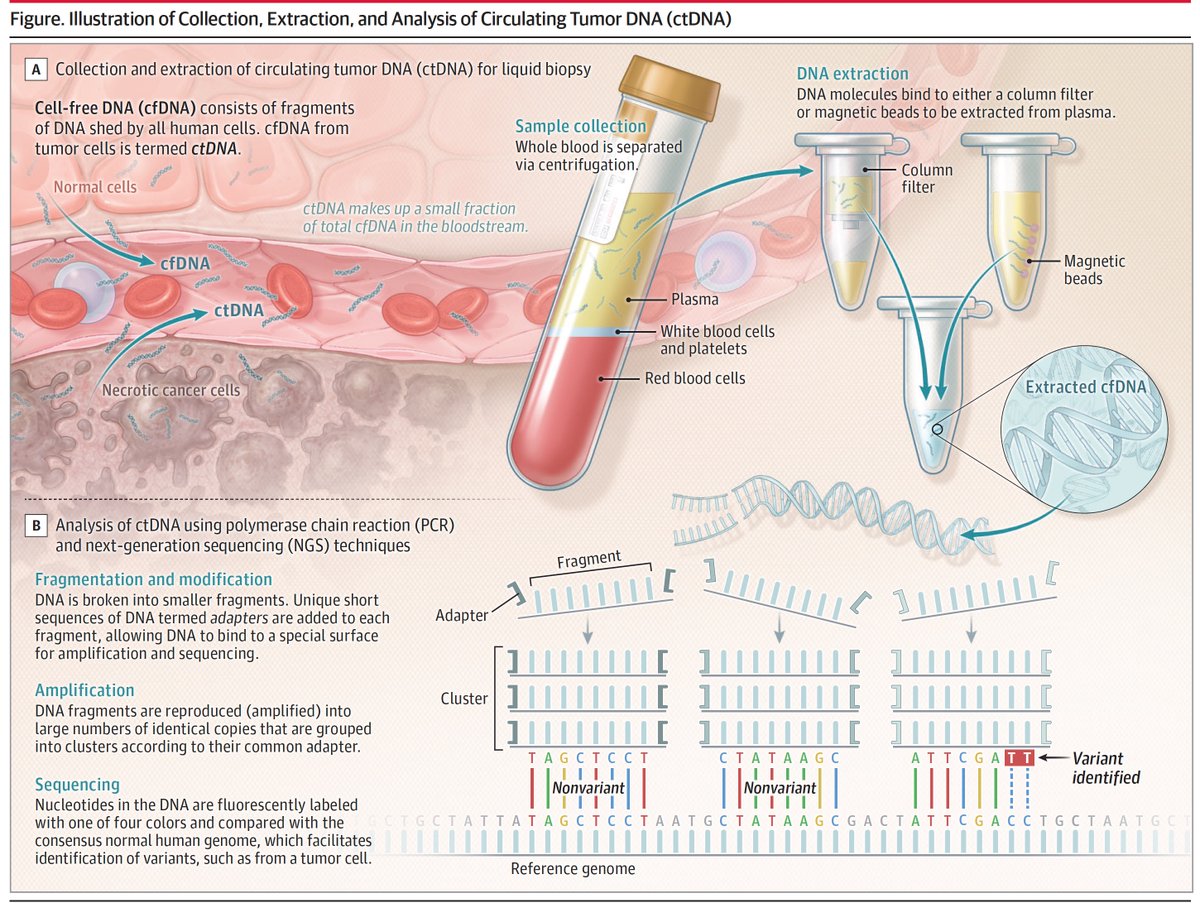
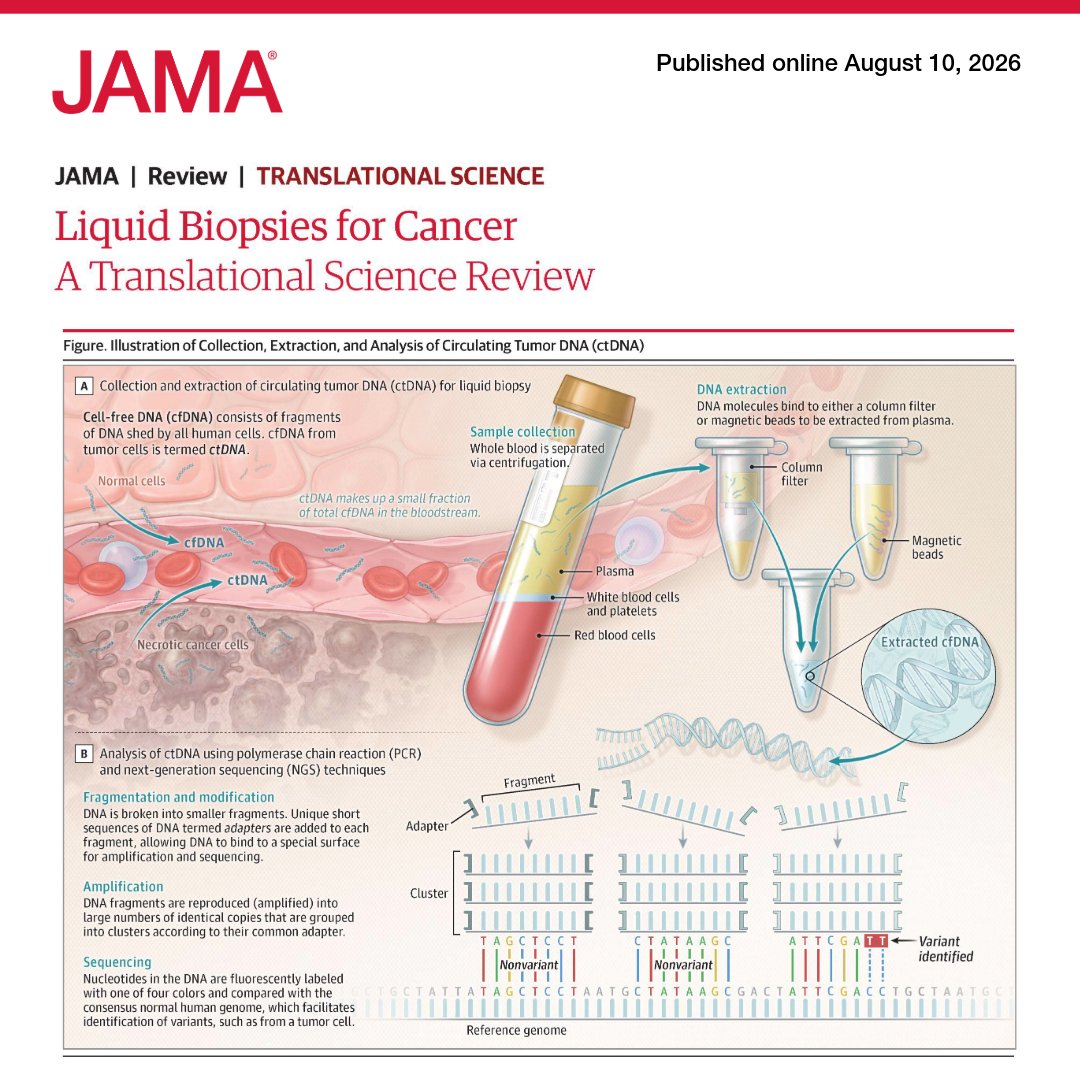
A new review of the evidence for use of cell-free tumor DNA (liquid biopsy) in patients with cancer. It does not include screening for cancer @JAMA_current
https://t.co/UpXUTOP1cl
Children are patients, not profit centers.
Our new Wolves in White Coats report raises serious questions about pediatric gender medicine, financial incentives, and insurance billing.
Thank you, @VP, and @ADM_Christine for standing with me as we demand answers. We will follow the evidence and hold anyone who broke the law accountable.
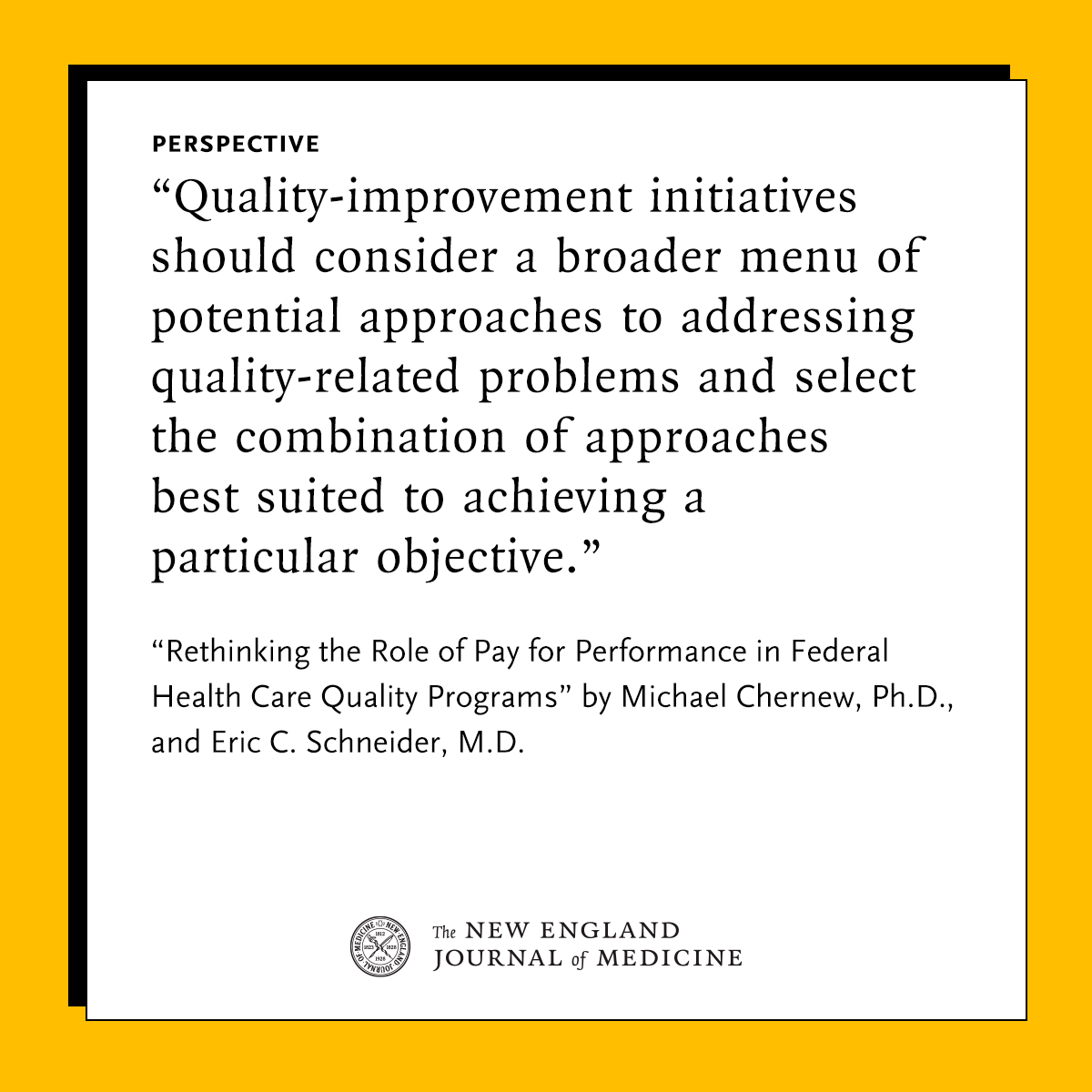
In a new Perspective, Michael Chernew, PhD, and Eric C. Schneider, MD, argue that core elements of the pay-for-performance approach have inherent shortcomings. Achieving meaningful quality improvement at scale may require rethinking this paradigm. Learn more: https://t.co/HnQGbaNSUx
Maybe it's just because it's new and shiny but I'm obsessed with with Grok Bot.
The form factor is so fun, especially when combined with text to speech. You can FLY.
Automations just work, cross-bot messaging works perfectly (I do most everything through my "chief of staff").
𝗖𝗹𝗶𝗻𝗶𝗰𝗮𝗹 𝗣𝗿𝗼𝗯𝗹𝗲𝗺-𝗦𝗼𝗹𝘃𝗶𝗻𝗴: 𝗖𝗼𝗻𝘀𝘂𝗺𝗲𝗱 𝘄𝗶𝘁𝗵 𝗜𝗻𝗳𝗹𝗮𝗺𝗺𝗮𝘁𝗶𝗼𝗻
A 60-year-old woman with stage II triple-negative breast cancer presented to the emergency department with a weeklong history of fevers, rigors, malaise, nonproductive cough, and nausea. She reported intermittent lightheadedness, headaches, and neck pain when febrile but no sore throat, rhinorrhea, shortness of breath, vomiting, abdominal pain, or dysuria. She noted no recent travel or sick contacts. Two months before presentation, she completed neoadjuvant carboplatin, paclitaxel, and doxorubicin and then, 1 month before presentation, underwent lumpectomy of the left breast and sentinel-lymph-node biopsy. She had also been treated as part of a clinical trial with multiple cycles of pembrolizumab (first dose, 6 months before presentation; last dose, 6 days before presentation). Although she had had transient neutropenia from chemotherapy, her white-cell counts had normalized after her last cycle. Postoperatively, mild tenderness and swelling around her left axilla had developed without systemic signs of infection; computed tomographic (CT) imaging was consistent with an uncomplicated seroma. In the days leading up to this presentation, her tenderness in this area had resolved.
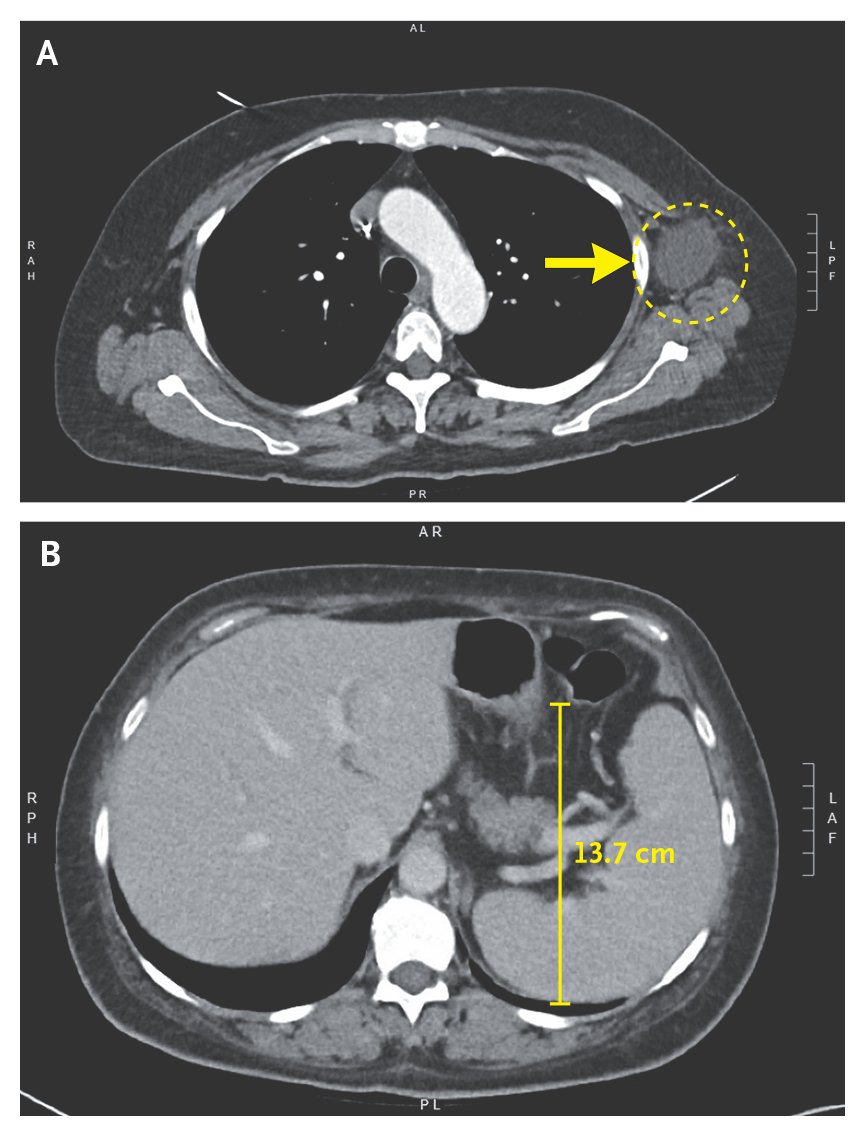
CT of the chest, abdomen, and pelvis with intravenous contrast was performed and revealed a persistent fluid collection in the left axillary space (seen in Panel A) where the patient had undergone her lumpectomy and axillary lymph-node biopsy. Although it was slightly larger than on previous imaging, there were no features to suggest a superimposed abscess. There was also mild splenomegaly (seen in Panel B) but no other evidence of any inflammatory or infectious process.
Read the full case details and authors’ commentary in the Clinical Problem-Solving article “Consumed with Inflammation” by H.L. Cho et al.: https://t.co/6IcM7T7Kar
NEJM subscribers: Try asking AI Companion to break this article down into teaching points for you.
🍋 Your skin’s glow starts in your glass! 🥤✨
Forget expensive creams — these Skin Detox Juices work from the inside out to boost immunity, flush toxins, and bring that natural radiance back 🌿
🍊 Immunity Boost: Orange + Lemon + Ginger
🥒 Detox Cleanse: Cucumber + Green Apple + Spinach + Ginger
🍌 Energy Recharge: Banana + Lemon + Ginger
🍓 Anti-Inflammatory: Strawberry + Apple + Ginger
⚡ Drink one daily for 7 days and watch your skin glow like never before!
📊 JAMA Guide to Statistics and Methods: Difference-in-differences compares pre-to-post changes between intervention and comparison groups, controlling for baseline differences and trends, and requires careful evaluation of the parallel trends assumption.
https://t.co/rQq79vL85k
📝 JAMA Review: #LiquidBiopsy using circulating tumor DNA can help guide care in #Cancer by identifying gene variants associated with treatment selection, monitoring treatment response, and detecting minimal residual disease after therapy.
https://t.co/cTPllo9bsm
Castor oil has been used in traditional medicine for over 4000 years! Known for its thick consistency and distinct, slightly nutty aroma, it has been linked to various potential health benefits and has a long history of use as a hair and skincare product.
When applied regularly, castor oil can leave skin and hair feeling smooth, nourished, and hydrated, making it a valuable addition to natural beauty routines.
Dr. Ken Wu, a pediatric doctor and NEJM editorial fellow from 2019 to 2020, reflects on his decision to apply for an NEJM editorial fellowship, some of the highlights of the fellowship, and the impact it has had on his career.
Sound interesting? NEJM is looking for physicians at any career stage to apply for a one-year, full-time, paid editorial fellowship beginning in July 2027.
Several fellows will be selected for the 2027–28 year; applications are due Saturday, August 15, 2026.
To learn more and to apply, visit https://t.co/azYvhVhs8d
For more reflections from prior NEJM fellows and for more information, visit https://t.co/RdW5a5Jrnn
Can MRI accurately diagnose carpal tunnel syndrome, or does clinical evaluation still reign supreme?
In this commentary on Liu et al., Robert R. Slater Jr., MD, FACS examines research evaluating whether MRI measurements of median nerve size correlate with electrodiagnostic findings in patients with carpal tunnel syndrome.
The study found that an increased median nerve cross-sectional area at the carpal tunnel inlet was associated with abnormal electrodiagnostic results, but MRI demonstrated only limited diagnostic accuracy overall. Slater emphasizes that carpal tunnel syndrome remains a clinical diagnosis and suggests MRI may be most valuable when clinicians need to rule out other underlying conditions or lesions contributing to patients' symptoms.
Read the full commentary 👉 https://t.co/OWlQOO94ft
And read the original study 👉https://t.co/V7wGk79UQN
#JBJS