Sushi tastes better than it has any right to. The reason is a receptor in your mouth getting hijacked.
Seaweed is one of the richest natural sources of free glutamate. It's where Japanese scientists first isolated glutamate and named umami back in 1908. Fish brings the other half: inosinate, a nucleotide that accumulates in the flesh as it sits after the catch.
Each one alone triggers only a modest savory signal. Put them on your tongue at the same time and the receptor does something strange.
That receptor is a structure called T1R1/T1R3. Glutamate binds near its hinge and snaps it into the active shape. Inosinate then locks onto an adjacent site and freezes it there, holding the receptor open far longer than glutamate could manage by itself. Stacked, they fire the savory signal up to 8x harder than glutamate alone. That number comes from actual human taste tests, not theory.
So the seaweed wrap is pulling as much weight as the fish. Dip the roll in soy sauce, fermented and packed with even more glutamate, and you trigger the same reaction a second time.
Nobody designed a maki roll to exploit allosteric receptor chemistry. Fishermen in old Japan were just trying to preserve fish by packing it in fermented rice. The most chemically optimized bite of savory on the planet started as a way to keep fish from rotting.
Cape Verde centre back Roberto 'Pico' Lopes has spent his entire career in Ireland, ignored a LinkedIn message from Cape Verde FA asking him to play for them because it was in Portuguese. A year later, they sent it in English. He accepted. An all-time great World Cup story.
An incredible bit of sports journalism by The Guardian here. A short summary of the playing style of all 48 World Cup nations and a short profile of all 1248 World Cup players. Bookmark and refer to the resources when watching the obscure matches: https://t.co/tdLGq8en0o
INSTEAD OF WATCHING AN HOUR OF NETFLIX TONIGHT.
This 60-minute Cambridge lecture by Demis Hassabis will teach you more about the future of AI than most people will learn in the next 5 years.
Bookmark it and give it an hour, no matter what.
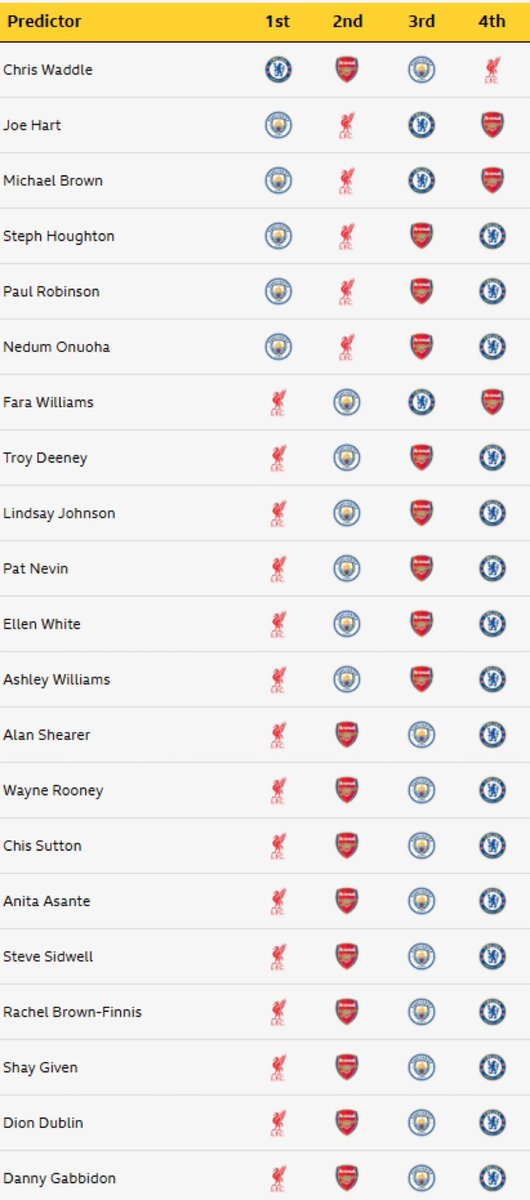
Back in December we were only 2 points ahead 😭
January came and Pep added two of the best players in the league to his squad, while Arteta made no signings. We dealt with a ridiculous injury crisis, competed in four competitions, and kept playing three games in seven days multiple times.
Pep’s side lost just one league game from December to May and we still came through it all. Gunners continue to celebrate this title with passion , drink it in, we worked too hard for this. Ignore the noise ❤️🏆
This is a man called Danny Bassett - I don’t have a better picture of him. I didn’t even know his second name until recently.
He stood a couple of rows behind me at the Emirates. Always topless and always bringing the energy. We’d hug when we scored and shake hands and have a quick chat if we won.
Beyond that, we didn’t know each other at all, but he was part of my Arsenal experience for close to a decade.
Danny died suddenly last summer and he didn’t get to experience this season. I thought about him a lot today. I hope you enjoyed it mate. You’re missed.
I'm obviously a big fan of supplements. But if I had to narrow down my list to just 5 that I think most people should be taking, they'd be:
- Omega-3s
- Magnesium
- Vitamin D
- Creatine
- A high-quality multivitamin
Gauss meets real life.
Also - Notice how people lifting 95 already say, “Fuck it, let’s do 100” - so there’s a discontinuity point.
Mathematical theory faces reality.
A Danish scientist counted bugs on the same windshield, same road, same conditions, every year for 20 years. By year 20, 80% of the insects were gone.
In Germany, a group of volunteer bug scientists did something even bigger. They set traps in 63 nature reserves, not farms, protected land, and weighed everything they caught. Same traps, same method, 27 years straight. The total weight of flying bugs dropped 76%. In midsummer, when insects should be peaking, it was 82% gone. A follow-up in 2020 and 2021 checked again. No recovery.
In the UK, they literally ask drivers to count splats on their license plates after a trip. The 2024 count came back 63% lower than just 2021. Three years.
A 2020 study pulled together 166 surveys from 1,676 locations around the world. Land insects are disappearing at roughly 9% every ten years.
Here’s where it hits your plate. About 75% of the food crops we grow depend on insects to pollinate them, everything from apples to almonds to coffee. One 2025 study modeled what a full pollinator collapse would look like: food prices jump 30%, the global economy takes a $729 billion hit, and the world loses 8% of its Vitamin A supply.
Birds are already feeling it. North America has lost 2.9 billion birds since 1970. A study from just weeks ago found half of 261 bird species on the continent are now in serious decline, and the losses are speeding up in farming regions. The birds that eat insects lost 2.9 billion. The birds that don’t eat insects? They gained 26 million. That ratio tells the whole story.
One of the German researchers behind the 27-year study drives a Land Rover. He says it has the aerodynamics of a refrigerator. It stays clean now.