@pitdesi@saxenasaheb So are n number of other varieties you get there. Just amazing. Everything outside of alphonso and super Alphonso tasted awesome. You need to go to farm and buy these. I used to freeze up a bunch for offseason 🤣
@pitdesi@saxenasaheb They are almost never good. What we are missing are Florida grown mangoes. Outside of eating Alphonso in Mumbai, florida variates are the best. Surprisingly (or not), Malika in Florida are better than both alphonso and super Alphonso grown there.
@pitdesi@saxenasaheb They are almost never good. What we are missing are Florida grown mangoes. Outside of eating Alphonso in Mumbai, florida variates are the best. Surprisingly (or not), Malika in Florida are better than both alphonso and super Alphonso grown there.
@pitdesi@saxenasaheb So are n number of other varieties you get there. Just amazing. Everything outside of alphonso and super Alphonso tasted awesome. You need to go to farm and buy these. I used to freeze up a bunch for offseason 🤣
Exactly. I would always want to take Brighline for my n number of Orlando to Miami trips and would never take it for this reason. For this to work, tickets have to be so cheap that you don't care about spending all the uber money before and after.
Brightline never made sense to me, even as a privately funded venture
Outside of the NE, unfort train travel doesn’t make much sense in the US - there is a last mile problem- we have poor public transit and low density so you need a car anyway when you get to your destination.
Brightline never made sense to me, even as a privately funded venture
Outside of the NE, unfort train travel doesn’t make much sense in the US - there is a last mile problem- we have poor public transit and low density so you need a car anyway when you get to your destination.
Most product failures don’t happen suddenly.
They accumulate quietly through decisions that seemed small or reversible at the time.
Over time, this creates what I call Decision Debt.
In this piece, I explore the Entanglement Trap: why “reversible” decisions stop being reversible, and how companies slowly lose the ability to change course.
If you’ve ever tried to roll something back and realized it was no longer just a product decision, this will feel familiar.
https://t.co/C2LxsMLcKW
The most dangerous product bets aren’t the ones that fail.
They’re the ones that succeed or mildly succeed and entangle you in the wrong direction.
One of the more interesting patterns in AI right now is the push toward “instant checkout” inside AI experiences.
On the surface, it looks obvious:
- reduce friction
- increase conversion
- capture transaction value
But structurally, this creates tension.
Most large retailers today aren’t just commerce platforms.
They’re retail media businesses.
Their highest-margin revenue doesn’t come from checkout.
It comes from:
- ads
- placement
- controlled discovery
A third-party “frictionless checkout” layer works against that model.
This is where the Entanglement Trap shows up.
To build something like this, you don’t just ship a feature.
You:
- build partnerships
- align incentives
- integrate workflows
- create expectations across teams and partners
It becomes a company-level commitment, not a product experiment.
The real risk isn’t just failure.
If it fails, you shut it down.
If it succeeds, you create:
- partner conflict
- misaligned incentives
- structural dependency
You’ve built something that’s hard to unwind.
And in AI, time compounds faster.
In most industries, six months is recoverable.
In AI, six months is a full cycle:
- models evolve
- distribution shifts
- competitors reposition
The cost of servicing the wrong bet isn’t just wasted effort.
It’s lost momentum.
The takeaway:
The Entanglement Trap isn’t about avoiding bold bets.
It’s about recognizing when a “feature” is actually a company decision in disguise.
And asking:
- Who gets entangled if this works?
- What incentives are we changing?
- Can we unwind this if we’re wrong?
Because in fast-moving systems, the cost of the wrong bet isn’t failure.
It’s the time you spend paying interest on it.
If you missed my post on how to spot these “vaults” before they lock your roadmap, see below 👇
Most product failures don’t happen suddenly.
They accumulate quietly through decisions that seemed small or reversible at the time.
Over time, this creates what I call Decision Debt.
In this piece, I explore the Entanglement Trap: why “reversible” decisions stop being reversible, and how companies slowly lose the ability to change course.
If you’ve ever tried to roll something back and realized it was no longer just a product decision, this will feel familiar.
https://t.co/C2LxsMLcKW
The cost of code is coming down, so we will consume more of it.
The productivity of coders is going up, so they will become more valuable.
Coding now includes training and driving models.
If you don’t immediate start teaching your kids proper reasoning skills, proper philosophy from Plato, Socrates etc, and the political science(s) of Machiavelli etc, and how to ask questions in a linear, logical progression
Your kids will be screwed.
AI is built to lie
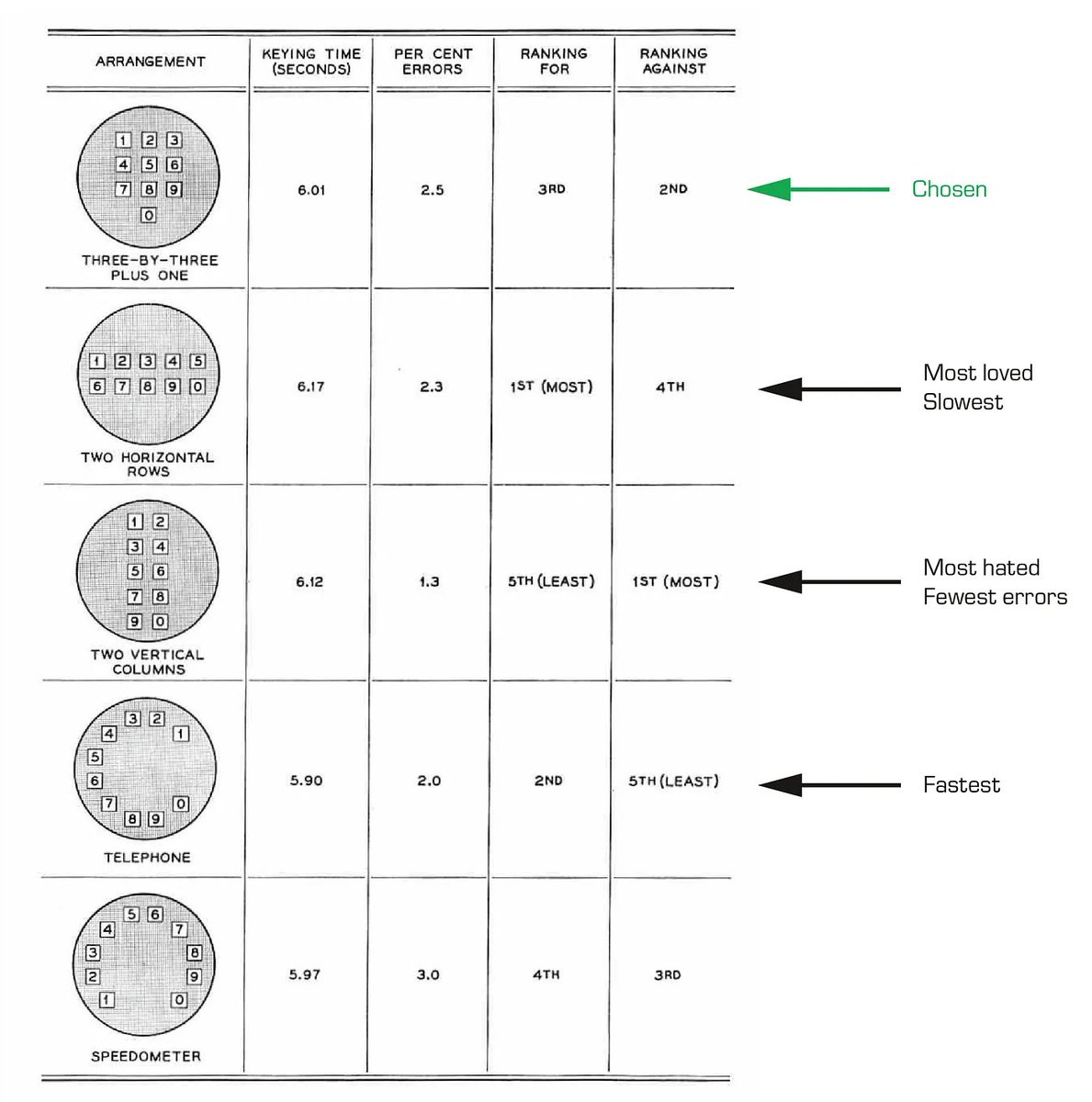
Bell Labs did not choose the fastest, least error prone or most popular layout!
This design decision X trillions of uses has saved millions of years of time :)
Good article about it:
https://t.co/dUQm9ZHJqD
.@manscaped has aired its first Super Bowl ad, a 30-second spot called "Hair Ballad,”
It features anthropomorphized hair singing a melancholic ballad about being shaved off, with lyrics like "I was your scruff, your loyal friend."
Agency: Quality Meats https://t.co/yuBuRL7wxh