I am not a Republican.
That was your first mistake.
I am politically independent. I’ll give you the good, the bad, and the ugly about both Democrats and the GOP.
Your second mistake was assuming that I support bombing school-age children in the Middle East. I'll be honest; I don't care about foreign affairs. I don't care about land disputes in the Middle East. I don't care about Ukraine or Russia. I don't care about Canada's or Australia's probems either. I am an American; I care about my country and my country only.
Now, this next part is really gonna hurt.
I deal in facts. And facts are inconvenient for the vast majority of left-wingers.
I don't support the U.S. government / military getting involved in regime change wars overseas. I don't.
But our defense spending has declined substantially as a percentage of GDP over the last six decades.
In fiscal year 1970 (FY1970), U.S. national defense expenditures amounted to 7.80% of our GDP. By FY2000, that figure had fallen to 2.9%. In FY2025, it stood at just 3.02%.
So, defense spending is not really that bloated. But I am okay with cutting a little bit of it (especially what goes to private contracting).
Meanwhile, federal spending on socialized welfare and entitlement programs (e.g., Social Security, Medicare, and Medicaid) has ballooned.
In FY1970, combined federal expenditures on these three programs amounted to 3.7% of our GDP. By FY2000, that figure had increased to 7.1%. By FY2025, it had reached 10.7%.
In other words, since FY1970, defense spending as a percentage of GDP has declined by 61.3%, whereas combined spending on social welfare and entitlement programs has increased by 189.2%.
Now, let's look at the numbers for FY2026, courtesy of the Congressional Budget Office (CBO).
The federal government collected $5.403 trillion in tax revenue and spent $7.396 trillion, leaving us with a $1.993 trillion budget deficit.
Here's where that money went:
👴 Social Security: $1.654 trillion (22.36%)
💳 Net interest on debt: $1.142 trillion (15.44%)
🏥 Medicare: $1.069 trillion (14.45%)
🪖 Military: $917 billion (12.40%)
⚕️ Medicaid: $723 billion (9.78%)
🎖️ Veterans Affairs: $416 billion (5.62%)
🍎 Food / nutrition programs: $137 billion (1.85%)
🎓 Department of Education: $75 billion (1.01%)
🏘️ Housing / Urban Dev.: $68 billion (0.92%)
🏛️ All other spending: $1.195 trillion (16.16%)
Recall our deficit is now ~$2 trillion / year. Trillion with a “T.” That figure is important.
The national defense budget is $917 billion. That's billion with a “B.”
So, what I'm saying is that it doesn't take Einstein to see that even if we cut defense spending to zero (which would be a national security threat of epic proportions), it would not be enough to balance the budget and bring the debt down.
Spending cuts must be made to welfare and entitlement programs to do that. You may not like the implications of that (and many people on the right don't either), but it's just basic math.
Cumulative CPI inflation (Jan of inauguration to next Jan, BLS data):
Bush (2001-09): +20.6%
Obama (2009-17): +15.0%
Trump 1 (2017-21): +7.7%
Biden (2021-25): +21.4%
Trump 2 (to Sep 2026): +6.1%
Averages were lowest under Obama, highest under Biden. Many factors (Fed, Congress, energy, pandemics) drive the numbers beyond any president.
To fund a no-OOP universal plan covering all US residents at current ~$6T spending levels (2026), government would need to replace roughly $3T in private premiums/OOP with taxes—about 9% of GDP. That lifts overall US tax-to-GDP from ~35% toward 44%, above Sweden’s 41%.
Swedish workers face ~32% municipal tax plus 20% national on higher incomes, plus high employer payroll and 25% VAT. US average effective federal income tax is ~14%; the new burden would raise middle-class effective rates substantially via progressive income or payroll taxes. Efficiencies could trim the total, but the shift remains large.
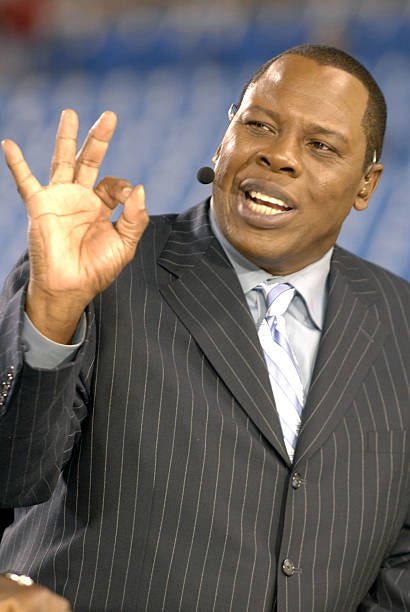
Tom Jackson, a foundational player on the Denver Broncos' "Orange Crush" defense and a fixture at ESPN as a Hall of Fame broadcaster in his post-NFL career, has died. He was 75.
Jackson's family informed ESPN of his death. A fourth-round pick by the Broncos in the 1973 draft out of Louisville, Jackson played in 191 regular-season games, including 177 starts. He also played in 10 playoff games over 14 seasons with the Broncos.
For many football fans, however, Jackson's second career act was how they knew him. He had a 29-year run at ESPN and was a mainstay alongside Chris Berman.
Rep Khana @RoKhanna , I am a Spine Surgeon & read the Yale study. All 40 pages. Here's what the "$1 trillion in savings" actually is.
$378 billion comes from cutting drug prices 51%. You could pass that tomorrow without touching anyone's insurance. It has nothing to do with Medicare for All.
$296 billion comes from paying every hospital and doctor in America Medicare rates. That's not a saving. That's a pay cut, to the one line that's already down 33% since 2001. The model counts it as efficiency.
$286 billion is an assumed 8% cut in "fraud." Medicare's own improper payments last year: $57 billion. The government's program doesn't achieve what the model assumes a bigger version of it will.
That's $960 billion of the trillion. The rest is admin savings, which are real, and ER visits, which are modeled.
Now what the study leaves out, in the authors' own words: "provider responses to Medicare rates are not modeled." No doctors leaving. No wait times. No supply constraint. A "static, single-year accounting." They say so on the page.
And the 114,000 lives? 51,000 of them, 45% of the headline, come from reversing last year's subsidy and Medicaid cuts. Not from your bill.
Restore the subsidies and you'd get those without a single-payer system. Of what's left, half is based on a mortality number the authors say they couldn't find and had to interpolate.
It's a preprint. Not peer-reviewed. It says so at the top.
As a surgeon, I don't doubt the Yale team's intent. But a model that cuts the doctor's pay, assumes the doctor stays, assumes the patient shows up, and assumes the fraud disappears isn't evidence. It's a spreadsheet with the hard parts turned off.
Medicare already pays physicians 33% less than it did in 2001. Private practice fell from 680% of doctors to 18% on that rate. Your plan makes it the only rate. The trillion dollars is real. It's coming out of the people who treat you.
@Alison_Galvani #medicareforall
“About once every two years the market falls 10%. Every six years the market’s going to have a 25% decline. That’s all you need to know. You need to know that the market’s going to go down sometimes. If you’re not ready for that, you shouldn’t own stocks.” – Peter Lynch
Why is this funny? What makes something funny? Because it is true. In 2021, speaking to Young Democratic Socialists of America, Zohran Mamdani named as his end goal the seizing of the means of production. Seizing. Not reforming, not regulating, not taxing. That is Mamdani's own word.
So ask what the means of production are. Land, buildings, machines, tools, trucks, the businesses built around them. Every one of them belongs to a man who earned it. Seizing means taking it from him.
Once you accept that premise, the number on the tax is a detail. If what a man produces belongs to everyone, then the line marking who counts as rich sits wherever the men holding power decide to put it this year, and no principle stops them from moving it down. The Bee moved it to zero for the laugh. Mamdani supplied the premise that makes zero coherent.
. @RahmEmanuel, you’re comparing the estimated value of Anthropic insiders’ equity stakes with the net worth of 45 million households, then pretending you’ve demonstrated something about wealth inequality.
You haven’t.
Stock valuations aren’t cash. Net worth is assets minus liabilities. And Anthropic’s rising valuation didn’t subtract a dime from those households’ balance sheets.
This is wealth creation, not wealth confiscation.
You haven’t identified a single provision of the tax code responsible for this comparison, much less explained how changing it would help those families.
You’re using big numbers you don’t understand to sell policies you can’t explain.
Senator Sanders @SenSanders I'm a surgeon. Let me tell you what Medicare for All means from inside the operating room.
Medicare already pays doctors 33% less than it did in 2001, adjusted for the cost of running a practice. It cut us again for 2027.
Third year in a row.
That one payer is why private practice fell from 80% of doctors to less than 20%. Why your doctor now works for a hospital system with a quota. Why I spent six hours last Friday trying to get one patient seen.
Medicare for All takes the payer that did that and makes it the only one. Nobody to negotiate with. Nowhere else to send the patient. One rate, set in Washington, for every surgeon in America.
CBO looked at it. Their words: demand for care would rise faster than the supply of doctors and hospitals. Universal coverage is not universal access. A card in your wallet is not an appointment.
And the 68,000 deaths? That's a computer model, not a body count. Here's a number that isn't a model: Medicare Advantage denied 200 of 207 of the sickest patients at one hospital system last year. Government-contracted. Government-paid.
I'm not defending insurance companies. I've spent two weeks on this feed showing what they do. But the answer to a bad insurer isn't one insurer with no competition and a 33% pay cut baked in.
The answer is a system where the doctor can still say "send her to me." Medicare for All is the last system where that's possible, and the first where it isn't. @Doctor4Patients #MedicareForAll
Over the last 10 years, US Federal Government Tax Revenue has increased 64% to $5.4 Trillion while Government Spending has increased 98% to $7.5 Trillion.
The result: a more than doubling of the US National Debt from $19.8 trillion to $40.5 trillion.
Absolutely insane stat: The U.S. has added over $1.1 trillion to the national debt in just the past 4 months.
“There are two ways to enslave a country. One is by the sword. The other is by debt.” – John Adams
The perfect fiscal balance that musicians and gig workers enjoyed in Nashville died around 2017. The price of homes skyrocketed (literally almost doubled). With that came the migration of tens of thousands folks from out of state either looking for opportunities or looking for state income tax relief. ( me included) And all cash buyers. If you wanted to finance and not offer 25 percent over asking , just forget it. Now you have the over build that yeilded massive condo complexes with only 20 percent occupancy all with a 5/6 or 7 in the price tag and less takers than projected. The property tax increases which are based on the "new" math are crushing homeowners and low margin businesses like restaurants and bars all of which do some sort of live music experience. There's just not enough margin in a 29 dollar martini to cover the overhead anymore. The tourist now find the price of a vacation to Nashville virtually no different in costs to any major city or tropical destination with a beach. Hotel prices have doubled if not more. ( I put my whole band and crew up twice a year for rehearsals) The difference between 2015 and now is staggering. All of these factors have contributed to a place that was once America's fastest growing city to now being on the verge of a soft insolvency all the way around. Musicians can't afford to live there and businesses can't afford to support the musicians that make up the fabric of the Nashville experience. I really hope they figure it out and charging more for everything isn't the answer.. Joe B ( part time Nashville resident)
The big problem in American politics is that voters expect the government to solve their problems. Our country was founded on the principle that the people should be left alone to solve their own problems. When government is empowered to solve problems, it creates them instead.