I just watched quarter-speed footage of the New Glenn explosion, and I noticed something interesting about it.
I am not an expert on explosion physics or chemistry. However, I do know one thing that is powerfully relevant, and that is that the kind of gaudy fireball we saw is not a natural result of high explosives going off. People only think it is because their ideas about how explosions look and sound are largely a creation of Hollywood special effects.
Real explosions are a lot less visually spectacular, and even sound different - they tend to rumble rather than producing sharp popping and cracking reports the way this one did.
In reality, pyrotechnicians have to do rather elaborate things to get that Hollywood effect. They have to aerosolize the fuel and semi-disperse it before they detonate. It's the same way fuel-air bombs work.
Which makes me think that what happened here is they were actually two explosions. A relatively small primary one that ruptured the main propellant tank and vaporized a bunch of the fuel and oxidizer. Then a secondary one, much bigger and nastier, when the aerosolized mixture went off.
I think it's pretty likely that something similar occurred during the only rocket explosion in history that was clearly larger than this one - the detonation of the Soviet N-1 rocket in 1969
This is my video of the explosion of the Blue Origin New Glenn rocket at Cape Canaveral’s pad LC-36 a short time ago. Includes video & audio from roughly 5 miles away near Jetty Park. That was an absolutely enormous explosion! 🤯
Note: Thankfully, Blue says all staff are OK.
Castle Romeo was one of the standout detonations of the Operation Castle nuclear tests in 1954. The device (known as Runt I) used natural lithium in its fusion fuel, something physicists weren’t even fully confident would perform well, which is why early yield estimates ranged widely. ☢️
After the Castle Bravo nuclear test showed that lithium-7 could contribute far more to the reaction than expected, predictions for Romeo were revised upward. When it was detonated, it reached about 11 megatons, making it the third largest U.S. nuclear test.
Romeo was also the first nuclear test conducted from a barge, since earlier high yield detonations had severely damaged the atolls used for testing. A significant portion of its yield came from fast fission in the natural uranium tamper, which really shows how much of these massive explosions relied on fission as well as fusion.
1/A mid-1960’s GE concept showing a Manned Orbital Laboratory-type space lab with 2 Gemini capsules and 1 nuclear reactor. Derived from the SNAP-10a, this powerplant featured a small reactor at the apex of the cone; the cone itself is the radiator for the system. The SNAP-10a...
In aerospace engineering, “Mag-Thor” (magnesium–thorium) refers to a class of alloys that were used in the 1940s-1980s that were inherently weakly radioactive due to the presence of thorium.☢️
Thorium was intentionally added to a magnesium alloy for its metallurgical advantages since it helped improve high temperature strength, creep resistance and microstructural stability by forming stable phases that resisted deformation under sustained thermal stress. From a performance standpoint, Mag-Thor alloys allowed engineers to retain magnesium’s low density while extending its usable temperature range. This made it suitable for components such as engine housings, transmission casings and other structural parts that could become exposed to heat and stress.
The picture shown here (used in an aircraft yoke) is a great example of its design priorities. A yoke must be strong, fatigue resistant and dimensionally stable under repeated mechanical input, while also remaining lightweight to ensure precise and responsive control. Magnesium–thorium alloys provided that balance effectively at the time, which is why it showed up often in old school cockpit control components like this.
However, by the early 1980s, these alloys were largely phased out as regulatory scrutiny and occupational safety standards surrounding radioactive materials became more stringent. Despite its engineering advantages, Mag-Thor alloys were ultimately discontinued due to the health risks associated with thorium during manufacturing, machining and disposal. As material science has also advanced, the aerospace industry has transitioned to alternative high performance alloys that met the same requirements without the added radiological risk.
Now that we have a more complete view, we wanted to provide an update on our NG-3 mission. While we are pleased with the nominal booster recovery, we clearly didn't deliver the mission our customer wanted, and our team expects. Early data suggest that on our second GS2 burn, one of the BE-3U engines didn’t produce sufficient thrust to reach our target orbit. Blue Origin is leading the anomaly investigation with FAA oversight to learn from the data and implement the improvements needed to quickly return to flight operations. We have been in steady communication with the team at AST SpaceMobile, we appreciate their partnership, and we’re looking forward to many flights together.
The Collapsable Contingency Urinal (CCU) now being used on Artemis 2 after a toilet malfunction. Essentially an open container (reusable, sealable, and drainable) that controls the urine-air interface using capillary forces like my Space Cup does coffee. When you are in cislunar space with a broken toilet, you need contingencies and the CCU replaces the need for about 25 pounds of diapers.
This is one of the greatest astronaut crews of all time. Hard to compare to historical greats like Gemini 8, Apollo 13, Soyuz T-13, or STS-31. But certainly Wiseman, Glover, Koch, and Hansen are setting a freaking high bar for the Artemis era.
Did you know that 1st-gen Hawker Hunters are still duking it out with 5th-gen F-22s and F-35s? At Sentry Aloha 2026, ATAC Hunters once again flew as "Red Air." With their tiny visual signature and high subsonic agility, they mimicked low-tech threats in a crowded/saturated battlefield. They not only forced F-22 and F-35 pilots and sensors to work harder, but also gave crews valuable reps in close-in dogfighting against a jet that doesn't know any better.
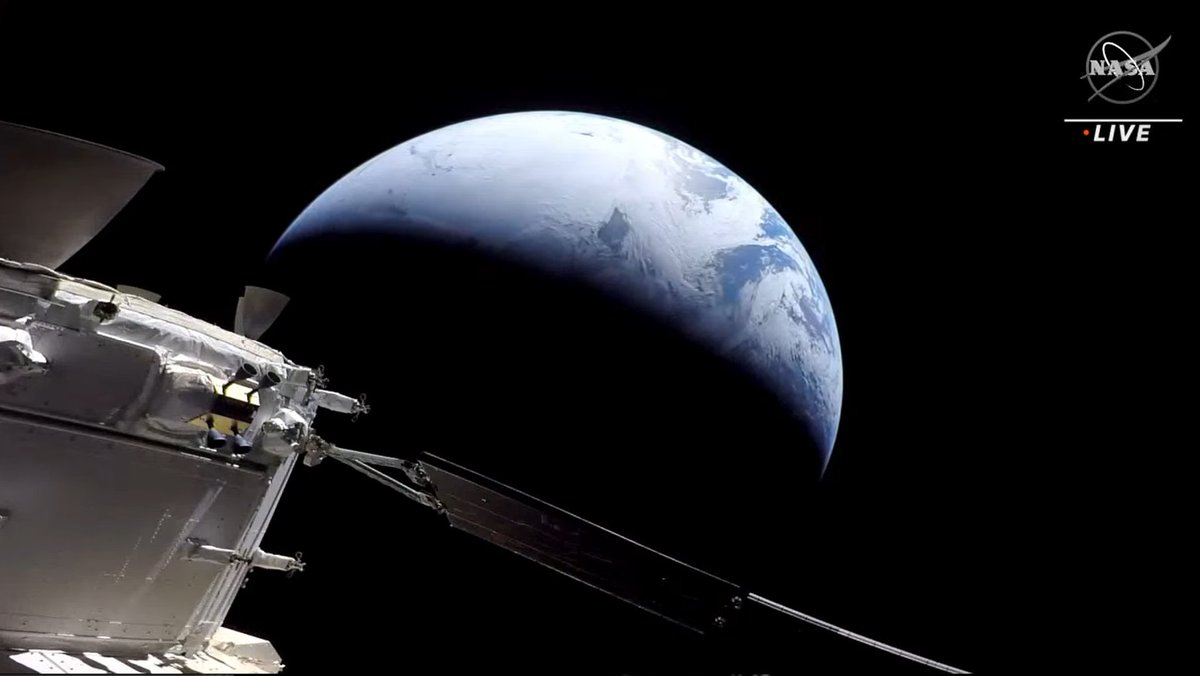
@NomadSierraZulu@Erdayastronaut We have many photos released now of earth outside of leo.
First 3 are Artemis II last one is an amazing photo from Artemis I.
A brilliant statistician who spent 50 years studying why massive engineering projects fail realized one terrifying truth:
Individual incompetence is almost never the actual problem.
His name is W. Edwards Deming, the man who famously rebuilt Japan's post-war manufacturing empire from scratch. He argued that we obsess over individual performance and completely ignore the environment.
Here are 4 operational frameworks he used to build elite, failure-proof organizations:
In 1958, a GAR-8(AIM-9B) Sidewinder was fired by an F-86 Sabre operated by the ROCAF. This missile, famously, did not detonate and embedded itself in a PLAAF MiG-17. This would then be sent to the USSR, who would copy it as the R-3S.
Why didn't the Sidewinder explode?
A🧵
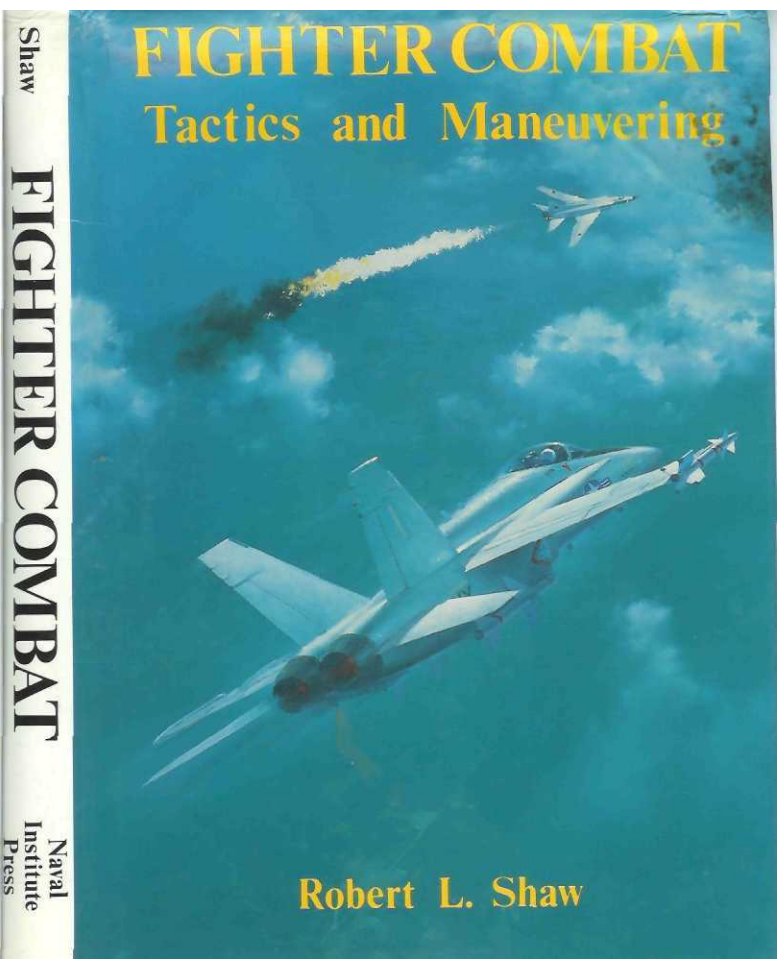
Now in our technical discussion we have almost solely focused on the aircraft and EM Theory. We have made allusions to the pilots but never fully expanded upon that or the context that dogfighting (BFM) exists in or any kind of utility value.
In 1798, a scientist effectively “weighed” the Earth — without leaving his laboratory.
The English scientist Henry Cavendish designed an incredibly sensitive experiment.
Inside a quiet wooden shed, he hung a horizontal rod from a very thin wire. Two small lead spheres were attached to the ends of the rod.
Nearby, he placed two much larger lead balls.
Because of gravity, the large spheres slightly pulled the smaller ones. The force was extremely tiny — so small that the rod twisted by only a minute fraction of a degree.
Yet that tiny twist held a big secret.
By carefully measuring this small movement, Cavendish determined the strength of the gravitational attraction between objects.
From this, scientists could calculate the mass of the entire Earth.
His estimate was remarkably close.
Cavendish calculated Earth’s mass to be about 6 × 10²⁴ kilograms, while modern measurements give 5.97 × 10²⁴ kilograms.
Sometimes the biggest discoveries come from measuring the smallest forces.
Getting tired of the #IranWar coverage? Take a break. Enjoy this stunning shot of two T-38 Talons flying in close formation at Mach speed. This photo was captured by a NASA Beechcraft B200 King Air flying about 2,000 ft above the T-38s, using a highly specialized air-to-air camera. The imagery helps NASA study shockwave patterns for the X-59 QueSST quiet supersonic research program.
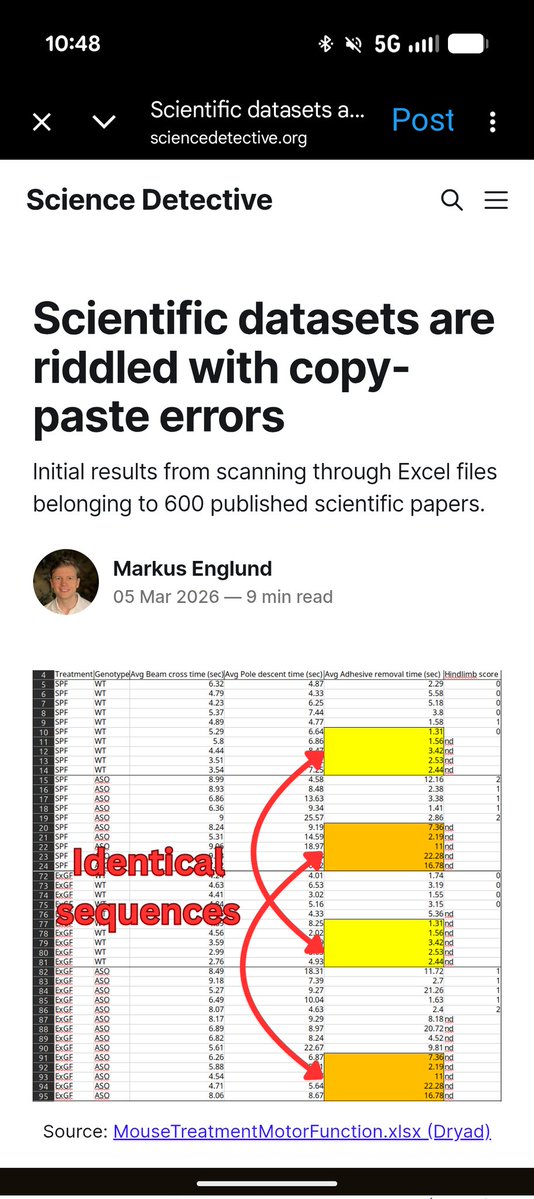
Another lower bound on likely fraud in biomed literature -- using suspicious copy/pasting in Excel files -- comes in at 3%.
It feels very uncomfortable but I think we all have to update our priors to fraud being quite common