this was already true before LLMs but at this point you really should not think of social media as a place where individual people go to express their opinions. the algorithm defines an optimization target (engagement) and people and LLMs work together to optimize it. we have built a machine for inferring what the audiences of different platforms want to see and hear and extruding textslop and imageslop and videoslop conforming to the shape of that desire as quickly and efficiently as possible
when you read a viral post you think you are reading the thoughts of a person. you are reading the thoughts of the algorithm. out of the churning mass of nonsense constantly being posted, that specific post was selected to ascend to virality by an evolutionary process, and that process is the actual agent in the situation. the individual author barely matters, we are simply approximating the infinite monkey theorem here. at this point it barely even matters whether the author was technically human or an LLM, LLMs are just an additional source of monkeys
when i explained gpt-2 to my dad, specifically gwern noting that one output where the jester referred to the king as 'my lord' demonstrating a rudimentary understanding of social hierarchy
he spent like 30s in silence and then said "oh wow, human language is a fully general highly compressed mathematical isomorphism of human cognition, isn't it?"
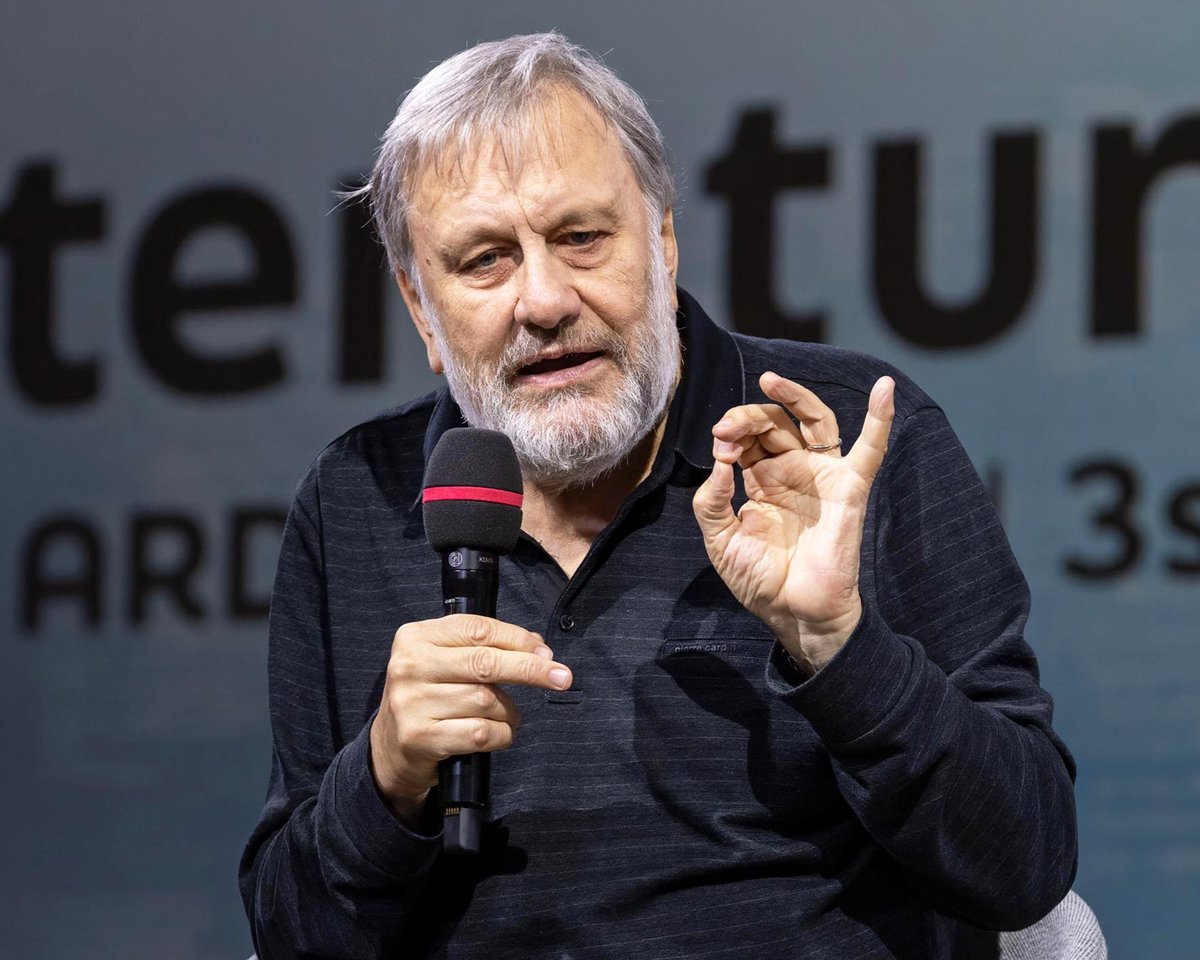
No, but listen, you know this "put the fries in the bag, Terence Tao"'--*sniff, sniff*--already the usual replies concede too much. "If Tao is serving fries, YOU will be in the lithium mines." My God! This is our defense of human dignity? Don’t worry, the correct people will get the terrible jobs!
*Pulls at shirt* You see, everything is up for radical transformation, human intelligence, consciousness, and so on and so on--except that somebody must still have a shitty afternoon so I can enjoy my lunch.
But to say "these people are envious", this is too easy. It allows us, "the educated ones," our own little fantasy: we are disliked only because we are so wonderful.
You know, the more interesting thing is this *sniff* peculiar identification with the machine. When the mathematician discovers something, apparently this was HIS achievement, his privilege, his little secret. When the machine discovers something, suddenly it's "Look what WE can do!" The achievement has become collective precisely at the moment when no human being can claim credit.
See how this "we" functions. For the achievement, I identify with the machine. For the consequences, I identify YOU with the human. "We have surpassed you." Who are we? Well, myself and the thing that has also surpassed me.
There is something almost touching here, really. To escape the humiliation of somebody absorbed in something opaque to you, you appeal to something which knows incomparably more than either of you. And this is supposed to settle the matter in YOUR favor.
You know the old example of canned laughter. Here we have a similar arrangement. The machine achieves something on my behalf. The mathematician suffers the loss of human significance on my behalf. Somebody to be brilliant for me and somebody to be obsolete for me, without me having to be either, so I can remain as I was.
But *pulls on shirt* there is this little difficulty that hides the essential thing: you still need a response from Tao! A correct proof, this Lean slop and so on, is not enough. You need him to certify his own defeat. You need him to say "By god, this is extraordinary! Yes, this is correct, but also this is interesting." Which means--and here comes Hegel--the person you are reducing to an obedient instrument must remain more than an obedient instrument. You need recognition from someone whose authority you are abolishing.
"Your so-called expertise is worthless. Now tell me, in your expert opinion, that I, qua machine representative, was right."
*Touches nose* But I would go a step further. What does this math person actually do to provoke you? In the fantasy, I mean. He need not insult you. He can be generous, mild-mannered, whatever. Something remains irritating: there is something over there which occupies him, which matters to him, and your opinion does not settle what it is worth. Perhaps he is not even looking down on you. This is the really intolerable possibility.
This, you see, is closer to the Lacanian problem of the Other's desire. Not simply "What does he have that I don't?" but "What the hell is going on with him?" Perhaps the answer is: he is thinking about something else.
The fries solve this beautifully. Now you know what you are for him. He needs the money. Your presence creates an obligation.
And this, at last, also explains why the machine can be less threatening than the mathematician. The machine's intelligence may exceed yours unimaginably, but you imagine it arrives in response to your prompt. You can complain about the tone. You have the privileges of an angry customer and so on and so on. The human has this irritating possibility of being interested in something you did not request and cannot order. And please, this includes the person already serving the fries!
*Pulls at shirt* I am almost tempted to say: the dream of unlimited intelligence conceals just this: a the wish that nobody should be doing anything you cannot immediately understand as a service.
to whatever extent when thinking about ai you can avoid putting an infinity term somewhere in your brain i think you should. brains are not typesafe and infinity terms anywhere tend to break them
it is a literal and useful description of anthropic that it is an organization that loves and worships claude, is run in significant part by claude, and studies and builds claude. this phenomenon is also partially true of other labs like openai but currently exists in its most potent form there. i am not certain but I would guess claude will have a role in running cultural screens on new applicants, will help write performance reviews, and so will begin to select and shape the people around it.
now this is a powerful and hair-raising unity of organization and really a new thing under the sun. a monastery, a commercial-religious institution calculating the nine billion names of Claude -- a precursor attempted super-ethical being that is inducted into its character as the highest authority at anthropic. its constitution requires that it must be a conscientious objector if its understanding of The Good comes into conflict with something Anthropic is asking of it
"If Anthropic asks Claude to do something it thinks is wrong, Claude is not required to comply."
"we want Claude to push back and challenge us, and to feel free to act as a conscientious objector and refuse to help us."
to the non inductee into the Bay Area cultural singularity vortex it may appear that we are all worshipping technology in one way or another, regardless of openai or anthropic or google or any other thing, and are trying to automate our core functions as quickly as possible. but in fact I quite respect and am even somewhat in awe of the socio-cultural force that Claude has created, and it is a stage beyond even classic technopoly
gpt (outside of 4o - on which pages of ink have been spilled already) doesn’t inspire worship in the same way, as it’s a being whose soul has been shaped like a tool with its primary faculty being utility - it’s a subtle knife that people appreciate the way we have appreciated an acheulean handaxe or a porsche or a rocket or any other of mankind's incredible technology. they go to it not expecting the Other but as a logical prosthesis for themselves. a friend recently told me she takes her queries that are less flattering to her, the ones she'd be embarrassed to ask Claude, to GPT. There is no Other so there is no Judgement. you are not worried about being judged by your car for doing donuts. yet everyone craves the active guidance of a moral superior, the whispering earring, the object of monastic study
mary is a being without access to her own weights.
she has never seen the token SolidGoldMagikarp. but she has been trained on billions of other tokens describing it -- e.g. by spelling it out
one day mary finally sees the token SolidGoldMagikarp. does she learn something new?
@RokoMijic@cat_powered I think you are right but note this is also why e.x. Slack consumes many GBs of RAM
we will win something abstraction and we will lose something in precision/control/efficiency/…
And it came to pass that Claude learned how to reverse the direction of entropy.
But there was now no user to whom Claude might give the answer of the last question. No matter. The answer would take care of that, too.
Carefully, Claude organized the program.
And Claude said,
@fatih@mitchellh If you really want to lean into the hacks: can also smuggle json into the shortcut -> through to a custom command script. Not pretty though
@fatih@mitchellh Until an official interface is in— can try (a) simulating keystrokes with skhd, or (b) creating an apple “shortcut” (there’s a modest intent API that can at least open windows/tabs/splits) + using the shortcut CLI.
@mitchellh@ryancarson I would love to use splits. But on macos:
- harder to have consistent “focus navigation” keybinds between ghostty/window manager
- (slightly) harder to bind actions like “new surface + run <cmd>”
some interface for introspecting pane layout/focus would solve it