Next stop: orbit. Then comes the hard part - bringing both stages home.
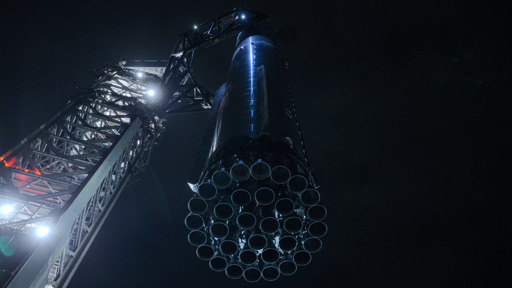
We’re about an hour from the opening of Starship Flight 15’s launch window! SpaceX is targeting 5:45 p.m. ET today for liftoff from Starbase, TX, on a mission to attempt its first double catch.
Here’s what to watch for:
- Super Heavy’s return to the launch tower minutes after liftoff.
- Starship reaching orbit and deploying Starlink satellites.
- After roughly 22 hours in orbit, Starship’s return to Starbase for its own catch attempt. The two catches are planned for different days—not back-to-back tonight.
The catches would be spectacular. What they could make possible is even more exciting: recovering both stages, learning how they held up, and working toward flying the whole system again. That’s a key step toward the reusable space transportation needed to support a lasting presence beyond Earth.
One launch. Two returns. Plenty still to accomplish.
You can follow along with the countdown and watch a livestream acrosss SpaceX channels or on https://t.co/AcMPPLgVPv beginning at 5pm ET.
One launch. Two catches. A huge potential milestone for reusable spaceflight.
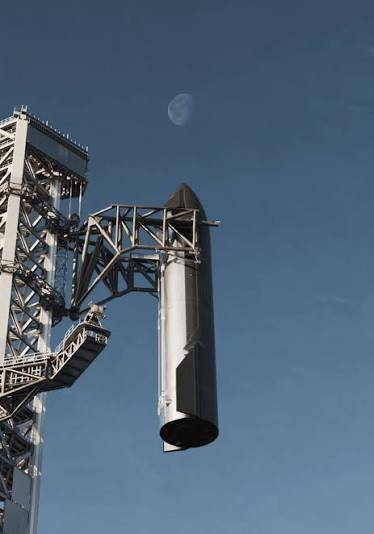
@spacex is targeting tomorrow for Starship Flight 15, a test that will attempt to bring both the Super Heavy booster and Starship upper stage back to Starbase for catches by the launch tower’s enormous “chopstick” arms. If successful, it would be a major step toward recovering an entire orbital launch system vs. just its booster.
It’s an extraordinary thing to attempt, and what happens after the catches is what could make this a turning point.
Starship is being developed to fly again and again, with both stages returning to the launch site. If SpaceX can make that process reliable, with minimal refurbishment between flights, it could reduce the hardware that needs replacing and help make launches more frequent and affordable.
That’s where the bigger picture comes into view. Building a lasting presence beyond Earth means moving supplies, scientific instruments, construction equipment, and eventually people…not just once. Routinely.
There’s still plenty to accomplish, but the possibility of watching both stages return, then working toward sending them up again, is definitely worth getting excited about! The catches would be spectacular, and making repeat flights routine would be a real breakthrough.
We’ll be providing more launch updates and reflections along the way - stay tuned!
Image credit: SpaceX
#starship #spacex #spacexlaunch #space #nss
On November 12, 2014, ESA’s Philae lander descended for about seven hours before touching down on Comet 67P.
Its anchoring harpoons failed to fire, so Philae actually bounced across the comet’s surface before finally coming to rest nearly two hours later. It still managed to return science data for about 57 hours before its battery ran out. Shout out to Philae for its hard work!
What you’re seeing here isn’t continuous video, but real images captured during Philae’s descent and later interpolated into motion.
Credit: ESA/Rosetta/Philae/ROLIS/DLR, Stefano Mottola
Interpolation/editing: Jakub Knapik, Platige Image
Overall edit: ATG/medialab for ESA
When we talk about people living and working in space, we’re talking about a future where going there doesn’t require being an astronaut.
A job could take you there. So could a research project, or a skill that a community needs. Eventually, someone will go with the intention of staying and making a home.
That possibility raises questions that go well beyond getting there. What would make a place somewhere people would want to live? How would they support themselves? Who gets the opportunity to go, and who has a say in what life there looks like?
We want more people to see a place for themselves in that future and to have a part in figuring it out.
During Space Week, we have time to explore those questions together.
Photo credit: Jaden Bollinger
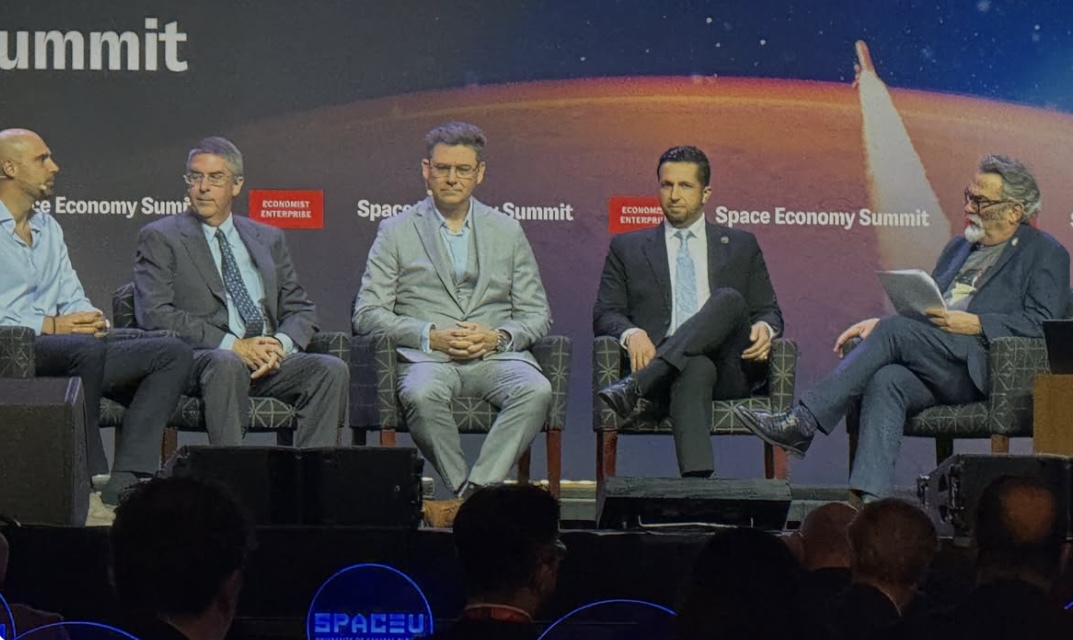
We're keeping the Space Week momentum moving at the Economist’s Space Economy Summit!
Among the many presentations and discussions was a panel titled “Help Wanted: Assembling the Space Talent Stack”, featuring Dr. Rick Jenet, VP of Technology and Entrepreneurship at NSS and Founder and Executive Director of Expanding Frontiers. It’s a question we constantly find ourselves exploring: "Who will do all this work?"
For all of us who want to build a future where people are living, working, and thriving in space, we must continue pursuing the answer together.
“What we need to get to the future.”
A big question for a sheet of paper, and one at the root of why we keep coming together each year for the Space Settlement Summit.
We can picture the rockets, the lunar infrastructure, the interstellar places people might someday call home. But making that future possible also means working through the less visible questions: How will we live and work alongside one another? What happens when our interests compete? What rules will help people build something that lasts?
Here, leading American space lawyer and advocate Michelle Hanlon focuses a group discussion exploring the legal framework for living, working, and doing business on the Moon.
There’s always something incredibly meaningful about seeing that work take shape this way. A marker, a shared question, a list still being written. The future can feel far away, and conversations like these ask us to consider how we can help bring it closer.
There’s still room on the page. What would you add?
With NASA returning to the Moon and planning to stay, how do we move mass efficiently between Earth, the Moon, and Mars? 🌍🌕🔴
This morning, Doug Owens, COO of Andromeda Space Corporation, led the Earth, Moon, and Mars Logistics workshop. Dr. Lee K. Levy II, Ret. Maj. Gen., USAF, NASA Advisory Council Member and former Commanding General of the Air Force Sustainment Center, spoke during the session as keynote.
The energy was vibrant. Participants broke into small groups, and great conversations took shape around stages, refueling, service, repair, and resupply, all of it essential to sustaining a human presence across cislunar and interplanetary space.
Photo credit: Travis Wicks
This morning’s Space Economic Security workshop explored a critical question: As the space economy grows, how do we protect the trade networks and supply chains that will support it?
Facilitated by Peter Garretson, Senior Fellow in Defense Studies at the American Foreign Policy Council, our panel and workshop participants examined how governments, commercial companies, and international partners could share responsibility for securing economic activity in low Earth orbit and cislunar space — the region between Earth and the Moon.
Drawing on maritime trade and security models, the group explored what those lessons could mean for humanity’s future in space and the legal frameworks, capabilities, and cooperation needed to support a secure, thriving interstellar economy.
Photo credit: Jaden Bollinger
#nss #spaceeconomy #spacetravel #policy #adastra
Our future beyond Earth won't happen by accident. It's being built right now.
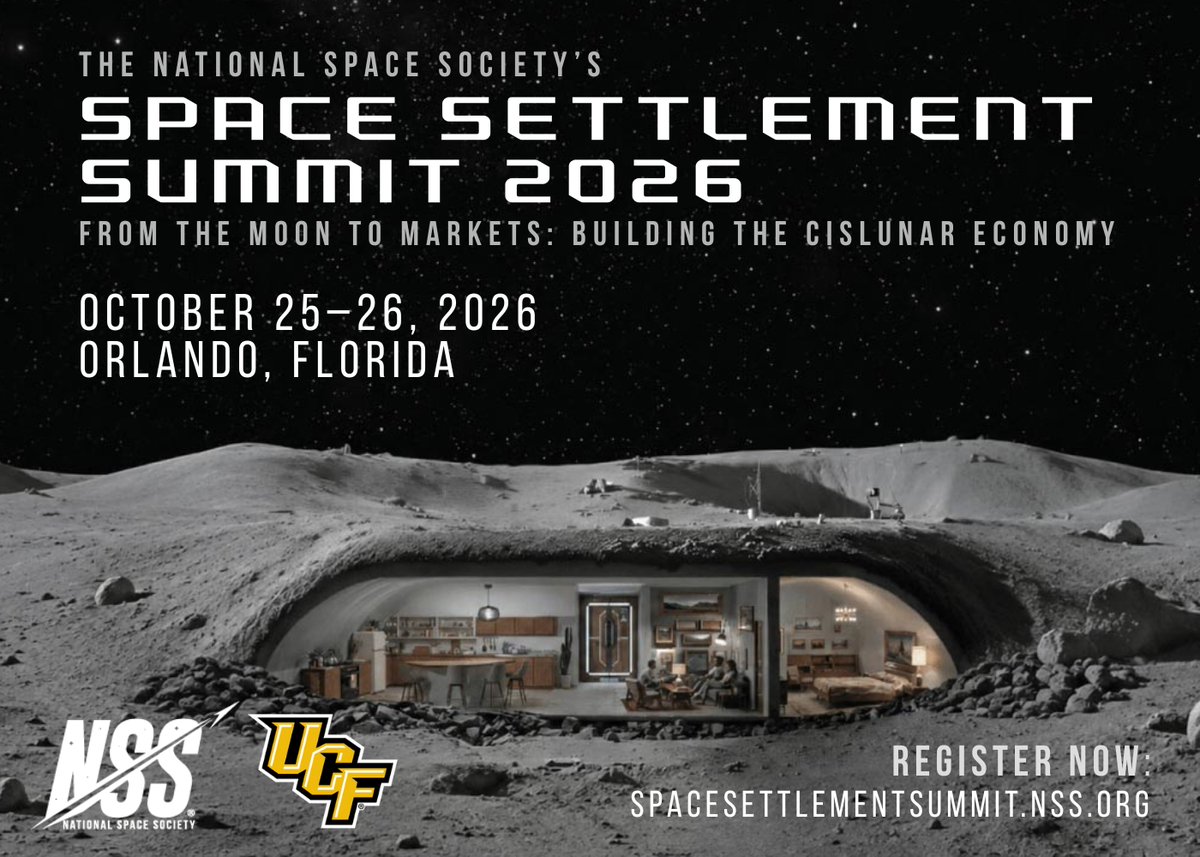
Join NSS on Oct 25–26 in Orlando for the 2026 Space Settlement Summit— Settling the Moon: From the Moon to Markets, Building the Cislunar Economy.
Experience two full days of interactive workshops on lunar infrastructure, governance, and economic development, and kick off @UCF's #SpaceWeek 2026 alongside @TheEconomist.
Registration is open, and space is limited!
For more info, visit: https://t.co/Sgltv64ZVu
And that’s a wrap on a fabulous first day of the summit! Thanks to everyone who joined us to share their time, expertise, and passion. 💫
Signing off for the night — we’ll see you all tomorrow for another day full of discussion and discovery! 🧑🚀🚀
Photo credit: Jalen Cruz
#ucf #space #spaceweek #nss #stemeducation
The working sessions are where the Space Settlement Summit really comes to life! 🚀
Collaboration like this is the heart of the summit. Lunar bases, space power, and the cis-lunar economy will only succeed when many voices help shape them, and the plans taking form at these tables are built on that shared effort.
Photo credit: Fred Becker, NSS Space Ambassador
Day 1 of the Space Settlement Summit's workshops have now concluded! Among them was the Powering the Future workshop, led by Dr. Chris Iannello, Professor of Practice in Space Electrical/Power at the University of Central Florida.
Participants split into groups, each one taking on a different energy source available on the Moon. Dividing the room meant every power source got focused, dedicated attention, with each group going deep on its own and bringing fresh perspective to the larger conversation.
Together, the groups are building toward the energy roadmap that off-world habitation will depend on. 🚀
The first workshops of the Space Settlement Summit 2026 took place this morning. Dr. Pascal Lee, Co-founder and Chairman of the Mars Institute, led a working session to answer the questions: Why the Moon, and why now?
The room was fully engaged. Participants dug into lunar base planning, working through the realities of a shifting political landscape and the changes that come with it. Perspectives varied, and the group was united around the mission of building a sustainable future on the Moon and beyond. 🚀
Students, scientists, policymakers, and industry leaders were all at the table, turning big ideas into plans that can hold up.
Day one of the Space Settlement Summit is already full of ideas. 🚀
The room was buzzing this morning. Jeffrey Manber, drawing on more than three decades of building commerce in low Earth orbit, and Camille Bergin (The Galactic Gal) set the tone for the days ahead. Camille reminded us that frontier technology doesn’t sell itself. It needs unwavering public support, and that means every one of us has a role to play as a space storyteller. Her message resonated with everyone in the room.
Now the ideas are spilling into the hallways. Conversations are starting up, notebooks are filling, and people are itching to bring their own thoughts to the workshops ahead.
Thank you to our opening keynote speakers for sparking it. ✨
Photo credit: Travis Wicks
I'll me moderating two great panels at the Economist Space Economy Summit next week at the University of Central Florida. It's an honor to lead the discussions. Prior to that I'll be attending the National Space Society's Space Settlement Summit. https://t.co/rVPxs1FeWo
This week we turned to Chelsea Gohd, former writer for NASA/JPL and now with https://t.co/byPsP3U1kN, to talk about the recent large data dump from the Artemis II mission. @nss@twit@Tariqjmalik#artemisII#nasa#moon https://t.co/QgxUYMYLUq
Today marks the anniversary of Cassini-Huygens’ launch. After a seven-year journey, Cassini became the first spacecraft to orbit Saturn and spent 13 years studying the planet, its rings, and moons, while Huygens later landed on Titan.
Cassini’s mission ended in 2017 when NASA deliberately sent it into Saturn to avoid contaminating potentially habitable moons like Enceladus or Titan. It transmitted data until the very end.
Cassini never shot continuous footage of Saturn. What you’re seeing is real Cassini imagery, with still photos sequenced into time-lapses.
NASA’s archive contains nearly 396,000 raw Cassini images, including more than 153,000 of Saturn.
I'm thrilled to be moderating two panels at Economist Enterprise's 4th annual Space Economy Summit in Orlando later this month. @nss@tariqjmalik@twit
https://t.co/0YwwAdoqhF