Here is my RustConf 2025 presentation "10 Years of Redox OS and Rust". Make sure to watch to the end for a surprise!
- Jeremy Soller
https://t.co/W1XHg64Ic6
rotki has been continuously developed as an opensource project since 2017!
We have been lucky to have had the help of 188 contributors to turn @rotkiapp into the best privacy tool for tracking your crypto.
Wanna join them? Then hop right into our github! There is work to do 💪
@maxominog@musalbas yup! that is why I am leaning towards using MLS as I describe in the forum - it comes with those features in mind in it's core architecture.
OK.
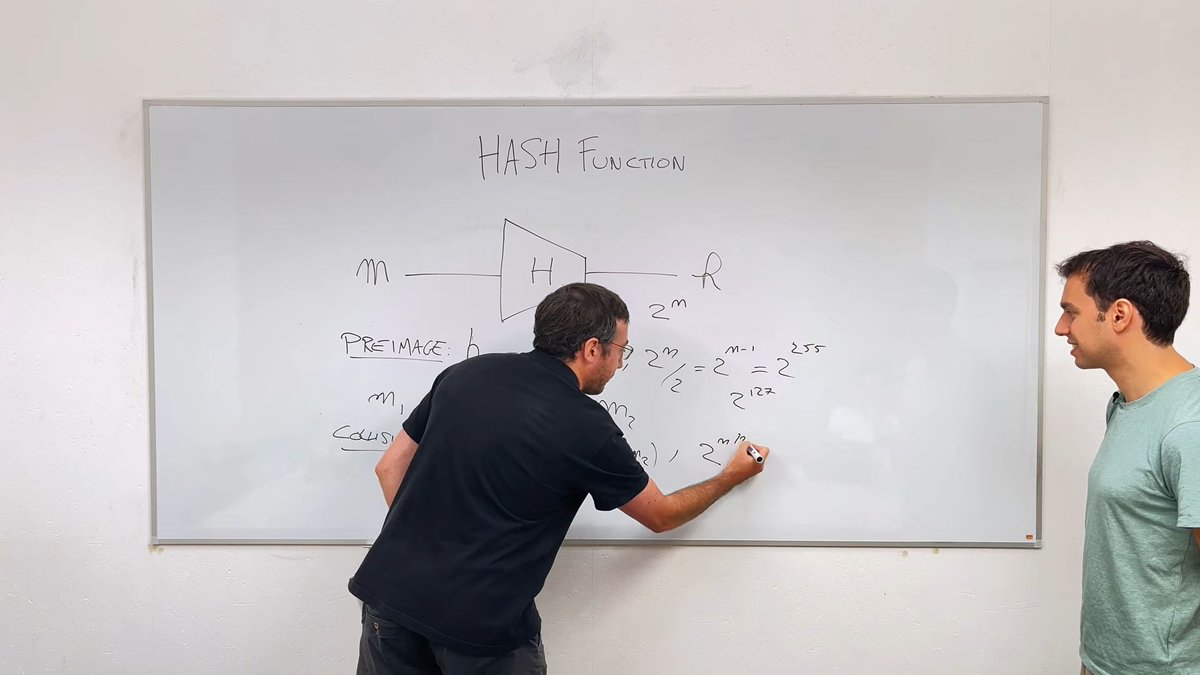
It’s time to reveal the ZK Whiteboard S3 Module 1... because it's LIVE!
🥁🥁🥁🥁
How to Build Hash Functions, with Jean-Philippe (JP) Aumasson @veorq & @nico_mnbl
Below are the links to watch the full module!
@mkoc61@musalbas Yup!
And depending on who *must verify* that encryption has some properties contained within the ciphertext (like a blockchain) verifiable encryption helps make assertions on otherwise hidden data
Myth: posting encrypted data on a DA layer gives you no DA guarantees, because it's the person who holds the encryption key could withhold the data.
This is false, if you use a model where users encrypt their own data. New research by @nuke_web3! https://t.co/s1DY0xUQdT
I decided to donate $500K to @rstormsf’s legal defense. Originally, we planned to give $50K, but after what happened to me, I need to take a clear position so everyone understands what @class_lambda stands for.
I understand that the @ethereumfndn will be matching donations up to another $500K for Roman Storm’s defense, which means our contribution can have double the impact. Our team is currently moving money to execute the transaction. It should be done in the next few hours. I'm going to sleep after not sleeping for the last 48 hours.
Open source and decentralization are not just philosophical ideals. They are practical necessities for building crypto. Success in this space comes from building in the open, onboarding others, and creating movements that grow beyond the original project. That is often hard to explain to people who do not share this ethos, because we are not optimizing for the same outcomes.
Our mission is to help build the highways of the new internet in sustainable ways. Economic sustainability is one part of that, but not the only one. We also exist to counterbalance the natural pull toward centralization, a side effect of pure optimization. Centralization is easier and cheaper in the short run. If our only goal were to make money, there are far simpler ways to do it. But money, to us, is just a tool to reach our goals.
Roman’s legal defense matters because builders everywhere need to know they can push innovation forward and that the community will stand behind them when they do. The West became powerful because it embraced freedom and its innovators. Progress came from protecting those who challenged the status quo and building systems that allowed their ideas to scale. When we stop defending our innovators, we stop building the future.
The community can contribute to @rstormsf's legal defense here:
https://t.co/FTckcvB6B2
It’s an exciting (but also scary!) time.
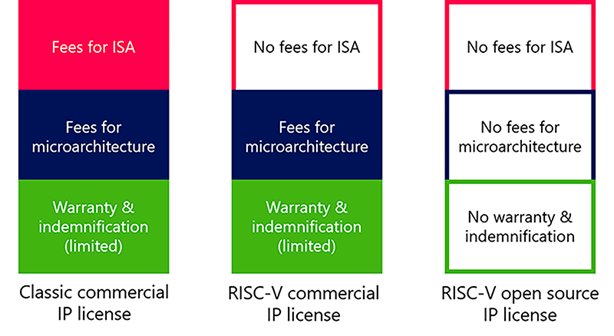
For hobbyists, it’s really interesting to get such a high level of performance out of an openISA.
From the geopolitical perspective, further development in this area will severely limit the effect of future US/UK export bans.
Once compiler toolchains and standards hit critical mass, China+RISCV is going to be unstoppable.
Policing an openISA is nearly impossible; reducing x86 / Arm dominance eliminates the single points of failure that could otherwise be controlled via sanctions.
What do you think? Are you worried about the momentum?
Intel’s not doing so hot lately. Meanwhile vendors are killing it at the RISC-V Summit in China.
One CPU got a specint2006/GHz rating of 10.4/GHz!
To put it in perspective, a i7-4790k (Haswell) scores 8.1/GHz.
RISC-V is hitting high-end desktop territory FAST:
@badcryptobitch > You end up generate ZK proofs for fake data, or computing over fake encrypted data and you'd never know!
VE constrains the plaintext encrypted data to conform to have some properties, you can define what "correct" is through that mechanic.
@badcryptobitch yeah - what is "correct" data is very application specific, but I see no blocker to defining a circuit checking what that is. "external" vs. "manual" doesn't mean much to me... it's just the oracle problem: zk and/or TEE inputs need to be validated in some known way.
@badcryptobitch for an audit trail of what (plaintext) was used, verifiable encryption might be a fit. Essentially committing to some "anchor" on your data is all you need, following that through whatever data pipeline you have in mind. (encryption if you need to store private data in public)
@_weidai@NitanshuL@Celestiaorg@eigen_da@LitProtocol This is aligned to our existing PDA work, and we are working towards a more user-centrict model to allow even more cool stuff (guaranteed ability of user to force exits & inclusions, ...)
See : https://t.co/2rbsRJS1gP
WIP user-centric design thinking: https://t.co/etU50iVyqx
Yesterday, @hibachi_xyz went live on @celestia Mainnet! 🔥
Hibachi uses our first version of Verifiable Encryption on Celestia, enabling:
✅ Privacy over critical user data such as perp positions;
✅ Onchain settlement from confidential offchain ops
🧵