Very honored to be awarded with Gairdner Early Career Investigator Award! #AI is really changing the landscape of biology, particularly single-cell analysis! Thanks for the recognition from @GairdnerAwards! Excited to meet with this year's Gairdner Laureates and discuss science!
Join us at @UofTCompSci! We are now hiring for tenure-stream faculty positions in multiple areas.
We will start reviewing applications on December 6, and we will give full consideration to all applications submitted by January 10.
Get the details: https://t.co/eCFRP7uzO7
Interested in working with me as a postdoc at the Vector Institute?
Oct 31 is the "October cohort" deadline for postdoctoral fellowships at Vector.
https://t.co/q9iwOoofsg
Assistant Professors @RogerGrosse and @ToviGrossman have been named 2021 @SloanFoundation Research Fellows in recognition of their outstanding accomplishments as early-career researchers. https://t.co/HVWDTjw8vf
Can't wait to share tomorrow's episode with @DrDevSK! We talk all about automating key parts of the healthcare process 🏥 so providers 🥼 can focus on time with their patients 🩺 and provide better care! 🩹
Happy to see this paper out. Interpreting what CNNs have learned on large compendium of ATAC-seq data was surprising: much of the learnt parameters point to validated biological mechanisms. Deep learning of immune cell differentiation https://t.co/qCt6DY4ywM
Congratulations to @VectorInst’s Chief Scientific Advisor @geoffreyhinton on receiving the ACM A.M. Turing Award, the highest honour in computer science, alongside @ylecun and Yoshua Bengio. https://t.co/DQUfBizBI1
Big thanks to @avarma for your donations and making this giant leap in health care possible 🚀
All insights tonight pointed to the need for #Innovation in health care, and your support is making it possible!
Lauren Erdman presents iModEst, an approach to learn about modes of gene regulation across cell types. iModEst reports what regulatory mechanisms explain a given genes expression in a given cell type. #ASHG18@nyulik
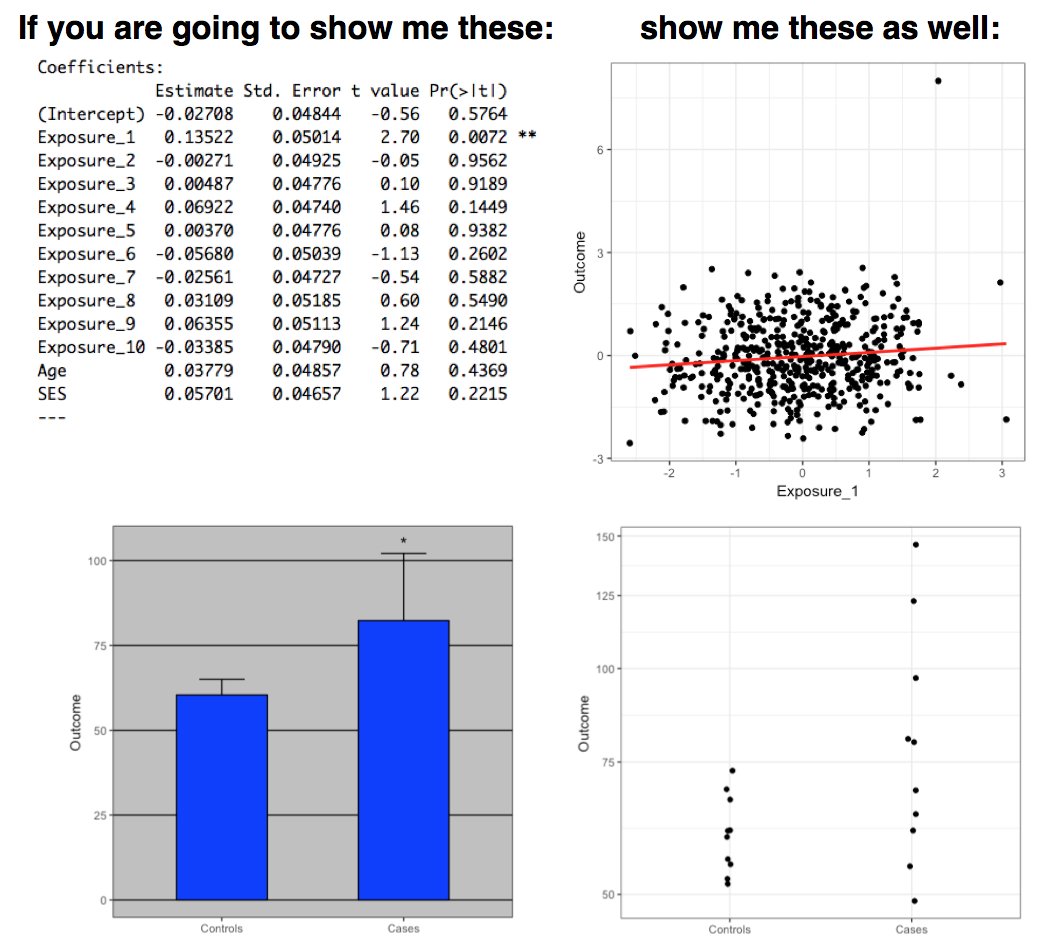
If they want to improve the quality of scientific publications, rather than banning p-values or changing the 0.05 threshold, journals should make us show the data.