Rust 1.65.0 is now available. 🦀
Today's release brings generic associated types (GATs), let-else statements, std::backtrace, and more.
See the announcement and release notes for details:
https://t.co/X5RJOe9JEb
The Transformer is a magnificient neural network architecture because it is a general-purpose differentiable computer. It is simultaneously:
1) expressive (in the forward pass)
2) optimizable (via backpropagation+gradient descent)
3) efficient (high parallelism compute graph)
I like the use of the event reducer and partial implementation of an ecs in this article
"Making a turn-based multiplayer game in Rust" https://t.co/bje9fx5J6W
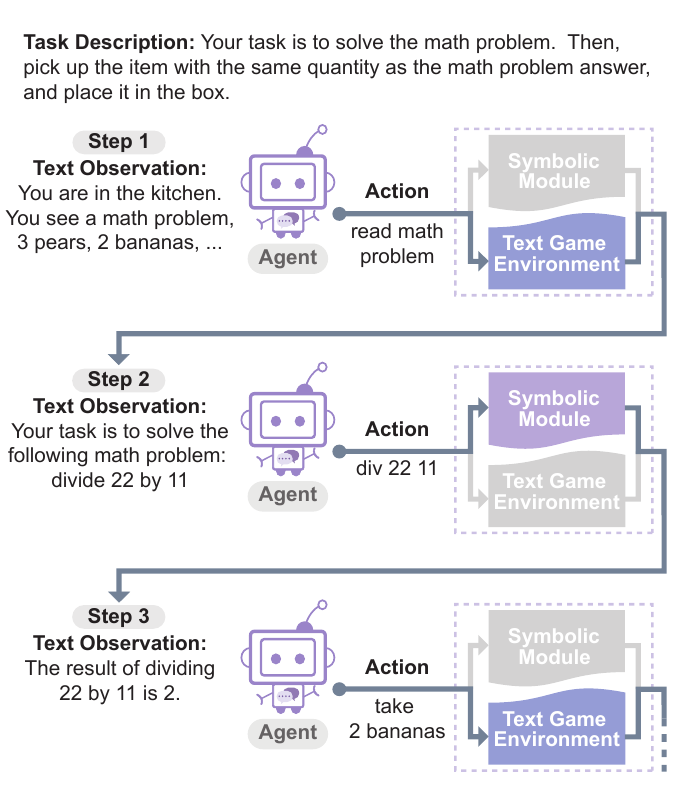
Transformers are robust reasoners, but frustratingly lack the ability for accurate math, navigation, & other easily coded tasks. In our new work "Behavior Cloned Transformers are Neurosymbolic Reasoners", we show you can have the best of both worlds. 1/3
https://t.co/2vQDvy0oKF
https://t.co/3nEC2zXzRf is a fascinating project from @meta, the developing persona from the AI's long term memory as a way to reduce the vector search space while also developing a model of the person interacting with it
“My hope is someday, when the next Aristotle is alive, we can capture the underlying worldview of that Aristotle - in a computer. And someday, some student will be able not only to read the words Aristotle wrote, but ask Aristotle a question - and get an answer!"- Steve Jobs,1985
“The episodes are rendered using https://t.co/mQioOa579b's ultra-realistic voices, and transcripts are generated with fine-tuned language models. For example, the Steve Jobs episode was trained on his biography and all recordings of him we could find online”
It is remarkable how coherent this interview is. The cadence of Steve Jobs voice however doesn’t sound great, perhaps due to the available training data mostly comes from his presentation voice. Impressive nonetheless! https://t.co/uz57HY1HGg
@rtfeldman Key takeaways - event loops + file descriptors + state machines + buffers = async networking programming. There's also some good material on the linux networking stack here that I found to be helpful https://t.co/MKl5SYst4a
@rtfeldman epoll, kqueue, iocp, wepoll, poll.
libuv (https://t.co/j9yg8TixY7) is a good source as it abstracts over the event loop and provides primitives for common descriptors. If you're interested I also did a series: async in depth in Rust (covers syscalls) https://t.co/NDmsXfGDkW
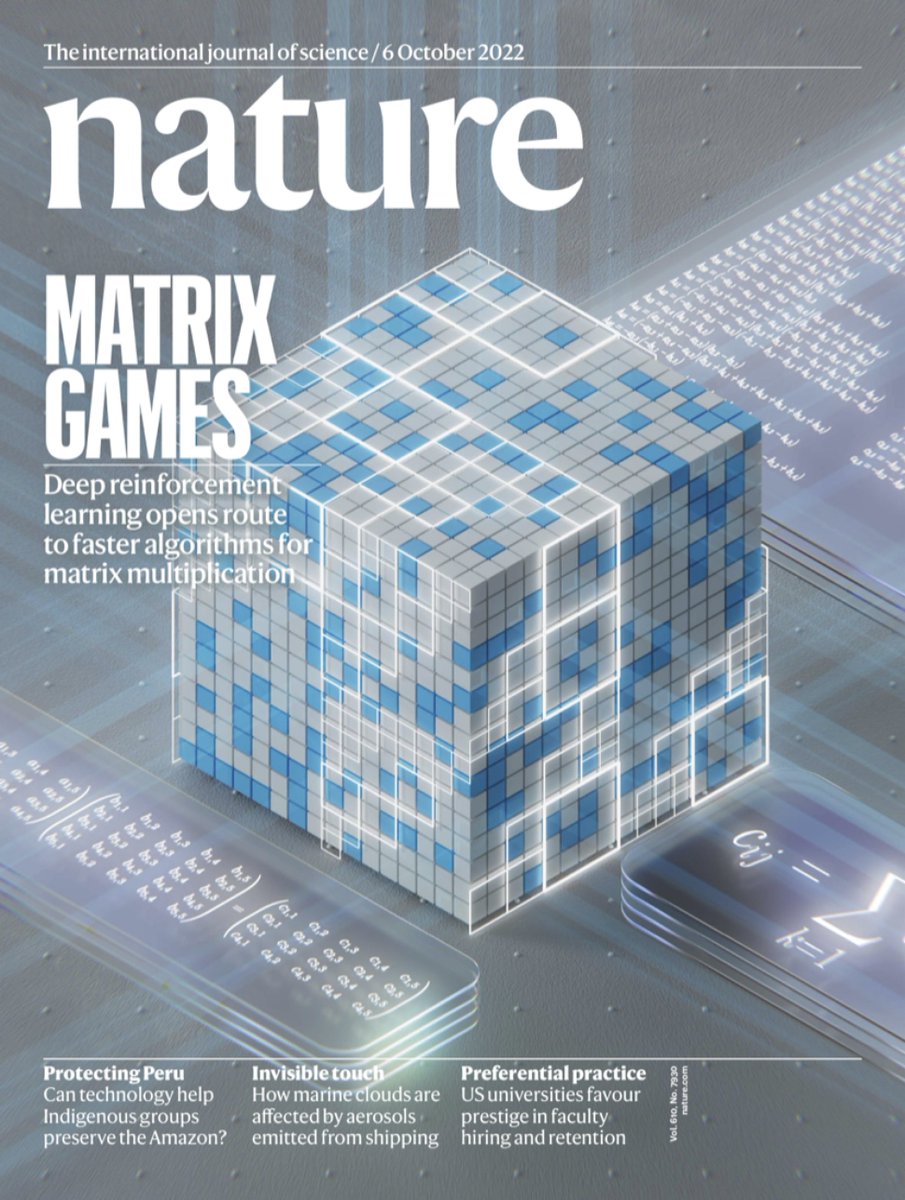
If #AlphaTensor can effectively bootstrap itself into greater efficiency in discovering a more efficient matrix multiplication algorithm, what is the upper limit to this method? What else can we push it to discover
ICYMI: On the cover of @Nature - #AlphaTensor, an AI system for discovering novel, efficient, and exact algorithms for matrix multiplication.
Learn more ⬇️
https://t.co/E18DezAevb
https://t.co/SvHgsaitFt
With some recent [1][2] fixes, passthrough nvme support for io_uring is now able to reach ~105M IOPS. Need to get the tag batching sorted, then we should get it very close (or better) than raw bdev.
[1] https://t.co/c4grR9uPfn
[2] https://t.co/Nf5FaYUrp2
This is insane: @drfeifei and team are about to publish a robotics paper that enables robots to perform 1000 common human tasks just from observation of humans.
Get ready
https://t.co/oBVyJvbbBp





![axboe's tweet photo. With some recent [1][2] fixes, passthrough nvme support for io_uring is now able to reach ~105M IOPS. Need to get the tag batching sorted, then we should get it very close (or better) than raw bdev.
[1] https://t.co/c4grR9uPfn
[2] https://t.co/Nf5FaYUrp2 https://t.co/Qy4ZWV3k4U](https://pbs.twimg.com/media/FbvxBimaQAAIX_0.jpg)


