What is the most unequal country in South America? It depends on what metric you look at.
One way to measure income inequality is to look at the share of all income that goes to the top income earners.
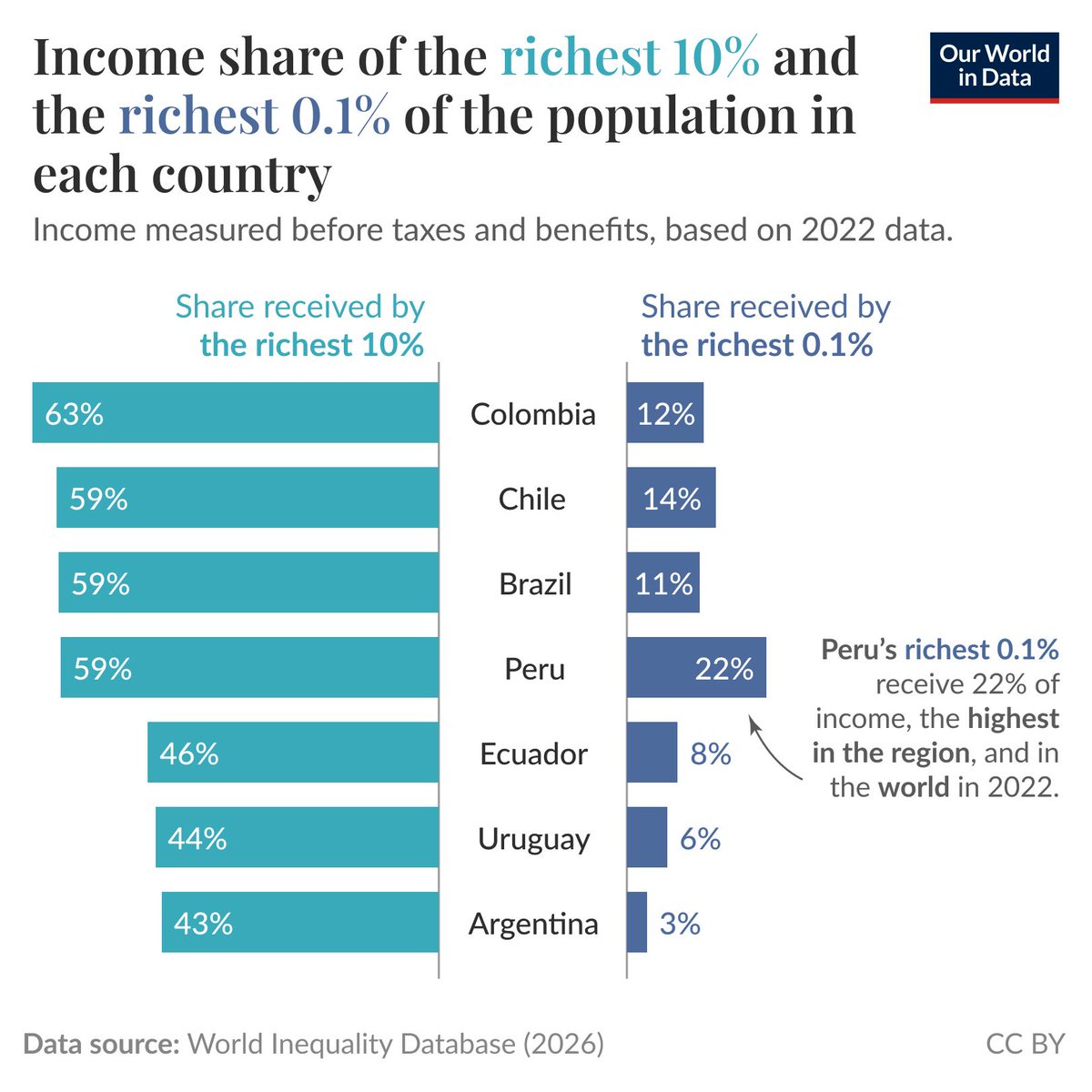
The chart plots this for all seven South American countries with comparable 2022 pre-tax income estimates in the World Inequality Database.
The difference between the left and right bars is which earners they cover: the richest 10% on the left, the richest 0.1% on the right.
Looking at the left-hand bars, Colombia ranks top. It has the highest share going to the richest 10%, followed by Chile, Brazil, and Peru — in these four countries, the top 10% share earns more than half of all income. This is high relative to other countries around the world.
But looking at the dark blue bars on the right, the rankings change. Peru’s richest 0.1% receive about 22% of income, the highest in the region by far, and actually the highest in the world that year.
This chart shows just two metrics, but you would also get different pictures if you looked at Gini coefficients or the distribution of wealth instead.
So, what is the most unequal country in South America? It depends on what metric you look at.
This is a region with high inequalities, but different indicators will tell you different stories depending on which part of the distribution you examine, and how incomes are measured.
(This Data Insight was written by @EOrtizOspina.)
🚨🇵🇪 #INVESTIGACIÓN 🦈
@MongabayLatam revela que entre 2021 y 2024, autoridades peruanas no fiscalizaron adecuadamente la salida de embarcaciones extranjeras que pasaron por puertos del país transportando tiburones protegidos por CITES. 1/9 🧵⬇️ https://t.co/o7p43IFIvd
Una nueva investigación de @Global_Witness vincula a bancos norteamericanos y europeos en el financiamiento a la deforestación en el Chaco paraguayo - incluyendo ganadería que invade territorio Ayoreo.
Gran trabajo de @lilimendonca y equipo.
https://t.co/0GFfL4GMnM
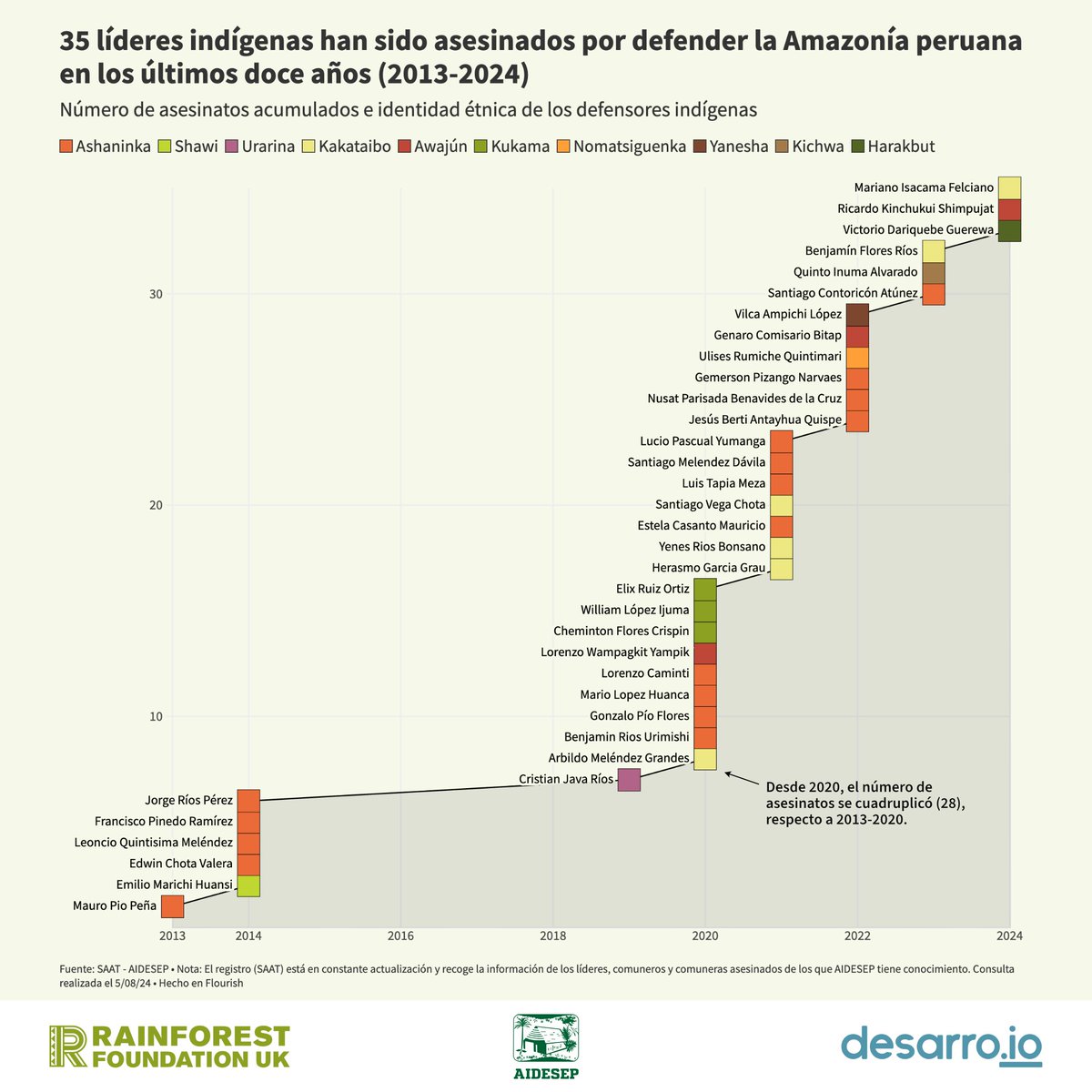
En el día de los #PueblosIndígenas, colaboramos con @RFUK y @aidesep_org para reconocer a los defensores indígenas asesinados y exigir el respeto de su derecho a la vida. Nota completa: https://t.co/yhD6Pvip0o
NEW STUDY: Swapping out your gas stove for an induction stove cuts NO2 in your house by 56%.
NO2 is linked to asthma, increased ER visits and “premature mortality” aka fewer birthdays.
Switching from Gas to Electric Stoves Cuts Indoor Air Pollution https://t.co/eD4VHNNmTF
Ladies!
I bring you great news!
A study went viral saying that husband leave their wives after they fall ill.
Actually, they’d messed up the code & the study was retracted.
The biggest risk is not desertion, but delayed or unaffordable healthcare! 😛
https://t.co/cCaz7HGQWv
Minería ilegal en Peru
Estudio calcula deforestación, contaminación mercurio y sedimentación, a causa de minería ilegal, generaron pérdidas económicas de $593 millones en 3 comunidades nativas
https://t.co/Xqdr9k5VSp
@actualidadspda,@amazonacca,@USAIDPeru,@spdaorg,@CINCIAMDD
Are you looking for a beginners course on #Python for agricultural applications? Follow our #MOOC on Python for Geospatial Analyses using #WaPOR Data for free! Check it out here: https://t.co/ZvYhS3HZCf
@ihedelft@WaterAccounting@FAOLandWater
Climate experts were increasingly saying that keeping heating below 1.5C is near impossible, yet it remains the global goal. So I asked hundreds of top IPCC scientists what they thought. What they said shocked even me…
🧵 1/n #ClimateCrisis
La forma como se extrae el oro en la Rinconada, Puno deja paisajes surreales, difíciles de digerir. Una ley que avale una minería sin regulaciones nunca será una alternativa viable de desarrollo, para nadie.
#mineria#Peru
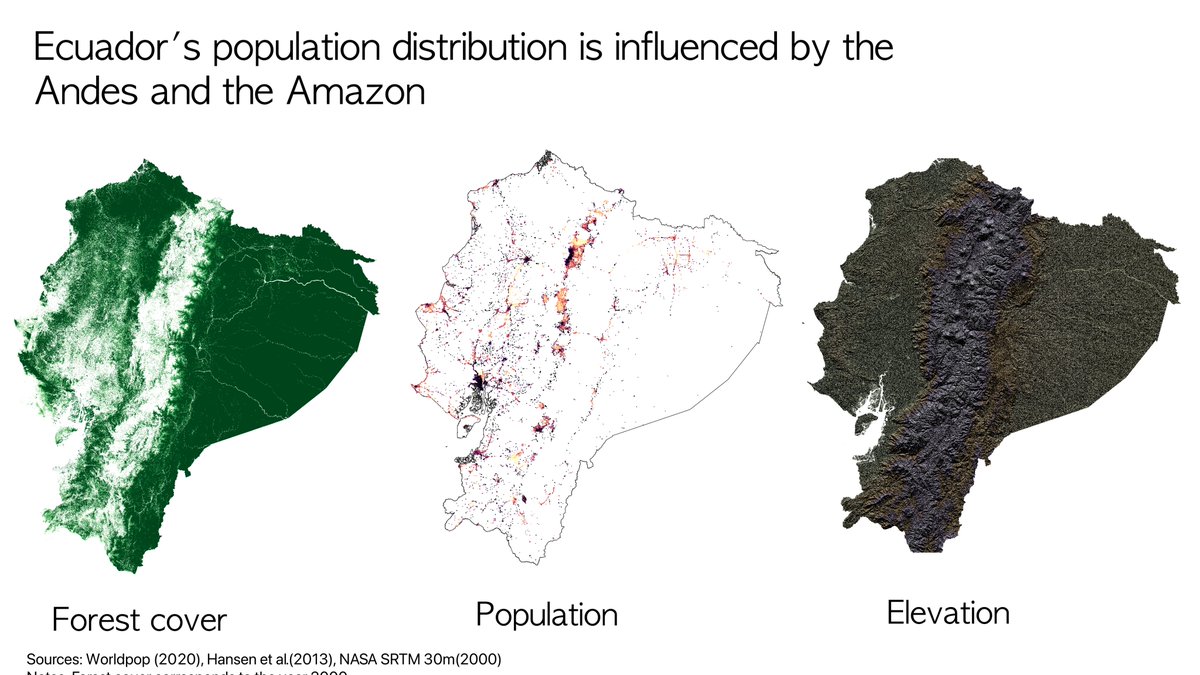
#30daymapchallenge Day 29: Population
Countries that are both Amazonian and Andean have such interesting population distributions! Here's 3 maps for understading population patterns in Ecuador.
#Ecuador#Andes#Amazonia