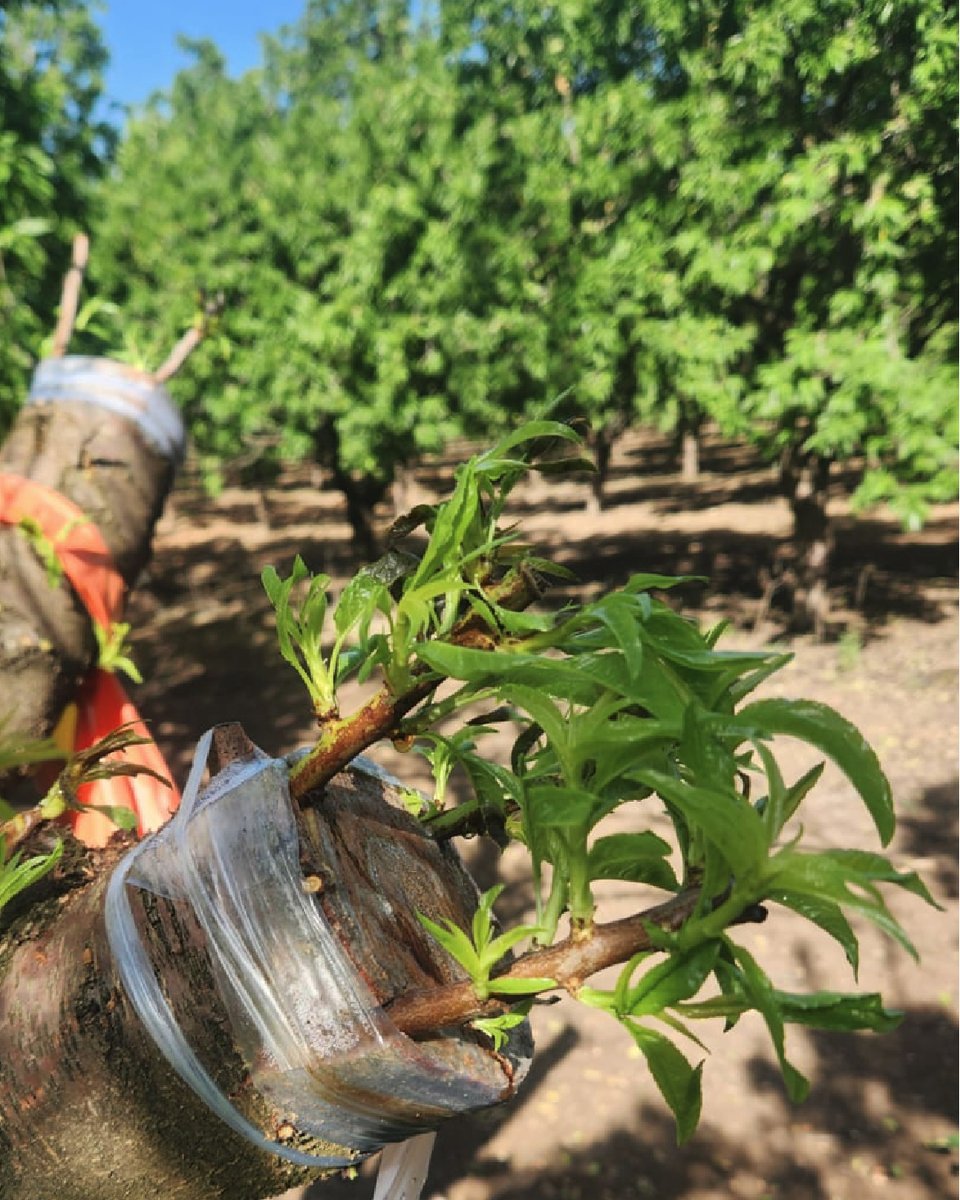
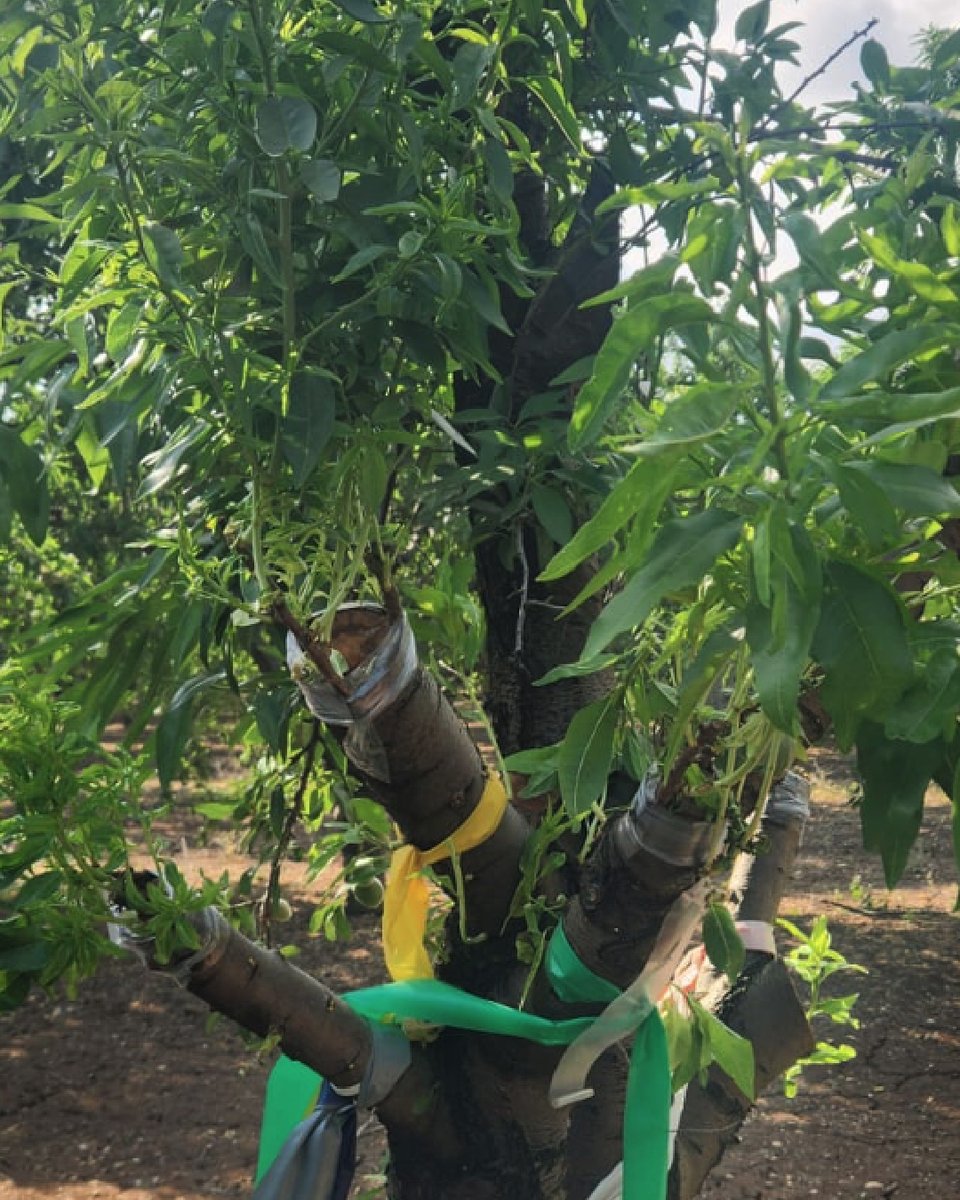
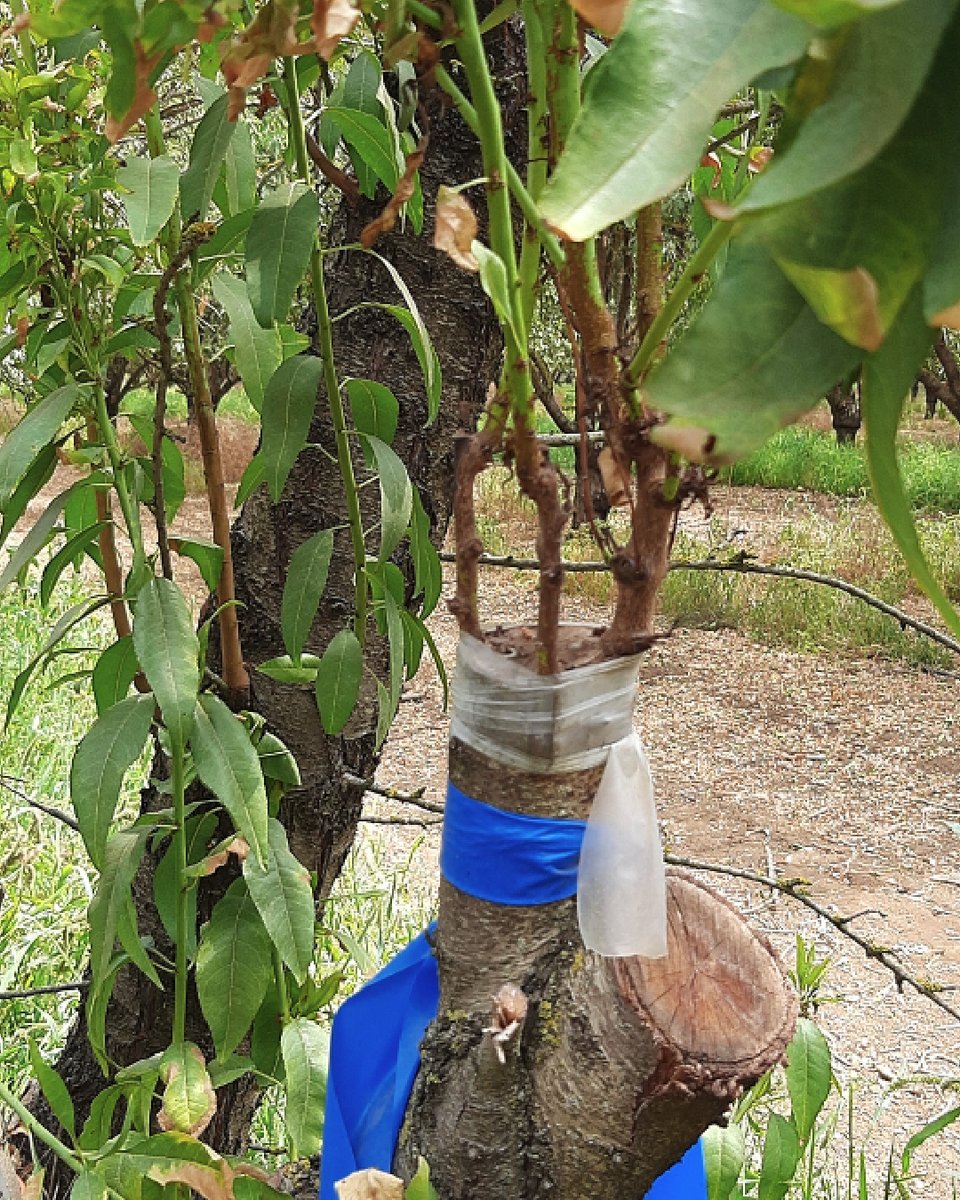
📸Exploring our almond tree collection in search of resistance to Xylella fastidiosa. 🍃
In this study, scions from different almond genotypes are grafted onto X. fastidiosa-infected trees. Over time, we monitor them for symptoms and test for bacterial colonization.
Resistant genotypes can be later used to breed almond cultivars with resistance to X. fastidiosa.
Left, scions beginning to flush;
middle, scions showing almond leaf scorch symptoms;
right, scions with no visible symptoms.
@Volcaninstitute #ARO
@REA_research
🌱 We can share with you the direct testimony of Ofir Bahar, one of the top researchers on the BeXyl team, leader of the research line on host plant resistance and scientist at the Volcani Institute (ARO-VOL) in Israel.
"One weekend, my wife and I took our kids to the spot where we got married. We noticed a Judas tree (Cercis siliquastrum) that looked a bit sick. It had symptoms that matched those of #Xylella fastidiosa. So, I collected some leaf samples and took them to the lab the next week. Guess what? The tree was infected with X. fastidiosa subspecies fastidiosa sequence type 1! Judas trees are native to many parts of Israel, including the upper Galilee, where #Xylella infection has already been found in commercial grapevine plots. Since the tree is in the wild, it'll be even harder to control #Xylella infections in crops like grapes and almonds."
Observation is the first step in the scientific approach, and researchers are constantly working on it. Someone once said that the catchphrase for scientific progress is "that's weird" rather than "I've got it" - even when the discovery is not good news.
@Volcaninstitute
Despite these difficult times, we were able to attend #2ndMOVEsymposium and represent ISREV in lovely Belgrade , tnx @SrbEVs_office for hosting us! Looking forward for a fantastic and stimulating 4 days⭐️
אנחנו, אנשי הסגל האקדמי והנהלת הפקולטה לחקלאות, מזון וסביבה של האוניברסיטה העברית, מביעים את תמיכתנו במכון וולקני ובחוקריו על רקע הקיצוץ הבלתי נתפס בתקציב המכון. אנו פונים לשר החקלאות ולממשלה: עצרו את הקיצוץ ההרסני. למכתב המלא: https://t.co/7ucWo0m7YY
Great resource, but why behind a paywall???
Open Access and Reproducibility in Plant Pathology Research: Guidelines and Best Practices | Phytopathology® https://t.co/GTeto9GzOs
Natural variation in a short region of the Acidovorax citrulli type III‐secreted effector AopW1 is associated with differences in cytotoxicity and host adaptation - Jiménez‐Guerrero - 2024 - The Plant Journal - Wiley Online Library https://t.co/9qUn364O8W
This is incredible really. @BillAckman reposting our video was blocked.
We are the copyright owners. Music is licensed.
What the hell is happening in Twitter?
@elonmusk
חקלאות ישראלית היא צו השעה אז בחמ"ל שלנו הקמנו מערך שיווק חינמי עבור חקלאים מהעוטף. במקום שהרשתות הגדולות יגזרו עליהם קופון, הם ימכרו את התוצרת ישירות לצרכן ללא עמלות וללא דמי תיווך. לצורך כך דאגנו כבר לשטחי תפעול ולחדרי קירור גדולים. החקלאים ידאגו לנו לתוצרת ואנחנו נדאג להם לשיווק והפצה.
מכירים חקלאים שזקוקים לכך? שלחו להם את הקישור ואנו נחזור אליהם
https://t.co/8yQDEugKXT
>> Our study delved into the colonization dynamics of Xylella in these infected almond trees to shed light on this observation, leading us to obtain interesting and useful results. Congrats to Noa, Miri, and the rest of the team for their excellent work!
https://t.co/rMauVKU7hz
Almond trees in Israel, which are chronically infected with Xylella fastidiosa, undergo a yearly reemergence after dormancy with leaves that initially appear healthy. However, a few months later, symptoms of almond leaf scorch appear.>>
The Israeli microbiology research community lost today one of its nicest members, an expert on Plant Pathology, who mentored many talented graduate students and taught generations of biology students.
R.I.P Prof. Guido Sessa from Tel Aviv University.
You will be missed.
@IsraelPremTech Opening tv to watch stage 19 and hearing the commentator says , if you just joined us you can guess who’s on the breakaway yet again… 😱😱😱
Enough!#EV people, listen & comment🙏. Today, a female #NewPI gave a talk on her beautiful #EV work. A senior scientist (& ignorant!) raised his hands to claim EVs are debris. She calmly described the field progress. His response?😡👎"That's okay, It's not your fault" @IsevOrg
The entire academic board of the journal Neuroimage, including professors from Oxford University, King’s College London and Cardiff University resigned after Elsevier refused to reduce publication charges https://t.co/1pIATmTVQn