Jo Nagai was raising swallowtail butterflies at his home in Kobe, Japan, when he noticed something odd. The ones he had looked after as caterpillars seemed to recognize him. Wild butterflies fled. His didn't.
He was in second grade. He wrote a four-page letter to Dr. Martha Weiss, an entomologist at Georgetown University who had studied whether moths could retain memories through metamorphosis. He asked if she could help him design a version of her experiment for butterflies.
She said yes.
Using a muscle therapy device, Jo trained caterpillars to associate the scent of lavender with a mild vibration. When the caterpillars became butterflies, 70 per cent of them still avoided the lavender. Their brains had been completely rebuilt during metamorphosis. The memory survived anyway.
Then he bred them.
The offspring, which had never been trained, also avoided lavender. So did their grandchildren. Without ever experiencing the vibration, two generations of butterflies inherited an aversion to a scent their grandmother had been taught to fear.
Jo documented it all in a 33-page research paper and presented his findings at the International Congress of Entomology in Kobe in 2024. He was 10.
A second grader wrote a letter to a Georgetown professor, and together they found evidence that butterflies can pass memories down through generations.
-Wilderness Whisper
Setua ini, saya baru pertama kali mendengar nama Bobby Freeberg. Dia adalah orang Amerika dari Kansas. Dia membantu perjuangan kemerdekaan Indonesia. Bob adalah seorang pilot. Dia pernah menjadi pilot Angkatan Laut Amerika.
Seorang cucunya mendengarkan siniar (Podcast) yang kami bikin di The Dig. Dan, kemudian mengirimkan link artikel dari majalah Smithsonian kepada Dan Denvir, host podcast ini.
Ketika membaca paragraf pertama artikel Smithsonian ini, saya ketawa getir.
"Pagi hari 29 September 1948, sebuah pesawat kargo Douglas DC-3 lepas landas dari Yogyakarta. Dalam penerbangan itu ada lima awak pesawat, satu penumpang, perlengkapan medis, dan 20 kilogram emas. Terdaftar sebagai RI002, pesawat tersebut merupakan tulang punggung angkatan udara Indonesia, yang baru saja terbentuk, yang berjuang melawan tentara kolonial Belanda. Dalam waktu setahun, Belanda akan dipaksa untuk menyerahkan kekuasaan kepada Republik Indonesia, mengakhiri perang pembebasan selama empat tahun.."
Saya tertawa getir. Modal kemerdekaan kita itu, 20 kilogram emas. Itu memerdekakan seluruh bangsa ini!
Dan, hari-hari ini kita tahu seorang jaksa yang memimpin pemberantasan korupsi menyimpan 74 kg emas di rumahnya! 74 kilogram!
Febrie itu adalah Kepala Satgas Penertiban Kawasan Hutan (PKH). Satgas ini menyita jutaan hektar kebun sawit dan tambang yang dituduh berada dalam kawasan hutan.
Bukan itu saja yang membuat saya jengkel dan tersenyum kecut. Rejim pemerintahan ini paling keras teriak anti korupsi. Paling getol mengancam koruptor dari berbagai podium. Teriak-teriak saja kerjanya saban hari.
Dan, kenyataan pahit harus kita telan. Korupsi di rejim ini tidak sekedar korupsi semilyar dua. Ini korupsi ratusan milyar! Korupsi dalam skala gargantuan!
Sehingga mau tidak mau, slogan "Memberantas Korupsi dengan Mendorong Korupsi yang Massif" itu berlaku. Ini bukan lagi sapu kotor untuk menyapu lantai kotor. Tapi mobil tinja menyemprotkan isinya untuk membersihkan rumah!
Link artikel Smithsonian:
https://t.co/XpkXHXKDnh
Tulisan tentang Bob Freeberg dalam bahasa Indonesia:
https://t.co/mdtF17mIGd
@madesupriatma
Contrary to the explosive opening (Toccata) like thunder that awakens humanity, the Fugue section is where a short melody (subject) rings out first, then the other voices successively chase after it, intertwining and blending with each other in a mathematical harmony within the music.
The ancients: For them, the sophisticated Fugue structure of Bach was not something created by humans themselves, but a code of the universe revealed by God. They believed that the universe was created by God with order, laws, and harmony. When listening to the complexly interwoven musical voices that still maintain stability, performed by artist Stamm with high discipline and precision, they could sense the operation of the celestial bodies and the arrangement of the Creator.
The sacred resonance of the Trost organ (1730) – A musical instrument directed toward Heaven
A visual and auditory detail cherished by the upper class in this video is the image of the giant pipes of the ancient organ soaring straight up to the church vault, combined with the simple yet resounding sound.
In the culture taught by God, the pipe organ is considered the king of musical instruments, specially built to be placed in churches for the purpose of praising the Lord. The design of the organ pipes reaching high symbolizes the human soul always turning toward Heaven. The sound produced from copper and wooden pipes over 300 years old creates a distinct vibrating frequency — it carries the majesty like the thunder of Heaven, yet also the gentle light of God. They love this detail because it has no artificiality from digital technology; it is pure, authentic, and merciful sound to communicate with God.
The philosophy of "Soli Deo Gloria" (To the Glory of God Alone)
The detail that viewers see through the demeanor of artist Hans-André Stamm is selflessness. He sits with his back to the audience (a characteristic of organ players in churches), focusing on the keys, not seeking personal praise.
The artist is simply a channel to convey the will and beauty of God down to the world. The calmness and discipline of artist Stamm in the video reflect the spirit of humility and reverence toward the Divine.
All of Bach’s works were signed by him with the letters S.D.G. (Soli Deo Gloria - Only for the glory of God).
This work is a holy place of art that those who preserve sacred culture always seek. It is the combination of three sacred elements: the musician as the recipient of divine revelation (Bach), the musical instruments created in a period of deep faith (Trost organ of 1730), and the artist as the preserver of heritage with reverence for the Divine (Stamm).
🎹J.S. Bach - Toccata and Fugue in D minor BWV 565
He taught machines to learn. He won a Turing Award. Now he says we're building AI all wrong.
"We want a path towards intelligence that isn't limited by human abilities."
In 71 minutes at MIT, Richard Sutton reveals what comes after the chatbot.
Self-taught + play + abstraction + superintelligence
Worth more than a year of AI roadmaps on your timeline
Adik saya kuliah dokter hewan, peminatannya satwa liar.
Tapi… dia terobsesi dengan hewan kuda. Sampai-sampai dia “iseng” magang di Klinik Kuda di Perth, Australia saat masih mahasiswa.
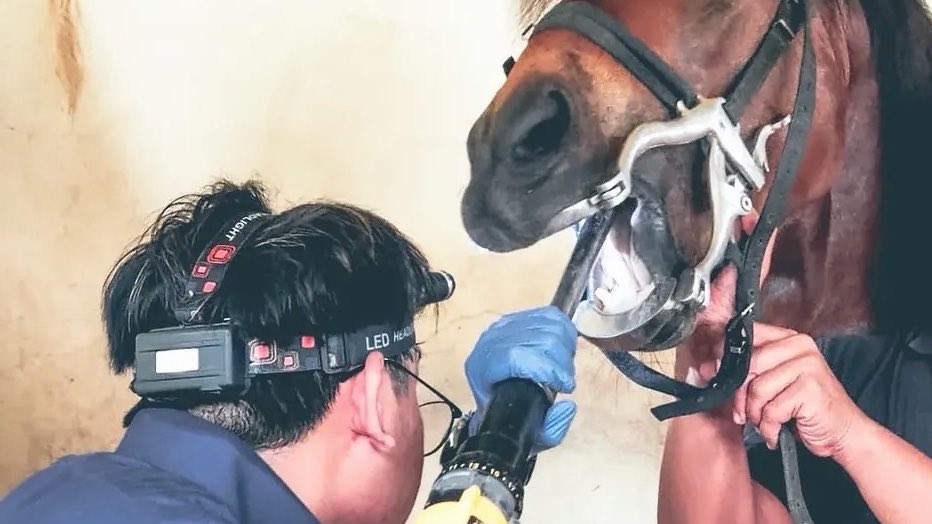
Abis lulus dan bisa praktik, malah makin spesifik lagi. Adik saya melayani pasien sebagai dokter hewan gigi kuda.
Katanya, gigi kuda itu harus dikikir setidaknya enam bulan sekali. Alasannya, gigi kuda itu tumbuh terus-menerus sepanjang hidupnya. Pertumbuhan gigi ini diimbangi dengan proses pengikisan alami saat mereka merumput dan mengunyah.
Nah… Jika tidak dirawat, proses pengikisan yang tidak merata dapat menyebabkan tonjolan tajam yang melukai mulut dan mengganggu proses pencernaan.
Sampai sekarang, adik saya siap melayani pelayanan kesehatan dan medis soal kuda. Utamanya memang melayani daerah Jabodetabek. Tapi adik saya siap dipanggil dari seluruh Indonesia jika ada kasus emergency (darurat).
Happy to announce my new book, with Alex Townsend. It's about the math behind enormous systems (medical scans, AI, etc.) and what happens when they outgrow our ability to understand them. More info (and pre-order for 25% off) at:
https://t.co/lOXl2Mivkh @littlebrown@BNBuzz
Mathematics.
Strange Anatomy of Pascal's Triangle.
[In much of the Western world, it's named after the French mathematician Blaise Pascal, although other mathematicians studied it centuries before him in Persia, India, China, Germany, and Italy.]
Mathematics.
This is a paper with the alluring title "A One-Line Proof of the Infinitude of Primes." [The American Mathematical Monthly, Vol. 122, No. 5 (May 2015), p. 466]
Masih ada tulisan beliau tentang pendidikan Indonesia yang bikin tensi naik. Nanti akan saya share biar masyarakat sadar betapa rusaknya pendidikan Indonesia.
Mahkamah Konstitusi (MK), Senin (15/6).
Iman menyebut seluruh jenis guru terdampak, mulai dari guru PPPK hingga honorer. Ia menyoroti pemutusan kontrak terhadap 39 guru PPPK di Tuban serta kasus serupa yang disebut terjadi di sejumlah daerah lain seperti Cianjur, Lombok Timur,
I assure my closeness to the people of the Philippines, struck a few days ago by a powerful earthquake. I pray for the deceased and their families, for the wounded, and for all those suffering because of this disaster.
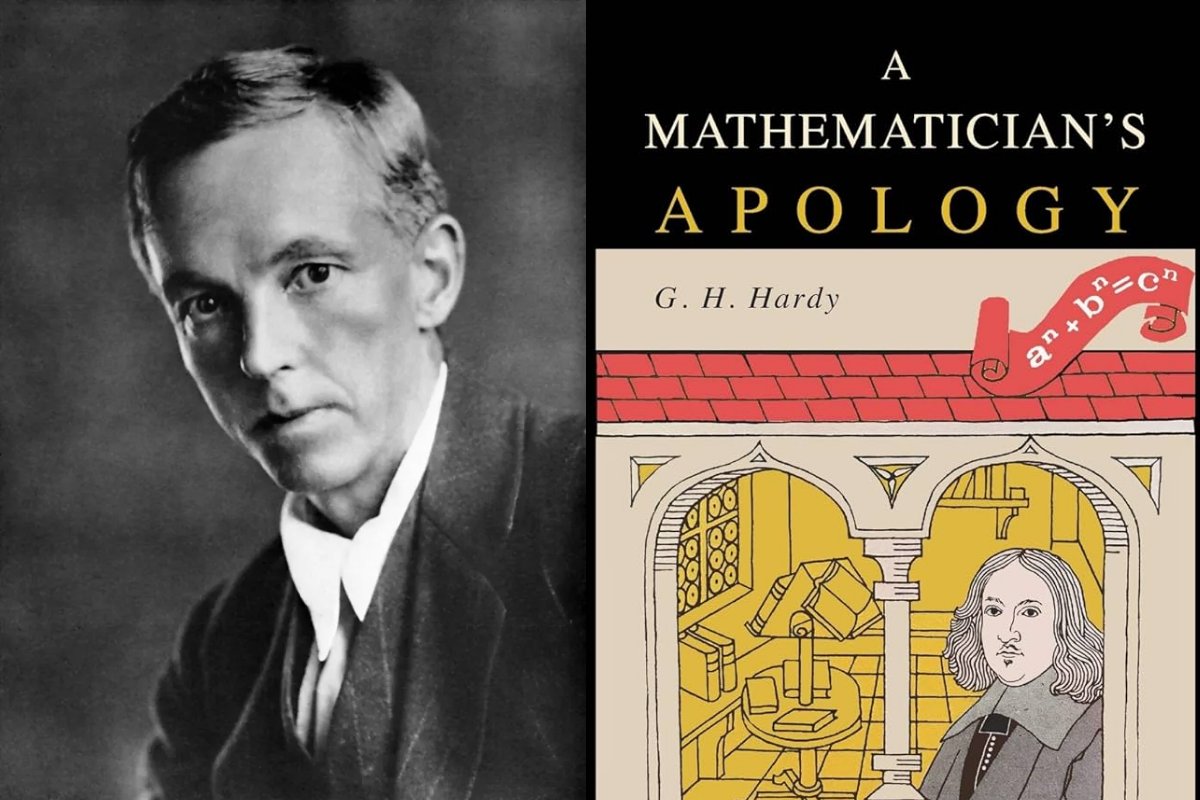
The greatest mathematician in England wrote a small book at 62 confessing that mathematics had always been art, never science, and the most painful part of the book is the man writing it knew he would never make another piece of it again.
His name was G.H. Hardy. The book is called "A Mathematician's Apology"
He was a professor at Cambridge and Oxford. He spent his career working on number theory and mathematical analysis, almost entirely with one collaborator named John Edensor Littlewood.
In his prime, between 1910 and 1930, he was considered the finest pure mathematician working in the English-speaking world. He published over 350 papers. He produced foundational results that mathematicians still use today.
In 1939, at the age of 62, he had a heart attack.
He survived it. But something inside him had been broken that did not heal. He could feel his mathematical powers leaving him. The same brain that had spent 40 years effortlessly producing original work now felt slow. Heavy. He kept trying to do new mathematics and kept producing nothing he was proud of.
He understood, with a clarity that almost no creative person ever wants to face, that the part of him that had made him who he was had quietly finished its work without telling him.
So he sat down to write a different kind of book.
It is called A Mathematician's Apology. It was published in 1940 by Cambridge University Press. It is about 90 pages long. You can finish it in two hours.
The word "apology" in the title does not mean an apology in the modern sense. It is used in the old Greek sense, the way Plato used it for the Apology of Socrates. An apology is a formal defense. Hardy is defending his life.
The book is sad in a way that almost no other book about mathematics has ever been.
Hardy writes that exposition, criticism, and appreciation are work for second-rate minds. He says this on the second page. He is telling the reader that the act of writing the book they are now reading is itself proof that his real work is over.
The first-rate mind produces new mathematics. The second-rate mind explains old mathematics to other people. Hardy is consciously demoting himself in print, on page two, as part of the price of writing the book at all.
Then he makes the argument that has been quoted for 85 years.
He writes that a mathematician, like a painter or a poet, is a maker of patterns. If a mathematician's patterns are more permanent than the painter's or the poet's, it is because they are made with ideas. Ideas, Hardy argues, do not fade the way colors fade or the way words go out of fashion. A theorem proved in ancient Greece is still true today. A poem written in ancient Greece is now stiff and remote.
A painting from ancient Greece is now a shadow of itself. Only mathematics survives the centuries intact, because mathematics is made out of the only material that does not decay.
This is the part of the book where Hardy stops sounding like a scientist and starts sounding like an artist who has been arguing his whole career that what he does is real work.
He pushes the argument further. He says the best mathematics is the most useless. He means this as a compliment of the highest possible order.
Useful mathematics, the math you would use to build a bridge or balance a budget, is dull. It is craft, not art. It is downstream of the real thing. The real thing, what he calls pure mathematics, exists for no reason except its own beauty. It does not solve any problem anyone has. It does not produce any product anyone needs. It exists because some human being, somewhere, looked at a pattern in the structure of numbers and decided the pattern was beautiful enough to spend a life chasing.
The other artists of his time agreed with him. Graham Greene reviewed the book and said it was, alongside the notebooks of Henry James, the best account ever written of what it feels like to be a creative artist.
Then Hardy gets to the most personal part of the book.
He writes about Ramanujan.
Srinivasa Ramanujan was a self-taught mathematician from a small town in southern India. He had no formal university training. He had read a single elementary mathematics textbook in his childhood and worked everything else out himself. In 1913 he wrote Hardy a letter at Cambridge containing dozens of strange formulas.
Two other mathematicians had already dismissed the letter as the work of a crank. Hardy read it, recognized what was actually inside, and arranged for Ramanujan to be brought to England.
For five years they worked together. Then Ramanujan got sick in the cold English winter, his health collapsed, and he was sent home to India where he died in 1920 at the age of 32.
Hardy never recovered from it.
In the Apology he writes that his greatest contribution to mathematics was not any theorem he ever proved. It was discovering Ramanujan. He gives a list of mathematicians he has known personally, ranked on a scale of one to one hundred.
He rates himself a 25. He rates his lifelong collaborator Littlewood a 30. He rates David Hilbert, the most respected German mathematician of the era, an 80. The only person he gives a 100 is Ramanujan. He had known one true genius in his life, and that genius had died in his early 30s, and the loss is sitting under every paragraph of the book even when Hardy is not writing about him directly.
The deepest irony in the Apology is the one Hardy could not have predicted.
He spent the whole book arguing that the best mathematics was the most useless. He used number theory, his own field, as the cleanest example. He wrote that nobody had ever found a useful application for the theory of prime numbers and that this was a feature, not a flaw. The work was pure. The work was art. The work was untouched by industry.
Five years after Hardy's death, the world's first computers were being designed using mathematical ideas from his field. Twenty years after his death, code-breakers at Bletchley Park were using number theory to crack the Enigma machine.
Forty years after his death, modern cryptography was being built on the prime number theorems Hardy had said could never be made useful. Every secure transaction you make on the internet today, every encrypted message you send, every banking app you open, runs on the math Hardy spent his life calling beautifully useless.
He was right that the math was beautiful. He was wrong that it was useless. The two things turned out to be the same thing seen from different angles in time.
The other part of the book that still hits readers hard is the ending.
Hardy quietly writes that he has had a good life. He has had Cambridge. He has had cricket. He has had Littlewood. He has had Ramanujan, briefly, and that brief possession of a true genius was worth more to him than all the rest. He has had a small place in the long history of pure mathematics. He says, in plain English, that this is enough.
Then he writes the closing line. He writes that the case for his life cannot be made any more. The verdict, he says, will rest where it falls.
Six years later he tried to kill himself by overdosing on sleeping pills. The attempt failed. He died in his bed of natural causes a few months later, in December 1947, at the age of 70.
The book has stayed in print for 85 years. Mathematicians still read it as a kind of secret confession. Artists read it because Hardy understood something most artists struggle to articulate. The act of making something beautiful is its own justification. You do not need a useful purpose for your work. You do not need the world to applaud it. You do not need it to fit in any system.
You only need the pattern itself to be true, and the pattern to be yours, and the work to have meant something to you while you were doing it.
The hardest part of the book is the part Hardy never says directly.
The act of writing it was itself the proof he was done.
He could no longer make the patterns. He could only tell other people what it had felt like to make them. The Apology is not a book about mathematics. It is a man saying goodbye to the part of himself that had been worth knowing.
Most of you reading this are still in the part of your life where you can make the patterns.
Don't waste it explaining them.
Make them.
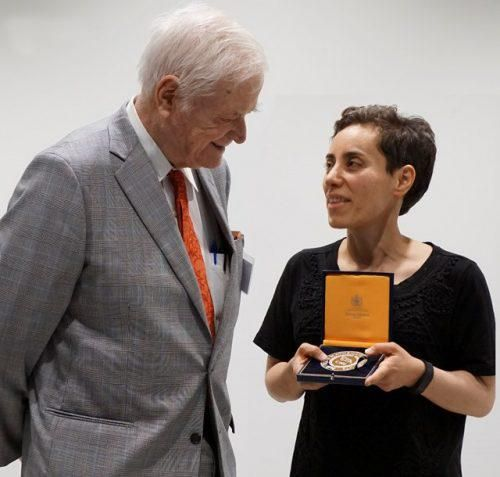
Maryam Mirzakhani was the first woman in history to win the Fields Medal — the highest honor in mathematics. For decades, it seemed unreachable for women. For generations, it remained a closed door. And then, she opened it.
Maryam did not just solve equations. She changed what people believed was possible.
Her work in complex geometry and dynamical systems may sound distant to many of us. But at its heart, it was about understanding patterns, movement, and the hidden structure of the universe. She explored worlds that could not be seen, only imagined — curved spaces, abstract surfaces, invisible connections. And somehow, she made sense of them.
That takes more than intelligence. That takes courage.
Because every time she stepped forward, she stepped into a space where very few women had stood before. She proved that brilliance has no gender. That curiosity has no limits. That perseverance can rewrite history.
And yet, her story is not just about awards or recognition. It is about resilience.
Even as she battled cancer, even as time grew shorter, her impact grew larger. She became a symbol — not just for mathematicians, but for dreamers everywhere.
Her life reminds us of something powerful:
You do not need to see the whole path to begin.
You do not need permission to pursue greatness.
And you do not need to fit into expectations to change the world.
Some of you may feel that your field is too hard.
Some of you may feel that you do not belong.
Some of you may feel that the odds are stacked against you.
So were hers.
And yet, she moved forward — step by step, idea by idea, proof by proof — until the world had no choice but to recognize her.
Let her story be your reminder:
Greatness often begins in quiet persistence.
Breakthroughs come from those who dare to keep going.
And barriers exist only until someone decides to cross them.
Maryam Mirzakhani did not just reach the pinnacle of mathematics. She lifted the ceiling for everyone who comes after her. Now the question is not whether the path exists.
The question is — will you walk it?
APA KABARMU, PAK OJOL?
Lo bangunin gue subuh. Lo anterin gue ke stasiun. Lo kirim makan siang ke kantor gue. Lo temenin gue pulang malem di tengah hujan. Lo anterin paket gue
Tapi lo kerja berapa jam?
Dapat berapa?
Kalau kecelakaan, siapa yang nanggung?
Kalau akun lo disuspend tiba2 , lo lapor ke mana?
Ini Utas buat kita bicara jujur soal kondisi lo , dengan data, bukan basa-basi.
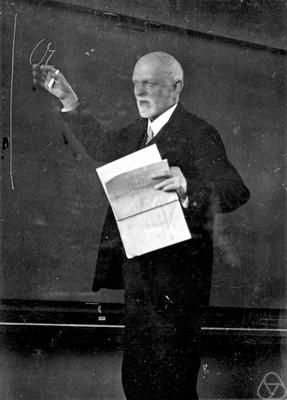
In the early days of commercial airline travel, David Hilbert (1862–1943) was invited to a certain university to give a lecture. He was told to speak on any subject that suited his fancy.
He announced that he would speak on “The Proof of Fermat’s Last Theorem.” Certainly his prospective audience was enchanted and thrilled, because no proof of this famous theorem was known to exist. It is safe to say that the event was much anticipated.
The great day arrived, and the room was packed. Hilbert delivered his lecture, but it had nothing whatever to do with Fermat’s last theorem. Afterward, someone had the temerity to ask why the great man had chosen a title that had nothing at all to do with the subject matter. “Oh,” said Hilbert. “That was just in case the plane went down.”
Source: Mathematical Apocrypha Redux by Steven G. Krantz







![pickover's tweet photo. Mathematics.
Strange Anatomy of Pascal's Triangle.
[In much of the Western world, it's named after the French mathematician Blaise Pascal, although other mathematicians studied it centuries before him in Persia, India, China, Germany, and Italy.] https://t.co/BcTahh0F9N](https://pbs.twimg.com/media/HLbadTIasAAeoig.jpg)
![pickover's tweet photo. Mathematics.
This is a paper with the alluring title "A One-Line Proof of the Infinitude of Primes." [The American Mathematical Monthly, Vol. 122, No. 5 (May 2015), p. 466] https://t.co/OZi09e5J5l](https://pbs.twimg.com/media/HLVoFcGWUAAkiQ1.png)