Launch table is out. The two-million-pound launch table is heading to the Integration Facility for inspection and adjustments to support our future ConOps. Once reinstalled at the pad, it'll be outfitted with the first stage aft umbilicals and tied into the water system, which delivers water injection just below the engine nozzles.
Data centers depend on power infrastructure that has to keep pace with facility development.
When substations, transmission lines, and supporting infrastructure fall out of sync with construction, the impact can ripple across schedules, readiness planning, and future capacity.
Vantor’s spatial intelligence helps utilities monitor whether the infrastructure supporting data center growth is advancing in alignment with the facilities it is meant to power.
By tracking visible changes around substations, transmission corridors, and adjacent construction sites, utility teams can gain a clearer view of readiness risk and better anticipate when and where projects may need attention.
Read the full blog to learn how spatial intelligence can help monitor utility buildout for data center development: https://t.co/fcepjAwQIa
Palantir's PRISMA software is confirmed to be utilized within Ukrainian long-range drone strike command posts. This deployment was verified by CNN's Nick Paton Walsh during his coverage of a unit coordinating drone strikes deep into Russian territory.
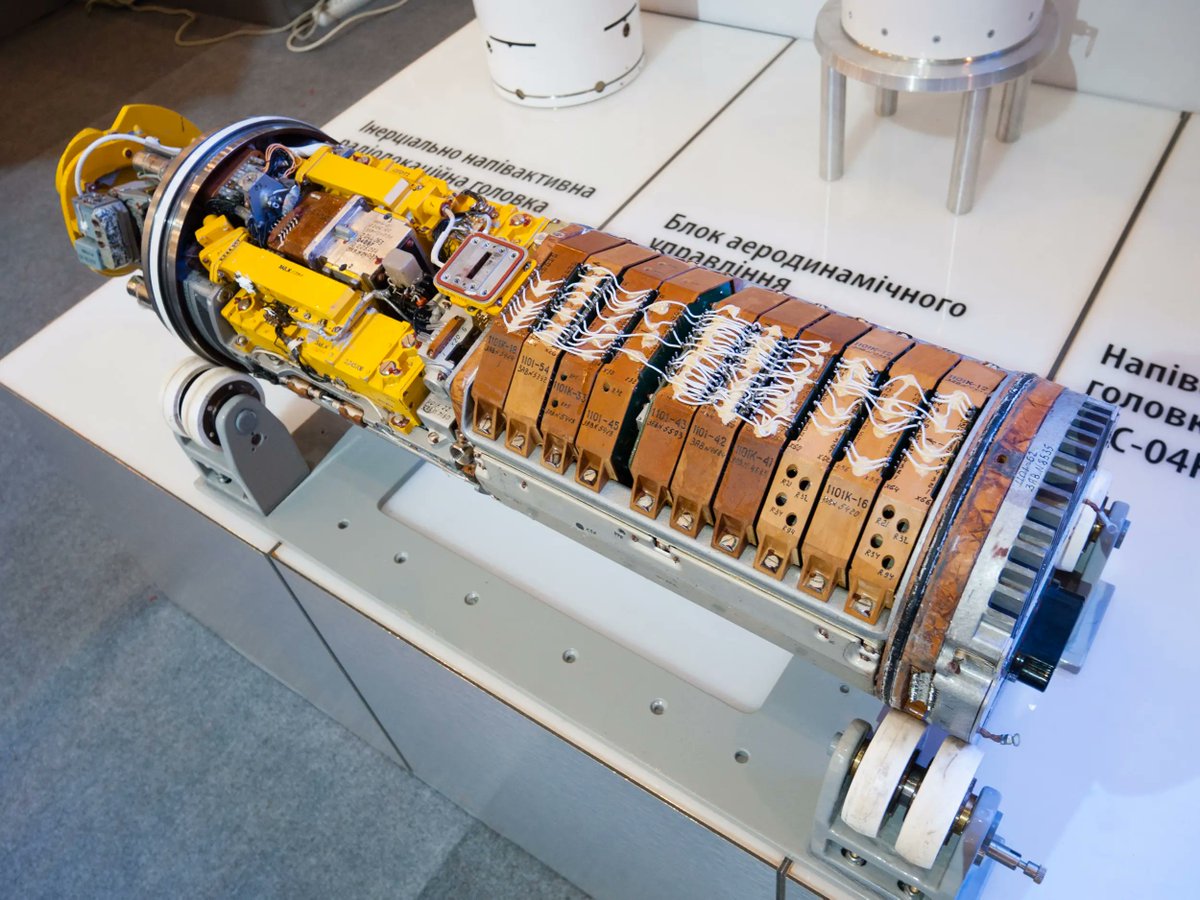
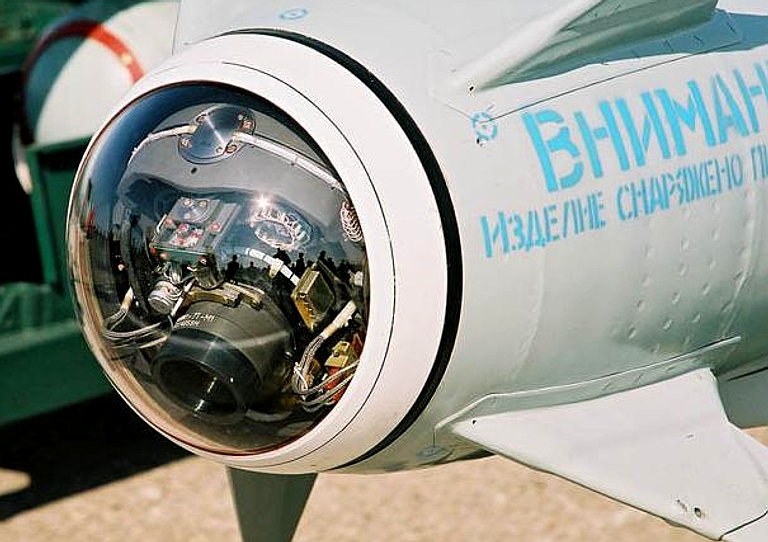
Missile seekers do not observe targets directly because every optical and infrared tracking system depends entirely on a transparent structural window surviving aerodynamic heating, vibration, and optical distortion at high velocity.
Optical seeker windows operate under supersonic and hypersonic regimes where stagnation temperatures exceed 500°C to 1000°C+, while enduring launch shock, vibration, rain erosion, and particle impact that continuously stress structural integrity and optical transmission stability.
These systems must transmit infrared radiation across MWIR (3–5 µm) and LWIR (8–12 µm) bands with strict refractive index uniformity and nanometer-class surface control, where sub-micron defects directly scatter energy and degrade seeker tracking accuracy.
Materials such as Sapphire, Spinel, and ALON dominate because they combine hardness, thermal shock resistance, and infrared transparency, with sapphire relying on single-crystal Al₂O₃ strength while advanced transparent ceramics improve isotropic optical behavior under extreme thermal cycling.
Manufacturing becomes an optical purity problem rather than a ceramic forming problem, requiring ultra-high purity powders, pore-free sintering, and nanometer-level polishing where microscopic porosity or grain boundary contamination directly increases wavefront distortion and reduces signal-to-noise performance.
At hypersonic speeds, aero-optic distortion arises as thermal gradients and boundary layer turbulence bend incoming wavefronts, altering refractive index locally and degrading target discrimination even when the sensor electronics remain fully functional.
Failure propagates as a chain where thermal stress or erosion induces optical distortion, refractive instability reduces tracking fidelity, guidance correction diverges, and intercept probability collapses despite correct propulsion performance.
Industrial capability is concentrated in the United States, Russia, China, and a narrow set of advanced optical ceramic manufacturers because producing large defect-free transparent structures that survive aerodynamic loading while maintaining optical precision requires tightly controlled crystal growth and nanometer-scale finishing ecosystems.
Advanced seeker window systems can cost $50,000 to $250,000 per missile, reflecting not material cost but extreme defect-free manufacturing, polishing, and validation infrastructure required for hypersonic optical survivability.
Optical seeker windows are not transparent covers but aerothermally stressed precision optical structures where microscopic imperfections directly scale into macroscopic missile guidance failure at high velocity.
The Pegasus rocket and Stargazer L-1011 aircraft are being prepared for a mission to boost the orbit of the Neil Gehrels Swift Observatory, which is at risk of reentering the atmosphere.
We’re preparing our Pegasus rocket and Stargazer L-1011 aircraft for a unique mission to help @KatalystSpace extend the life of the Neil Gehrels Swift Observatory, combining air-launch flexibility with proven rocket propulsion to support @NasaScience_ in orbit.
The Engineering Test Reactor (ETR) was constructed in 1957 at the National Reactor Testing Station in Idaho. It was a 175 MWt reactor that absolutely hammered fuels and materials with high flux neutrons, fine-tuning the high-performance nuclear technology we use today. It was created to supplement the capabilities of the MTR nearby. Here's an AEC film about it from 1958, digitized by the IAEA.
Today, the DOE accepted our Documented Safety Analysis (DSA) for the Ward250 Reactor.
The DSA is our final design approval, demonstrating that we have satisfied the DOE’s rigorous safety standards in engineering and construction.
Next, Readiness Review and power before July 4.
First trim test of our Zenith ZE12 engine to assess the flight thrust chamber assembly's (TCA) design performance and to run the engine system through its range of power levels and mixture ratios–along with performance upgrades to our fuel turbopump 🧑🍳😙🤌
(Also shows performance upgrades to our fuel turbopump.)
MISSION SUCCESS! Payload deployment confirmed for "Kakushin Rising" on our 87th Electron launch.
Congratulations @JAXA_en and welcome to orbit once again 🛰️
Anduril is bringing the scale & expertise of the world’s best shipbuilders to the @USNavy.
We’ve partnered with HD Hyundai and @edisonchouest to design & build Autonomous Surface Vessels, and we’re already in production.
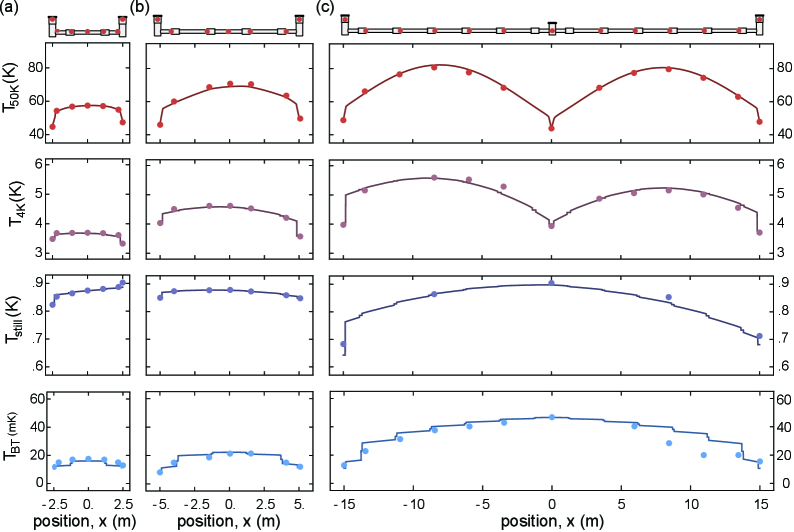
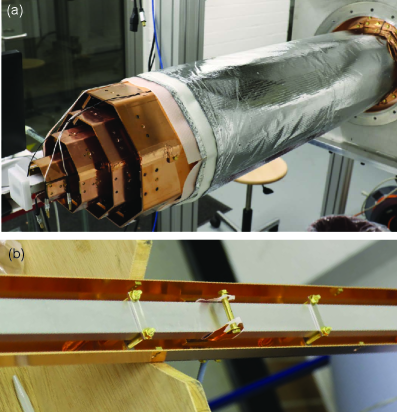
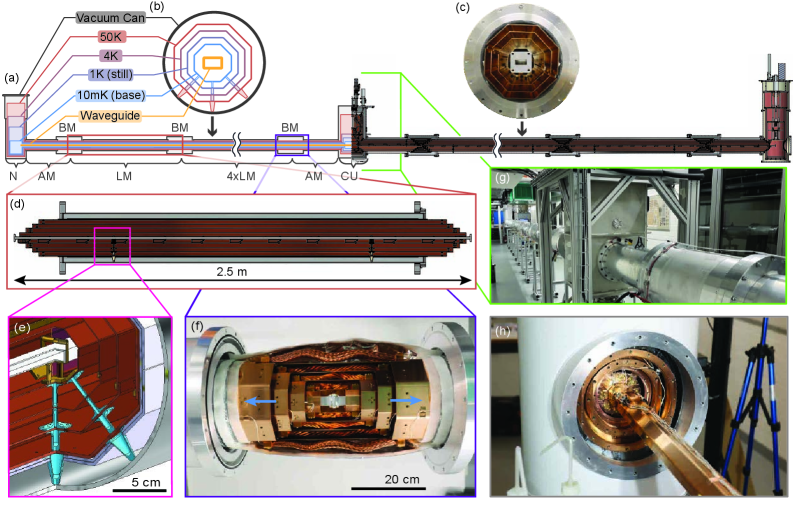
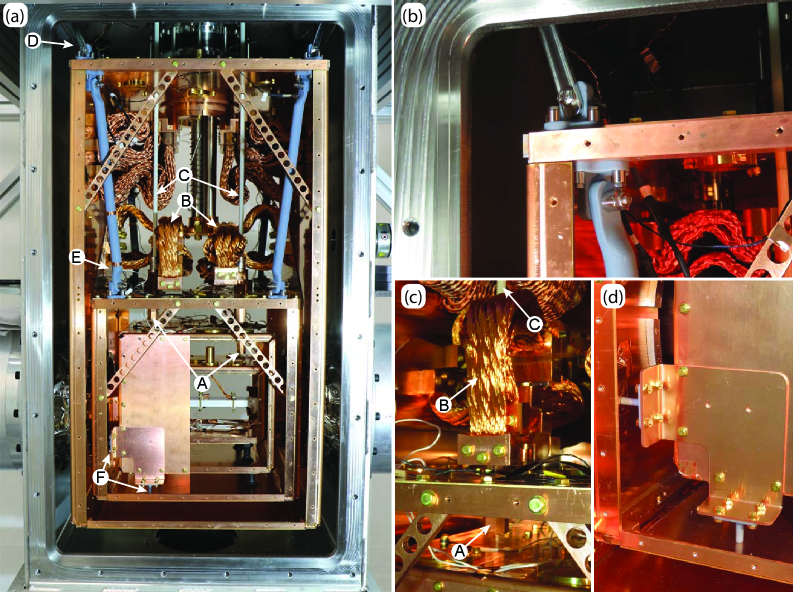
Are you curious about the insights we gained when building our 30-m-long cryogenic microwave-frequency quantum link which we used to do a loophole free Bell test with superconducting qubits? This system also serves as a role model for how to interconnect devices in a large-scale modular superconducting #quantum #computer. In the new paper A Modular Cryogenic Link for Microwave Quantum Communication Over Distances of Tens of Meters out on @arxiv today we describe some of our learnings from constructing the system.
Read more here: https://t.co/mxNZMrMQLH .
Let us know if you have any questions.
The work was done at the Quantum Device Lab (https://t.co/cF4jsoFdYJ) of the Department of Physics (@ETH_physics) and the @ETHQuantumCntr of @ETH_en Zurich by Josua D. Schär, @simonstorz , Paul Magnard (now at Isentroniq), @PhilippKurpiers (now at Rohde & Schwarz), Janis Lütolf, Melvin Gehrig, @BesseJC , Anatoly Kulikov, and @AndreasAtETH with support from the European Research Council (ERC), and @ETH Zürich.
In 1994, a covert U.S. operation called Project Sapphire removed 1,300 pounds of bomb-grade uranium from Kazakhstan. Secrecy was paramount. “It was very important that nobody knew that we were going to be moving the material that snowy, cold night,” says Andrew Weber, who helped lead the operation. https://t.co/FYN4D8umzi