#Televistazo | 11 #estudiantes usaron teléfonos inteligentes y alambres adheridos a sus cuerpos, para cometer fraude académico en medicina, según un reporte de la Universidad Central del Ecuador.
En medio de este escenario, dos estudiantes mujeres que no participaron de este hecho, denuncian tocamientos en sus partes íntimas, durante registros.
Conoce más en https://t.co/PgjOzH7SSk
Only one chance in this lifetime…
Like watching sunset at the beach from the most foreign seat in the cosmos, I couldn’t resist a cell phone video of Earthset. You can hear the shutter on the Nikon as @Astro_Christina is hammering away on 3-shot brackets and capturing those exceptional Earthset photos through the 400mm lens. @AstroVicGlover was in window 3 watching with @Astro_Jeremy next to him.
I could barely see the Moon through the docking hatch window but the iPhone was the perfect size to catch the view…this is uncropped, uncut with 8x zoom which is quite comparable to the view of the human eye. Enjoy.
The Aizawa attractor, a particular case of the Lorenz attractor, has this system of differential equations:
dx = (z-b) * x - d*y
dy = d * x + (z-b) * y
dz = c + a*z - z³/3 - x² + f * z * x³
#Video | Un video grabado desde una aeronave por un piloto colombiano volvió a viralizarse con la etiqueta de “la mejor filmación de OVNI”. #LéaloEnET: https://t.co/rownlSdqJQ
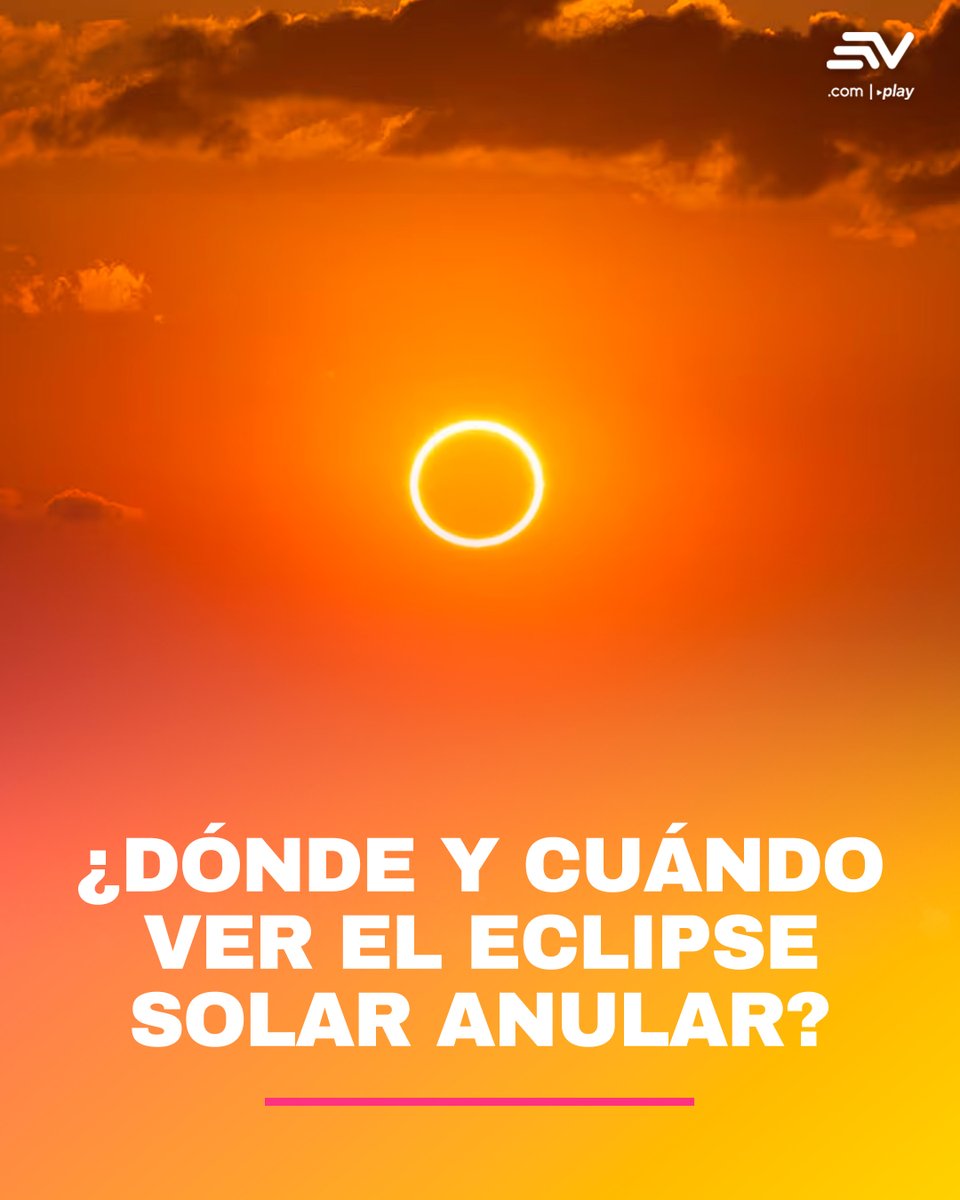
You could witness an annular solar eclipse tomorrow! (If you’re in Antarctica, that is. 🥶)
Starting at 5:48 a.m. EST on Tuesday, Feb. 17 (that’s 6:48 p.m. local time at Antarctica’s Concordia Station), an annular solar eclipse will be visible over part of Antarctica. Annular eclipses occur when the Moon blocks the Sun but doesn’t appear large enough to cover the whole thing, leaving a “ring of fire” visible around the Moon.
Places outside the path of annularity — including parts of Antarctica (like McMurdo Station), southern Africa, and South America —will see a partial solar eclipse, when the Moon blocks a portion of the Sun. Those of us in the Northern Hemisphere will be none the wiser — the Sun will appear normal like any other day. (But don’t look at it directly without proper solar viewing glasses!)
Curious how that geometry works? Learn more: https://t.co/D9ZlJjejW1
📌 #LoMásLeído 🌕 El año 2026 tendrá uno de sus principales fenómenos, un eclipse solar anular, conocido como el Anillo de Fuego. Te contamos cómo y cuándo verlo 📲 https://t.co/jB46nC6mg3
We've just released the latest images of the interstellar comet 3I/ATLAS, as observed by eight different spacecraft, satellites, and telescopes.
Here's what we've learned about the comet — and how we're studying it across the solar system: https://t.co/ZIt1Qq6DSp
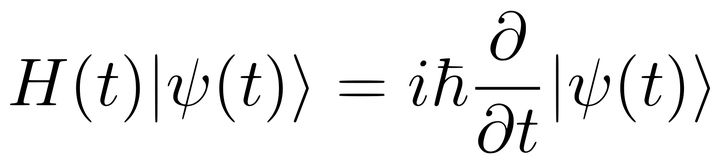
Is this one of the most famous equations in physics?
The Schrödinger equation is a cornerstone of quantum physics - the analogue of Newton's second law for quantum mechanics. Its derivation led to Schrödinger, born on this day in 1887, receiving the 1933 Nobel Prize in Physics.
Galileo fue el primero que se dio cuenta de que la aceleración de la gravedad no depende de la masa. Newton amplió esta idea y añadió dos leyes más. Además explicó casi toda la física.
On Dec. 24, our Parker Solar Probe will make history with a record-breaking closest approach to the Sun ☀️
Follow along in real time with this interactive visualization, brought to you by @NASA_eyes and @NASASun: https://t.co/DXeKvMdJsl
Last Christmas, @ChandraXray gave us a cluster of stars. This year, new telescope views (combined with Chandra data) gave us something special: https://t.co/9IoeaF1u38
Este adolescente expuso la oscura verdad de la falta de sueño.
Se inscribió en un experimento en el que no dormía para descubrir a dónde lo llevaría.
Lo que descubrió podría sorprenderte.
Esta es la historia completa: 🧵
It’s official: We have reached solar max phase! ☀️ 📈
@NASA, @NOAA, and the international Solar Cycle Prediction Panel just announced that the Sun has reached its solar maximum period.
Expect solar eruptions, auroras, and more: https://t.co/zrZIuRdLWu
The 2024 Nobel prize in physics has gone to John Hopfield and Geoffrey Hinton for discoveries that enabled machine learning and are key to the development of artificial intelligence models like ChatGPT. https://t.co/z1JL2tCzmP
Dancer, choreographer, and @LASPatCU artist in residence Alexandra Lockhart created “Cascading Abyss,” a solo piece excerpted below, with inspiration from turbulence in plasma, the enigmatic state of matter that makes up the Sun and fills our solar system.