Post-doctoral research in AI for diabetes healthcare with an interest in machine learning, generative AI, reconfigurable computing, and biomedical engineering.
I’ve been working my way through this epic 7-hour interview with Xie Saining at AMI Labs.
I also asked Gemini to give me top 10 takeaways. Biggest ones are that he turned down Ilya twice and believes world models, not LLMs, are the key to AGI.
1. Non-Linear Path to AI & Academic Freedom
Xie emphasizes that his journey wasn't a standard, hyper-competitive path of a "genius." During his time in Shanghai Jiao Tong University's ACM class, his "highlight" was playing video games in his dorm, teaching him the value of unstructured exploration over rigid academic competition [11:46]. He believes the best research is never linear; if a project ends exactly how you initially planned it, it's likely a "boring idea" [02:09:58].
2. Rejecting OpenAI & Ilya Sutskever (Twice!)
In 2018, Xie turned down a job offer from OpenAI in favor of Facebook AI Research (FAIR), which led to an angry phone call from Ilya Sutskever [01:21:04]. More recently, he declined an invitation to join Ilya's new startup, SSI, because of a fundamental philosophical disagreement: Ilya believes vision is a "solved" problem and focuses on language, while Xie believes vision and physical world modeling are the true frontiers of AI [01:25:57].
3. Silicon Valley is "LLM-Pilled"
Xie argues that the tech industry is currently hypnotized by Large Language Models (LLMs) [05:46:51]. While he acknowledges LLMs are revolutionary communication tools, he insists they are not true "world models" because they operate purely in a digital, text-based space and lack the ability to process high-dimensional, noisy, continuous signals of the physical world [04:29:36].
4. The Definition of a True World Model
According to Xie, a true world model must go beyond text and video generation. It must be a "predictive brain" that understands the physical world, possesses associative memory, can reason and plan, and can predict the consequences of actions in the real world [04:31:32].
5. Founding AMI Labs with Yann LeCun
Disillusioned by the current Silicon Valley narrative that treats AI research as a "finite game" of benchmark-chasing and product cycles, Xie co-founded AMI Labs with Turing Award winner Yann LeCun [05:00:58]. The startup acts as an "underdog" aiming to build true predictive world models based on LeCun's JEPA (Joint Embedding Predictive Architecture) vision, separate from the dominant LLM narrative [06:04:42].
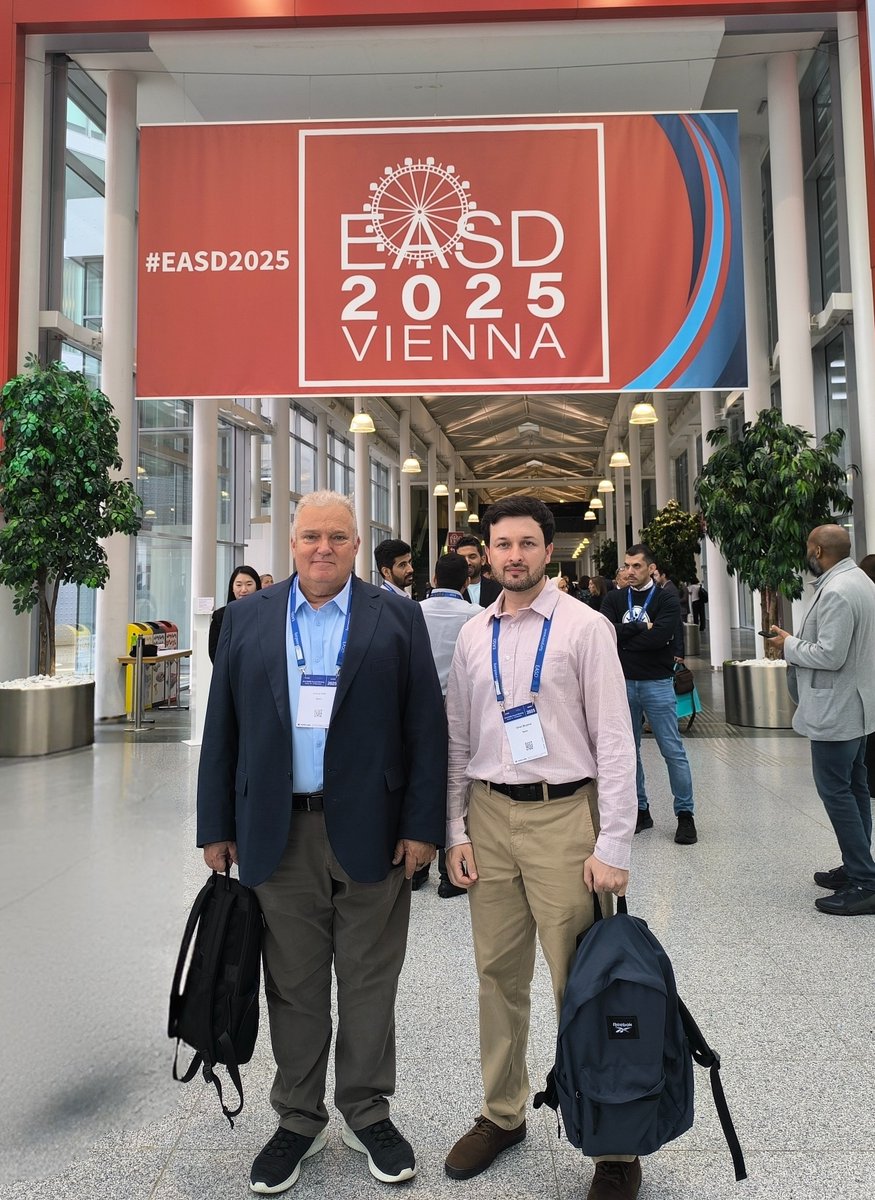
Last month, we attended @EASDnews in Vienna - one of the world’s leading meetings for diabetes research and care!
🔹 Engaging presentations and discussions
🔹 Networking with leading researchers and clinicians
🔹 Explore new directions for collaboration/ innovation #EASD2025
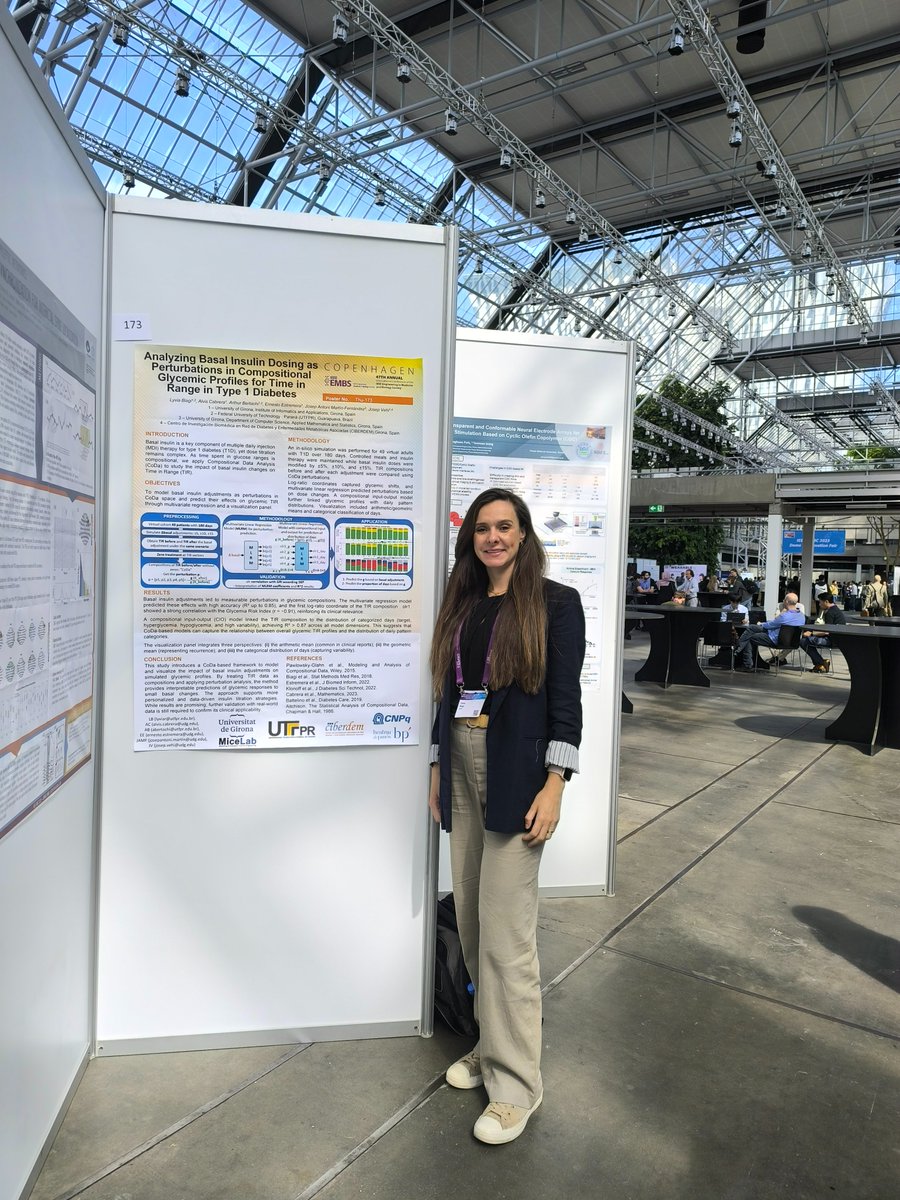
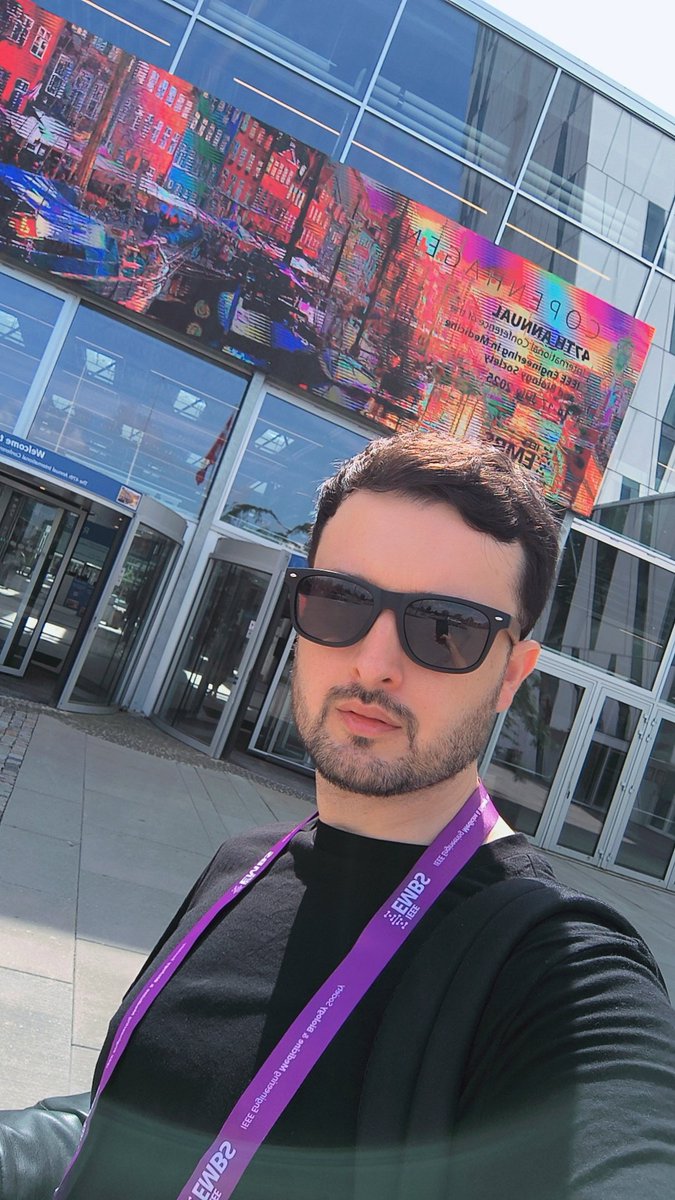
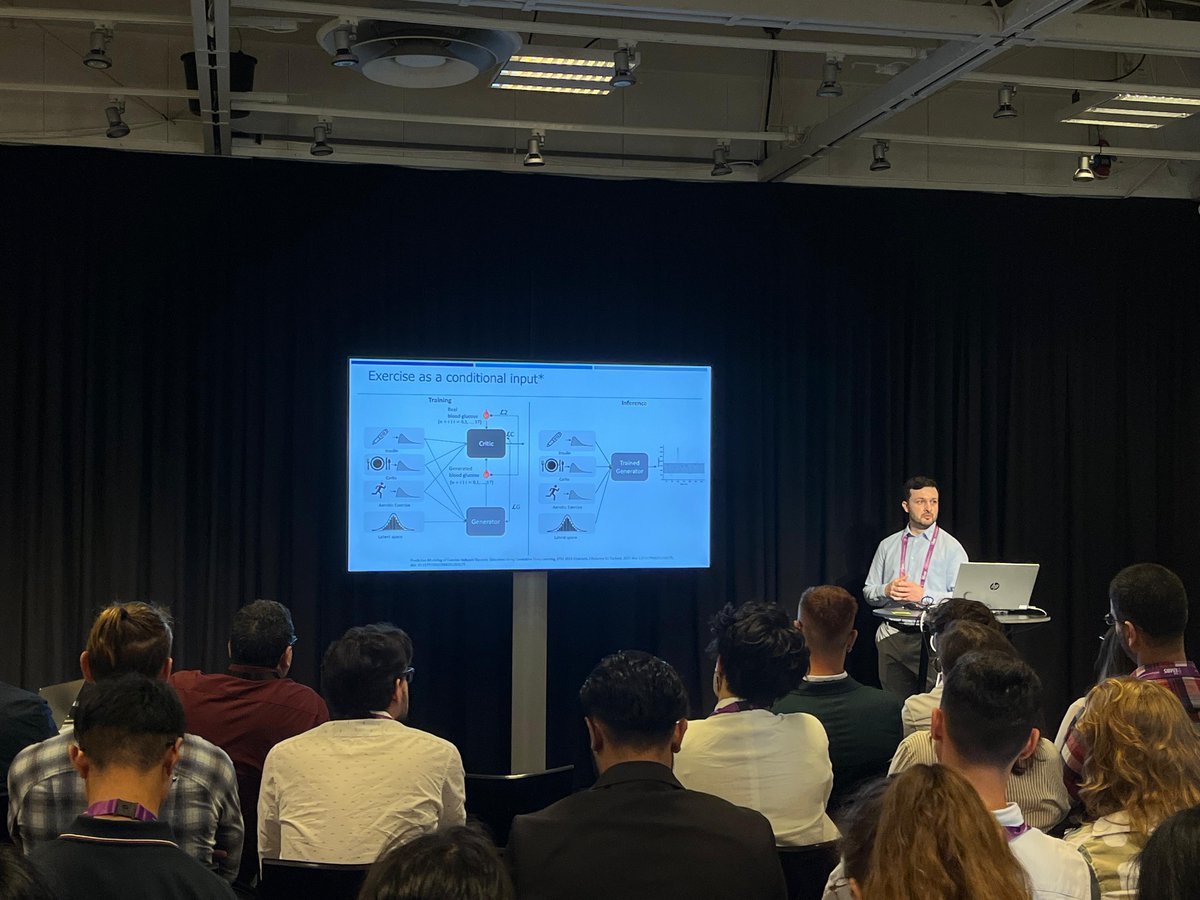
🌍Last week, we attended the 47th Annual International Conference of the @IEEEembs!
Omer and Lyvia presented some of our work 🧬💡
It was a fantastic chance to connect with researchers and professionals from around the world 🌍🙌
#EMBC2025@univgirona
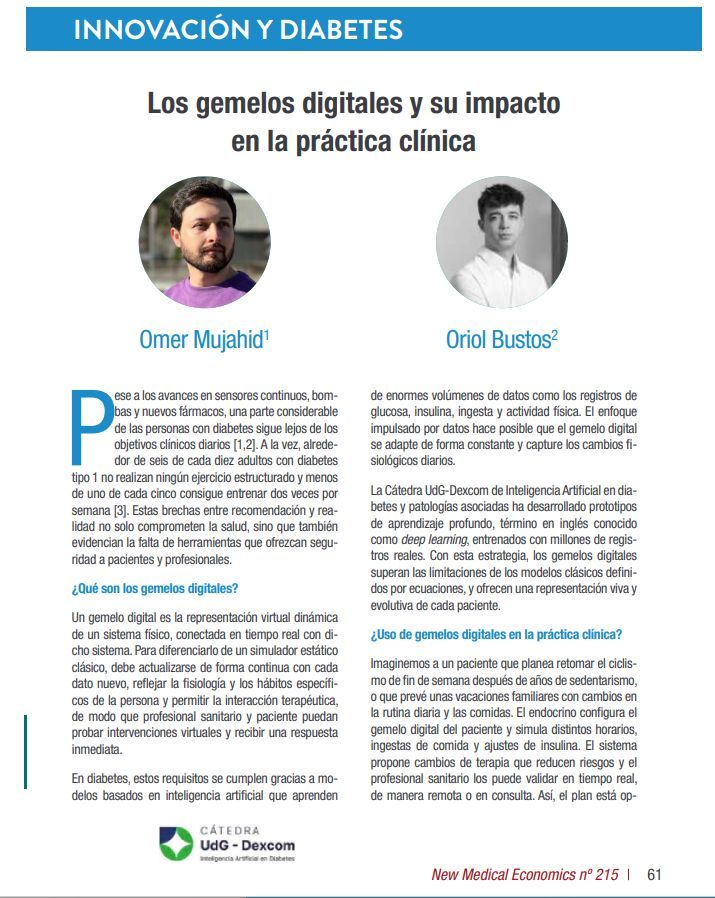
Nuevo artículo de divulgación! Junto con @omermujahid
Los gemelos digitales y su impacto en la práctica clínica
Texto completo:
https://t.co/rtbwGZB6Et
We are happy to share the release of our latest scoping review on Heart rate variability (#HRV) via @PeerJLife.
Our findings highlight the growing importance of HRV in personalized healthcare and digital health solutions.
🔗 Read the full article here: https://t.co/Va7waFcM7i
JULIAN ASSANGE IS FREE
Julian Assange is free. He left Belmarsh maximum security prison on the morning of 24 June, after having spent 1901 days there. He was granted bail by the High Court in London and was released at Stansted airport during the afternoon, where he boarded a plane and departed the UK.
This is the result of a global campaign that spanned grass-roots organisers, press freedom campaigners, legislators and leaders from across the political spectrum, all the way to the United Nations. This created the space for a long period of negotiations with the US Department of Justice, leading to a deal that has not yet been formally finalised. We will provide more information as soon as possible.
After more than five years in a 2x3 metre cell, isolated 23 hours a day, he will soon reunite with his wife Stella Assange, and their children, who have only known their father from behind bars.
WikiLeaks published groundbreaking stories of government corruption and human rights abuses, holding the powerful accountable for their actions. As editor-in-chief, Julian paid severely for these principles, and for the people's right to know.
As he returns to Australia, we thank all who stood by us, fought for us, and remained utterly committed in the fight for his freedom.
Julian's freedom is our freedom.
[More details to follow]
➡️ Check out our new video published by @researchsquare!
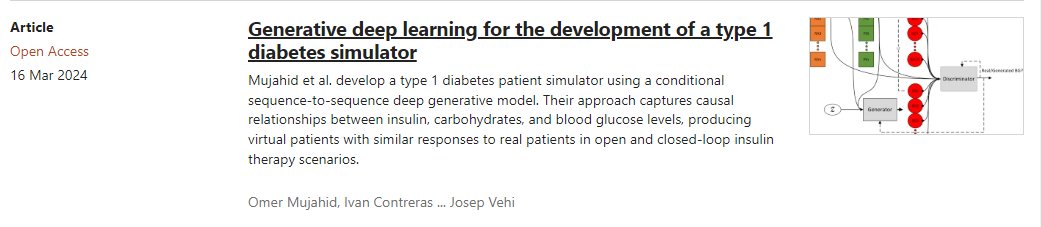
We propose generative #deeplearning to learn comprehensive models from patient data for #T1D simulators. The proposed technique can accurately capture physiological dynamics and causal links.
https://t.co/iCa50QwJxk
New breakthrough in #Type1Diabetes research! A study published on @nature introduces a deep learning-based simulator providing a more accurate representation of the glucose-insulin relationship. Learn more: [https://t.co/KUKTQJLYzF] #DiabetesTech#AIHealth
Specialized computer simulators are used to test new T1D therapies before animal/patient trials. We propose generative deep learning to learn comprehensive models from patient data to be used in T1D simulators.
[https://t.co/5IrysKwrXH]
@CommsMedicine@MicelabUdg@egdrc@GCDTR
New paper at @CommsMedicine!
This study introduces a simulation approach employing a conditional deep generative model. The aim is to overcome the limitations of existing T1D simulators by synthesizing virtual patients that more accurately represent entire glucose-insulin system
🔊Artificial intelligence and machine learning are transforming many fields including medicine.
Check out our new review which provides consensus guidelines for machine learning practitioners in the field of diabetes ➡️ https://t.co/MjXNmF618P
@IEEEXplore@univgirona
Congratulations to Dr. @omermujahid who defended his thesis last week at the @univgirona!
His thesis entitled "Data-driven Models for Type 1 diabetes using generative deep learning" was supervised by Prof. Josep Vehi and Dr. Iván Contreras.
Way to go!! 🔝
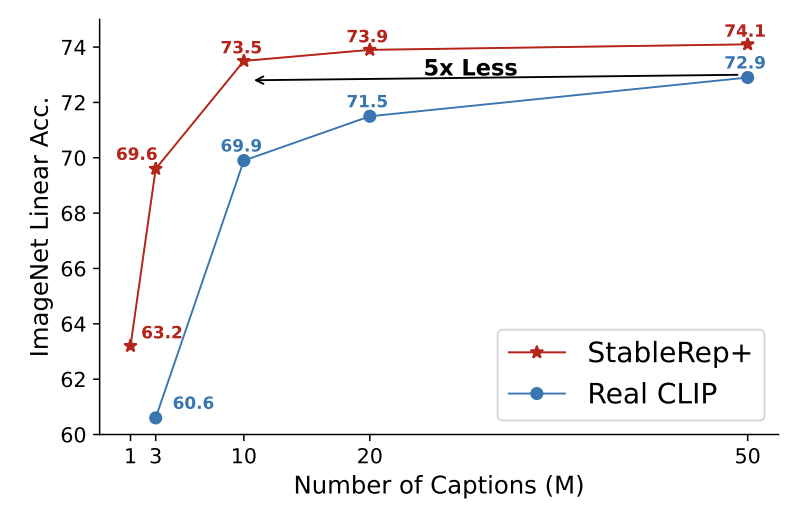
New paper!! We show that pre-training language-image models *solely* on synthetic images from Stable Diffusion can outperform training on real images!!
Work done with @YonglongT (Google), Huiwen Chang (Google), @phillip_isola (MIT) and Lijie Fan (MIT)!!
Happy International #Women’s Day 💜
We would like to take this opportunity to specially recognize all the women who are part of or interact with our #researchgroup.
Thank you all for your great work and dedication!










![egdrc's tweet photo. New breakthrough in #Type1Diabetes research! A study published on @nature introduces a deep learning-based simulator providing a more accurate representation of the glucose-insulin relationship. Learn more: [https://t.co/KUKTQJLYzF] #DiabetesTech #AIHealth https://t.co/O00xwYHNVL](https://pbs.twimg.com/media/GJAOZqPXQAAInKt.jpg)
![omermujahid's tweet photo. Specialized computer simulators are used to test new T1D therapies before animal/patient trials. We propose generative deep learning to learn comprehensive models from patient data to be used in T1D simulators.
[https://t.co/5IrysKwrXH]
@CommsMedicine @MicelabUdg @egdrc @GCDTR https://t.co/FLozuNVU7j](https://pbs.twimg.com/media/GM-MVpXW8AADaAc.jpg)