#Thiamine in the ICU: 10 high-yield pearls
1. Unexplained lactate? Think thiamine.
Thiamine is required for pyruvate dehydrogenase. Deficiency blocks conversion of pyruvate to acetyl-CoA, shunting pyruvate toward lactate and impairing mitochondrial aerobic metabolism. Thus, thiamine deficiency belongs in the differential diagnosis for otherwise unexplained lactic acidosis.
2. Thiamine deficiency in the ICU is not rare.
~30-70% of critically ill patients are thiamine-deficient. Many arrive deficient; others develop deficiency during critical illness because of increased metabolic demand, inadequate intake, or losses.
3. The bedside phenotype is more important than waiting for a thiamine level.
High-risk situations include malnutrition, alcohol-related liver disease, bariatric surgery, renal replacement therapy, polyuria/DKA, chronic diuretic therapy, unexplained encephalopathy, unexplained lactate elevation, and sepsis.
4. Starting nutrition can unmask the deficiency.
Glucose administration increases carbohydrate metabolism and thiamine utilization. A malnourished patient may therefore develop rising lactate after initiation of enteral/parenteral nutrition. Refeeding syndrome is not simply a phosphorus/potassium problem; thiamine deficiency can be central to its pathophysiology.
5. Dialysis and polyuria are major clues.
Thiamine can be lost during continuous RRT, hemodialysis, and peritoneal dialysis. Renal losses also rise with polyuria, including the diuretic phase of AKI, post-transplant polyuria, DKA, and chronic diuretic therapy in heart failure.
6. Do not wait for the classic Wernicke's triad.
Altered mental status, ocular abnormalities, and gait ataxia are rarely all present together. I think I have seen it only a few times. In an at-risk ICU patient with otherwise unexplained encephalopathy, absence of the complete triad should not reassure you.
7. A plasma thiamine concentration is not a great “rule-out” test.
Testing is often unavailable and expensive, and blood concentration does not necessarily reflect tissue thiamine status. I don't even remember when I last ordered the test (if ever...). Erythrocyte transketolase activity is physiologically more informative, but its cutoffs are poorly defined. Just recognize the risk population and consider a therapeutic trial rather than wait for laboratory confirmation.
8. The sepsis data are more nuanced than “thiamine works” or “thiamine doesn't work.”
Thiamine is not expected to improve hard outcomes in the overall septic-shock population. Some subgroup analyses and meta-analyses suggest signals for improved lactate clearance and organ function, particularly renal outcomes. I don't consider it a magic drug...
9. Thiamine alone ≠ HAT (hydrocortisone + ascorbic acid +thiamine) therapy.
Do not interpret negative trials of HAT as proof that correcting thiamine deficiency is useless. Large HAT RCTs failed to demonstrate the dramatic clinical benefit initially claimed, and a VICTAS secondary analysis raised concerns about longer-term outcomes. That is a different question from replacing thiamine in a patient likely to be deficient.
10. The kidney may be an important target organ.
Renal tubular cells are highly energy dependent. Across secondary analyses, observational data, and meta-analytic evidence, thiamine supplementation -particularly in deficient patients- shows a signal toward less AKI progression, better renal recovery, and less need for RRT, although individual RCTs have not consistently demonstrated significant benefit in unselected populations.
Rule of thumb:
“⬆️ lactate + risk factor + no good explanation" → think B1 deficiency”
Especially think about it when you see malnutrition/refeeding, alcoholism/cirrhosis, dialysis, polyuria/DKA, chronic diuretics, unexplained encephalopathy, sepsis, or otherwise unexplained persistent hyperlactatemia.
I usually include it in the admission orders for most of my ICU patients along with DVT and GI prophylaxis...!
Thiamine deficiency behaves less like an obscure vitamin deficiency and more like a potentially reversible form of mitochondrial energy failure. Or that's how I like to think about it.
#foamed #foamcc #meded
🧠 Acute ischemic stroke in 2026: the treatment window is becoming a tissue window
The management of acute ischemic stroke has changed dramatically.
This useful 2026 review brings together the evolving evidence for thrombolysis, thrombectomy and early antithrombotic therapy.
Thrombolysis: tenecteplase is changing practice
Alteplase established IV thrombolysis as standard therapy, but tenecteplase has important practical and pharmacological advantages: greater fibrin specificity, a longer half-life and, importantly in emergency stroke workflows, administration as a single IV bolus.
The reviewed evidence supports tenecteplase 0.25 mg/kg, maximum 25 mg, and a 2024 meta-analysis found a higher likelihood of excellent functional outcome and less disability at 90 days compared with alteplase. Tenecteplase was FDA-approved for acute ischemic stroke in 2025.
But perhaps the bigger conceptual change is that 4.5 hours is no longer an absolute biological boundary.
MRI DWI-FLAIR mismatch and CT/MR perfusion can identify selected patients with potentially salvageable tissue beyond conventional time windows. WAKE-UP and EXTEND established this principle, while more recent studies have continued exploring thrombolysis as far as 24 hours in carefully selected patients.
Thrombectomy: even a large core does not necessarily mean “too late”
Mechanical thrombectomy transformed large-vessel-occlusion stroke, and DAWN and DEFUSE 3 subsequently demonstrated that carefully selected patients can benefit 6-24 hours after onset.
Now another boundary is disappearing: the large ischemic core.
Multiple randomized trials have demonstrated benefit from thrombectomy in patients previously considered to have too much established infarction. Across these studies, thrombectomy plus medical therapy was associated with better 90-day functional outcomes, with a combined OR of 1.57 (95% CI 1.40-1.76). The review highlights current consideration of thrombectomy for proximal MCA/ICA occlusion with ASPECTS 3-5 and, in selected patients, even ASPECTS 0-2.
Posterior circulation treatment has also evolved. For basilar artery occlusion with moderate-to-severe deficits, thrombectomy can be considered up to 24 hours. In contrast, the role of thrombectomy for medium and distal vessel occlusion remains unsettled, with recent trials producing conflicting signals.
And reperfusion is only the beginning
Recurrent ischemic events cluster early after stroke.
Aspirin initiated within 48 hours reduces recurrence and produces a small mortality benefit. For minor ischemic stroke or high-risk TIA, appropriately selected patients benefit from early, short-term dual antiplatelet therapy, rather than simply continuing aspirin alone.
Time is brain...
Reference 📚
Leon Guerrero CR. 2026. Thrombolysis, Thrombectomy, and Antithrombotic Therapy for Acute Ischemic Stroke. Continuum (Minneap Minn). 32(3):775–790.
DOI: 10.1212/cont.0000000000001701
MASLD/MASH: from “fatty liver” to a new era of targeted therapy. 🫀🔬
The therapeutic landscape is rapidly expanding beyond lifestyle intervention:
→ GLP-1–based agonists: weight loss, ↓ inflammation, metabolic reprogramming
→ FGF21 analogues: ↓ liver fat and fibrosis
→ THRβ agonists: improved lipid metabolism
→ PPAR agonists and DNL inhibitors: targeting hepatic metabolic dysfunction
→ Lifestyle remains the essential foundation.
The paradigm is changing: treat obesity, metabolic dysfunction, inflammation and fibrosis together.
MASLD is not only a liver disease—it is a systemic cardiometabolic disease requiring multidisciplinary care.
#MASLD #MASH #GLP1 #Obesity #Cardiometabolic #Diabetes #Hepatology #Cardiology
https://t.co/7VuYItdyF6
A pregnant woman came with a simple but disturbing complaint.
Both soles were burning badly.
Not mild tingling.
So severe that she could not sleep at night.
Power was normal. Reflexes were preserved.
It is easy to say pregnancy related paresthesias and prescribe calcium, vitamins or pregabalin.
But I think painful soles in pregnancy deserve a little more thought.
I usually start by asking:
What do you feel like doing when the burning starts?
If she says
I have to move my legs or walk, and that gives relief
think restless legs.
Check iron status, especially ferritin. Pregnancy and iron deficiency commonly bring RLS out.
If she says
I want to scratch my soles, particularly at night
don't assume it is neuropathy.
Think of cholestasis of pregnancy. Check bile acids and liver functions and involve the obstetrician.
If she says
My feet become red and hot and cooling gives relief
erythromelalgia comes to mind.
It is rare, especially in pregnancy, so it should not head our list. But when the pattern fits, remember it.
And then there is another patient.
She doesn't want to move, scratch or cool them.
She simply says:
Doctor, my soles are burning. Even the bedsheet troubles me.
Now I start thinking of a painful small-fiber neuropathy.
Look for glucose abnormalities, B12, B1, thyroid disease, nutritional deficiency, hyperemesis and medications/supplements.
And don't forget B6.
Pregnant women may be taking B6 from several preparations. Deficiency can cause problems, but excessive B6 can also produce a sensory neuropathy.
If routine nerve conduction studies are normal, don't dismiss her symptoms.
Small-fiber neuropathy can have a completely normal NCS.
And yes, autoimmune neuropathy should also remain in our mind.
It is much less common than the usual pregnancy-related causes, but if the burning is severe, started rapidly, keeps spreading, routine work-up is unrevealing, or there are other systemic clues, look further for an immune cause such as Sjögren-related small-fiber neuropathy.
Finally, one rule I would not compromise on:
Burning feet + increasing weakness + disappearing reflexes + symptoms moving upwards = urgent reassessment for GBS or another significant neuropathy.
So severe painful soles in pregnancy should not end with the label pregnancy related.
First decide:
MOVE → RLS
SCRATCH → cholestasis
RED + HOT → rare, think erythromelalgia
SIMPLY BURNS → investigate neuropathy
#NeuroX #MedX #Pregnancy #Neuropathy
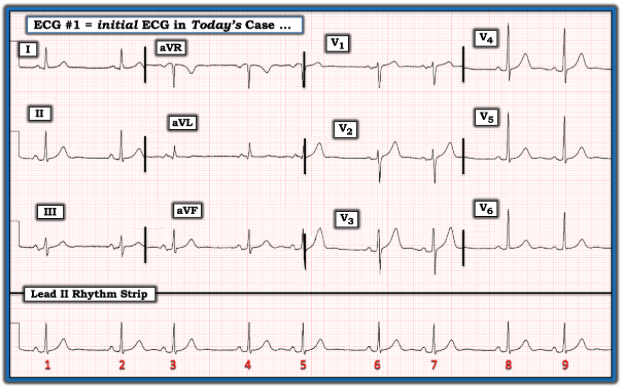
The ECG in the Figure is from a man in his 60s who is aware of his “irregular heart beat”. — Why is this rhythm irregular? — What is your differential diagnosis? — GO TO — https://t.co/CuTZVMvalV — :)
A 24-year-old man presents with multiple painless whitish, serpiginous ulcers on the buccal mucosa. He reports a recent generalized rash that disappeared spontaneously. He denies significant pain and has no history of recurrent aphthous ulcers.
Which is the most likely diagnosis?
A. Aphthous ulcer
B. Oral herpes simplex infection
C. Squamous cell carcinoma
D. Secondary syphilis