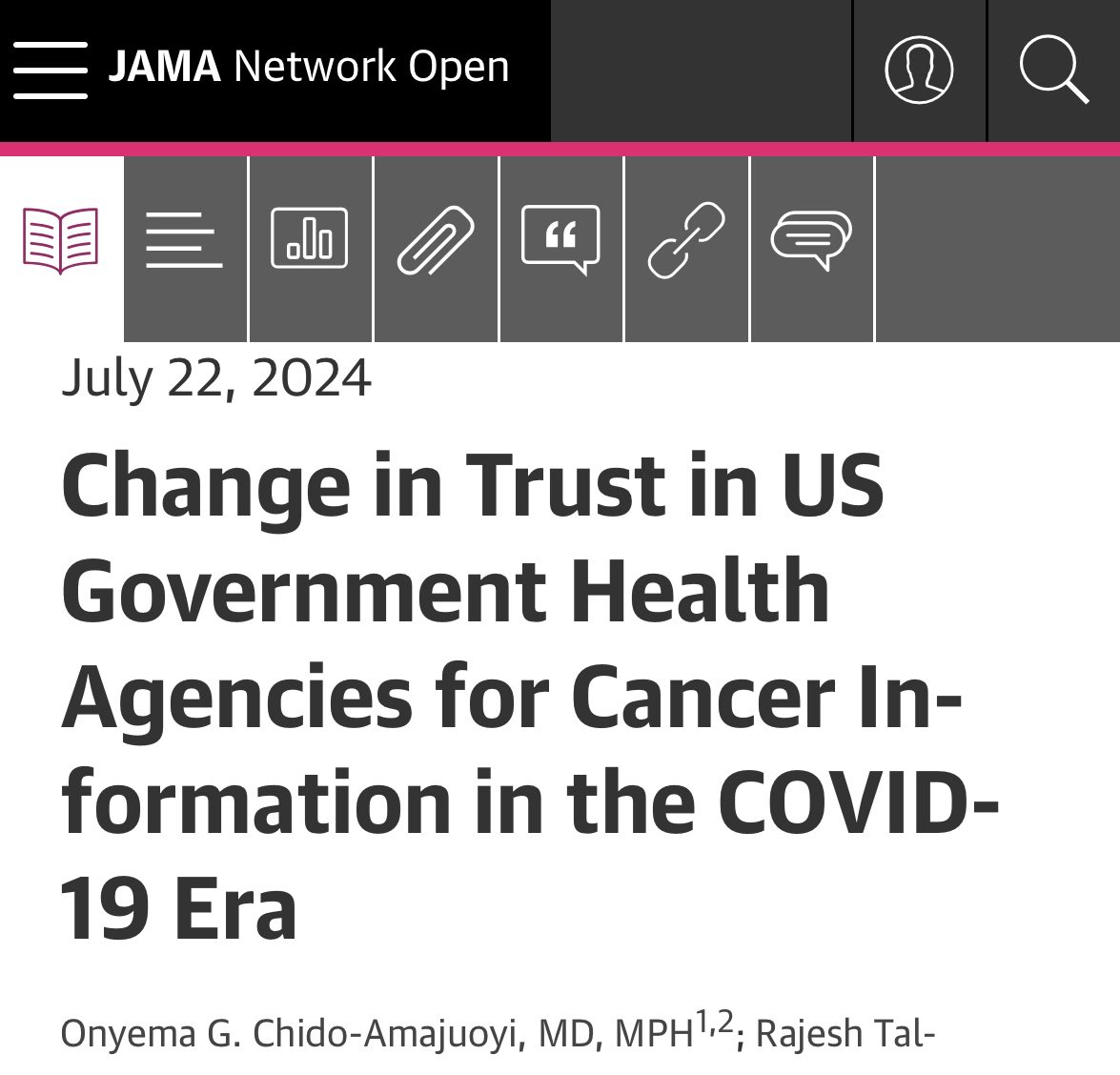
🔬 Improving clinical trial diversity may require new approaches
New findings suggest political ideology may influence skepticism toward trials, with implications for enrollment, diversity, and equity in #cancerresearch.
🔸 Chido-Amajuoyi et al | @JAMAOpen
https://t.co/u6MBfaxnkO
Australia just recorded zero cervical cancer cases in women under 25 - for the first time since records began in 1982.
This is what happens when a country commits to HPV vaccination and screening. We protect our girls and save lives.
UW alum Mary Brunkow, ’83, won the Nobel Prize in Medicine this morning.
This photo was taken while she was on the phone with the Nobel Committee in Sweden. Mary said she initially missed the call because a strange number popped up on her phone — she thought it might be spam. 1/3
Happy 4th of July!🇺🇸
A truly special 4th for myself/family as I officially became a US Citizen today!
An accomplishment that comes on the heels of years of hardwork & sheer determination. Grateful to everyone who has supported me along this journey! Thank YOU!! #NewUSCitizen
From a child in rural Cameroon through @UChicago, to @Harvard —on my way to becoming a cardiologist 🫀at Brigham. To everyone who has been part of this journey so far, thank you for being part of my story 🙏🏾.”
12% of US adults are exposed to tobacco on TV and streaming platforms, with racial/ethnic disparities in exposure, this study finds. Targeted interventions and regulations are needed to mitigate disparities and reduce tobacco-related health risks. https://t.co/2HXtkfZ2mN
New research shows racial/ethnic disparities in exposure to tobacco content on streaming platforms! 📺 As TV viewership varies across groups, streaming giants might exploit algorithms to precisely target vulnerable communities. @MGHPsychiatry@MGH_SUDs@MGH_TRTC
Important piece. This holds particularly true for the cancer care spectrum (from cancer prevention to therapies).The gaps are too far from what’s obtainable in different parts of the world. Cancer is broadly still a death sentence in some regions. Thanks @seyeabimbola @paimadhu
Essentially our findings suggest that trust in government health agencies for cancer information has declined in the COVID-19 era, with some sociodemographic subgroups impacted more substantially than others
Excited to share our publication in @JAMANetworkOpen. We analyzed @NCIHINTS data for changes in population-level trust in cancer information from Government Health Agencies https://t.co/J3N9QKgDD5… #Epitwitter#Cancer