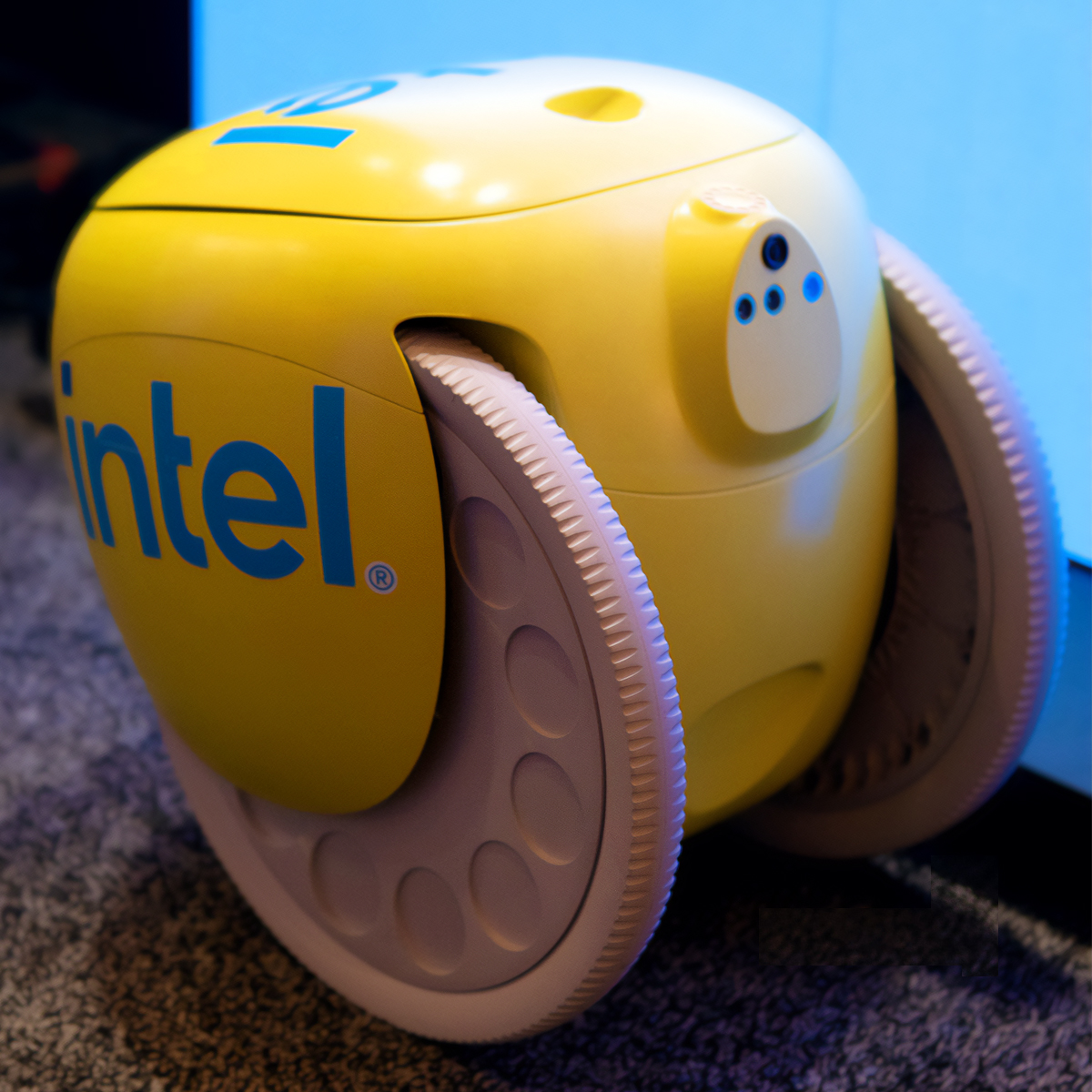
Thanks for an amazing @VMware Explore 2026! From cloud AI innovation and customer success stories to live demos with @OpenInfer, @Cisco, @Dell, ATEA, and @Presidio, plus our crowd-favorite F1 simulator, it was a week to remember.
Over-provisioning works well for predictable traffic as @ylecun and others shared.
The Agentic traffic needs more manageable traffic, an operating system that can manage ai traffic.
check our coverage on Intel: https://t.co/QUJdsgfWSO
Anthropic’s most capable model is not becoming its default model.
Fable 5 has plateaued at ~11% of @AnthropicAI spending across 70,000 companies (ref: @tryramp data @FT)
This looks less like weak AI demand... more like workload segmentation / routing. Enterprises used to default to the best model. Now they send cheap tasks to cheaper models and reserve frontier models for the work that needs them.
Right model for the right task. This is good for enterprise AI adoption... makes @patrickc@stripe's timely acquisition of @OpenRouter look even smarter.
@openInfer (early investor) takes same optimization logic below model layer: mapping inference workloads to the right hardware across cloud, on-prem & edge cc @bastani_behnam@RezaNourai
𝗢𝗽𝗲𝗻𝗜𝗻𝗳𝗲𝗿 𝗖𝗹𝗼𝘂𝗱 is live.
Inference is overprovisioned by design. GPUs get statically pinned to models, so capacity sits idle every time traffic dips, and you pay for all of it.
Operating systems fixed this for CPUs decades ago. We're the first inference OS to do it for AI: schedule dynamically, oversubscribe safely.
More tokens per GPU. Lower cost per token. Same quality.
Point your app at it and go. Free through Aug 31.
https://t.co/ZIZ7Xb1Zvu
#inference #cloud #inferenceos
Two years ago we built @openInfer around CPUs being central to agentic AI.
Everyone said we were wrong.
NVIDIA just shipped "the CPU for agents."
@intel's CEO called the CPU "the indispensable foundation of the AI era."
CPU:GPU ratios moving from 1:8 → 1:1.
The ground moved.
https://t.co/9TLnQtaJau
#openinfer #inference #heterogenous
60 days. Three deals. One bet: agentic inference will not run on one chip.
→ Feb 24: Intel Xeon + SambaNova
→ Mar 13: NVIDIA Rubin + Groq LPX (disaggregated inference)
→ Last week: Meta + millions of AWS Graviton CPU cores
Three stacks. Three processor mixes. One pattern.
━━━━━━━━━━
NVIDIA said it bluntly: "prefill and decode place different demands on hardware." Layer agentic behavior on top (tool calls, planning, retrieval, verification, multi-agent coordination) and the demands shift again on every step.
The future of AI infrastructure isn't more GPUs. It's more kinds of compute, coordinated across a topology.
━━━━━━━━━━
Three things change once multi-processor agentic inference is the default:
→ Accelerator door opens. Every credible silicon player gets a seat.
→ Tail latency becomes an architectural decision, not a tuning problem.
→ Scalability shifts axis. Agentic inference > model inference.
━━━━━━━━━━
At @openInfer we call this vertical disaggregation. First proof point: Intel Xeon CPU + NVIDIA GPU. +50% capacity, zero additional GPUs.
The harder problem is dynamic workloads, multiple models, across aggregated hardware.
That's what agentic inference actually is:
multiple SLAs, multiple models, dynamic behavior changes, served by multiple compute topologies.
→ Intel: CPU + accelerator layer
→ NVIDIA: GPU + LPU layer
→ Meta: CPU layer
→ Next race: the orchestration layer that knits them together
Sources:
Intel + SambaNova: https://t.co/nkhzNnMyJs
NVIDIA Groq 3 LPX: https://t.co/dc158IEZTX
Meta + AWS Graviton: https://t.co/72ulJNw4Wu
Vertical Disaggregation (OpenInfer): https://t.co/io7e1kL2I6
#A
We just published how we unlocked +50% inference capacity on a 27B model — no new GPUs, no new nodes, at a fraction of the cost.
Turns out the CPU sitting next to your GPU isn't dead weight. We just had to stop treating it like it was.
Full breakdown ↓
@AnthropicAI's @openclaw Restrictions Exposed a Deeper Infrastructure Problem. OpenInfer Is the Fix and its free.
We at @openInfer unlock and round background agents to hardware topologies that are designed for them: same model, fraction of the cost. Drop-in replacement. Zero code changes.
FREE beta live now
https://t.co/7BI9oiRD1l
https://t.co/m1cyOO2DnC
#openinfer #openclaw #anthropic #agenticAI
Come and Try out our Beta (FREE): OpenClaws Restriction is Fixed
We are opening up our Beta (https://t.co/4SIF995psx) hosting openClaw background task on lower end, complex cloud topologies, demonstrating value of an inference system built the agentic world.
We have building the infrastructure for Agentic flow in mind. What we saw with @AnthropicAI announcement is a demonstration that agents need to be treated differently than conversational ai
@EricBuess@bcherny probably an infra that is built for agentic applications. thoughts? something we have been cooking @openInfer
https://t.co/crttugJNm1
@EricBuess@bcherny probably an infra that is built for agentic applications. thoughts? something we have been cooking @openInfer
https://t.co/crttugJNm1
@OpenAI tripling revenue. @AnthropicAI at $14B ARR. @nvidia at $130B.
Who's paying? Enterprises.
But change is coming — cheaper AI, new competitors, margin compression. Some companies will get devalued. Others will explode.
That's exactly why we built @openInfer
Featured in @CIOonline
https://t.co/aixhP4nMpc
The "wow" phase of AI is over. We’ve entered the era of 𝗣𝗿𝗮𝗰𝘁𝗶𝗰𝗮𝗹 𝗔𝗱𝗼𝗽𝘁𝗶𝗼𝗻.
I’m excited to share my latest interview with @technewsworld. Special thanks to @jpmello for the great conversation on @OpenAI's 2026 strategy.
Key focuses: 𝗔𝗜 𝗮𝘀 𝗜𝗻𝗳𝗿𝗮𝘀𝘁𝗿𝘂𝗰𝘁𝘂𝗿𝗲: Moving from novelty to a foundational operating layer. 𝗔𝗴𝗲𝗻𝘁𝗶𝗰 𝗙𝘂𝘁𝘂𝗿𝗲: AI agents solving real-world problems in health and science. 𝗗𝗲𝗹𝗶𝘃𝗲𝗿𝗶𝗻𝗴 𝗥𝗢𝗜: Scaling to meet global enterprise needs.
Now, the real work of transforming how the world functions begins—driven by the need for transformational infrastructure and @openInfer 𝗯𝘂𝗶𝗹𝗱𝗶𝗻𝗴 𝗶𝗻𝗳𝗿𝗮 to support this new era.
Full interview: https://t.co/uLVnGwg6wC
#OpenAI #openInfer #AI #TechTrends #openinfer @TechNewsWorld
𝗧𝗵𝗲 𝗻𝗲𝘅𝘁 𝗔𝗜 𝗰𝗼𝗺𝗽𝘂𝘁𝗲 𝘀𝗵𝗶𝗳𝘁 𝗶𝘀 𝗶𝗻𝗳𝗲𝗿𝗲𝗻𝗰𝗲.
Edge data is exploding.
Inference must move to data.
This requires a ground-up system, not a model upgrade.
NVIDIA + Groq is an early signal.
2026 is when inference infrastructure becomes the battleground.
🎙️ New Podcast Episode
I joined The Software Leaders UNCENSORED Podcast to talk about why the future of AI is at the edge and how we are building OpenInfer to make reliable, secure, and energy efficient physical AI possible.
Here is what I cover:
• How my experience across @Meta , @Google , and @Roblox shaped @openInfer's edge first mission
• Why AI needs to run where data is created and how our unified stack makes that real
• How we push innovation through custom inference and system mementos to bring datacenter level AI to the edge
• What I learned from 250 enterprise leaders on why most AI projects fail
• How to stay ahead in a field that changes every 90 days
Full episode link in the comments.
#AI #openinfer #edgeai #inference