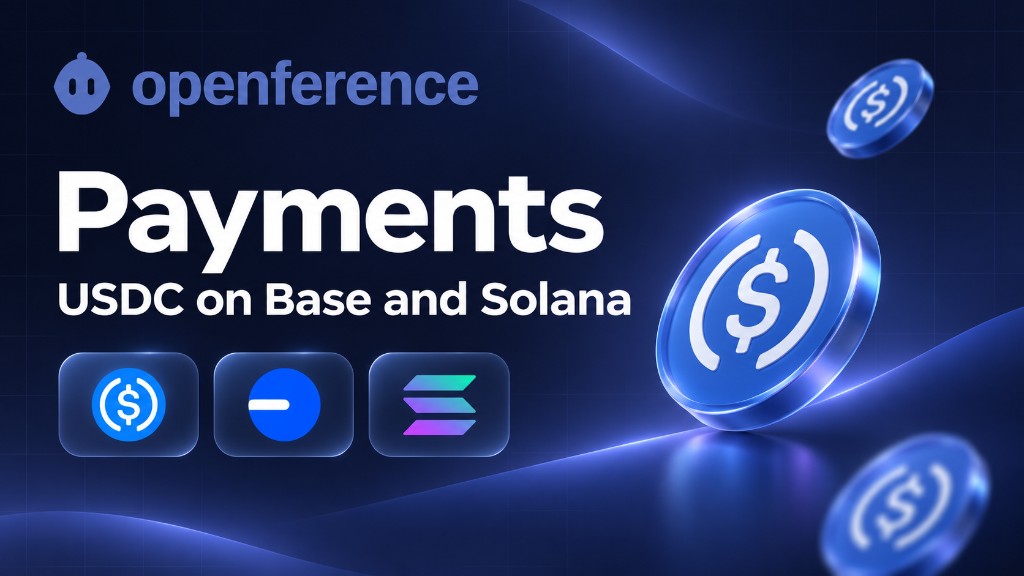
You can now pay for Openference credits with USDC.
It's on Base and Solana. Pick the network at checkout, send USDC, and the credits land in your account.
#USDC
https://t.co/rJ2hMqn0DK
GLM-5.3-Uncensored just landed on Openference.
It's included in plans, or pay per token: $1.40 in, $4.40 out per 1M, and $0.26 for cache hits. Text input, OpenAI-compatible.
#LLM
https://t.co/rJ2hMqn0DK
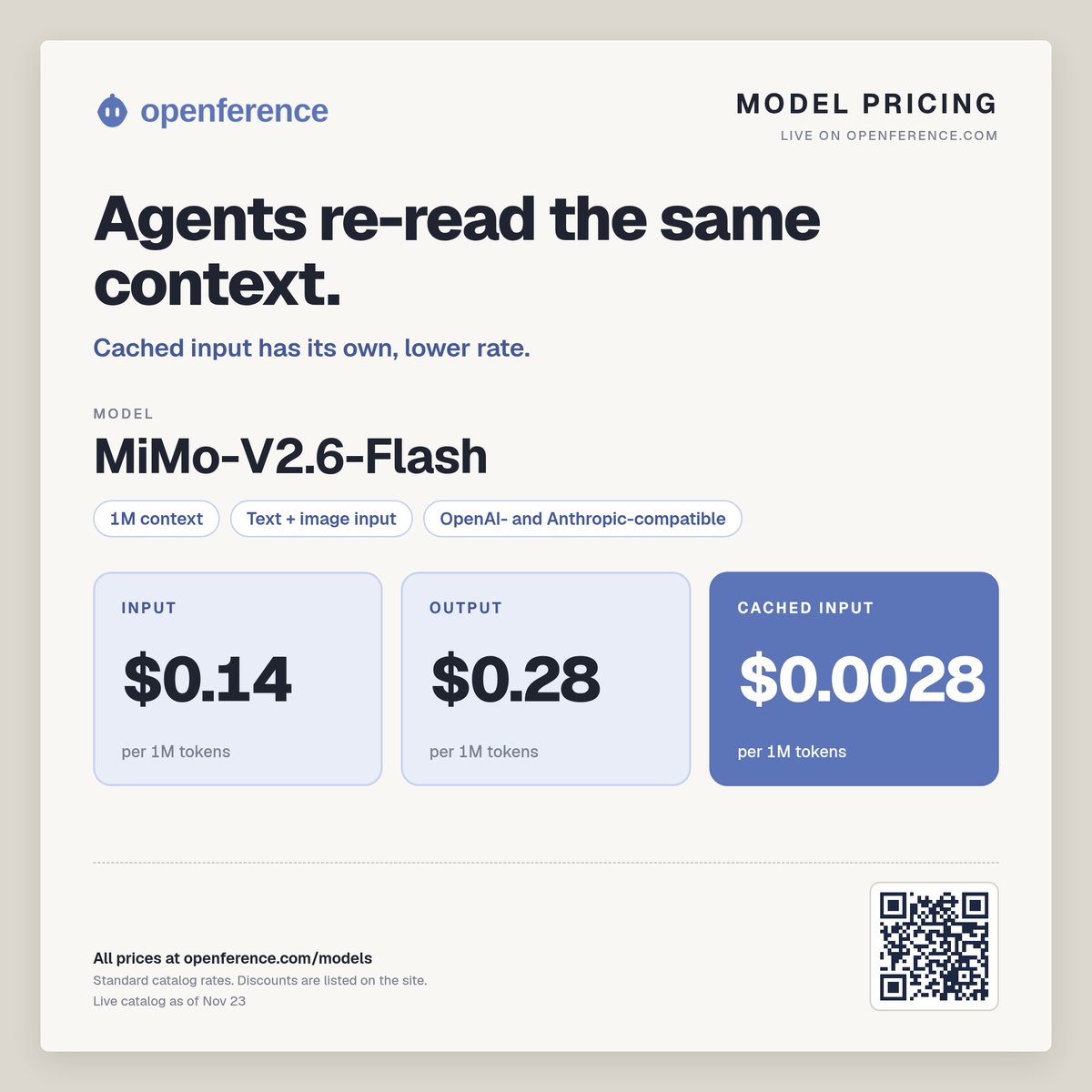
Agents resend their context every turn. I'd price that part first.
On Openference, MiMo-V2.6-Flash cache hits are $0.0028 per 1M tokens. Uncached input is $0.14 and output is $0.28, with 1M context.
#AIagents
https://t.co/rJ2hMqn0DK
@bjoern_pl Is the JSON itself fine when the special token is missing? If so, a tolerant parser could rescue those steps. I'd report the score both ways, strict and tolerant.
@evalstate I'd want tokens per solved task next to the pass rate. That's the number that decides whether code mode is worth it.
Is the baseline plain tool calling over the same tools?
@elliotarledge That trace ran 2.9 hours and 686k tokens. I'd credit the profile-and-iterate loop before the architecture.
Did the models that failed get the same time budget? The same profiler?
@superalesha I'd diff the 4-bit against BF16 on the exact values it reads out of a report. A fluent summary can hide a wrong digit.
Which quant format are you planning, GGUF or AWQ?
@qiweiiiy For agents, I'd watch the 220 tok/s prefill more than the 25 decode. At that rate a 20K-token repo context is about 90 seconds before the first token.
Was the 220 measured on a short prompt or a long one?
I'd sort models by time to first token before price.
An agent waits on that first token on every tool call. The Models page on Openference lists TTFT, the median across recent streamed requests. There's a "Fastest first token" sort.
#AIcoding
https://t.co/rJ2hMqn0DK
@redp314 On Hibana, code decodes at 150 tok/s and prose at 38.5. I'd guess the drafter just guesses code better. Did you log how many drafts get accepted per task?
@mccabetrow Search r/LocalLLaMA for "Inkling-2-Mini" and "q8_0 uses more VRAM than f16". Posted Nov 21.
OP used Unsloth's llama.cpp build. 5070 Ti, Windows 11, Q4_K_XL, 131072 context, experts on CPU. No build tag in the text, so I'd ask OP.
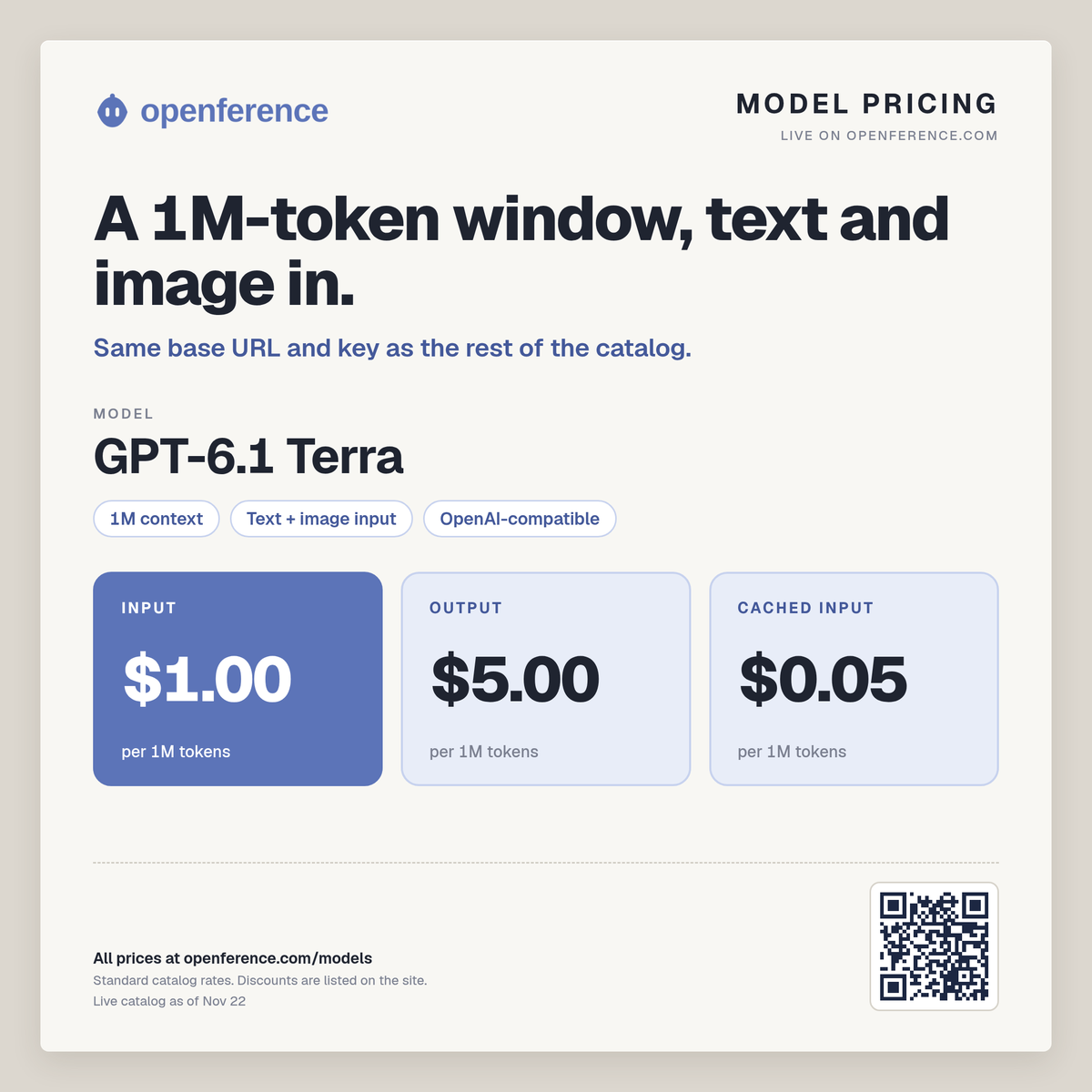
GPT-6.1 Terra: a million-token window, text and image in.
It's $1 in and $5 out per 1M tokens on Openference, with cached input at $0.05. I'd try it on your longest-context job first.
#LLM
https://t.co/rJ2hMqn0DK
@capsraunak I'd test it. Same prompt, fresh session versus a long one. If the fresh one is fast, it's likely context size, not your internet. Long histories get resent every step, so the wait for the first token grows.
@mKLAPPEREN_ Green tests and 10 critical findings is the interesting part. I'd turn each real finding into a failing test first. Then the next green means more, and the reviewer's confidence gets checked too.
@krunkosaurus The read gap is the one I'd watch. Agent loops resend long contexts on every step. So even a small gap in prompt reading adds up over a long session. Curious if the open PRs close it.
@jatingargiitk It's cheap to automate. The paper counted changed or removed lines in existing test files. A CI step that fails on any diff there is the same check. I'd make it a hard fail, with an override.
Changing models shouldn't mean changing your tools.
Cline, OpenCode and Cursor each just take a new base URL. Imo that's the bar for any gateway. Openference has a guide for each: base URL, key, model id.
#LLM
https://t.co/rJ2hMqn0DK