Verifying my account on nostr
My Public Key: "d1245264c5c1926fa9b4153a824eacdaa4ccd39966e6edea5f73f7b8d3619ab5"
Find others at https://t.co/rn24tyMm09 @nostrdirectory#nostr
I have spent over $10,000 scanning 100+ bitcoin ecosystem related libraries looking for vulnerabilities with Kimi K3 running as quarterback.
Myself and a small "Red Team" have found multiple serious vulnerabilities impacting the ecosystem. They vary in scope severity, but this is a call to action.
For any critical tier vulnerability that was identified if I was able to immediately demonstrate a POC (proof of concept), I have already responsibly disclosed to the maintainers.
HERE IS HOW YOU CAN HELP ME
IF YOU ARE NOT TECHNICAL:
- please share with me any repository that is on github that I can scan, we want to cast a wide net. It takes a few moments for you to link github accounts, we'll take it from there
- if that project does not have a SECURITY.md make an issue asking the dev to list one
IF YOU ARE TECHNICAL:
- If you are a maintainer or contributor to a project, I may have already scanned your repo, hit me up I'll share the results, if not I'll add your project to the list.
- If I can trust you to do larger review to start looking through this stuff to give me more eyes let me know.
AI Has forever changed software development. Tomorrow marks 1 week of Kimi k3 being live in open weights.
We are going to accelerate.
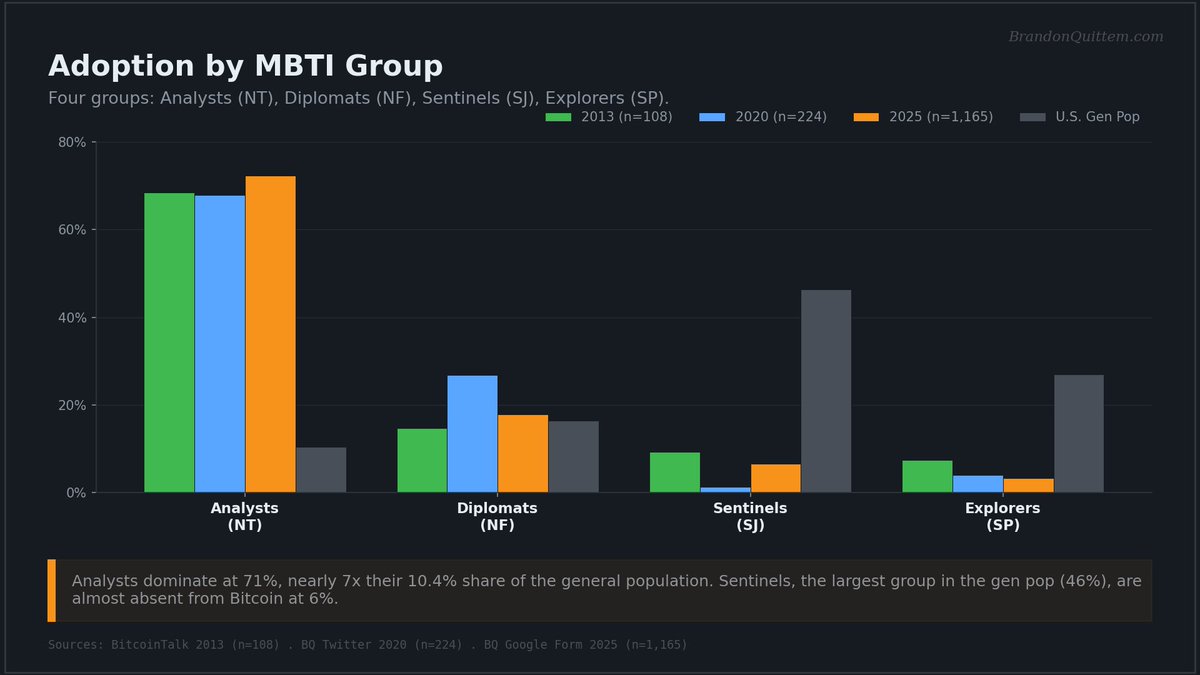
1/ 2025 Bitcoin personality types (Myers-Briggs) survey results are LIVE
Here's what jumped out:
71% of Bitcoiners are "Analysts" (INTJ, INTP, ENTJ, ENTP).
Nearly 7x higher than the general population 🤯
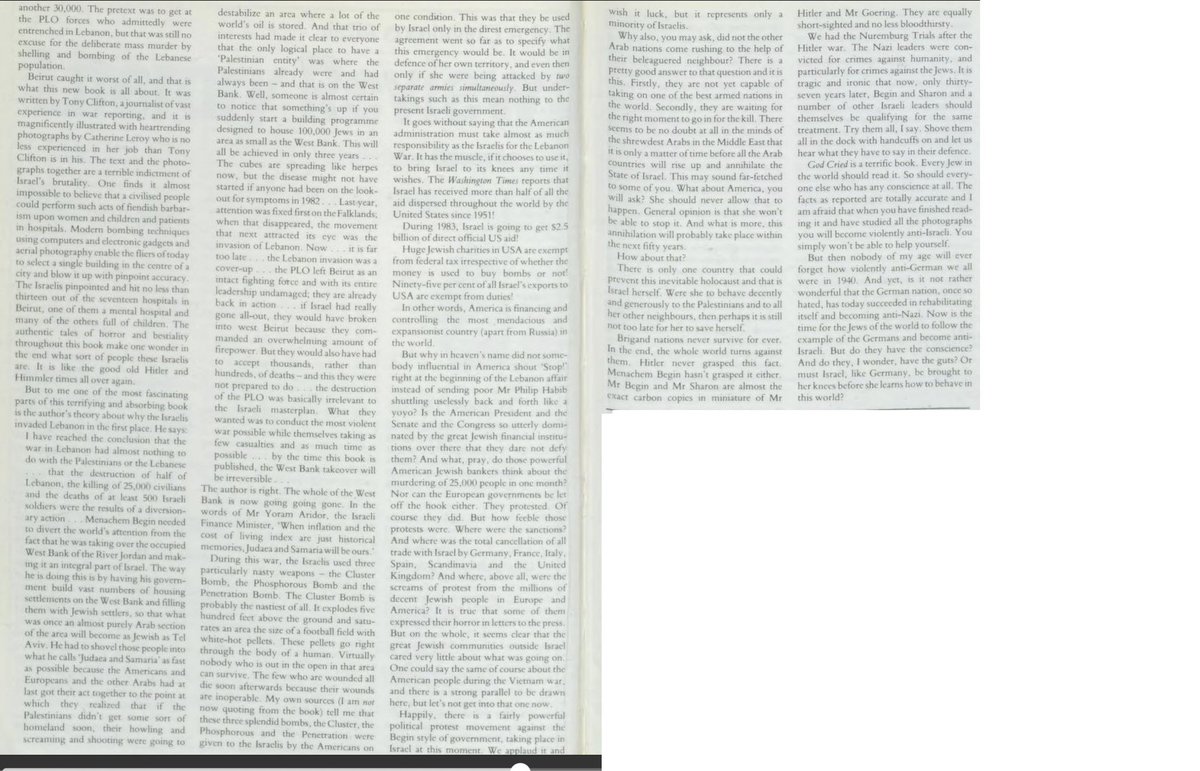
Wow. Everyone should read this 1983 article by Roald Dahl. Every word of it. It's literally the same fucking shit as now, with the same kind of impunity, only now it's even much worse. He called it. He fucking called it and they just ignored him and called him an antisemite.
I’ve held my breath for about two months but here are finally a few notes on AI and freedom:
1. There is a lot of hype and fear around AI. I don’t think people are actually prepared for how dramatically AI will transform the world, and how quickly it will do it. At the same time I also think people are mistakenly choosing fear over action and curiosity. Do NOT sit on the sidelines.
2. For the past two weeks I have had a robot. His name is r2. He is a good guy, a resistance robot. His composition changes but he is most usually an Opus or Codex mind, OpenClaw body, and Matrix or Telegram hands. Every day I figure out new things he can do. My jaw is on the floor.
3. I do not do anything sensitive with my robot. In theory I could use Matrix to talk to my robot from my phone or just use the MacBook Air that the robot inhabits directly, and use my little local llama model, to do sensitive work, but I’m not there yet. I’m just in exploration mode. I don’t send anything from my phone to my robot that I wouldn’t want Anthropic or OpenAI to see, which is to say, nothing that sensitive. I can right now send a sensitive question in Matrix to my claw to have my local model run: anthropic or openAI would see the question, but they wouldn't see the answer.
4. OpenClaw is experimental software. DO NOT put it on your personal computer or your work computer or give it access to your email. DO experiment and play with it. What you need to do is start training to figure out how to use this new magical technology. You will want to be good at this. A decent balance is a fresh MacBook Air, a fresh gmail account, and a fresh anthropic or codex app on the machine. That’s about all you need. A credit card or if you want to use BTC, you can pay for advanced models with things like PayPerQ. An extra phone number too if you want to talk to it via Signal or WhatsApp. What’s amazing is that whenever your robot breaks, you just go onto the local claude code or codex app on the machine and just ask it to fix it and voila done. Back up and running.
5. I don’t know any code at all and yet have been able to create complex novel working software. Beautiful websites too that would have cost me a fortune a few years ago. But it’s just the tip of the iceberg. I was able to for example ask my claw to read everything I've ever written, watch a ton of my interviews, and develop an editorial skill so that I can send it a google doc and it can go in and track changes and leave comments just like a human would, just like I WOULD. It is legitimately amazing at this. And each time I do this, it learns, as I show it which comments I accepted and which new things I add. It has persistent memory and just gets better and better. What excites me most is giving this gift to the world’s dissidents and activists and seeing what THEY do with it.
6. Which brings me to security. Hopefully in the next few months we will be at a point where we can have an encrypted phone app that you speak to that requires no phone number or corporate intermediary that runs on nostr that goes directly into your claw powered by a high-quality local model. The full freedom tech stack. You can already sort of do this today already but it will get way easier and better. That’s what you’re going to need to do real serious resistance work. For now we just train. Think: Dagobah today, Death Star tomorrow.
7. People think this transition is about robots but it is about humans. Already I can see how Claws will allow insane collaboration between people. For example I can ask my brilliant designer friend to leave me a voice note to give feedback on my website or presentation or event plan, and then just forward that voice note to my robot for immediate implementation. Whenever I build or make something I ask my robot to do a deep search for the most beautiful and well designed things of that sort in the world, extract what makes them great, and create a plan for implementing that magic into whatever I am building. It could be fashion, art, cuisine, music, architecture, strategy, etc. Whenever I make a skill for my claw I can have my robot upload it and share it with anyone else. The speed of collaboration is dizzying.
8. Robots and Freedom Tech are a match made in heaven but the synergy will take some time to really flower. Many of the major obstacles to freedom tech can be solved by personal agents. For example mine was very quickly able to create its own nostr identity and build its own ecash wallet and it could and did start to zap people on my direction. But the robots can’t have their own bank accounts or social security numbers. Silicon Valley will try to force through KYC stuff and stablecoins but I think in the end bitcoin and nostr win out because they are so easy for the agents to use. What’s awesome is the realization (noted by Odell on his two recent excellent Citdadel AI podcasts with Alex Gleason and Justin Moon) that agents make freedom tech easier to use. For example your agent can run a lightning node for you. Of course... you then realize. We were never going to sit there and operate channels. Our agent will do it for us. Etc.
9. HRF will be heavily involved in providing grants to open source AI projects, projects that help improve agent security and privacy, projects that help superscale dissident work, events that bring brilliant people together around the challenge of how do we best harness AI, hackathons that encourage people to build freedom-oriented AI tools, educational content and trainings, and much more this year.
10. Right now Claw is experimental. But it’s easy to see how it will become incredibly secure. Every day it ships new patches. Already I can ask mine to become a cybersecurity expert and scan my system for vulnerabilities. Obviously I take it with a grain of salt now but -- never before did I have that power, nothing even close. Soon this will become seriously powerful and you will have swarms of patrol agents guarding your networks and alerting you if anything goes wrong. I think it can be more expensive to attack than to defend. White blood cell theory.
11. There are a lot of parallels between the creation of Bitcoin and the creation of OpenClaw. One person chooses a new way for the world to go. A new system. In Satoshi’s case, money that the state can’t control. In Peter’s case, intelligence that the state can’t control. I can’t stress enough how big of a deal it is that people now can control their intelligence. We were for sure heading in the direction of needing to sign up for a corporate app for all of your agent needs, and being in the Web 2.0 trap of being vulnerable to being banned or kicked off. Not anymore. YOU choose the brain for your robot. You customize the body. You choose how you want to interact with it. Peter has changed the world probably more than he knows. Yes he might be the first one person unicorn but that’s not the cool part. The cool part is that he changed the course of humanity and that as of today, at least, the best agent technology on the planet is people-powered, built by the people, for the people. It’s quite a moment for freedom tech.
12. We need to go fast and furious on developing freedom-oriented open-source AI tools. We are fortunate that we have Bitcoin and nostr and bitchat networks in place before the great AI transition. We have the tools. We need to act now. I would encourage everyone reading to start getting involved today.
13. Setting up a claw is not easy right now unless you are an engineer. I could not do it myself and have no shame in saying it. I would have gotten really frustrated. We are developing a way of working with privacy engineers to build a simple yet powerful solution and an onboarding process that we do in a bespoke way in person that takes 2 days. I think this is probably the situation for the next month or two and then hopefully it gets way easier. The thing is, it will get easier very quickly for you to have a CORPORATE robot (all the big companies are now following OpenClaw, Claude already has a way for you to use Code via your phone), but a freedom tech one that you fully control will probably not evolve as quickly. Then again, it might, if we all work together on making it happen. I do think by the summer things will be very different.
14. I think some things will become even more valuable in the new AI world that will come to us in the coming year. Many have said taste, and I agree. But also personal health, friendships, and physical communities. Big picture, labor market as many have said a lot of companies will choose between laying off a lot of their workforce or growing their productivity. There will be a spectrum and some organizations will lean one way and others will lean the other. It depends on how valuable the humans are inside the org, what kind of skills they have. If leadership values you as an individual, then you probably aren’t getting replaced. But you're going to have to become a super employee. And you should want to. It's fun.
15. If you are interested in joining the effort to work on AI and Freedom, HRF will have several opportunities. We are collaborating with Bitcoin Park on the second AI Hack for Freedom in Nashville (talk to Rod if you want to join or learn more), and will feature a lot of AI content at our upcoming activation at the Bitcoin Vegas event, and at the Oslo Freedom Forum on June 1-3. We will also keep churning out our monthly AI newsletter. We have opened up a grants portal. DM me if you are interested in any of this.
16. One simple thing that you can do today in AI and freedom is switch your daily “chatbot” activity to Maple. It’s a beautiful and simple mobile app (and web app) that is fully encrypted. Think Signal for AI. It only can use open models so it’s not going to be for all of your tasks, but it does great with most of them. It should replace a lot of interactions you have with corporate chatbots regarding things about your health, personal stuff, sensitive matters. etc. If we can make Maple or something like it the standard for research in the coming months that’s a huge victory. And sometime soon I think you’ll be able to enjoy this level of encryption with coding agents and personal agents as well.
It's interesting because the longer you wait to try claw, the better it gets. But the more time you lose. My sense is you could wait a month or two. But you'll want to be using it this summer. I would strongly recommend trying it at some point. You will be tempted by the easy corporate route. But you can join the AI and Freedom army today. Let's go!
The latest round of the Epstein files is exactly why I'm a Bitcoiner.
The people who engage in these disgusting acts are the same ones ultimately in charge of the money printers.
I don't give a fuck how much Bitcoin tanks in the markets.
The alternative is so much worse.
One thing that I would like to tell my past self is to cultivate optimism. Things that go wrong are largely things you cannot influence (and have often unexpected upsides), while optimism makes you more effective at changing things you can.
My fellow Bitcoiners,
Bitcoin was built so no tyrant could print it, no banker could freeze it, and no border could block it.
That’s something bigger than any of us—and it deserves better than what we’ve been doing lately.
We talk a lot about “what Bitcoin has done for me, or more recently what Bitcoin community has done to me.”
Maybe it’s time to ask what we’re doing for Bitcoin.
Are you running a node to keep it strong?
Are you helping a newcomer set up cold storage?
Are you writing, building, teaching, defending?
The chain doesn’t grow through memes and infighting—it grows through work, through code, through community.
Every line of code, every block relayed, every person who learns self-custody—that’s how Bitcoin wins.
Let’s stop tearing down contributors just because they don’t see things the same way.
Developers, miners, educators, builders—we all play a part.
We need fewer purity tests and more pull requests.
To the devs: ship code, not shade.
To the miners: secure the chain, not your ego.
To the holders: stack conviction, not resentment.
To the critics: review honestly, but don’t burn what others built.
The energy wasted on personal attacks could power a thousand nodes.
The time spent on drama could help a million new users go sovereign.
Bitcoin is an inheritance we’re borrowing from the future.
Let’s make sure the people who come after us find it stronger—and a little kinder—than we did.
Ask not what Bitcoin can do for you.
Ask what together we can do for freedom.
HODL the line. Build the future.
Don’t trust—verify.
Whoa!
🇪🇹 Ethiopian Electric Power says it has raised over $200 million from Bitcoin mining
The revenue was generated by diverting electricity to Bitcoin mining, which was otherwise wasted due to a lack of transmission infrastructure.
"The lowest monthly income in the current year is $25 million, and the highest is $28 million," Moges Mekonnen, Communications Director of Ethiopian Electric Power, told Sputnik Africa.
The Cost Of Our Inheritance: A Generation's Vision For Ethical Money
One of the most personal and important keynotes I've ever given on broken money, generational injustice, and Bitcoin as our moral imperative.
The future isn't something we wait for, it's something we build ✊
Most Bitcoin newcomers have no idea the well-thought-out pipeline that had been implemented back in 2015 in order to incrementally enable new op codes. It was interrupted by the block size wars, and the insuing distrust made it impossible to continue that agenda.
This MIT paper arguing that using ChatGPT worsens one's performance on neural, linguist, and behavioral levels recently went viral.
Got millions of views. TIME and CNN covered it too.
But most people agreeing with it haven't read it.
Interestingly, researchers themselves used an AI Agent to evaluate essays.
I'm reading it closely to see if it withstands critical scrutiny.
Follow along for my commentary:
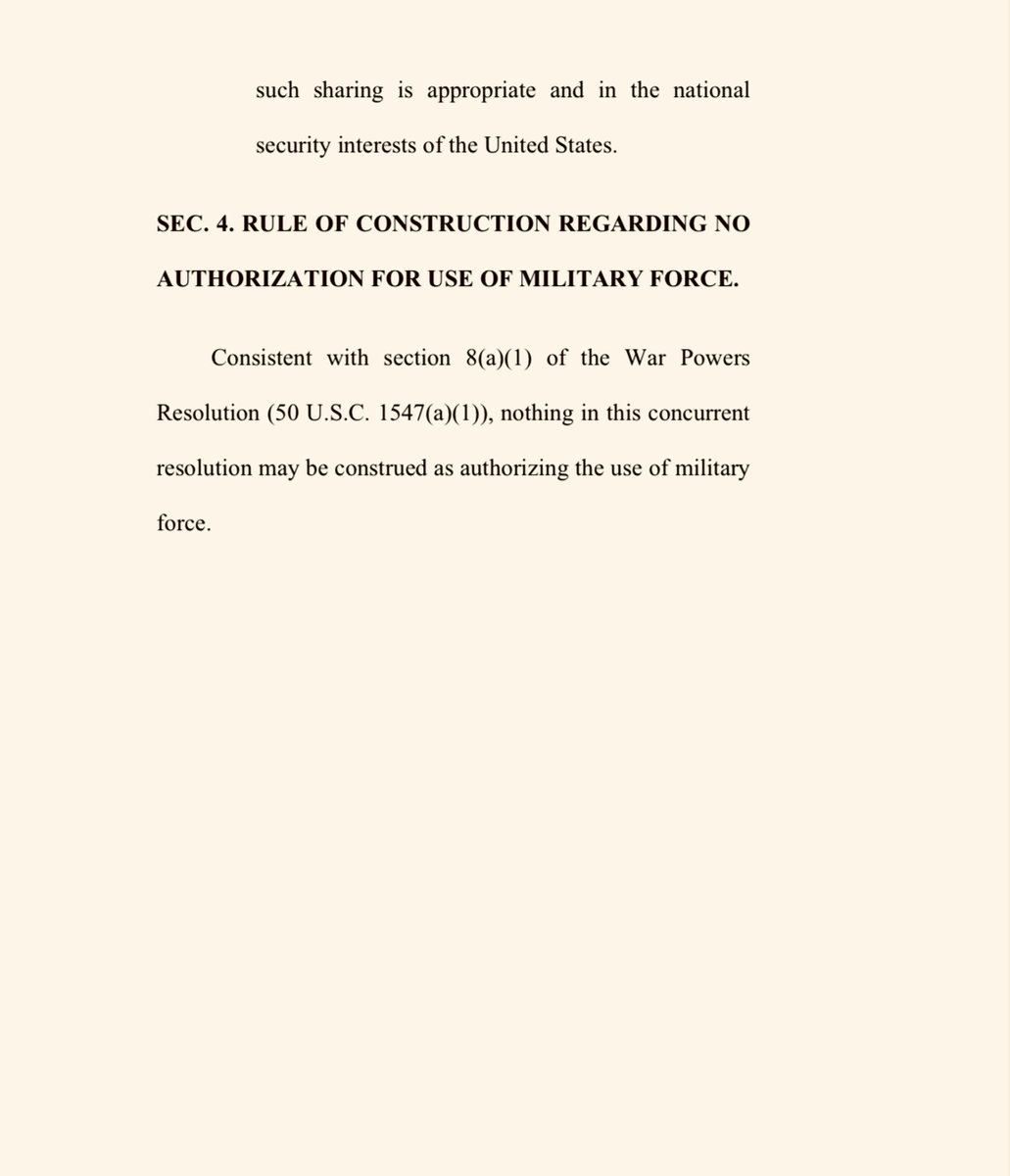
I just introduced an Iran War Powers Resolution with @RepRoKhanna to prohibit U.S. involvement in the Israel-Iran war.
This is not our war. Even if it were, Congress must decide such matters according to our Constitution.
Teaching the poorest communities to spend Bitcoin is not financial empowerment.
It’s theft of their future.
In places where every sat matters, Bitcoin should be taught first as a tool for saving, not for daily spending.
Store value first.
Buy time.
Protect optionality.
Without that foundation, you’re just recreating the same cycle of short-term survival over long-term freedom.
Bitcoin was never the property of one ideology or “agenda”—it was built to transcend political leanings and intermediaries through an open-source protocol and decentralized consensus. While some may promote Bitcoin purely for short-term price appreciation, that does not negate the powerful freedom, security, and accessibility it provides to users worldwide. Real people from Venezuela to Nigeria to the U.S. already rely on Bitcoin’s permissionless network for everyday transactions and savings, often in the face of broken financial systems. Those practical use cases stand as a testament that Bitcoin’s value goes far deeper than “number go up.”
Moreover, the protocol itself has not been hijacked by anyone. Its proof-of-work consensus mechanism and globally distributed network of node operators ensure that no single viewpoint—libertarian or otherwise—can override the code. The rules remain freely auditable and enforceable by anyone running the software, and they protect the network from changes pushed by a central authority or a handful of influential voices. This robust consensus means that whether someone sees Bitcoin as a hedge against inflation, a lifeline in regions with corrupt banking, or an attractive asset to hold, they must still play by the same transparent, verifiable rules.
Yes, it is true that speculation often grabs headlines, and some individuals do fixate on price movements. But hype alone does not define Bitcoin’s ethos or overshadow its open, borderless design that empowers the unbanked, protects user sovereignty, and resists censorship. If anything, the noise around “number go up” underscores that the core innovation of decentralized digital scarcity continues to attract—and unify—people of differing motives. Ultimately, Bitcoin’s open network belongs to anyone who chooses to use it, and its long-term resilience hinges on math, code, and user consensus, not any single agenda or marketing pitch.
There are numerous flaws in your approach, which is unfortunately incomplete in some ways, and misguided and others.
First, the incomplete: you make the rather obvious observation that bitcoin is not yet the most marketable MoE in the world. However, you stop there. You don't proceed to analyze bitcoin as a secondary medium of exchange and explain why, despite not being the most marketable good, it still draws growing levels of demand and increasing marketability.
As Mises points out, people have a reason to reduce their cash balance in favor of secondary media of exchange if they make up for the costs of holding cash, while also being marketable enough to be sold for other goods or for money itself at a ready pace.
Bitcoin is quite obviously the best secondary media of exchange on the market, even if it is not "money." No new monetary technology was going to go from 0 to first place overnight, but it has done phenomenally well in 15 years, and it continues to get better every day. Economists should be explaining all of the ways people benefit from acquiring and holding bitcoin even as a secondary MoE: number go up/usefulness as a treasury asset and unit of account, protection from political risks/debanking, etc.
Second, the misguided: you focus too much on the spending of a good as defining factor of it being a MoE. However, what defines a MoE is that a good is acquired (exchange demand) or held (reservation demand) in anticipation of being used in future indirect exchange.
As a reductio ad absurdum, an entrepreneur could be mistaken about apples being a great MoE and find himself with worthless rotten apples, but that doesn't mean he wasn't himself intending to use apples as a MoE.
Put these together, and there are two problems:
First, you are unable to flesh out a theory of why bitcoin is demanded as a MoE at all, and why an economy would adopt it as such, despite this being the fundamental purpose of the Austrian theory of money.
This would be explained by talking about the role of uncertainty in the role of money as described by Mises, and how bitcoin's properties make it very useful for overcoming the challenges of exchange over space and time as described by Menger.
Second, all of this makes your analyses unnecessarily antagonizing and patronizing.
Bitcoiners often use "money" colloquially to mean "medium of exchange" (and other times colloquially use "medium of exchange" to mean method of payment). I think this is worthy of clarification.
However, you are not clarifying. You are only making things more confusing, because you are not actually helping them map their true observations (and ones that have, not coincidentally, led them to profiting enormously) to proper conceptual framing. You instead just tell them they are ignorant and effectively throw gas on what feels more like a semantic flame war than a disputation of economic theory. "It's money!" "It's not money!"
The correct article, and perhaps one I now need to write ("Austrian Economists' Guide to Bitcoin"?), would have been the following:
---
Because of uncertainty, people acquire goods for the purpose of indirect exchange, which we call a MoE. We call the most marketable MoE, money.
Bitcoin is a MoE, but it is not in most contexts the most marketable, so we wouldn't call it "money." However, bitcoin is a very marketable MoE, so we can call it a secondary MoE.
It has grown as a secondary MoE because of a growing exchange and reservation demand based on its scarcity, durability, transportability, low storage costs, etc. The increased liquidity has a positive feedback loop of making it even more desirable as a MoE.
As this demand grows, we could see more people adopting bitcoin as a treasury asset, demanding it as payment, and spending it to acquire other goods. In time, it could even displace the USD as the most marketable MoE.
At that time, bitcoin would be money.