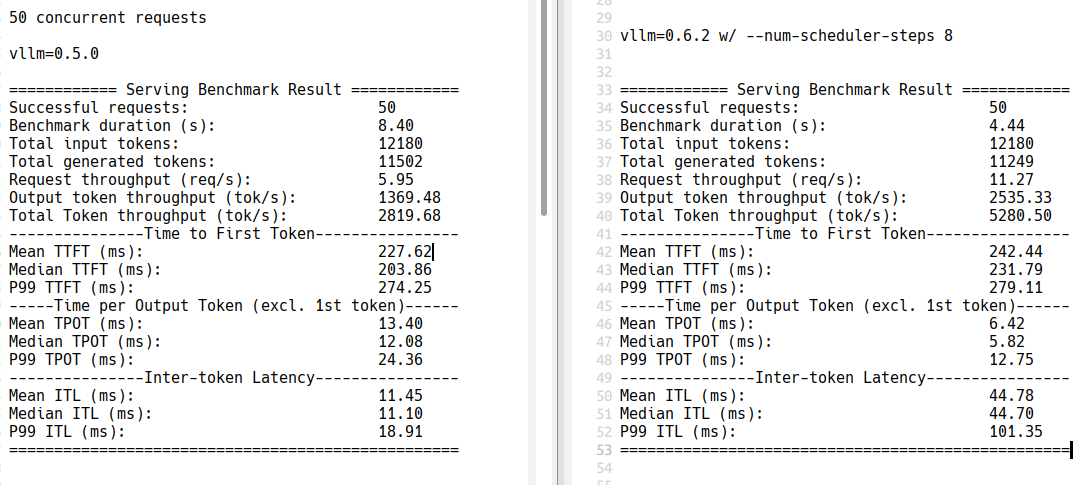
@huskydogewoof@ZhengyangGeng@zicokolter I would love to see somebody do a benchmark comparison between Equilibrium Reasoners (EqR) and Attractor Models from this paper.
https://t.co/Tgc5h1RPRL
Atmospheric science professor quit MIT and turned $400 → $46K on Polymarket weather markets.
at university, he was exploring atmospheric forecasts with machine learning
5 years of research → he built his own ML model that predicts rare weather events {1¢ – 10¢}
results shocked everyone:
116$ → 2,903$
13$ → 1,586$
7$ → 1,178$
he is trading a wide range of regions from Hong Kong to New York by hunting the {$0.01 – $0.10} range.
his profile: https://t.co/NejYhRiAsh
start copy-trading his model with as little as $5 using Ares: https://t.co/HTBjyUiJ41
he isn't gambling - he is using the advantages of ML models and building his edge based on it.
Pinned research on weather forecasts using ML models below ↓
Kalshi founder on institutional adoption:
"Block trades are already live on the platform...Right now a trade that we're seeing a lot is in the $20-30 million range for payroll hedging"
This 1 hour lecture on "Probability Theory" from MIT will teach you more about prediction markets than 2 month internship at at a Wall Street Quant firm.
Bookmark this & give it 1 hour today, no matter what. It’s the most productive start you can give your week. Then read post below.
In this 2014 video, Sam Altman asks Marc Andreessen what venture capitalists are really looking for when judging startups.
“The conventional statistics are that about 200 of the 4,000 venture-fundable companies per year will be funded by a top-tier VC. About 15 of those will someday get to $100MM of revenue, and those 15 will generate something on the order of 97% of all of the returns for the entire category of venture capital in that year.
Venture capital is such an extreme feast or famine business. You’re either in one of the 15 or you’re not.”
That is the real logic behind VC, and it is harsher than most founders want to admit.
Investors are not mainly asking whether your company is solid, credible, or broadly impressive.
They are asking whether it has the kind of asymmetry that could put it in the tiny set of companies that matter disproportionately.
In a power-law business, “good across the board” is often less interesting than “exceptional in one decisive way.”
Venture returns come from companies with an extreme advantage, a product that spreads unnaturally fast, a market opening at exactly the right moment, a founder with unusual force, or some other quality that compounds harder than competitors can match.
For founders, the implication is uncomfortable but useful.
Do not pitch yourself as merely well-rounded.
Show the one thing that is so strong it changes the odds, because in venture, weakness can sometimes be survived, but ordinariness almost never can.
---
From @ycombinator YT channel from 2014 (link in comment)
In 2013, Yale professor Ben Polak gave a legendary 1-hour lecture on Game Theory.
It will change how you make decisions in negotiations, business, and life.
His frameworks:
• Dominance arguments
• Backward induction
• The proactive bias
12 lessons to make better decisions:
.@MichaelDell explains why fear never goes away and why that's the point:
"You don't want to fail although failing is how you learn. Pain is the best teacher."
"You can't have it paralyze you where you don't want to make any decisions because you're afraid to fail."
"What you want to do is sort of be incremental. It's back to iterating. 'Okay, we are not sure if this is a good idea — let's try it. Let's experiment, let's get started, we'll figure it out.'"
"We're not betting the whole company on this decision. We're just experimenting."
"And if it doesn't work — great. We learn something. We move on."
Peter Thiel: The salary of a startup CEO is “incredibly predictive”
In this 2012 interview Thiel explains that one of the best questions an investor can ask is “What is the salary of the CEO?”
In his view, the right answer is less than $150k, even post Series A.
“If you like the people, you like the business model, you like the technology, you like everything. I��ve found that that single question is incredibly predictive because it ends up setting the culture. Are people doing it for equity or cash? It drives the people who are being hired… And you always want to get to this question of motivation. Do people actually believe in what they’re doing?”
He cites Reid Hoffman founding LinkedIn as an example:
“Reid was taking a salary of $15,000 a year. It was the minimum wage so you could get health insurance. And maybe he didn’t need more money [after PayPal], but it was setting the right tone for the company.”
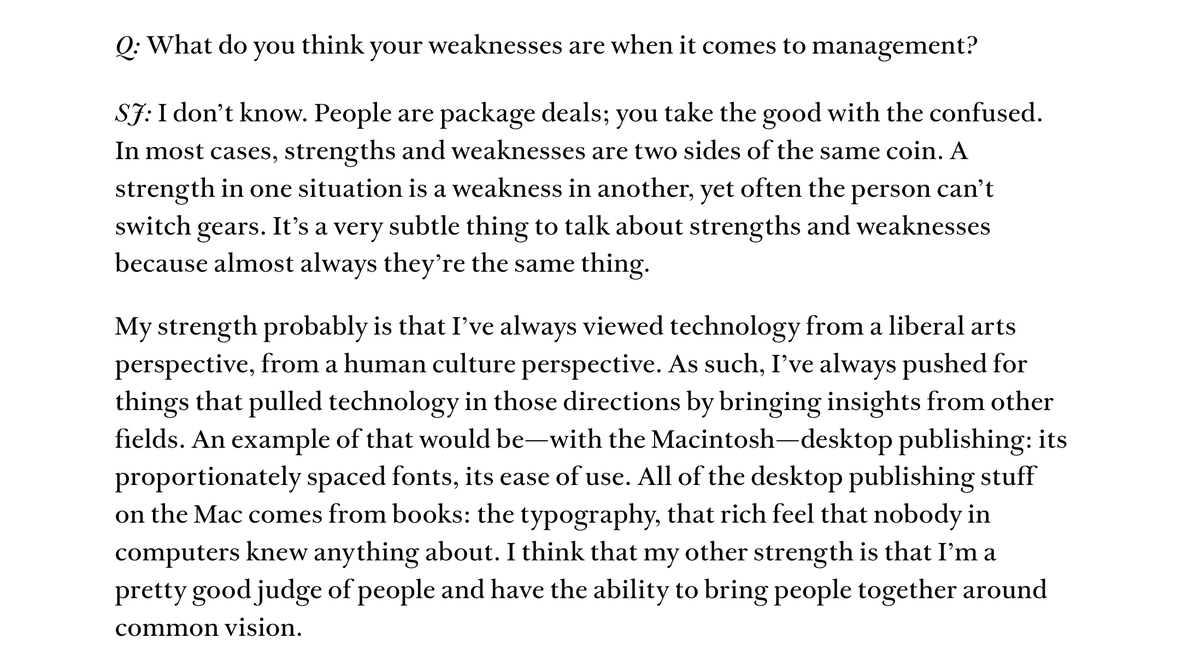
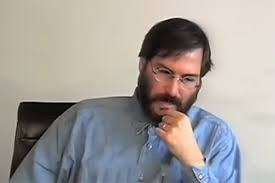
One of the best (and most sociopathic) interview responses Steve Jobs ever gave.
Interviewer: What are your weaknesses?
Steve Jobs: Hard to say. But here are some of my strengths...
I reverse-engineered what the top 20 Polymarket traders actually do differently
They don't trade more. They trade smarter:
— They never enter without edge detection first, model fair value minus market price, if the spread is under 3% they don't touch it
— They size every position through Kelly fraction so one loss never kills the account
— They track their own accuracy with Brier scores and stop trading the moment calibration breaks
— They simulate every position 10,000 times with Monte Carlo before risking a dollar
This isn't secret. It's just hard to build yourself. Unless someone already built it for you. @kreoapp gives you Trader B's screen.
https://t.co/FEMGw7Lt7J
This 58-minute lecture from 1992 will make you question everything your business school professor ever told you.
Steve Jobs before the iMac, before the iPhone, before the comeback - explaining exactly how great products get made.
Watch until the last 10 minutes.
What he says about failure will change how you think forever.