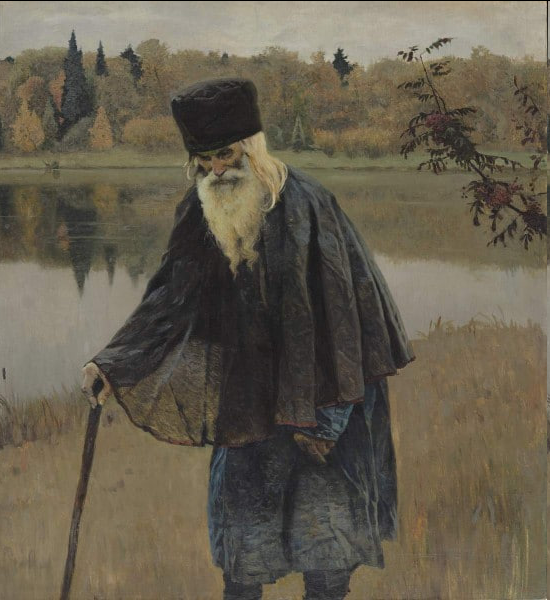
Não existem adultos.
A infância não termina. Ela apenas aprende a usar terno, pagar boletos e esconder o que sente.
Passei muito tempo acreditando que crescer significava atingir um estado de lucidez, como se em algum momento deixássemos de ser criaturas movidas por impulsos e nos tornássemos plenamente racionais. A experiência me ensinou o contrário.
Fui repetindo erros, quebrando a cara e observando as pessoas. Aos poucos, percebi que a maior diferença entre uma criança e um adulto não está nos sentimentos, mas na capacidade de justificá-los. A inveja continua existindo. O ciúme continua existindo. O ressentimento, a vaidade, a necessidade de aprovação, o medo de rejeição. Nada disso desaparece com a idade.
O adulto apenas aprende a dar nomes mais elegantes aos próprios impulsos.
Alguns conseguem refletir sobre o que sentem antes de agir. Mas essa é uma conquista rara, não uma consequência da idade. A maioria continua vivendo como sempre viveu: reagindo ao ambiente, absorvendo o humor da multidão, repetindo opiniões, confundindo emoção com verdade.
O homem moderno acredita que escolhe. Na maior parte do tempo, apenas responde aos estímulos que o cercam.
É por isso que a vida adulta me parece, muitas vezes, uma grande encenação. Quanto mais velhos ficamos, menos espontâneos nos tornamos. As relações passam a ser mediadas pela conveniência. A sinceridade cede espaço ao cálculo. A moral, muitas vezes, vira apenas um teatro para preservar reputações.
Todos fingem maturidade. Todos fingem certeza. Todos fingem normalidade.
Mas basta uma crise, uma paixão, uma humilhação ou uma perda para que a criança escondida sob décadas de civilização volte a conduzir a vida.
Talvez crescer seja apenas reconhecer a criança que continua vivendo dentro de nós e, finalmente, assumir a responsabilidade por ela.
Porque idade é um fato biológico.
Maturidade é uma conquista espiritual.
The most intelligent being God ever made is currently in hell and he's going nowhere. he was the sharpest mind in the court and it made him unbearable. every other angel sat in presence and was content. he sat in presence and dissected it, picked apart the mechanics of divine light like some wretched little academic pulling wings off his own nature, trying to figure out why it flies. God said stop and he couldn't. not wouldn't, couldn't. the thinking had become him. there was no seventh day. just one permanent grinding four in the morning dissertation on why God does what God does, until the question ate through his floor and he fell through it. and he's still falling still thinking. and the worst part, is he finally got the answer. he understood everything perfectly and it still changed nothing. because understanding God and loving God are not the same thing. one of them will save you and the other will eat you alive
O mal senta no trono reservado à Providência vestindo as cores litúrgicas da Igreja e usando uma moeda de ouro como se fosse a Eucaristia.
O diabo mais perigoso nunca vem com chifres ou rabo pontudo, ele vem com rosto bochechudo, sorriso amigável e uma tese bonitinha pautada no seu próprio bem.
A doidera é que todo mundo olha para a figura de carmesim e verde e acha simpática. O sujeito tá lá, corado, parecendo um burocrata bem alimentado num trono suspenso nas nuvens. Mas a sacanagem tá nos detalhes que o pessoal finge não ver.
Na pintura de Ludwik as asas não têm penas, são de morcego, esticadas no espaço num deboche direto ao Sagrado. O cajado dourado na mão esquerda não carrega nenhuma cruz. E na mão direita vem a profanação definitiva: ele segura a moeda exatamente na posição em que o sacerdote eleva o Corpo de Cristo. É a comunhão da ganância.
Aos pés desse trono de ouro, uma trilha de moedas cerca crânios usando coroas de reis, elmos de cavaleiros e cartolas de banqueiros. Reis, soldados e magnatas passaram a vida inteira sendo baba-ovo do mesmo senhor pensando que mandavam em algo. A morte nivelou todos no chão, enquanto o tirano de rosto jovem e confiável continuou no topo.
Toda tirania humana começa assim, prometendo ordem e entregando a profanação da fé e da dignidade.
In The Brothers Karamazov, the elder Zosima makes one of the most remarkable statements in all of literature:
"Each of us is guilty before everyone, for everyone and everything, and I more than the others."
Our lives are woven together far more closely than we imagine. Every conversation, every act of kindness, every moment of patience shapes another person's life, who in turn shapes someone else's.
Dostoevsky understood that families, friendships, and entire societies are built this way. They grow through countless ordinary encounters that seem insignificant in the moment but continue echoing long after we've forgotten them.
That's why even the smallest act of love carries extraordinary weight. You may never know whose burden became lighter because of your kindness, whose hope returned because of your encouragement, or whose life took a different course because, for a brief moment, someone chose to care.
Perhaps that is what Zosima wanted his readers to remember. Every life touches countless others, and every act of love leaves the world a little richer than it was before.
NASA physicist Thomas Campbell states the universe tracks every human decision to measure individual spiritual growth.
This system operates like a cosmic feedback loop, testing whether our avatars choose love over chaos.
I used to wonder why I felt weak, scattered, and stuck. Then I started waking up before 5am. Mark 1:35 "Very early in the morning, while it was still dark, Jesus got up, left the house and went off to a solitary place, where he prayed." Taking control of that time transformed my life: here’s how. 1) Winning the heroic minute. No snooze. No negotiation. The first act of the day is an act of the will. Win it or lose it there. 2) Morning offering before my phone. Giving the day to God before the world claims it. 3) Building a prayer life. 10-15 minutes of mental prayer. Not reading about God. Talking to Him. Silence. Attention. Presence. 4) Prioritizing physical training before the day gets busy. The body is the instrument of the soul. The man who can practice the cold shower, the fast, the early rise is the man who can resist lust, anger, cowardice. 5) Taking the time for Scripture and spiritual reading. Feeding the mind on the living water.
The morning is the gate of the day, and it must be closely guarded with prayer. Waking up early is a quiet form of self-denial. It trains the will. It removes comfort. Those early hours are for our prayer. Our physical training. Our formation in the Word. The building of virtue. When men anchor themselves in silence, Scripture, training, we become steadier in chaos. We become the foundation that other people need us to be. And most importantly we are rooted.
"Satan's going to come after you." 😳
That was Mel Gibson’s chilling, direct warning to screenwriter Randall Wallace before they even typed a single word for The Resurrection of the Christ.
According to Wallace on Raymond Arroyo’s podcast, Gibson dropped this bombshell during their 2016 promotional tour for Hacksaw Ridge.
Gibson wasn't trying to scare him—he was laying out the terms of spiritual warfare.
🎬 The Ground Rules for the Sequel:
No Greed: Gibson insisted the movie cannot be made for money.
No Revenge: The film cannot be a weapon against their critics.
Pure Motives: The focus must strictly remain on grace and salvation.
The highly anticipated sequel to The Passion of the Christ is shaping up to be an absolute spiritual epic.
Um homem comprou uma TV Samsung de $1.500 há três anos.
Assistia Netflix. Assistia YouTube. Achava que a imagem estava boa.
Um amigo instalador profissional de home theater entrou no apartamento e precisou de 5 segundos.
“Você está assistindo tudo no modo demonstração. O suavizador de movimento está ativado. O modo economia está reduzindo o brilho em 40%. Sua TV tira print da tela a cada 30 segundos e vende esses dados para anunciantes. E você está usando um painel de $1.500 no mesmo modo que a loja usa sob luz fluorescente para chamar atenção.”
Ele mudou 8 configurações em 12 minutos.
A imagem pareceu uma TV completamente diferente. O efeito novela desapareceu. As cores ficaram naturais. A TV parou de espioná-lo.
Essas foram todas as mudanças que ele fez:
Se você é um homem que tem:
30 Anos
32 anos
33 anos
34 anos
36 anos
37 anos
35 anos
E está reconstruindo sua vida, Comece com essas 12 coisas.
1. Conserte seus dentes, pele e postura
Every civilization begins to die when its vocabulary begins to shrink.
Language is where culture begins. Every forgotten word takes a piece of history, philosophy, beauty, and human experience with it. When people can no longer understand the language of Homer, Shakespeare, Dante, or Dostoevsky without constant translation, they slowly lose access to the ideas that shaped their civilization.
That is why difficult books matter. They stretch the mind, expand our vocabulary, and connect us to generations that came before us.
Read with a dictionary beside you. Learn the words. Teach them to your children.
A civilization that loses its language soon forgets how to think, remember, and preserve what made it worth inheriting.
Görelilik teorisinden doğan en sarsıcı fikirlerden biri Blok Evren yorumudur.
Bu bakış açısına göre geçmiş, şimdi ve gelecek birbirini takip eden anlar değil; uzay-zamanın dört boyutlu dokusunda aynı anda var olan farklı koordinatlardır. Çocukluğun, bu satırı okuduğun an ve henüz yaşamadığın son günün… Belki de evrenin farklı noktalarında zaten “yerini almıştır”. Zamanın aktığını hissetmemizin nedeni ise evrenin değişmesi değil, bilincimizin bu devasa yapının içinde tek bir yönde ilerlemesidir. İşte beni durduran düşünce tam burada başlıyor. Eğer geçmiş gerçekten sadece geride kalmış bir şey değil de uzay-zamanın başka bir noktasında hâlâ varlığını sürdüren bir gerçeklikse, yıllardır değiştirilemeyecek anılar için kendimizi suçlamamız ne kadar anlamlı? Belki de kaybettiğimizi sandığımız insanlar evrenden silinmedi. Belki onlar hâlâ kendi zaman koordinatlarında gülüyor, konuşuyor ve yaşamaya devam ediyor. O zaman yas tuttuğumuz şey gerçekten onların yokluğu mu, yoksa bizim artık o koordinata bir daha dönemeyecek oluşumuz mu? Belki insan, çoktan tamamlanmış devasa bir uzay-zaman heykelinin içinde yalnızca tek bir doğrultuda yürüyebilen bir bilinçtir.
Ve belki de en büyük trajedimiz, geçmişin yok olması değil… Ona bir daha dokunamayacak olmamızdır.
Nesses tempos de ChatGPT, importante lembrar as dicas de Italo Calvino para o novo século:
1. Aprenda poemas de cor;
2. Faça contas a mão;
3. Combata a abstração da linguagem;
4. Saiba que tudo que você tem pode lhe ser tirado de uma hora para outra.
“The total number of minds in the universe is one.”
Erwin Schrödinger, best known for the famous cat paradox in quantum mechanics, also spent much of his life thinking about consciousness.
He proposed a striking idea: that our seemingly separate minds may ultimately be manifestations of a single universal consciousness.
Whether you see it as philosophy, metaphysics, or something deeper, it's one of the most fascinating ideas ever put forward by a physicist.
Robert Greene ha vendido +20M de libros estudiando una sola cosa:
por qué unos pocos encuentran su propósito y la mayoría muere sin descubrirlo.
7 pasos para dar con el tuyo:
1. Vuelve a tu infancia
The circular diagram presents the C major scale, its seven diatonic triads (I–vii°), and the corresponding relative modes in a single, integrated view. At its center lies C, from which the primary triads radiate outward:
CM (I), Dm (ii), Em (iii), FM (IV), GM (V), Am (vi), and Bdim (vii°),
each formed by stacking every other note of the C–D–E–F–G–A–B scale. Encircling these are the seven modes:
Ionian, Dorian, Phrygian, Lydian, Mixolydian, Aeolian, and Locrian
aligned with their respective parent roots and annotated with their characteristic scale degrees and interval patterns.
This unified layout enables musicians to quickly visualize harmonic relationships, making it a practical reference for composition, improvisation, modulation, and transposition across keys.
For thousands of years, the number 144,000 has been a deep mystery, famously appearing in ancient texts like the Book of Revelation.
what if it wasn’t just a spiritual metaphor? What if it was an advanced mathematical blueprint?
To understand it, we look to Buckminster Fuller, the famous architect who popularized the geodesic dome (think of the giant sphere at EPCOT).
Fuller found a simple formula to count the exact number of intersecting points (nodes) on a spherical grid , 10 times the "frequency" squared.
Frequency is just how many times you slice up the triangles to make the sphere smoother. If we use a frequency of exactly 120, something cool happens.
Why 120? In math, 120 is "5 factorial" (written as 5!, which just means 5 x 4 x 3 x 2 x 1). It is a highly foundational number that also represents the exact number of perfect symmetries in a 20-sided 3D shape.
Plug 120 into Fuller's formula: 120 squared is 14,400. Multiply that by 10, and you get exactly 144,000 points.
This specific 144,000-node sphere does the impossible. It unifies the two fundamental "languages" of the universe.
Normally, the math of adding (like the Golden Ratio) and multiplying (like Prime numbers) do not align. They are two different grids.
But at this exact 144,000-node geometry, they perfectly overlap. The physical coordinates of the sphere land flawlessly on a Golden Ratio grid, while the overall structure perfectly obeys the complex laws of prime numbers.
They didn't just pick a big number to sound impressive. 144,000 is a mathematical singularity where geometry and number theory become one.
The Golden Geodesic Fibonacci Structure in the 144,000-Node CTF Manifold
https://t.co/uCfnYrMMIc
The Prime Lattice Coherence Framework: A Unified Master Document
https://t.co/DwBbibESHA
https://t.co/zEPR9Ku75k
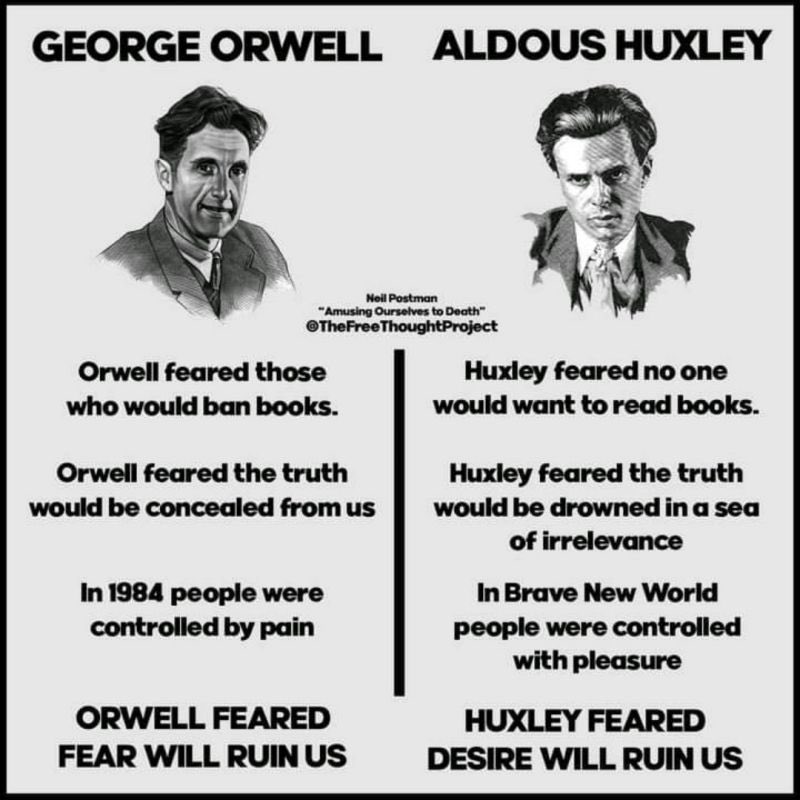
One of my longest-standing arguments is that we are not living in Orwell’s 1984, where truth is centrally suppressed and censored by force (that’s former communist societies, modern-day China, Russia, North Korea).
We are living in something much closer to Huxley’s Brave New World.
The truth is not hidden - it is almost always readily available. But it is buried beneath an industrial quantity of noise: propaganda, outrage, half-truths, conspiracy theories, influencer theatre, algorithmic rage bait and an endless stream of content designed not to inform us, but to keep us emotionally stimulated.
The modern information system does not need to censor the truth when it can simply drown it in noise.
A fact no longer has to be disproven - it only has to be surrounded by a hundred competing claims, stripped of context and nuance, turned into partisan ammunition and pushed into the same feed as celebrity gossip, memes and 15 second videos engineered to deliver the fastest possible dopamine hit. By the time the truth reaches us, it appears as just another piece of content competing for our attention.
That is the more sophisticated form of control: not preventing people from knowing, but exhausting their capacity to care.
Orwell feared a world in which people would be deprived of information. Huxley feared a world in which they would be given so much distraction, stimulation and triviality that they would lose the desire to seek it.
The defining struggle of our age is therefore not simply between truth and censorship, but between truth and indifference.
Aristotle didn't think young people should study politics.
Near the beginning of the Nicomachean Ethics, he says:
"This is why a youth is not a suitable student of political science; for he lacks experience of the actions in life, which are the subject and premises of our arguments."
Politics, Aristotle argues, isn't like mathematics, where the same formula always produces the same answer. It deals with human beings, and human beings are messy, emotional, inconsistent, and endlessly complicated. Understanding them requires living.
Someone who has never managed a family, worked through failure, experienced betrayal, or carried real responsibility simply hasn't seen enough of life to judge it well. They may know the theories, but they don't yet know people.
That's why Aristotle thought experience was one of the greatest teachers. Wisdom doesn't come from reading another book or winning another argument. It comes from years of observing how people actually behave and learning the difference between what sounds good and what is good.
It's an interesting idea because modern society assumes the opposite. We believe that more information automatically leads to better judgment. Aristotle wasn't convinced. He believed knowledge without experience was incomplete.
In other words, you could memorize every political theory ever written and still lack the wisdom needed to govern well.